High Renaissance
Portrait of a Man in Red Chalk
Leonardo da Vinci, c. 1512
Portrait of a Man in Red Chalk is a drawing of an old, long-bearded man made around 1512 and traditionally believed to be Leonardo da Vinci's self-portrait. It is kept in the Biblioteca Reale in Turin.
- Artist
- Leonardo da Vinci
- Date
- c. 1512
- Medium
- Red chalk on paper
- Dimensions
- 33.3 × 21.6 cm
- Collection
- Biblioteca Reale, Turin, Italy
- Movement
- High Renaissance
Portrait of a Man in Red Chalk is the drawing most people picture when they think of Leonardo da Vinci's face. Made in red chalk on paper around 1512, it measures about 33.3 by 21.6 centimeters and is kept in the Biblioteca Reale (Royal Library) in Turin, which acquired it in the nineteenth century. It has long been called his self-portrait, but that identification is debated.
What you are looking at
The head of an old man fills the sheet. He is turned three-quarters to the right, his gaze directed down and away, not at the viewer. Long, wavy hair falls from his head and merges with a flowing beard that runs down to the bottom of the sheet, drawn in long, loose, curling lines.
The face is drawn with great precision. Heavy eyebrows overhang deep-set eyes with pouched lower lids. The nose is long and slightly hooked. The mouth is set in a firm, downturned line, and the deep folds running from the nostrils suggest missing teeth. The forehead is creased, and the shading on the cheek and temple is built from fine parallel hatching that runs from upper left to lower right, the direction natural to a left-handed draftsman like Leonardo.
The paper is covered with reddish-brown spots, called foxing, caused by humidity and iron salts in the paper over five centuries.
Is it a self-portrait?
The tradition that this is Leonardo himself goes back at least to the nineteenth century, and the face matches written descriptions of him in old age, with long hair and beard. Around 1512 Leonardo was about sixty. But some scholars point out that the man looks older than sixty and suggest it may be a study of another elderly man, possibly a relative, or an imagined type of the old philosopher, a figure that appears often in his drawings. A faint inscription at the bottom of the sheet has not settled the question.
Condition and display
The drawing is extremely fragile. Light accelerates the darkening of the foxing, so it is kept in a climate-controlled vault and shown only rarely, for short exhibitions. In 2019, the five-hundredth anniversary of Leonardo's death, it was among the works shown in Turin.
Where to see it
The drawing belongs to the Biblioteca Reale in Turin and is displayed only occasionally. For Leonardo's painting and drawing, see Mona Lisa, Study of Hands and Benois Madonna, and the Renaissance collection.
Questions & answers
Is the Man in Red Chalk a self-portrait of Leonardo da Vinci?
It is traditionally identified as Leonardo's self-portrait from about 1512, when he was around sixty, and matches descriptions of his long hair and beard. Some scholars doubt this, noting the man looks older, and suggest it may be a study of another old man or an imagined philosopher.
Where is Leonardo's red chalk self-portrait kept?
It belongs to the Biblioteca Reale, the Royal Library, in Turin, Italy. Because the paper is fragile and stained by foxing, it is stored in controlled conditions and exhibited only rarely and for short periods, such as during the 2019 Leonardo anniversary.
Why does the Leonardo self-portrait have brown spots?
The reddish-brown spots are foxing, a form of paper deterioration caused by humidity and iron salts in the paper. They have spread over the centuries, and exposure to light can make them worse, which is why the drawing is shown so rarely.
More by the artist
Leonardo da Vinci
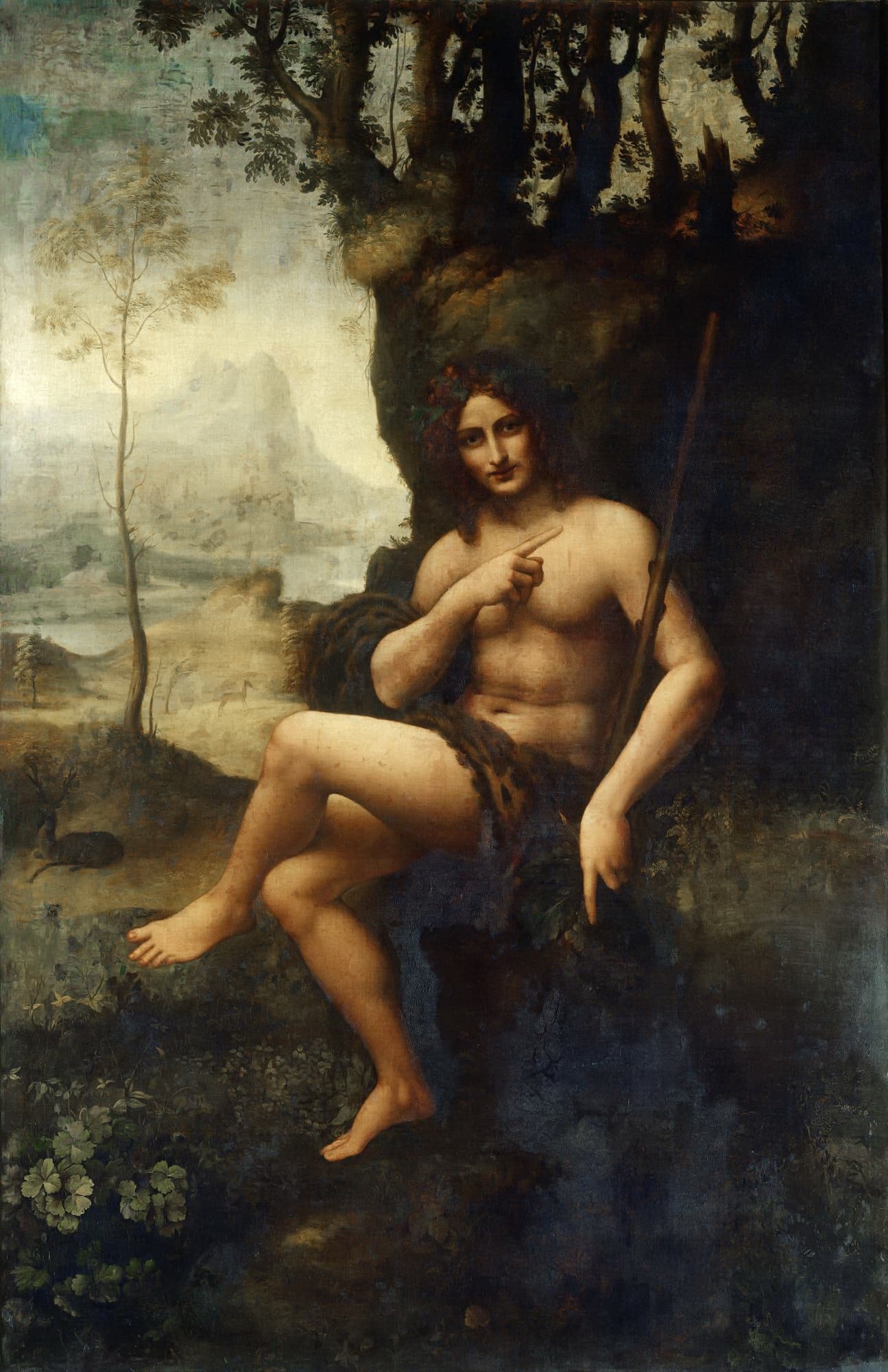
Bacchus (Saint John the Baptist)
Leonardo da Vinci · c. 1510–15; altered 1683–93
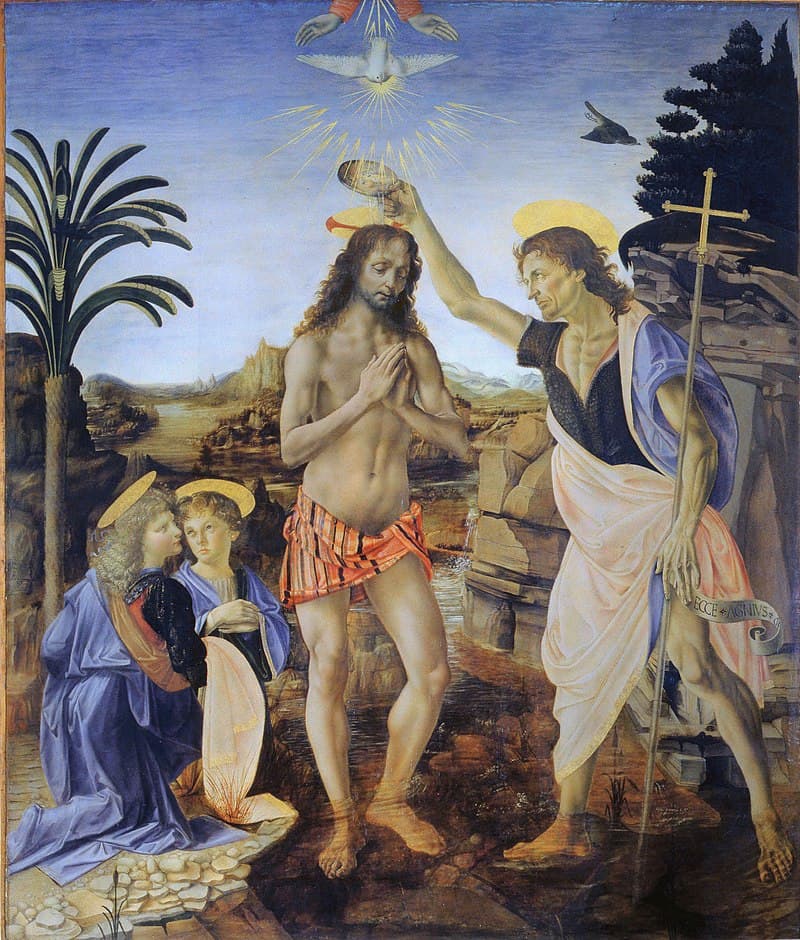
The Baptism of Christ
Andrea del Verrocchio & Leonardo da Vinci · c. 1470–75
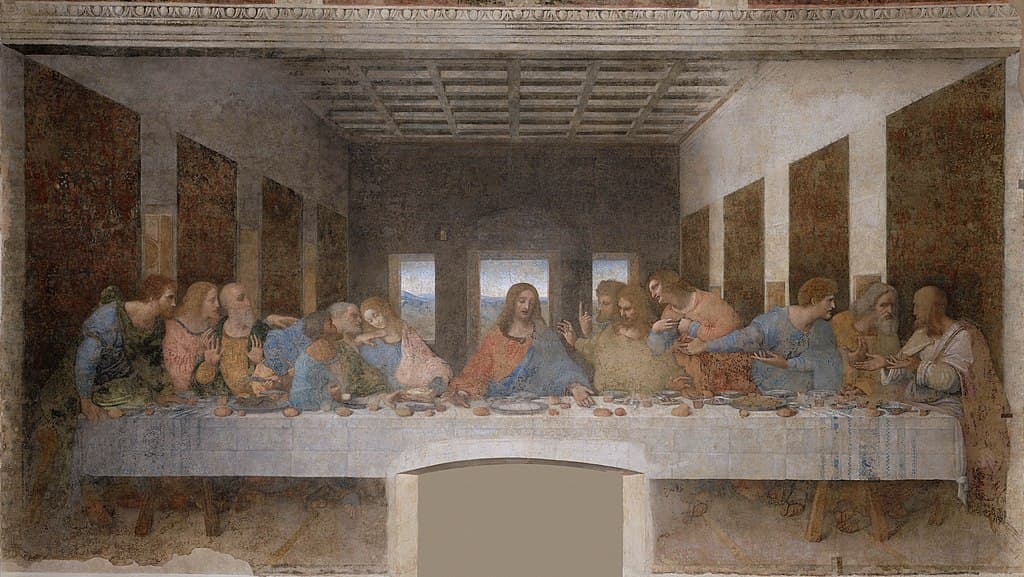
The Last Supper
Leonardo da Vinci · c. 1495–98
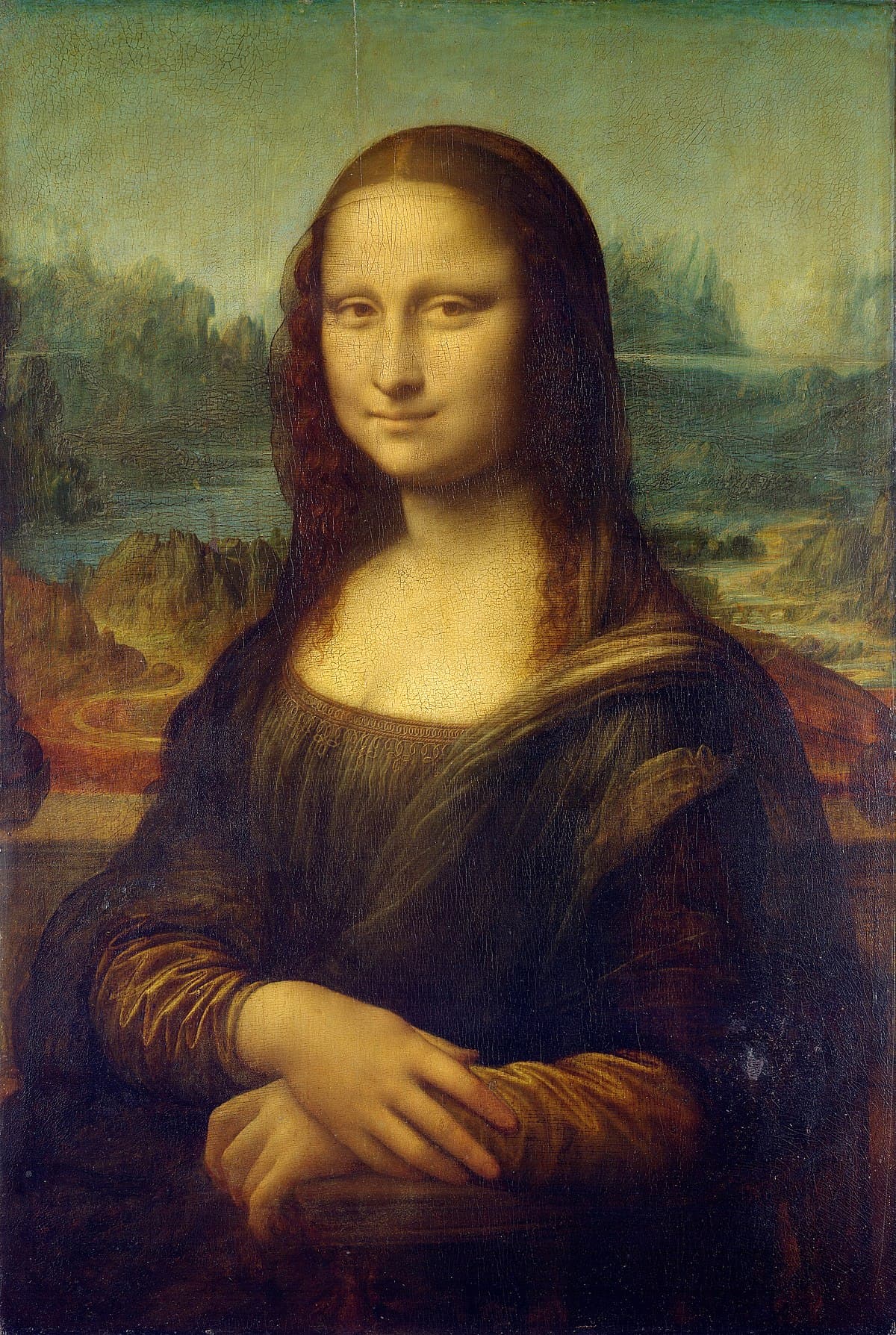
Mona Lisa
Leonardo da Vinci · c. 1503–1519
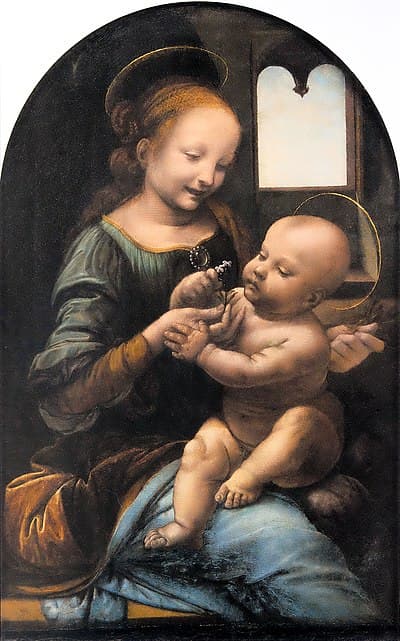
Benois Madonna
Leonardo da Vinci · c. 1478–80
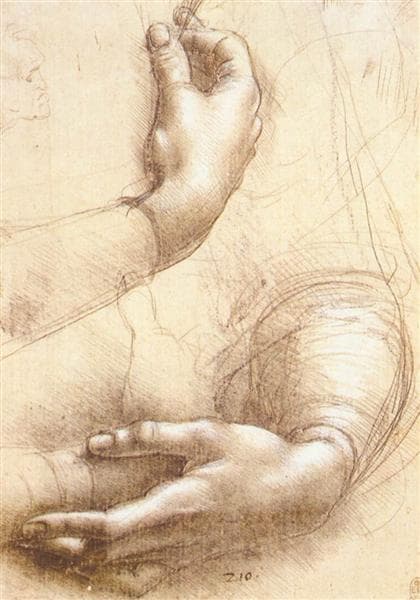
Study of Hands
Leonardo da Vinci · c. 1474–76
Kindred works
You may also study

The Scream
Edvard Munch · 1893
The Thinker
Auguste Rodin · Modeled 1880–82; enlarged 1902–03; this cast 1904

Saturn Devouring His Son
Francisco Goya · c. 1819–1823

Ophelia
John Everett Millais · 1851–52

Woman with a Parasol – Madame Monet and Her Son
Claude Monet · 1875
Las Meninas
Diego Velázquez · 1656
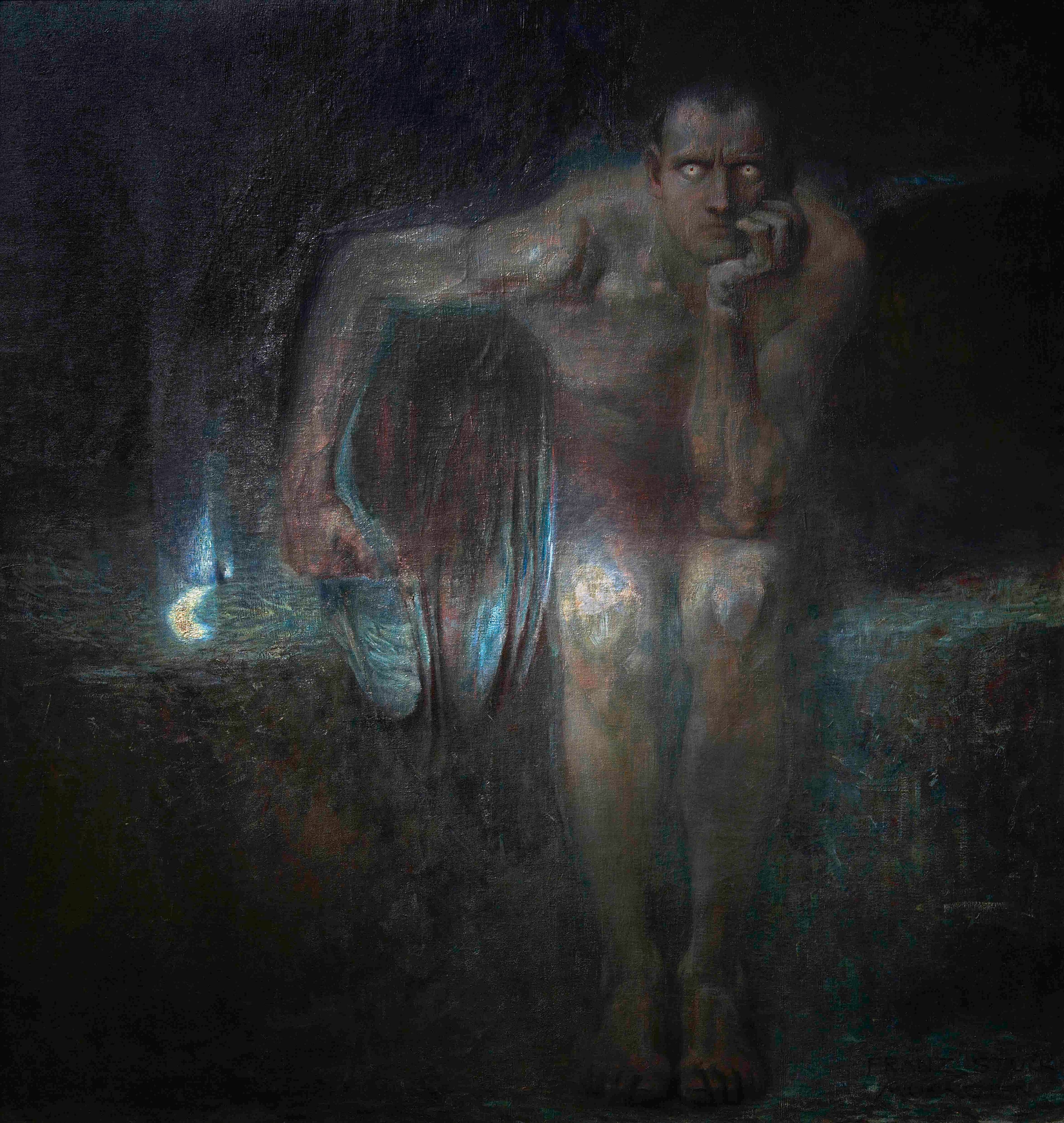
Lucifer
Franz von Stuck · 1890
Head of a Skeleton with a Burning Cigarette
Vincent van Gogh · 1886