Contemporary figurative drawing
The Danse Macabre Series
Paul Rumsey
The Danse Macabre series is a group of charcoal drawings by the English artist Paul Rumsey (born 1956) on the medieval theme of the Dance of Death. In the drawing shown, a skeleton dances with flung-out arms before a hushed crowd.
- Artist
- Paul Rumsey
- Medium
- Charcoal on paper
- Movement
- Contemporary figurative drawing
Paul Rumsey is an English draftsman and printmaker, born in Essex in 1956 and trained at Colchester School of Art and Chelsea School of Art in London. He is known for intricately worked drawings, mostly in charcoal, of dark, grotesque and fantastic subjects. His drawings on the theme of the danse macabre, the medieval Dance of Death, take one of the oldest images in European art and stage it as a scene of uneasy theater.
What you're looking at
The drawing shown here is a single, almost cinematic moment. In a pool of light at the center, a skeleton dances alone. It throws its arms wide, one leg kicked up and bent, its skull tipped back as if laughing or singing to the sky. The bones are drawn with real anatomical knowledge, the ribcage foreshortened and the spine twisting, yet the pose is pure exuberance.
On either side, a crowd of hooded and shawled figures presses in from the darkness. They are drawn with softer, smudged charcoal, their faces half lost in shadow, and they stand very still. Some clasp their hands; some seem to stare; none joins the dance. The floor in front of them is a pale, scraped expanse, and the light from above falls only on the dancer, leaving the onlookers at the edges of visibility. Rumsey's signature appears at the lower right.
That contrast between one frantic figure and a silent audience is the point. In the medieval tradition Death leads everyone into the dance; here the living watch, as if waiting their turn.
The tradition behind it
The danse macabre appeared in fifteenth-century Europe, after waves of plague, in murals and printed books showing skeletons or corpses leading people of every rank, pope, emperor, merchant, peasant, in a procession to the grave. Its message was equality in death. The best-known versions include the lost mural at the Cemetery of the Innocents in Paris (1424) and Hans Holbein the Younger's woodcuts of the 1520s. The theme returned in the Romantic and Symbolist eras, in music such as Saint-Saëns's Danse macabre and in prints by artists such as Alfred Kubin, whom Rumsey's gallery cites as an influence.
Rumsey's skeleton belongs to that line, but his crowd is not a hierarchy of social ranks. It is an anonymous congregation, which makes the image feel less like a sermon and more like a ritual.
Related works
See the overview in Danse Macabre and Memento Mori & Vanitas, and compare Hugo Simberg's The Garden of Death and Bruegel's The Triumph of Death.
Questions & answers
Who is Paul Rumsey?
Paul Rumsey is an English artist born in Essex in 1956. He studied at Colchester School of Art and Chelsea School of Art in London and in 1989 moved to Wivenhoe, near Colchester. He works mainly in charcoal and etching, making dark, detailed and fantastic images of the human figure, death and hybrid creatures.
What is a danse macabre?
The danse macabre, or Dance of Death, is a late medieval allegory in which skeletons lead people of every rank, from pope and emperor to peasant, in a dance to the grave. It reminded viewers that death comes to everyone and became a recurring subject in art, literature and music.
What medium does Paul Rumsey use for his Danse Macabre drawings?
The drawing shown is in charcoal, Rumsey's main medium, which lets him move from deep, velvety blacks to scraped and smudged grays. He also works in etching. Gallery listings of his work are dominated by charcoal drawings of macabre and fantastic subjects.
Kindred works
You may also study
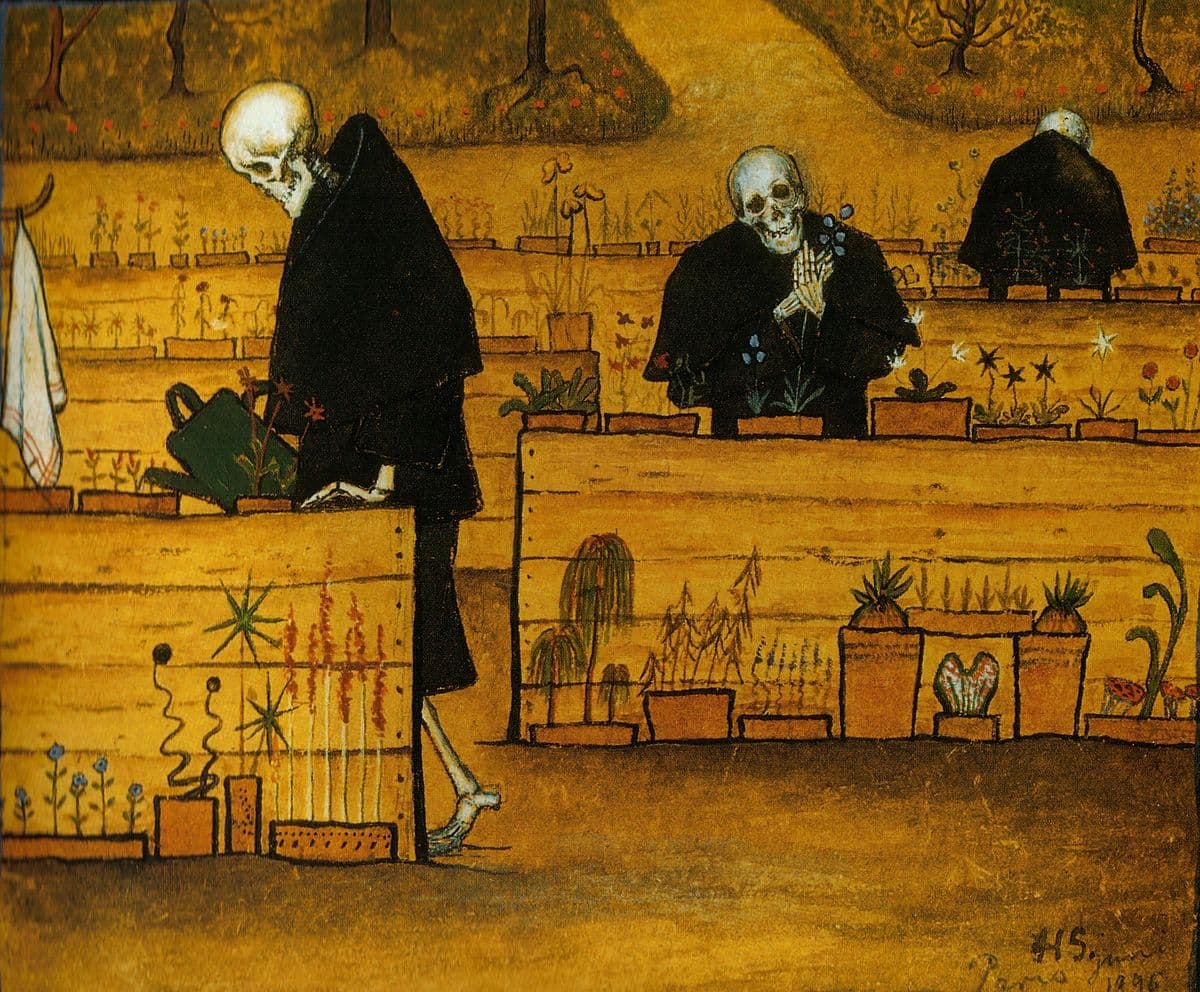
The Garden of Death
Hugo Simberg · 1896
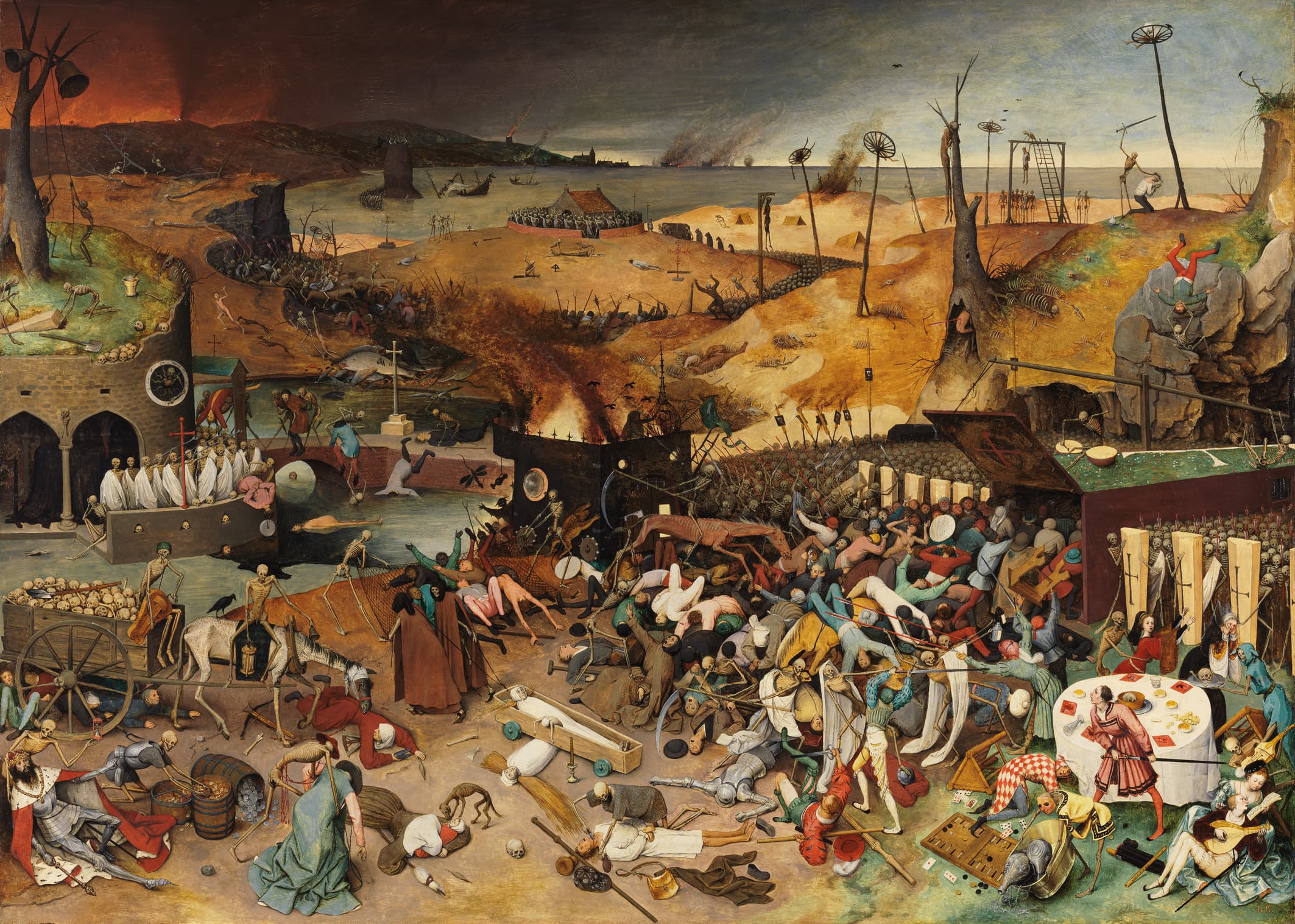
The Triumph of Death
Pieter Bruegel the Elder · c. 1562
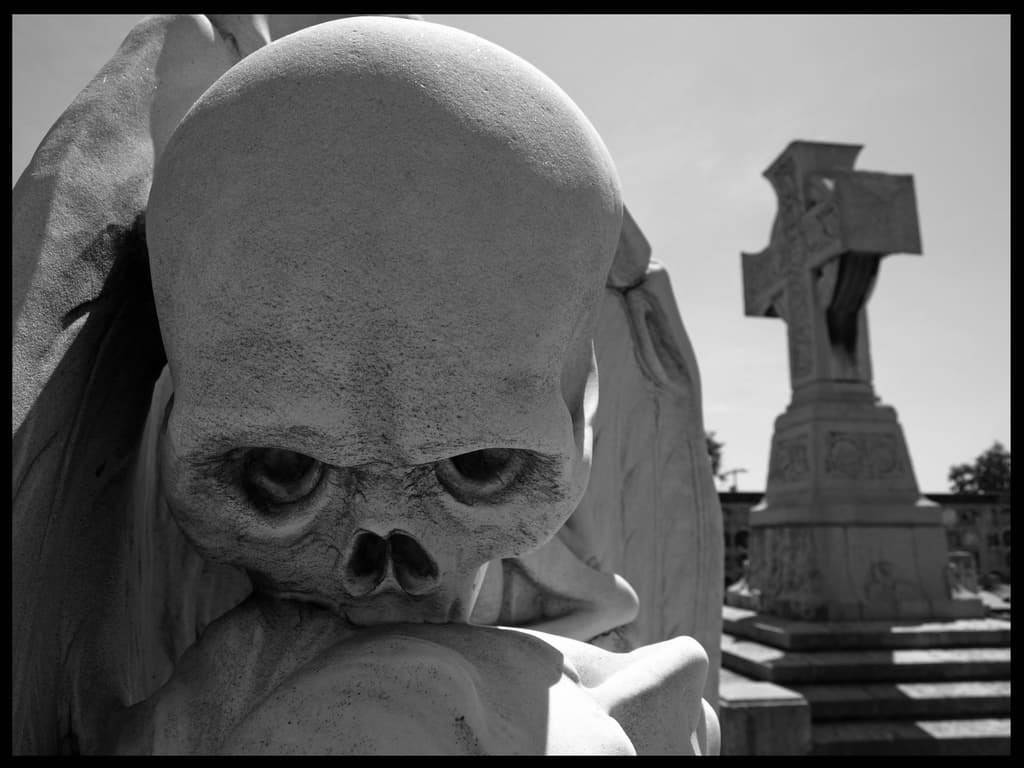
The Kiss of Death (El Petó de la Mort)
Jaume Barba & Joan Fontbernat · 1930
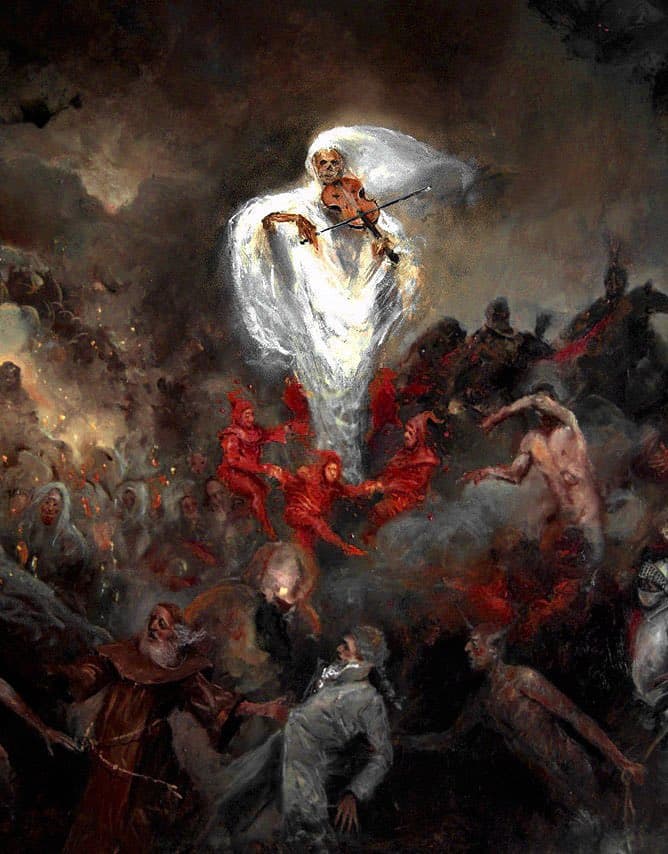
Requiem
Ignacio Trelis
Finis (The End of All Things)
Maximilian Pirner · 1887

Nymphs Dancing to Pan's Flute
Joseph Tomanek

The Scream
Edvard Munch · 1893

The Thinker
Auguste Rodin · Modeled 1880–82; enlarged 1902–03; this cast 1904