Tombstone of Silvia Marini nei De Rogati
Artist Unknown, After 1947
The tombstone of Silvia Marini nei De Rogati (1886–1947) is a funerary statue in the Porte Sante cemetery at San Miniato al Monte, Florence: a young mother spreads her cloak over four children. The sculptor is unknown.
- Artist
- Artist Unknown
- Date
- After 1947
- Medium
- White stone, probably marble
- Collection
- Cimitero delle Porte Sante, San Miniato al Monte, Florence, Italy
What you are looking at
The monument shows a young woman standing with her head bowed, holding her cloak open with both hands so that it spreads behind her like a pair of wings. At her feet four small children cling to her legs, half sheltered by the falling cloth. The gesture is old and instantly legible: it is the pose of the Madonna of Mercy, who opens her mantle to shelter the faithful beneath it, turned here into the image of a mother protecting her own children.
The photograph on this page comes in close on her upper body. Her hair is gathered in a thick braid wound around the head like a crown. Her eyes are lowered and her expression is quiet rather than tragic. Rain has done the rest. Dark streaks of weathering run down from her eyes and across her cheeks, so that the stone seems to weep, an effect no sculptor carved but every visitor notices. Behind her, far below, lie the roofs of Florence, the dome of the cathedral and Giotto's bell tower.
Beneath the figure the tomb carries a carved portrait of Silvia Marini herself, shown older than the idealized young mother above, and an inscription that reads simply Mamma, Mamma mia. The contrast is the point of the monument. The portrait records the real woman; the statue shows what she was to the people who commissioned it.
Who was Silvia Marini?
The inscription names her as Silvia Marini nei De Rogati, "née Marini, married De Rogati," following the Italian convention for a married woman's name. She was born in 1886 and died in 1947. Beyond the dates and the inscription, little is publicly documented about her life. The four children at her feet and the words Mamma mia suggest that the monument was raised by her family, most likely her children, in her memory.
Who made the tombstone?
The sculptor has not been identified. No signature is recorded in published descriptions of the tomb. Its style, a smooth, softly idealized figure in white stone with a frankly sentimental subject, is typical of Italian cemetery sculpture of the first half of the twentieth century, a tradition that also filled the cemeteries of Genoa and Milan. If you know the maker, the inscription on the base or the cemetery's records would be the place to confirm it.
The cemetery of the Porte Sante
The tomb stands in the Cimitero delle Porte Sante, the monumental cemetery that surrounds the Romanesque basilica of San Miniato al Monte on the hill above Florence's Oltrarno. The burial ground opened in 1848 and spread through the bastions of the sixteenth-century fortifications built around the church during the siege of 1529–30, works traditionally associated with Michelangelo. Its terraces are crowded with marble angels, portrait busts and family chapels, and its burials include Carlo Collodi, the author of Pinocchio, the cookery writer Pellegrino Artusi and the film director Franco Zeffirelli.
For visitors the Porte Sante is one of the most rewarding places in Florence to see funerary sculpture, and few monuments there are photographed as often as this one, partly because of its position against the city view and partly because its subject needs no explanation.
Meaning: a mother as guardian angel
The monument fuses two images. The open cloak recalls the Madonna della Misericordia, a subject Florentine painters and sculptors had repeated since the fourteenth century. The wing-like spread of the drapery also recalls the guardian angel, a favorite figure of nineteenth- and twentieth-century cemetery art. The family's message is clear: the dead mother continues to shelter her children. For other ways sculptors have given grief a body, compare Michelangelo's Pietà or the veiled figures of Antonio Corradini.
Where to see it
The tombstone is in the Cimitero delle Porte Sante at San Miniato al Monte, Florence, a short climb above Piazzale Michelangelo. The cemetery is open to visitors; please treat it as the working burial ground it still is. More funerary and mourning imagery is gathered in Death in Art and Famous Sculptures.
Questions & answers
Where is the tomb of Silvia Marini?
It is in the Cimitero delle Porte Sante, the monumental cemetery around the basilica of San Miniato al Monte, on the hill above Piazzale Michelangelo in Florence, Italy. The statue looks out over the city, with the cathedral dome visible behind it.
Who was Silvia Marini?
The inscription identifies her as Silvia Marini nei De Rogati, born Marini and married into the De Rogati family, who lived from 1886 to 1947. Little else about her is publicly documented. The words Mamma, Mamma mia and the four children on the monument suggest her family raised it in her memory.
Who sculpted the Silvia Marini tombstone?
The sculptor is not known. No signature or attribution appears in published descriptions of the tomb. Its smooth, idealized style is typical of Italian cemetery sculpture of the early and mid twentieth century.
What does the Silvia Marini statue mean?
The mother opens her cloak over four children, a pose borrowed from the Madonna of Mercy, who shelters the faithful under her mantle. The spread cloth also reads like wings, making her a guardian angel. The monument says the dead mother still protects her children.
More by the artist
Artist Unknown
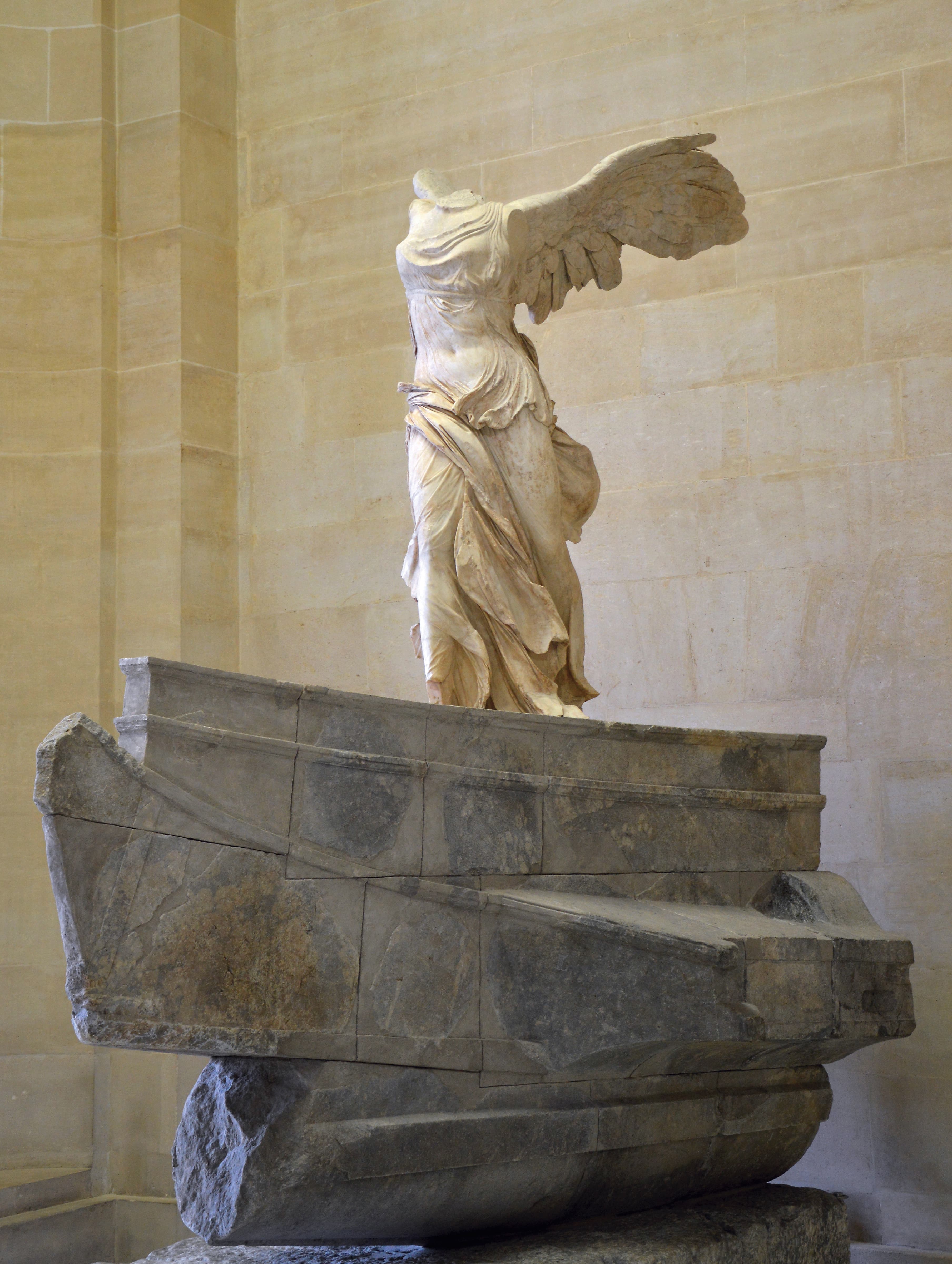
Winged Victory of Samothrace
Artist Unknown · c. 200–190 BC
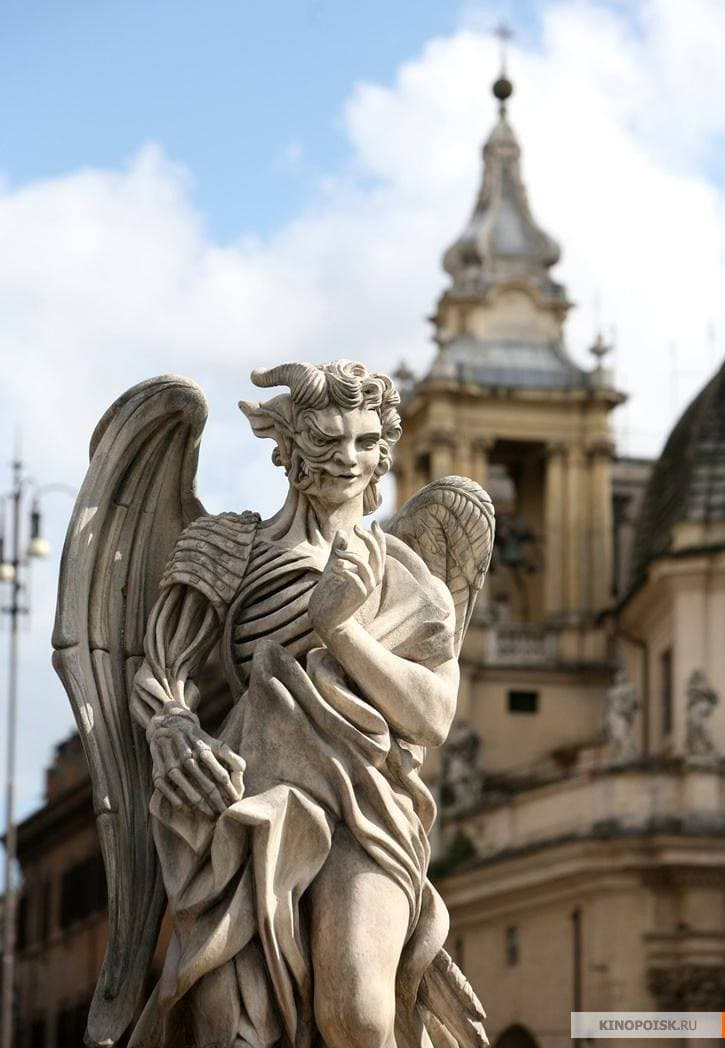
Angels and Demons – The Movie Prop
Artist Unknown & Gian Lorenzo Bernini · 2008
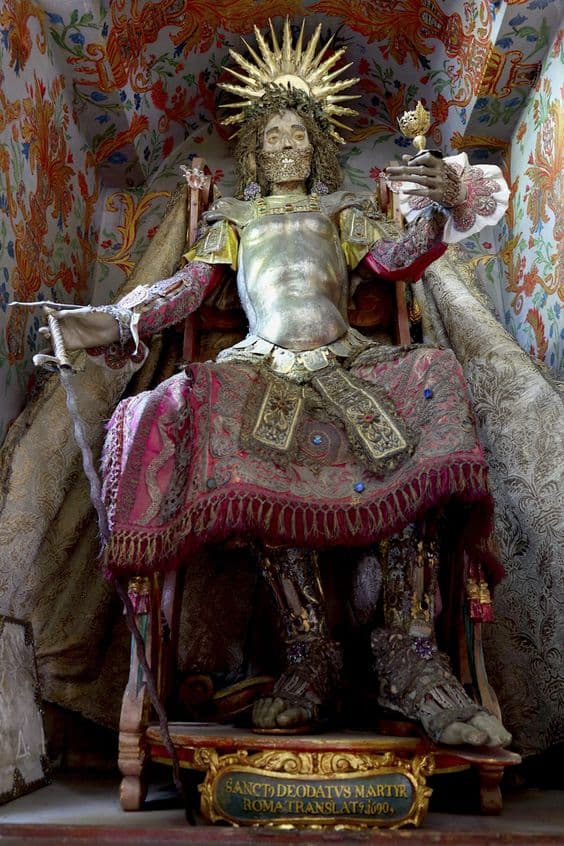
Bejeweled Skeleton of Saint Deodatus
Artist Unknown & Paul Koudounaris · Translated from Rome 1690

Sock and Buskin
Artist Unknown
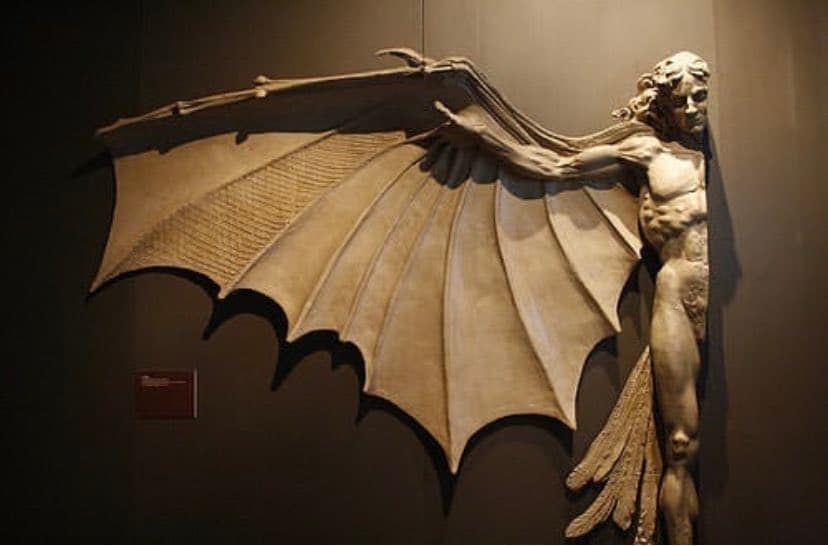
Artificial Wings
Artist Unknown · c. 2008
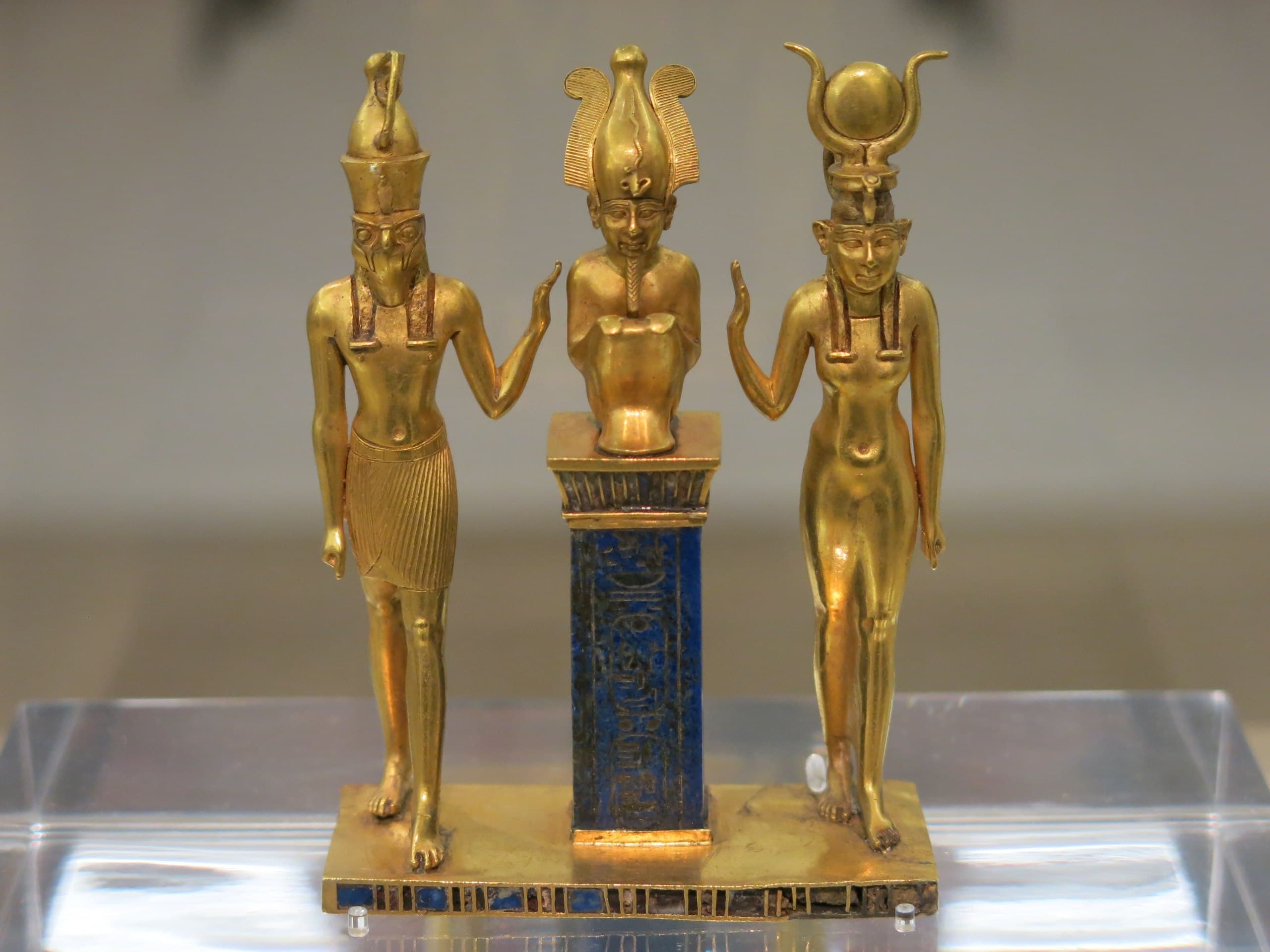
Triad of Osorkon II: Osiris, Isis and Horus
Artist Unknown · c. 874–850 BC (reign of Osorkon II)
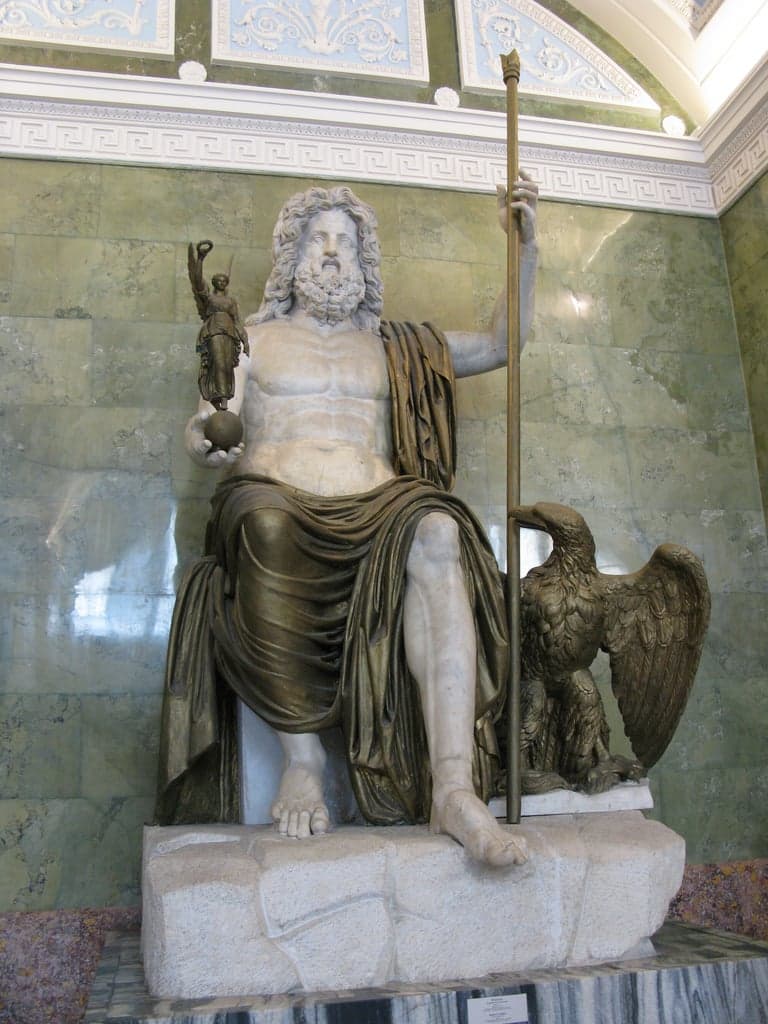
Seated Zeus (Statue of Jupiter, Hermitage)
Artist Unknown & Phidias · Late 1st century AD (after Phidias's Zeus, c. 435 BC)
Kindred works
You may also study
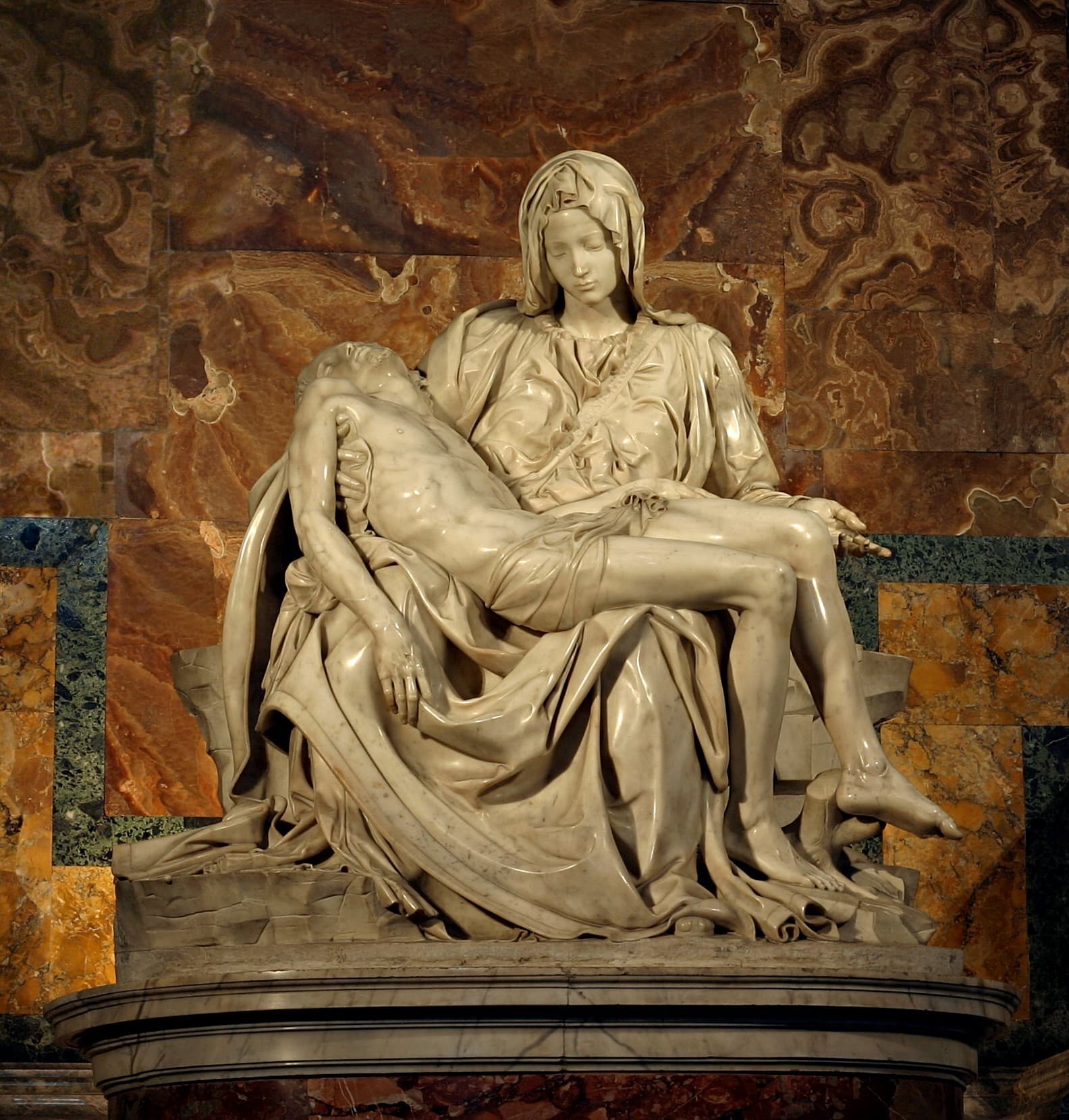
Pietà
Michelangelo · 1498–1499
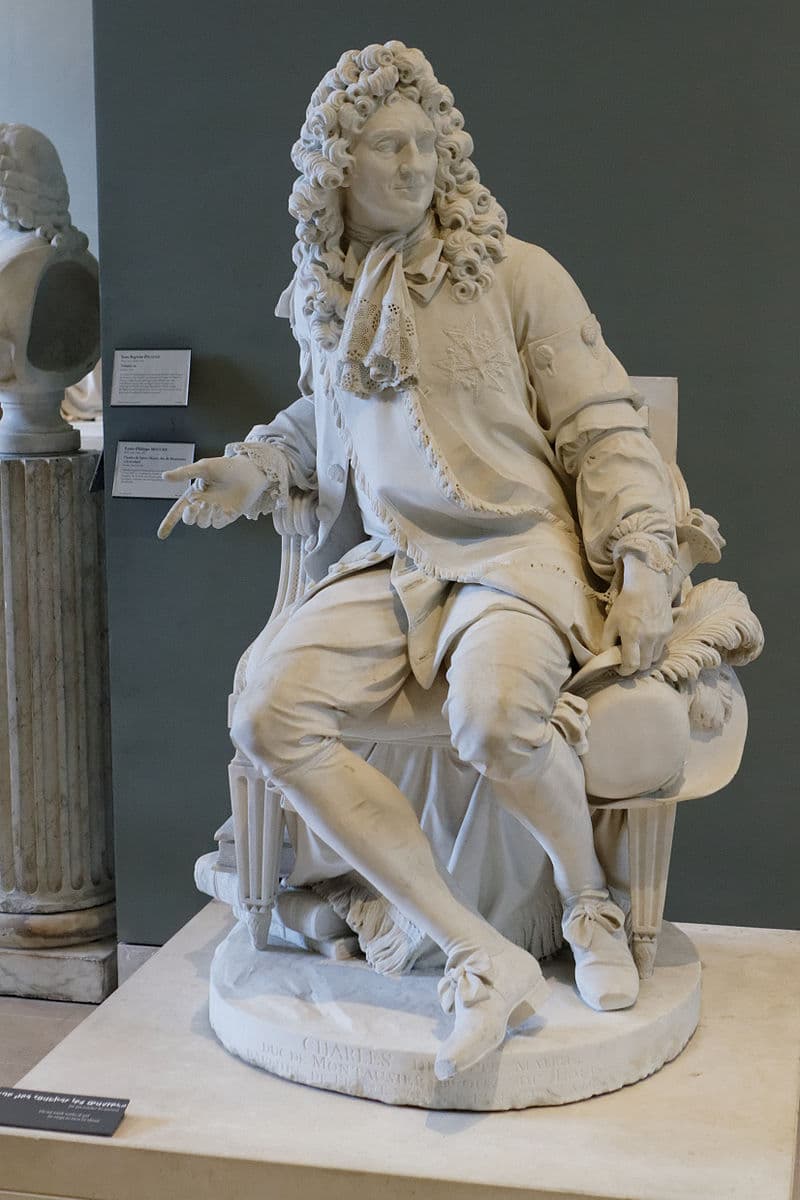
Charles de Sainte-Maure, Duke of Montausier
Louis-Philippe Mouchy · 1781–89
Veiled Christ
Giuseppe Sanmartino · 1753
Camille Monet on Her Deathbed
Claude Monet · 1879

Venus de Milo
Alexandros of Antioch · c. 150–125 BC

The Scream
Edvard Munch · 1893

Saturn Devouring His Son
Francisco Goya · c. 1819–1823
The Creation of Adam
Michelangelo · c. 1511–12