Sock and Buskin
Artist Unknown
Sock and buskin are the paired comedy and tragedy masks that symbolize theater. The names come from the footwear of ancient actors: the low soccus worn in comedy and the raised cothurnus, or buskin, worn in tragedy.
- Artist
- Artist Unknown
The sock and buskin are the two masks, one laughing and one weeping, that have stood for the theater for centuries. The smiling mask represents comedy and the grieving one tragedy. Strictly speaking, the names do not come from masks at all but from shoes: the soccus, a light, low slipper worn by comic actors in ancient Greece and Rome, and the cothurnus, a laced boot, later raised on a thick sole, worn by tragic actors. In English the cothurnus became the "buskin". The image on this page is a modern pair of theater masks of the familiar kind, not an ancient object.
What you are looking at
Two white masks hang together on black ribbons. On the left, tragedy: the brows are drawn up and together, the eyes droop, deep furrows run down the cheeks and the mouth gapes open in a downturned howl. On the right, comedy: the brows arch, the cheeks bunch up into round lumps, and the mouth stretches into a wide, open grin. Both masks have hollow eye openings and open mouths, a feature inherited directly from the ancient stage, where the actor's voice had to carry through them.
Seen side by side, the masks mirror each other almost line for line. The same forehead creases that read as joy on one become anguish on the other. That symmetry is the point: comedy and tragedy as two faces of the same art.
Masks in ancient Greek theater
Greek drama developed in Athens in the sixth and fifth centuries BC, in festivals honoring the god Dionysus. All actors were men and all wore masks, made of linen, wood or cork, which covered the whole head and included hair. Masks let a small cast of three actors play many roles, including women, gods and old men, and their exaggerated expressions could be read from the back rows of open-air theaters seating thousands.
Very few original masks survive, because they were made of perishable materials. What we know comes from vase paintings, terracotta and marble copies, and descriptions. A famous catalogue of mask types for tragedy and comedy was compiled by the second-century AD writer Julius Pollux. Many of these stone and clay masks, including those carved on Roman tombs and theater decorations, look remarkably like the modern symbol.
The great tragedians were Aeschylus, Sophocles and Euripides; Old Comedy is represented above all by Aristophanes, whose Clouds and Lysistrata still play today, and New Comedy by Menander.
Why shoes became masks
The soccus was a soft, flat slipper, cheap and ordinary, suited to comic characters drawn from everyday life. The cothurnus was a high, laced boot associated with hunters, heroes and gods. In the Hellenistic and Roman theater, tragic actors wore it with a thickened sole that raised them above the stage, giving the noble figures of tragedy greater height and dignity.
Roman writers turned the two shoes into a shorthand. Horace, in his Ars Poetica, speaks of comedy taking up the sock and tragedy the lofty buskin to discuss the styles proper to each. English poets took up the image. John Milton, in L'Allegro, imagines going to see a comedy if "Jonson's learned sock be on", and in Il Penseroso refers to "the buskin'd stage" for tragedy. Over time the phrase "sock and buskin" came to mean the theater itself, and the visual symbol attached to it was the pair of masks.
Thalia and Melpomene
The masks are also attributes of two of the nine Muses. Thalia, Muse of comedy, is often shown holding a comic mask; Melpomene, Muse of tragedy, holds a tragic mask, sometimes with a club or sword, and in some images she wears the cothurnus. Neoclassical sculpture and painting returned to these figures again and again, and through them the masks became the standard emblem of drama on theater façades, programs and prizes.
Meaning today
The paired masks express an idea as old as Aristotle's Poetics: that drama works by moving its audience, toward laughter or toward pity and fear. They also carry a quieter message about human experience. Joy and sorrow are close neighbors, and the same face can wear both. That is why the symbol works equally well over a theater door and on a gravestone of an actor.
In the twentieth century the masks became a universal logo, used by drama schools, theater companies and award ceremonies around the world. They are also popular in tattoos and in the dark academia aesthetic, where they stand for literature, performance and the classical tradition.
Where to see ancient theater masks
Ancient masks in stone and terracotta can be seen in many collections, among them the British Museum in London, the Louvre in Paris and the National Archaeological Museum in Naples, which holds masks and mosaics from Pompeii. For more on classical imagery in the catalogue, see Greek statues, Greek mythology in art and Dark Academia.
Questions & answers
What are the sock and buskin masks?
They are the paired masks of comedy and tragedy, the laughing and weeping faces that symbolize the theater. The names come from ancient footwear: the soccus, a low slipper worn by comic actors, and the cothurnus or buskin, a high boot worn by tragic actors.
Which mask is the sock and which is the buskin?
The sock stands for comedy, so it is the smiling mask. The buskin stands for tragedy, so it is the sad or weeping mask. Strictly, both words refer to the actors' shoes, and the masks inherited the names through the phrase sock and buskin.
How old are the comedy and tragedy masks?
Masks were worn in Greek theater from its beginnings in Athens in the sixth and fifth centuries BC. The phrase sock and buskin comes from Roman and later English writing, and the paired-mask emblem became standard from the Renaissance and Neoclassical periods onward.
What are the names of the comedy and tragedy masks?
Besides sock and buskin, the masks are linked with two Muses: Thalia, Muse of comedy, and Melpomene, Muse of tragedy. In popular use they are simply called the comedy and tragedy masks, or the theater masks. Theaters around the world still use them as their emblem.
Why did Greek actors wear masks?
Masks let a few male actors play many characters, including women and gods, and their bold expressions could be read from far back in huge open-air theaters. They also had religious meaning, since drama was performed at festivals honoring Dionysus.
More by the artist
Artist Unknown
Winged Victory of Samothrace
Artist Unknown · c. 200–190 BC
Angels and Demons – The Movie Prop
Artist Unknown & Gian Lorenzo Bernini · 2008
Bejeweled Skeleton of Saint Deodatus
Artist Unknown & Paul Koudounaris · Translated from Rome 1690
Tombstone of Silvia Marini nei De Rogati
Artist Unknown · After 1947
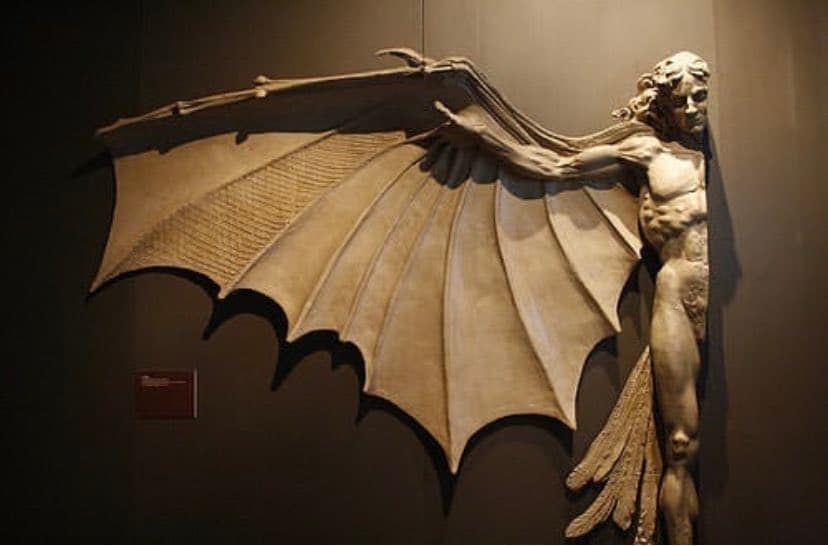
Artificial Wings
Artist Unknown · c. 2008
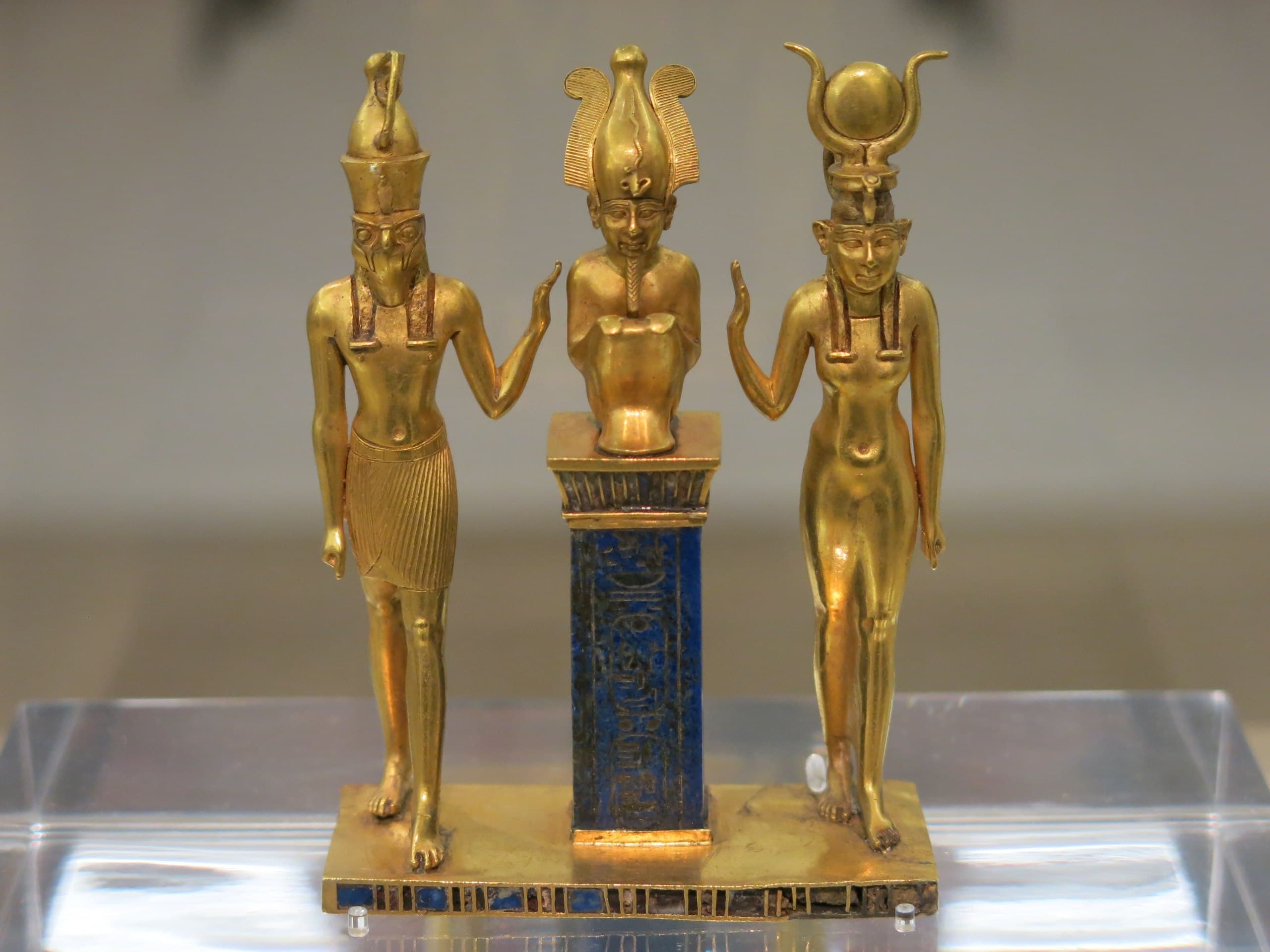
Triad of Osorkon II: Osiris, Isis and Horus
Artist Unknown · c. 874–850 BC (reign of Osorkon II)
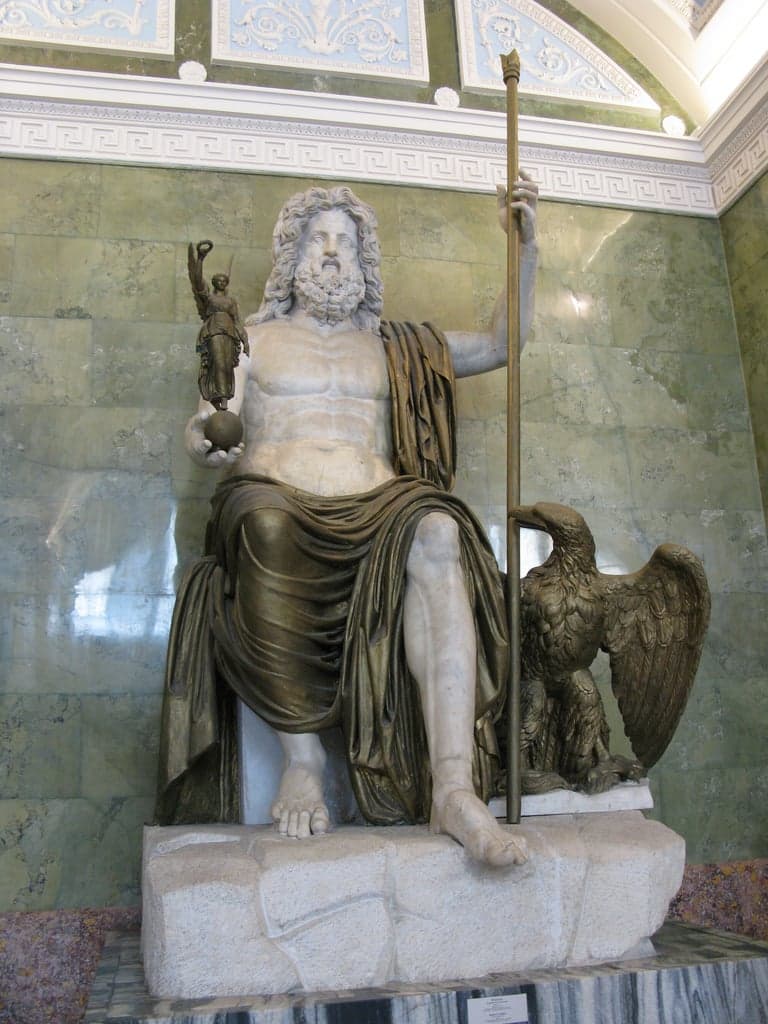
Seated Zeus (Statue of Jupiter, Hermitage)
Artist Unknown & Phidias · Late 1st century AD (after Phidias's Zeus, c. 435 BC)
Kindred works
You may also study
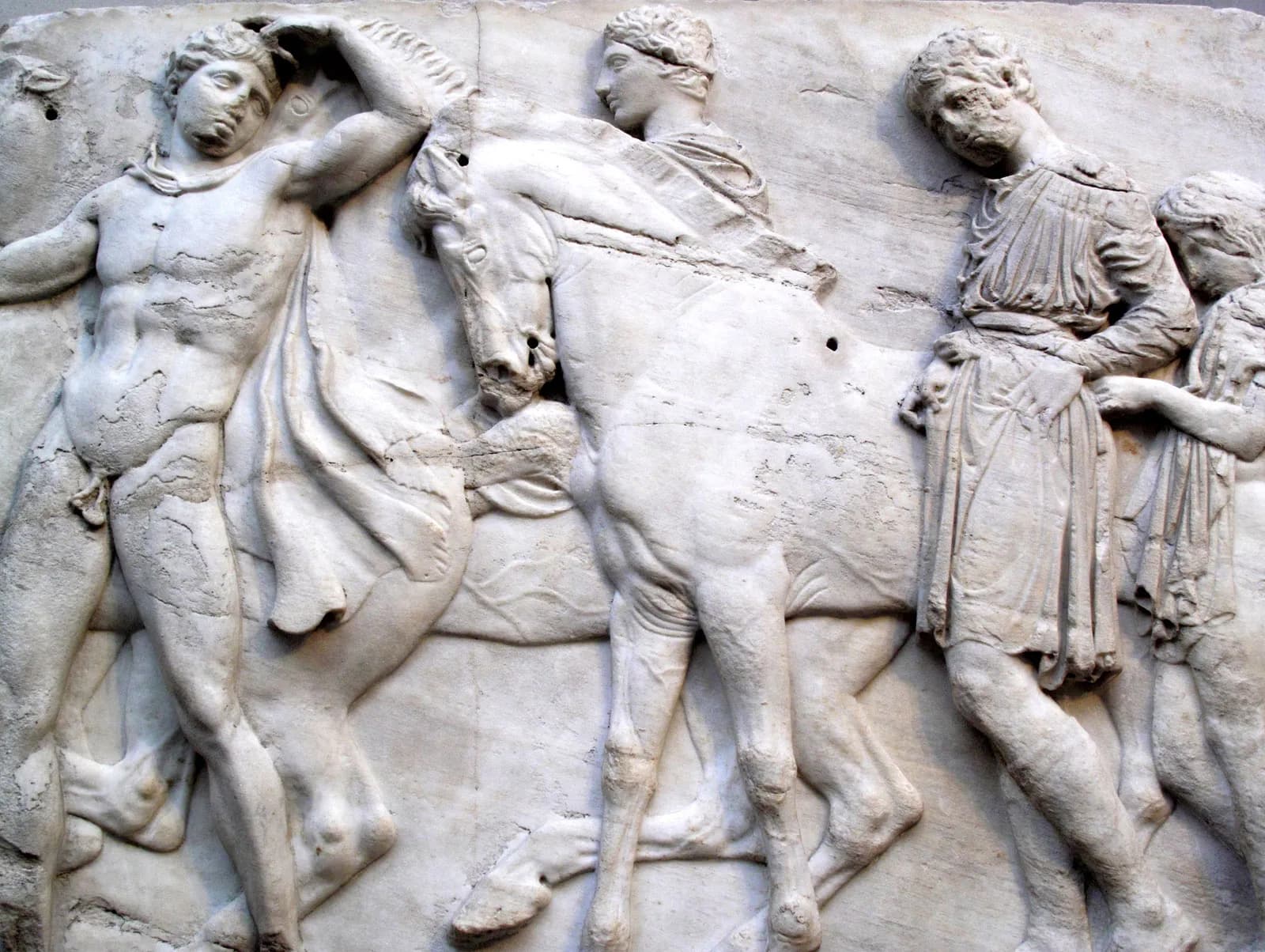
Parthenon Frieze
Phidias · c. 443–437 BC

Venus de Milo
Alexandros of Antioch · c. 150–125 BC
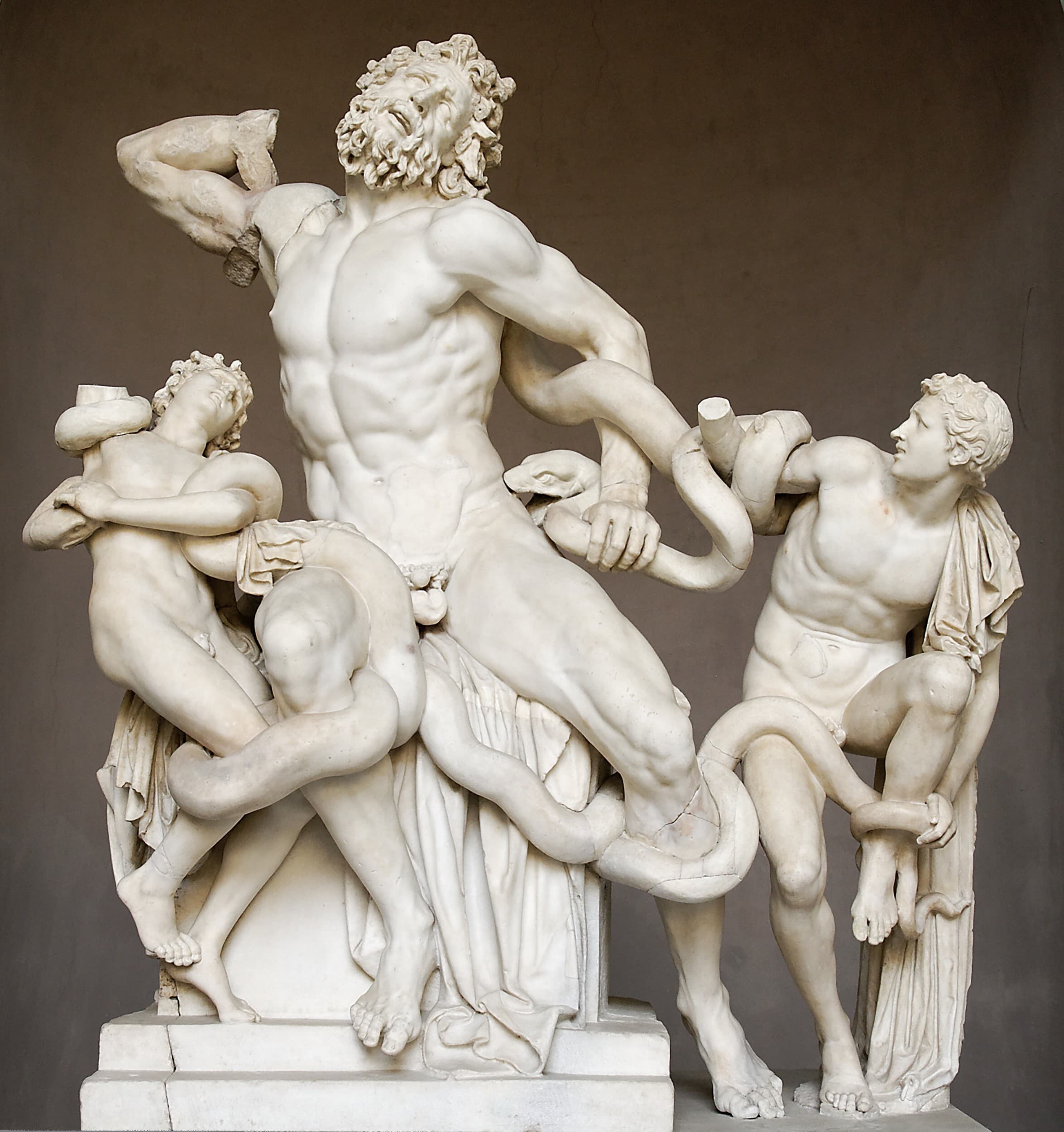
Laocoön and His Sons
Agesander of Rhodes & Athenodoros of Rhodes & Polydorus of Rhodes · c. 200 BC – AD 70 (date debated); excavated 1506

Nymphs Dancing to Pan's Flute
Joseph Tomanek

The Thinker
Auguste Rodin · Modeled 1880–82; enlarged 1902–03; this cast 1904

Ophelia
John Everett Millais · 1851–52
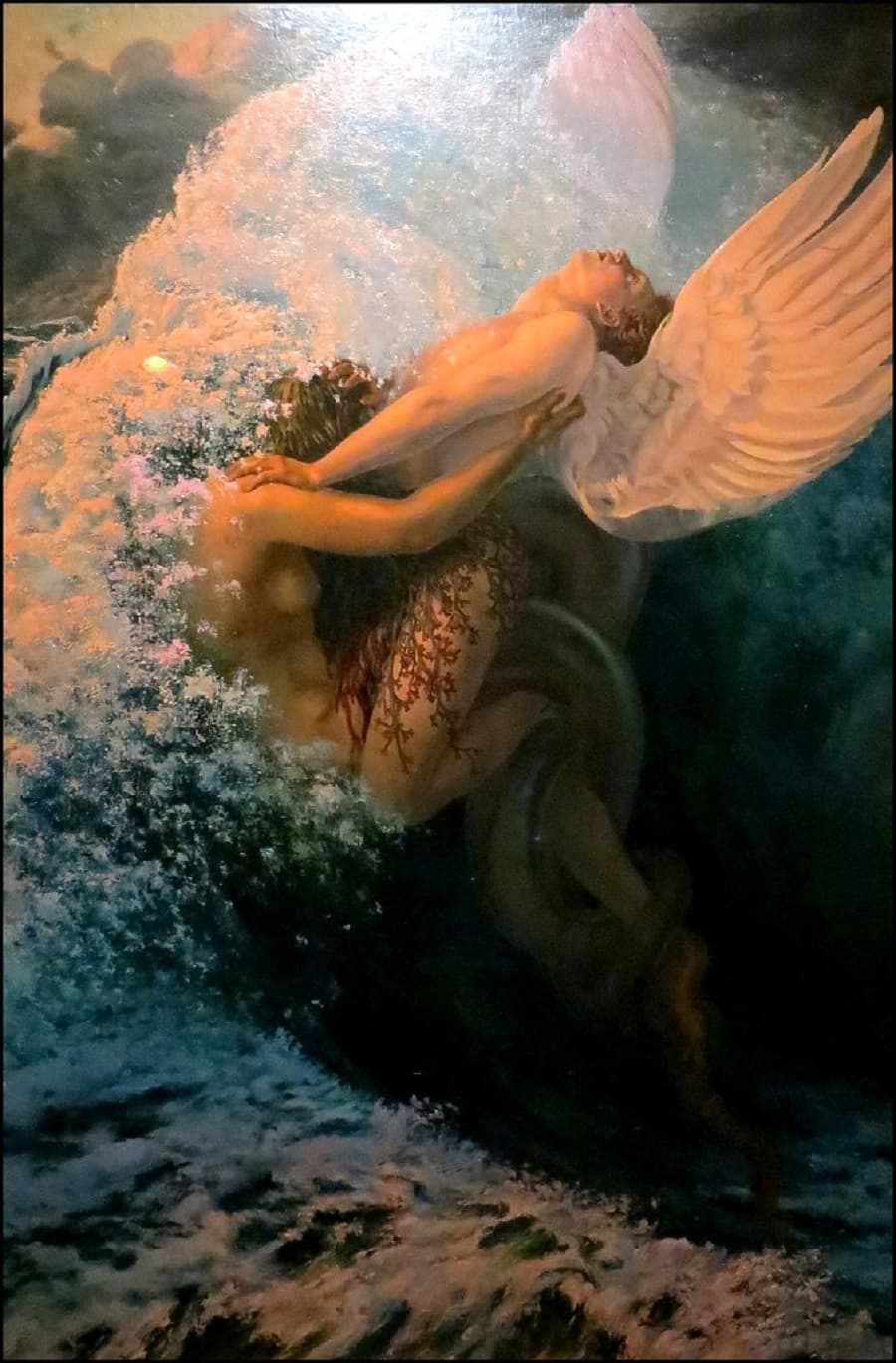
Spleen et Idéal
Carlos Schwabe · 1907
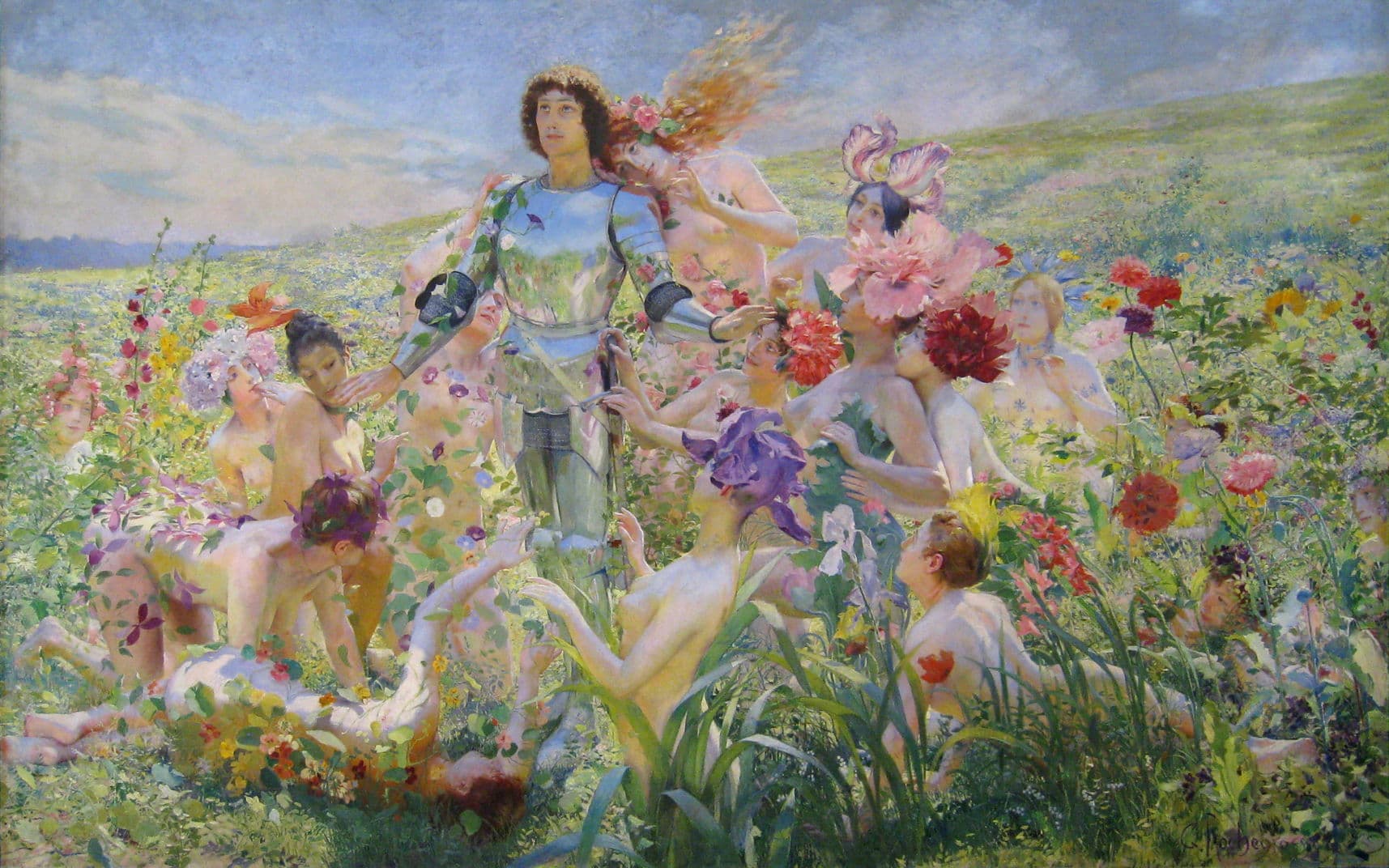
The Knight of the Flowers
Georges Rochegrosse · 1894