Late Renaissance (Mannerism)
Judith with the Head of Holofernes
Fede Galizia, 1596
Judith with the Head of Holofernes is a 1596 oil painting by the Milanese artist Fede Galizia, signed and dated on Judith's blade. It is in the John and Mable Ringling Museum of Art in Sarasota, Florida.
- Artist
- Fede Galizia
- Date
- 1596
- Medium
- Oil on canvas
- Dimensions
- 120.7 × 94 cm
- Collection
- The John and Mable Ringling Museum of Art, Sarasota, Florida, United States
- Movement
- Late Renaissance (Mannerism)
Judith with the Head of Holofernes is an oil on canvas painted in 1596 by Fede Galizia, a young woman artist working in Milan. Galizia signed and dated the picture on the blade of Judith's weapon. The painting, 120.7 by 94 centimeters, is in the John and Mable Ringling Museum of Art in Sarasota, Florida. Some older websites place it in the Pinacoteca di Brera in Milan, but the 1596 canvas is the Ringling picture. Galizia painted the subject again: a version dated 1601 is in the Galleria Borghese in Rome, and another, from about 1605–10, is in Turin.
The story of Judith
The subject comes from the Book of Judith, part of the Catholic and Orthodox Old Testament and the Protestant Apocrypha. When the Assyrian general Holofernes besieged the Jewish town of Bethulia, the widow Judith dressed in her finest clothes, entered his camp with her maid, and won his confidence. After a banquet, when he lay drunk in his tent, she cut off his head with his own sword and carried it back to the town in a food bag held by her maid. The army, leaderless, fled.
In Counter-Reformation Italy, Judith was read as a type of the Virgin and of the Church triumphing over evil, and as an example of virtue and courage. She was also one of the most popular subjects for paintings of heroic women.
What you are looking at
Galizia shows the aftermath, not the killing. Judith stands in the foreground at about three-quarter length, facing us with a calm, almost social expression. She could be sitting for a formal portrait. She wears a magnificent gown of silver-grey silk brocade woven with gold motifs and seed pearls, and her sleeves, bodice and hair are loaded with jewels: a gem-set bracelet, rings, brooches and ropes of pearls.
In one hand she holds a large blade, its curved edge resting against the folds of her dress. With the other she grips the severed head of Holofernes by the hair, lowering it toward a basin held up by her elderly maid, Abra. Galizia has given the maid a basin rather than the bag mentioned in the text, a small change that makes the gesture almost domestic.
The detail most viewers miss is on the blade itself. Along it Galizia painted her own name and the date, so that the signature sits on the instrument of Judith's courage. The hand that grips the weapon is painted with great precision, from the jeweled bracelet at the wrist to the gold-and-gem hilt.
How it was made
Galizia was trained by her father, Nunzio Galizia, a miniature painter from Trento who worked in Milan. That training in exact, small-scale detail shows in every inch of the picture: the individual threads of the brocade, the highlights on the pearls, the tiny reflections in the gemstones. She was best known in her own time for portraits, and in later centuries for her still lifes of fruit and flowers, among the earliest independent still lifes in Italy. Both skills are at work here. Judith's face has the steady likeness of a portrait, and her jewels and textiles are painted with a still-life painter's love of surface.
Is Judith a self-portrait?
It has often been suggested that Galizia gave Judith her own features, partly because of the signature on the blade. There is no documentary proof. Galizia, whose birth is usually placed between about 1574 and 1578, was around twenty when she painted it, and it is easy to believe she identified with the heroine's resolve. Still, the face should be described as possibly, not certainly, a self-portrait.
Meaning and interpretation
Compared with the violence of Caravaggio's version of about 1599 or Artemisia Gentileschi's Judith Slaying Holofernes, Galizia's Judith is restrained. There is no blood spray, no struggle. Some art historians read this as Galizia following the conventions of Lombard portraiture; others see it as a deliberate image of female composure and virtue, in which the heroine's dignity matters more than the act of killing.
The painting is also important as evidence of women's careers in late sixteenth-century Italy. Galizia was praised by contemporaries, received commissions for altarpieces in Milan, and worked as a professional painter at a time when very few women did. Feminist art history since the 1970s has helped restore her reputation, often discussing her alongside Lavinia Fontana, Sofonisba Anguissola and Artemisia Gentileschi.
A portrait of splendor
Galizia's emphasis on dress is not decoration for its own sake. The Book of Judith dwells on the heroine's preparations: she bathes, anoints herself and puts on her finest garments and jewelry to enter the enemy camp. By painting the brocade, pearls and gold with such care, Galizia makes the costume part of the story. Judith's beauty is her weapon, and the jewels are the armor she wore into Holofernes' tent. Milan was one of Europe's great centers of luxury silk weaving and goldsmith's work, and a Milanese viewer would have recognized the fabrics as the most expensive of their day.
Where to see it
The painting is in the Ringling Museum of Art in Sarasota, Florida, in the galleries of the Ringling's Old Master collection. For more paintings of armed heroines, see Eglon van der Neer's Judith, Rembrandt's Lucretia and our selection of famous paintings of women.
Questions & answers
Where is Fede Galizia's Judith with the Head of Holofernes?
The 1596 painting is in the John and Mable Ringling Museum of Art in Sarasota, Florida. It is sometimes wrongly placed in the Brera in Milan. Galizia painted later versions of the subject, including one dated 1601 in the Galleria Borghese, Rome.
When did Fede Galizia paint Judith with the Head of Holofernes?
She painted it in 1596, and the date is inscribed on the blade of Judith's weapon together with her signature. Galizia was then a young artist, probably still under twenty-five, working in Milan in the studio tradition of her father, the miniaturist Nunzio Galizia.
Is Galizia's Judith a self-portrait?
It is often suggested, partly because Galizia signed her name on Judith's blade, but there is no proof. The face has the precise likeness of a portrait, and the artist may have used her own features. It is safest to call it a possible self-portrait.
What is the meaning of Judith with the Head of Holofernes?
The painting illustrates the biblical heroine who saved her town by beheading the Assyrian general Holofernes. Galizia stresses Judith's calm dignity and finery rather than violence, presenting her as an image of virtue and courage, and placing her own signature on the weapon.
Kindred works
You may also study
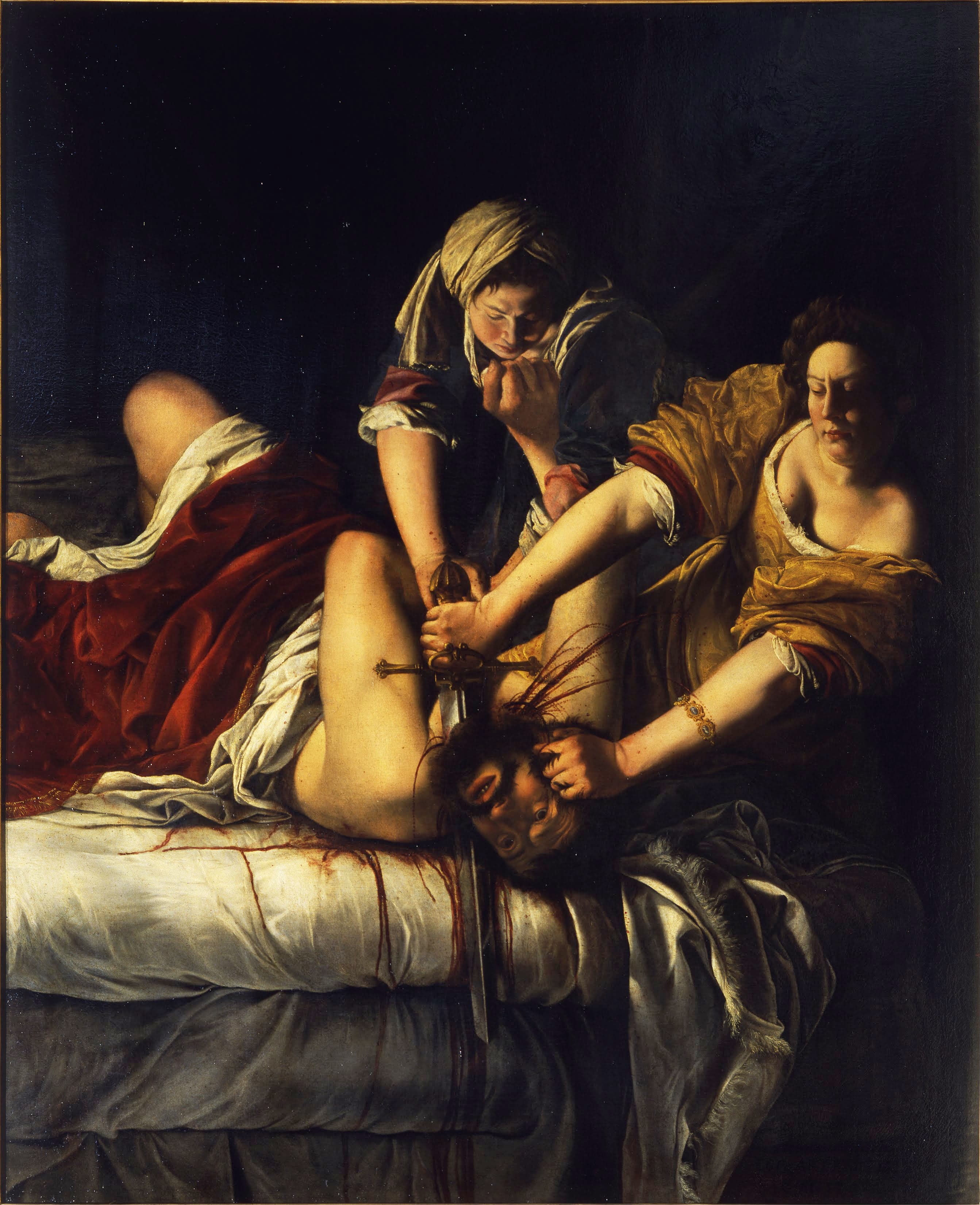
Judith Slaying Holofernes
Artemisia Gentileschi · c. 1620
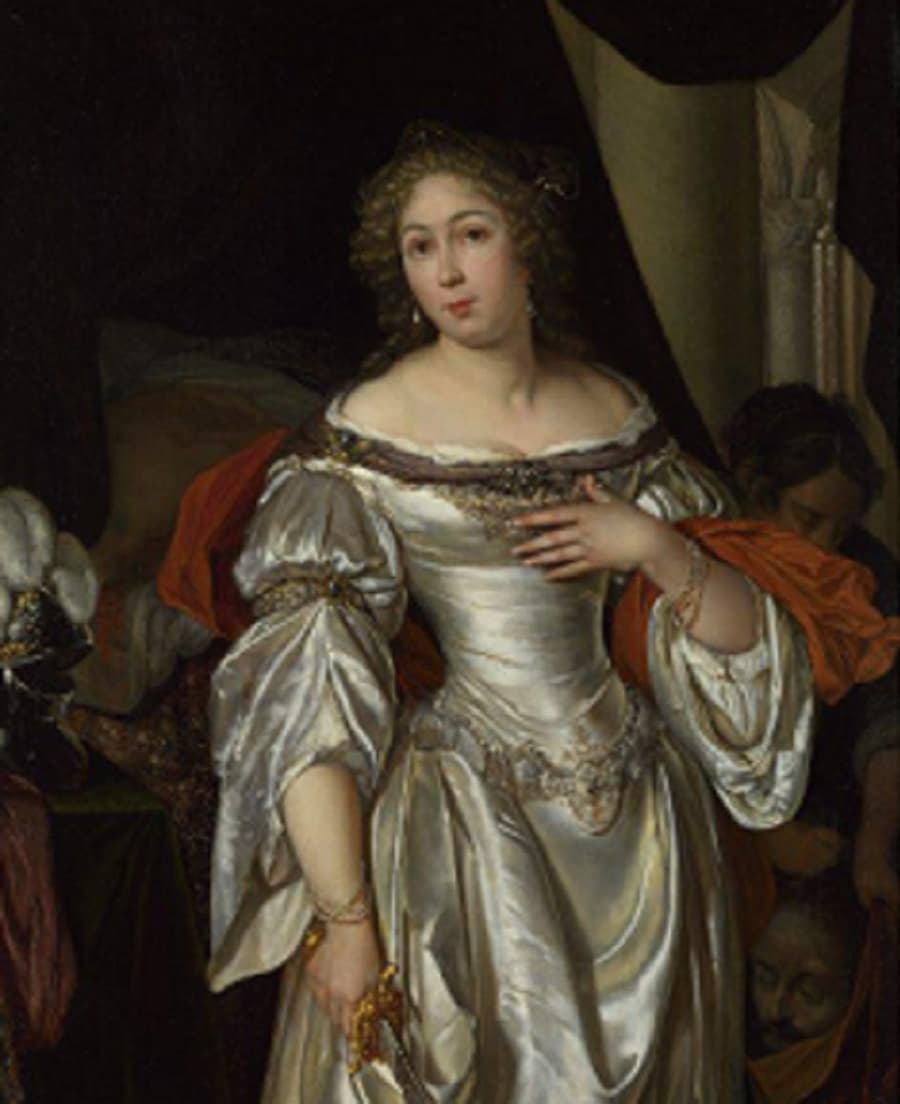
Judith
Eglon van der Neer · c. 1678
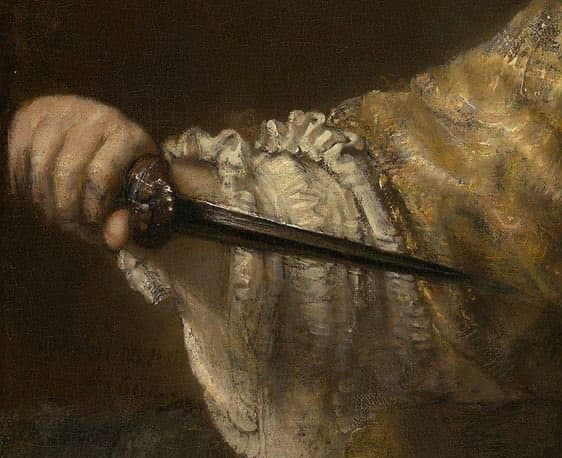
Lucretia
Rembrandt · 1664
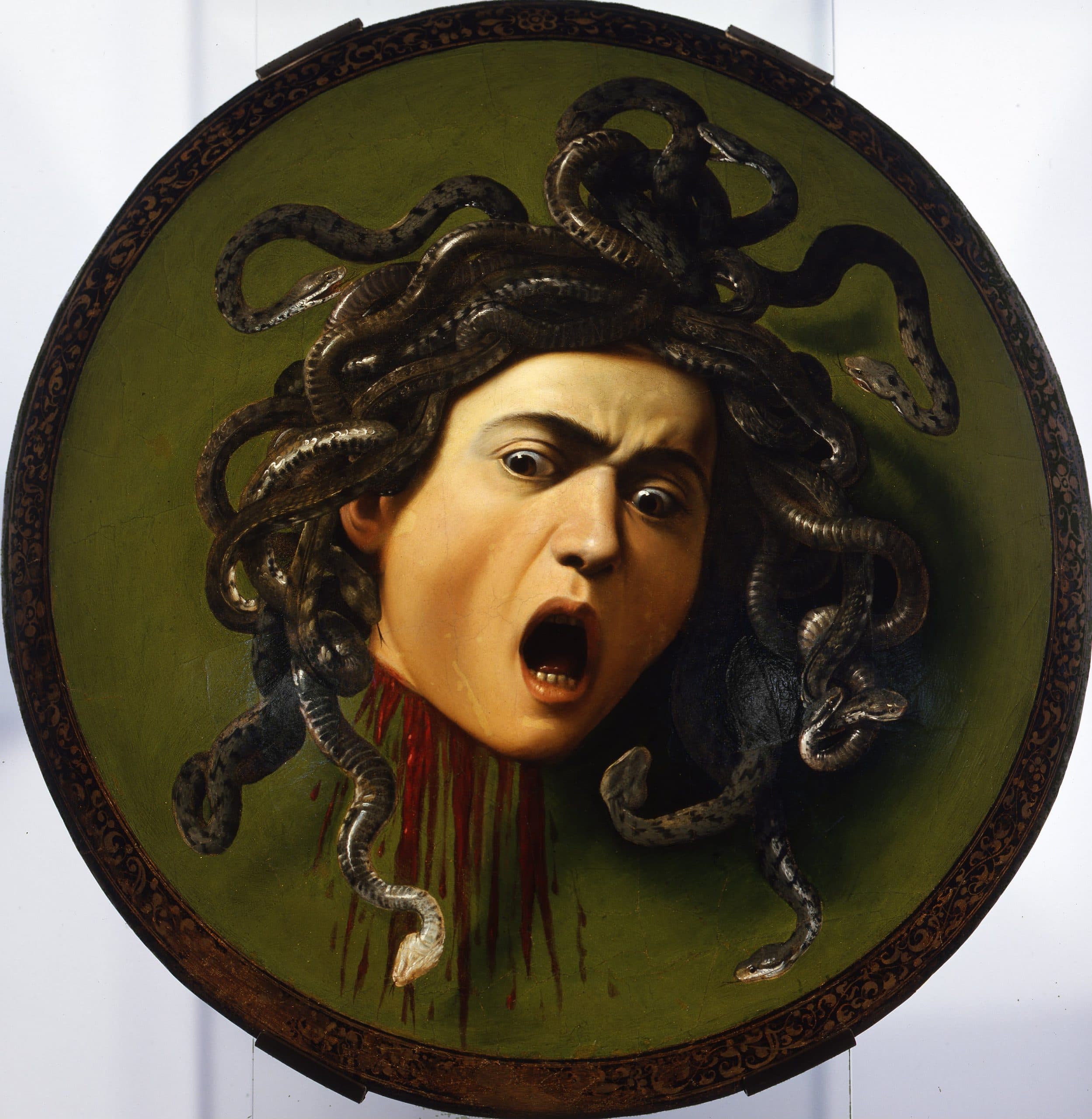
Medusa
Caravaggio · c. 1597–98
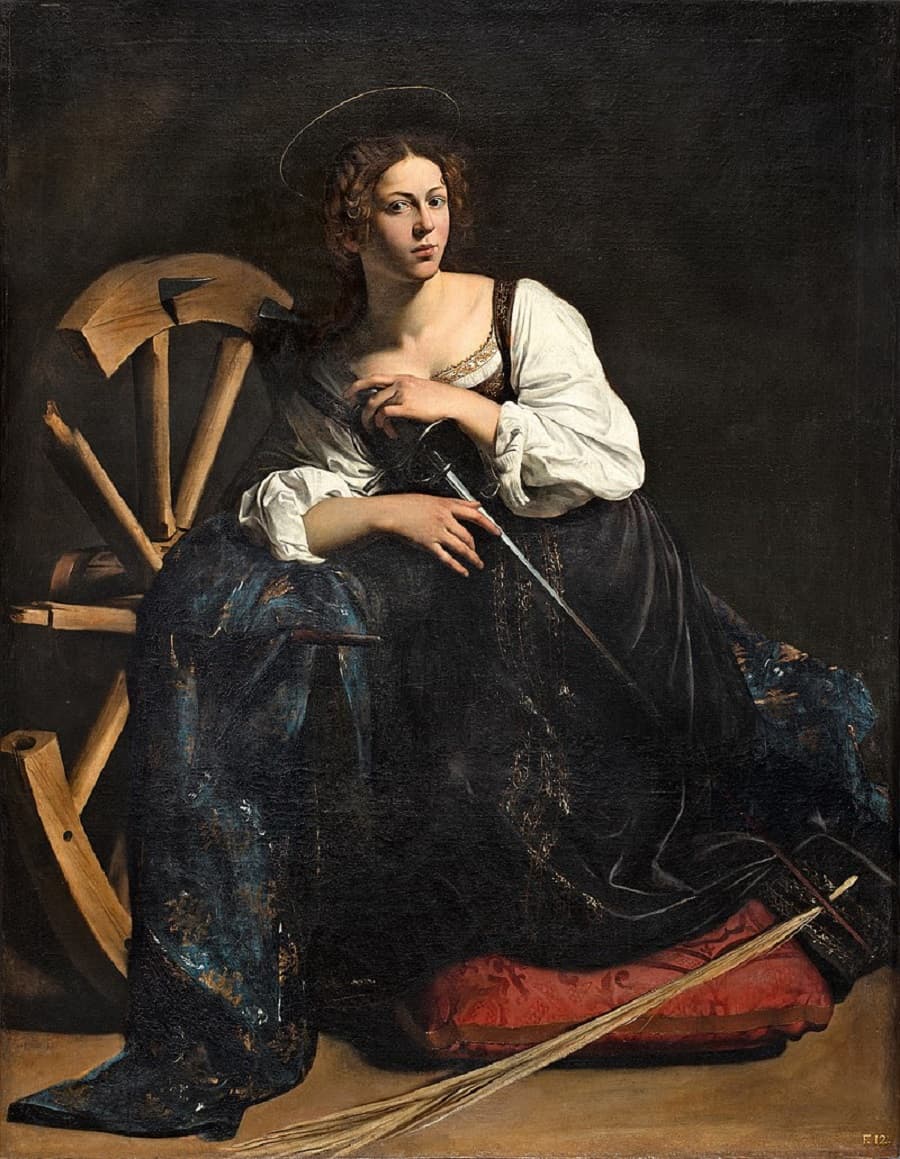
Saint Catherine of Alexandria
Caravaggio · c. 1598

Venus de Milo
Alexandros of Antioch · c. 150–125 BC

Saturn Devouring His Son
Francisco Goya · c. 1819–1823
The Creation of Adam
Michelangelo · c. 1511–12