Dutch Golden Age
The Storm on the Sea of Galilee
Rembrandt, 1633
The Storm on the Sea of Galilee is Rembrandt's only seascape, painted in 1633: Christ and his disciples in a fishing boat struck by a wave. It belonged to the Isabella Stewart Gardner Museum, Boston, until it was stolen in 1990; it is still missing.
- Artist
- Rembrandt
- Date
- 1633
- Medium
- Oil on canvas
- Dimensions
- 160 × 128 cm
- Collection
- Isabella Stewart Gardner Museum (stolen in 1990, whereabouts unknown), Boston, United States
- Movement
- Dutch Golden Age
What you are looking at
A small fishing boat is caught in a storm on the Sea of Galilee. A huge wave lifts the bow, the mainsail has torn loose, and the mast leans hard against a sky split between black cloud on the right and a break of light on the left. Men cling to the rigging and haul at ropes at the front of the boat, where the light is strongest. In the shadowed stern, others crowd around a calm, seated figure: Christ, being woken by his frightened followers.
Rembrandt painted it in 1633, soon after he settled in Amsterdam. It is oil on canvas, 160 by 128 centimeters, a tall upright picture, and is signed and dated on the rudder. It is his only known seascape.
Note that the image shown here is a cropped, horizontal version that appears to have been digitally retouched. The original is taller, with more sky above the mast and more sea below the boat.
The story
The subject comes from the Gospel of Mark (4:35–41). Jesus and the disciples cross the lake by night; a great storm rises and waves break into the boat while Jesus sleeps on a cushion in the stern. The disciples wake him, asking whether he does not care that they are perishing. He rebukes the wind, the sea grows calm, and he asks them why they are so afraid and have no faith.
Looking closely
Rembrandt divides the boat in two. At the bow, in the light, the struggle is physical: bodies strain against wind and water. In the stern, in shadow, it is spiritual: the men turn toward Christ. Count the people on board and you find fourteen, one more than Christ and the twelve disciples. One man near the center, steadying himself with a rope and holding his cap, looks straight out at us. He is often identified as Rembrandt himself, placing the painter in the boat with the faithful and the fearful.
Stolen in 1990
Isabella Stewart Gardner bought the painting in 1898 for her Boston collection. In the early hours of 18 March 1990, two men disguised as police officers entered the Isabella Stewart Gardner Museum and stole thirteen works, among them this painting, which was cut from its frame. None of the works has been recovered, and the museum offers a large reward for information. Following Gardner's wish that her galleries remain unchanged, the empty frame still hangs in the Dutch Room.
Where to see it
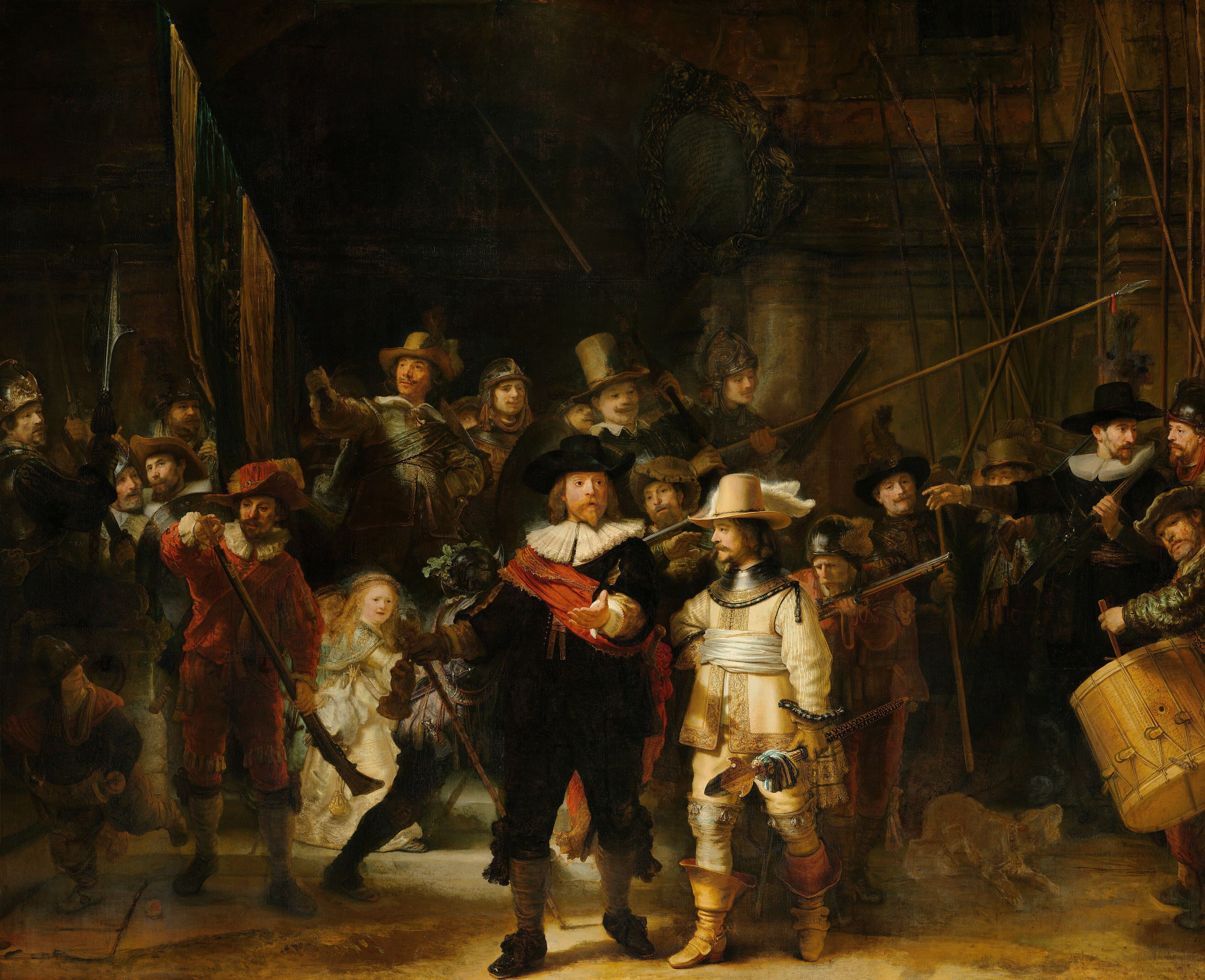
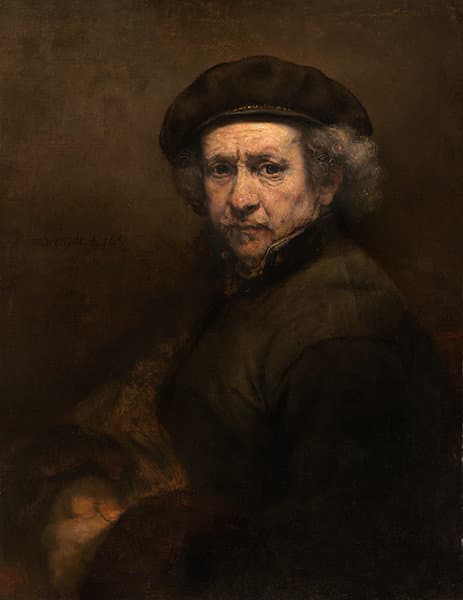
For now, nowhere: the painting's whereabouts are unknown. For other works by the artist in the catalogue, see The Night Watch, The Suicide of Lucretia and Self-portrait with Beret, or our guide to Baroque art.
Questions & answers
Where is Rembrandt's Storm on the Sea of Galilee now?
Nobody knows. The painting belonged to the Isabella Stewart Gardner Museum in Boston until 18 March 1990, when thieves posing as police officers cut it from its frame and stole it with twelve other works. It has never been recovered, and its empty frame still hangs in the museum's Dutch Room.
What does The Storm on the Sea of Galilee depict?
It depicts the Gospel of Mark's account (4:35–41) of Jesus calming a storm. The disciples' boat is overwhelmed by waves while Jesus sleeps; they wake him in fear, and he stills the wind and sea. Rembrandt shows the moment of greatest danger, before the miracle.
Is Rembrandt in The Storm on the Sea of Galilee?
Probably. There are fourteen people in the boat, one more than Christ and the twelve disciples, and one of them, holding his cap and a rope, looks directly out at the viewer. He is widely identified as a self-portrait of Rembrandt, then in his late twenties.
More by the artist
Rembrandt
Kindred works
You may also study

Bridge over a Pond of Water Lilies
Claude Monet · 1899
The Creation of Adam
Michelangelo · c. 1511–12

Ophelia
John Everett Millais · 1851–52

The Great Wave off Kanagawa
Katsushika Hokusai · c. 1830–32
Lucifer
Franz von Stuck · 1890
The Birth of Venus
Sandro Botticelli · c. 1484–1486
The Garden of Earthly Delights
Hieronymus Bosch · c. 1490–1510
Spleen et Idéal
Carlos Schwabe · 1907