Dutch Golden Age
The Artist in His Studio
Rembrandt, c. 1628
The Artist in His Studio is a small panel painted by Rembrandt around 1628 in Leiden, showing a young painter standing back from a huge easel in a bare room. It is in the Museum of Fine Arts, Boston.
- Artist
- Rembrandt
- Date
- c. 1628
- Medium
- Oil on panel
- Dimensions
- 24.8 × 31.7 cm
- Collection
- Museum of Fine Arts, Boston, Boston, United States
- Movement
- Dutch Golden Age
The Artist in His Studio is a small oil on panel painted by Rembrandt van Rijn around 1628, when he was about twenty-two and working in his home town of Leiden. It measures only 24.8 by 31.7 centimeters and is in the Museum of Fine Arts, Boston.
What you are looking at
A plain, shabby room with cracked plaster walls and a bare plank floor. In the right foreground, filling much of the picture, stands a large easel seen from behind: we see only the back of the panel on it, lit on its edge, and the long shadow it throws across the floor. We never learn what is being painted.
Far back in the room, small and in shadow, stands the painter. He wears a broad-brimmed hat and a long blue-grey working smock, and he holds a brush and maulstick, with palettes hanging on the wall behind him. He looks toward the easel from a distance, as though considering the picture rather than working on it. A table with jars and a grinding stone stands at the left, and a heavy wooden door with iron fittings closes the right edge. The light falls from an unseen window at the left.
How it was painted
The handling is minute and precise, typical of Rembrandt's early Leiden style. He records every crack in the wall, the grain of the door and the scuffs on the floor. The composition is the surprise: the hero of the picture is placed in the background, and the great easel looms in front of him. A small panel represents a much larger one, which gives the scene a slightly dizzying sense of scale.
Who is the painter?
Scholars disagree. Many see the figure as Rembrandt himself, early in his career, in which case this is one of the first of his many self-images. Others have suggested Gerrit Dou, who became Rembrandt's first pupil in 1628. Either way, the picture is less a portrait than a statement about painting: much of the work, it suggests, happens in the mind, standing back, before the brush ever touches the panel.
Where to see it
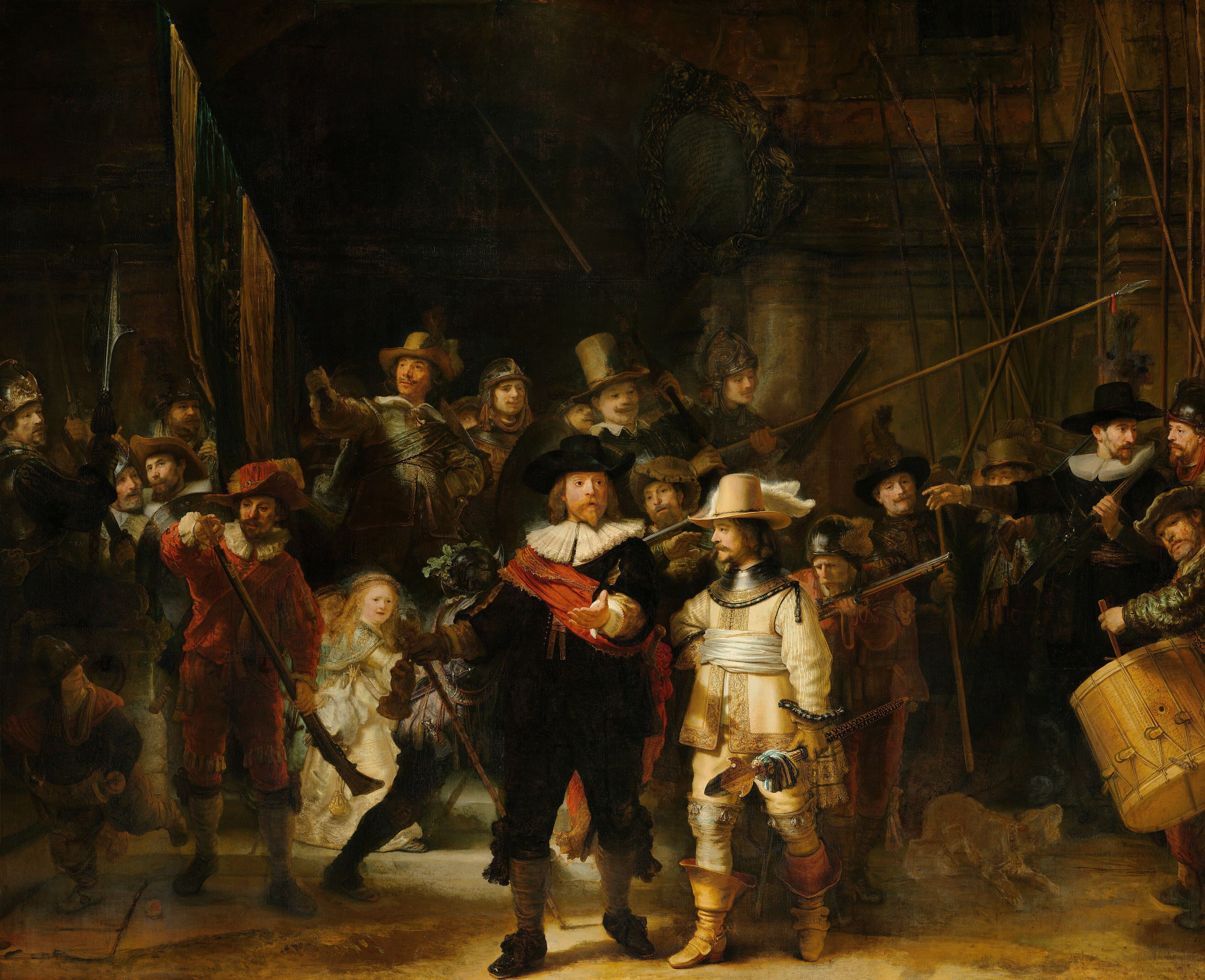
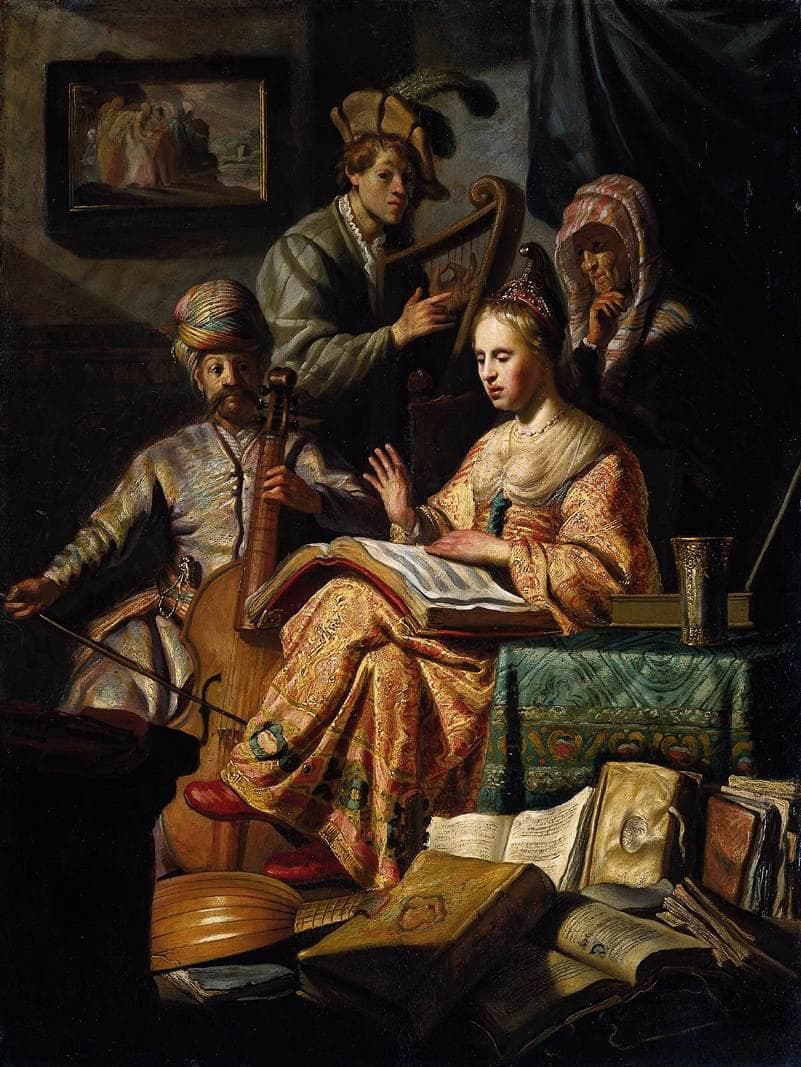
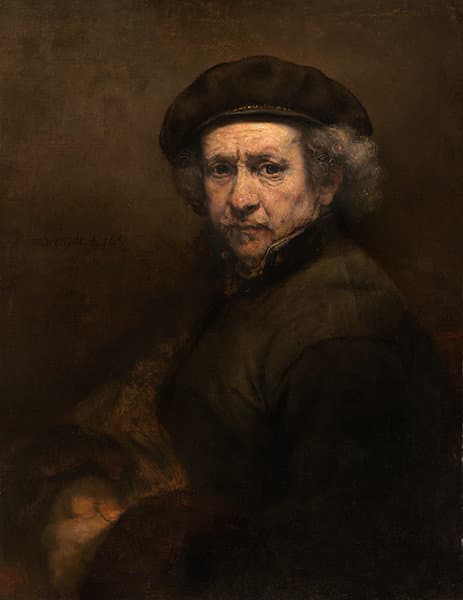
The painting is in the Museum of Fine Arts, Boston, from the Zoe Oliver Sherman Collection. Boston's other great early Rembrandt, The Storm on the Sea of Galilee, was stolen from the Isabella Stewart Gardner Museum in 1990 and is still missing. For Rembrandt's later self-portraits see Self-Portrait with Beret; other works include Music Party and The Night Watch. More on the artist at Rembrandt.
Questions & answers
Where is Rembrandt's Artist in His Studio?
The painting is in the Museum of Fine Arts, Boston, where it came with the Zoe Oliver Sherman Collection. It is a small oil on oak panel, about 25 by 32 centimeters, painted around 1628 while Rembrandt was still working in his native Leiden.
Is The Artist in His Studio a self-portrait?
It may be. Many scholars identify the small painter in the background as the young Rembrandt himself, which would make it one of his earliest self-images. Others have proposed his first pupil, Gerrit Dou, who joined him in 1628. The question is still debated.
What does The Artist in His Studio mean?
It is often read as a picture about the act of painting itself. The artist stands far back from his easel, thinking rather than painting, which suggests that imagination and judgment matter as much as manual skill. The hidden picture on the easel leaves its subject to the viewer.
More by the artist
Rembrandt

Kindred works
You may also study

Woman with a Parasol – Madame Monet and Her Son
Claude Monet · 1875
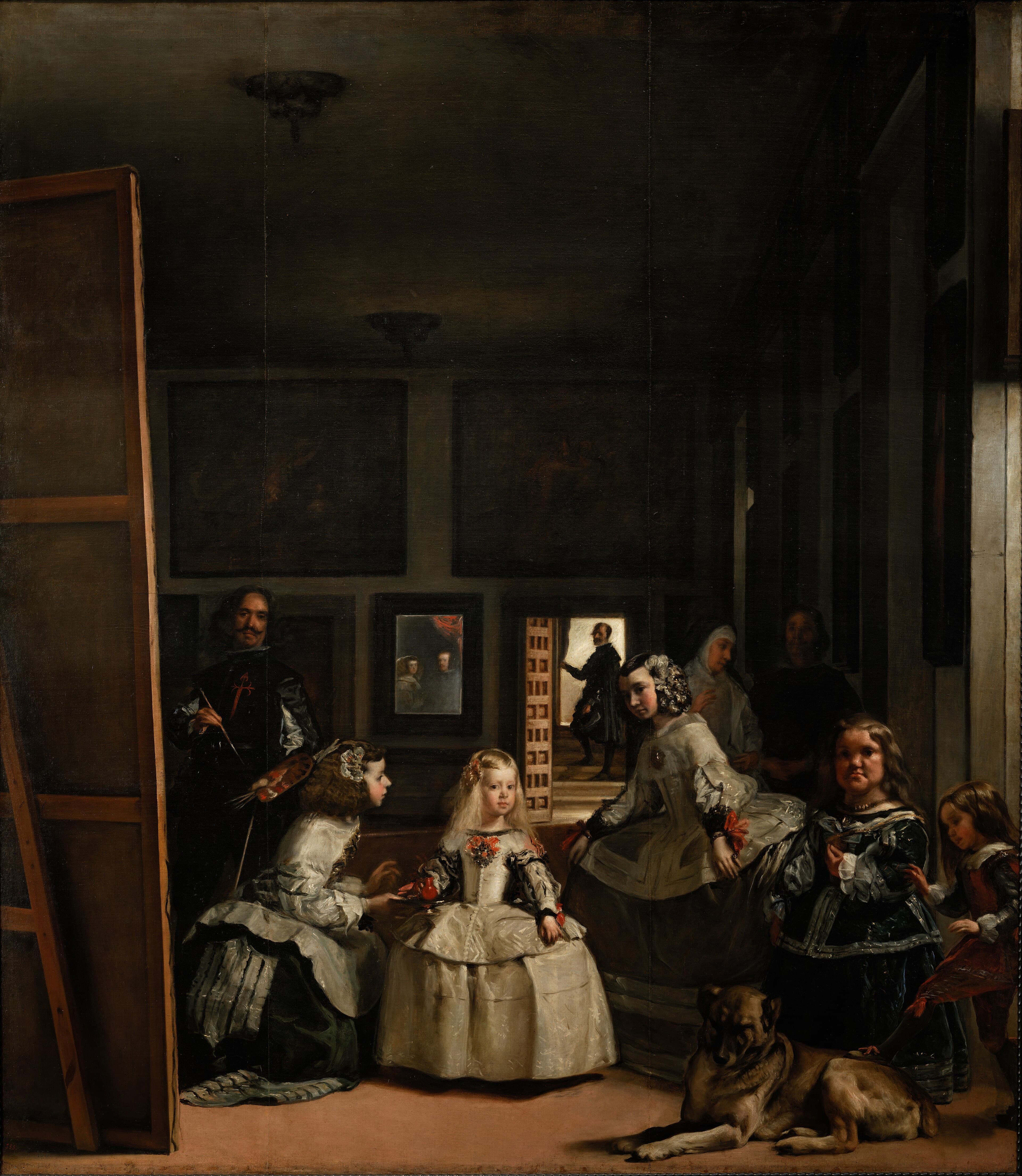
Las Meninas
Diego Velázquez · 1656
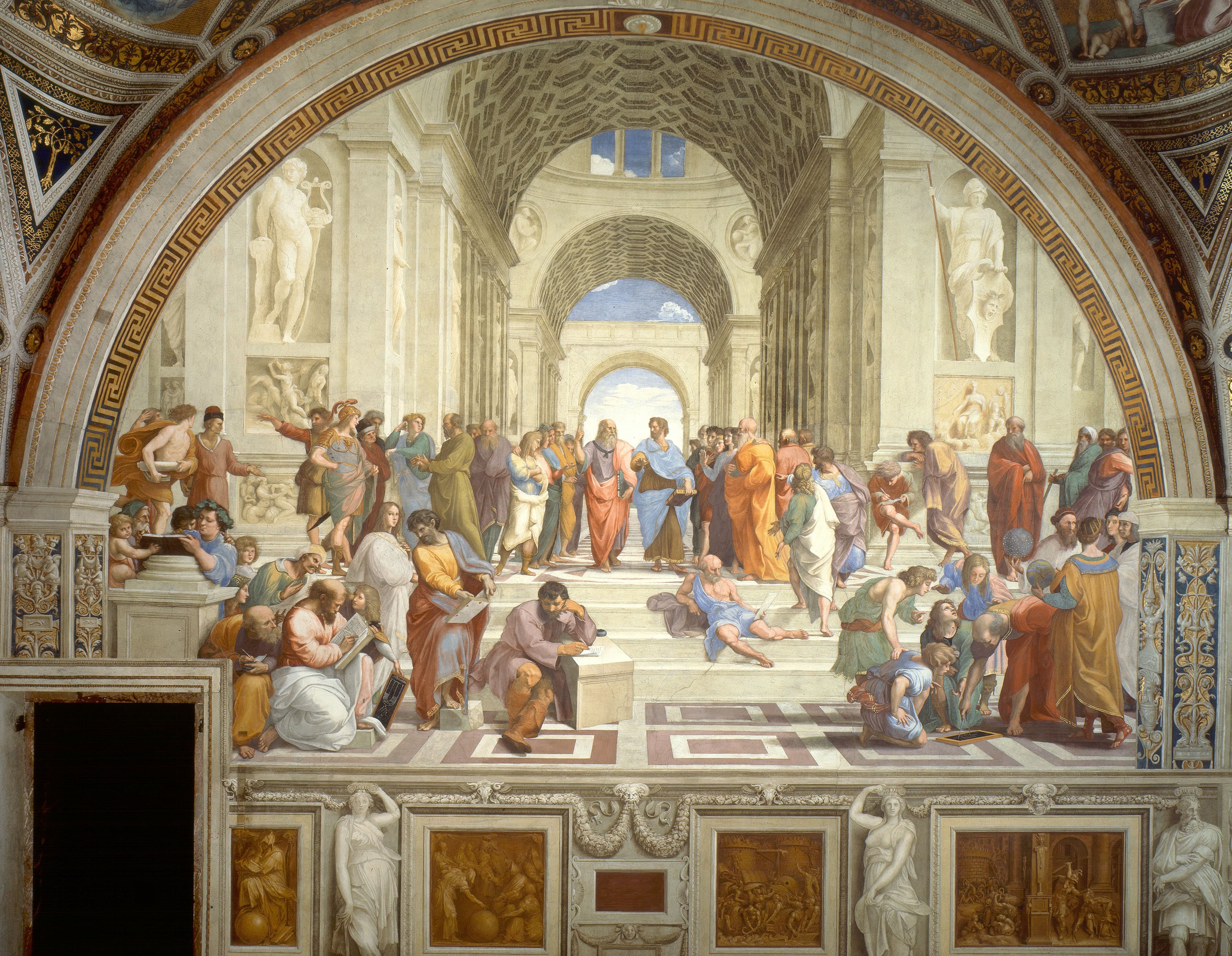
The School of Athens
Raphael · 1509–1511
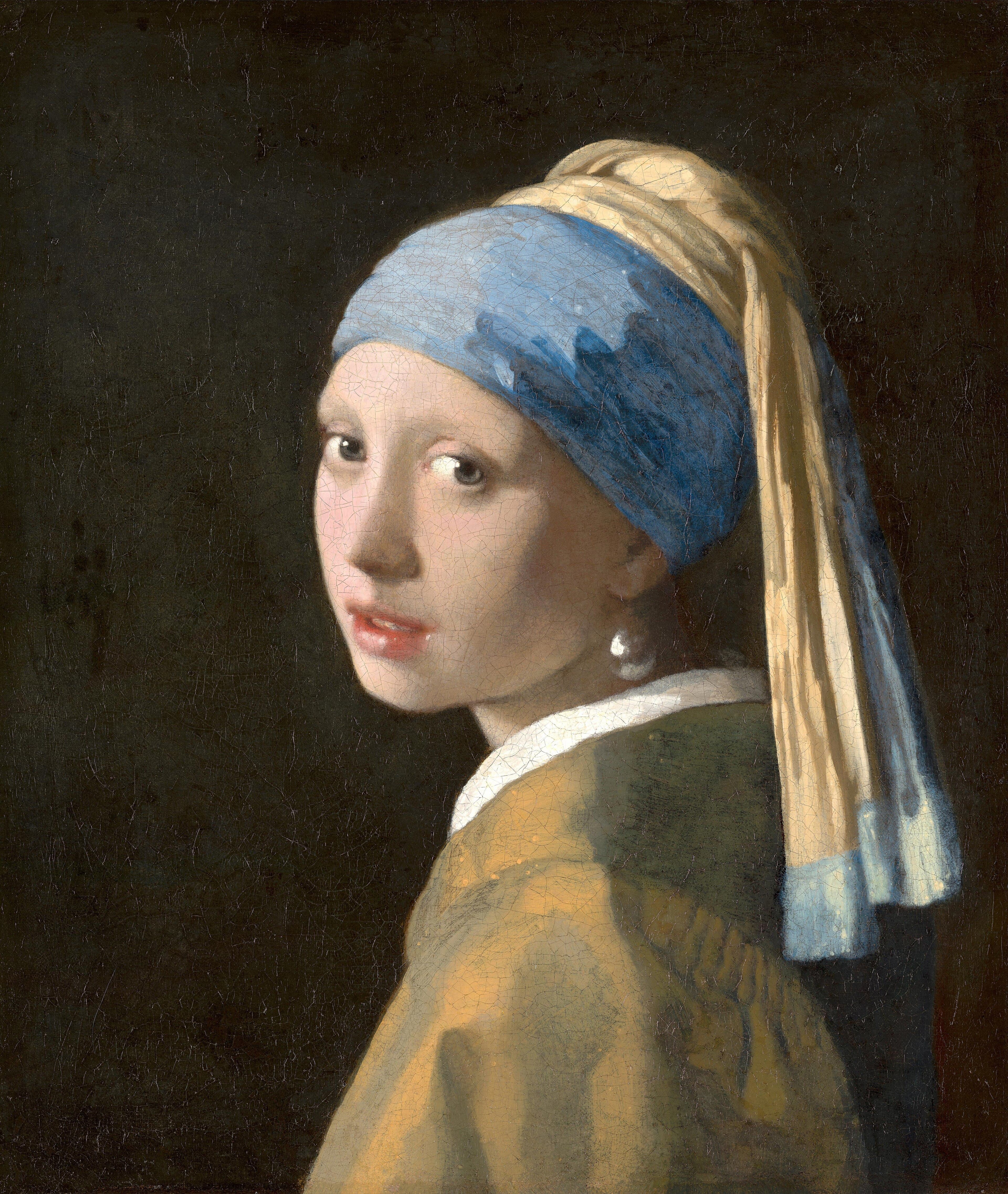
Girl with a Pearl Earring
Johannes Vermeer · c. 1665
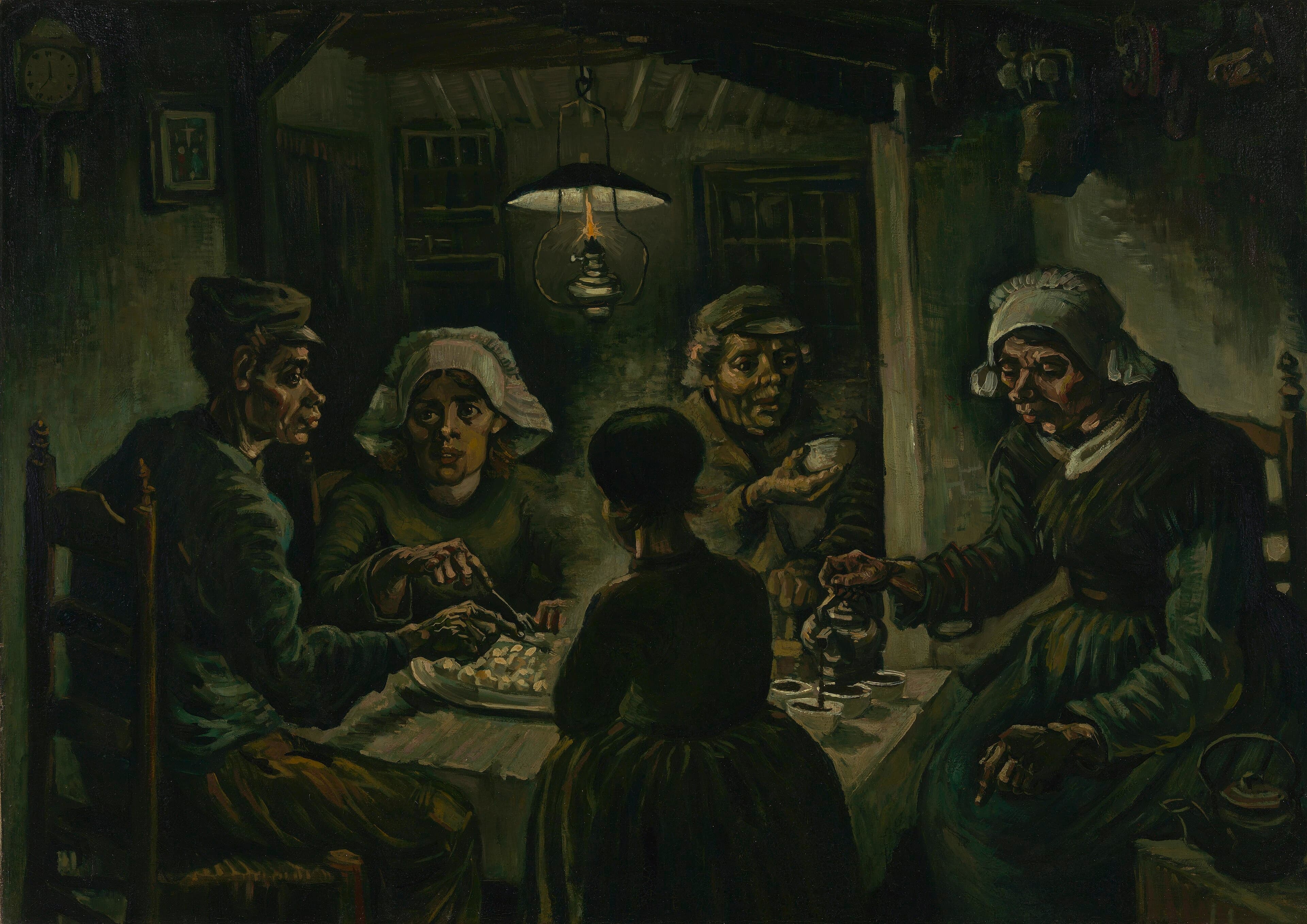
The Potato Eaters
Vincent van Gogh · April–May 1885
The Death of Marat
Jacques-Louis David · 1793
The Arnolfini Portrait
Jan van Eyck · 1434
The Ambassadors
Hans Holbein the Younger · 1533