Dutch Golden Age / Baroque
Self-portrait with Beret
Rembrandt, 1659
Self-portrait with Beret is a 1659 painting by Rembrandt, made three years after his bankruptcy, showing the 53-year-old artist seated in a dark cloak and beret. The canvas, 84.4 × 66 cm, is in the National Gallery of Art, Washington, D.C.
- Artist
- Rembrandt
- Date
- 1659
- Medium
- Oil on canvas
- Dimensions
- 84.4 × 66 cm
- Collection
- National Gallery of Art, Washington, D.C., United States
- Movement
- Dutch Golden Age / Baroque
What you are looking at
Rembrandt sits half-length, turned slightly to the right, and looks back over his shoulder at us. He wears a large dark beret and a heavy brown cloak with a turned-up collar that hides his neck and jowls. His hands are clasped in his lap at lower left, barely emerging from the gloom. Almost everything is brown, grey and black, except the face, which catches a strong light from the upper left.
That face is the picture. The skin is built up in thick, tactile paint, pushed and dragged with the brush and possibly the palette knife, in pinks, ochers, reds and grey-greens. Light pools on the forehead and the bulb of the nose; the eyes, set under raised brows, are slightly swollen and red-rimmed. A faint vertical crease between the brows, the grey curls escaping from the beret, the blemishes on cheek and ear are all recorded without flattery. At the left, in the dark background, is the signature and date: Rembrandt f. 1659.
Rembrandt in 1659
In 1656, after years of overspending, Rembrandt was declared insolvent. His house and his large collection of art and curiosities were sold in 1657 and 1658, and he moved with his companion Hendrickje Stoffels and his son Titus to a rented house in a poorer part of Amsterdam. He was 53 when he painted this, still working and taking commissions, but no longer the fashionable master of the 1630s.
He painted himself more than any artist before him, some 40 paintings plus drawings and etchings, across four decades. The late self-portraits, of which this is one of the most searching, are often read as a meditation on aging and endurance.
Technique
Rembrandt varies his handling across the canvas more than almost any contemporary. The thick impasto of the face contrasts with thin, dark glazes in the cloak and background, so the head seems to come forward out of shadow. Patches of red in the background may indicate a chair back and a tablecloth.
Meaning
There is no studio costume here, no gold chain or exotic headdress, as in his youthful self-portraits. The painter presents himself plainly, as an aging man who has lost his fortune but not his concentration. Whether he meant it as self-examination or simply as a saleable image of a famous artist, the effect is of extraordinary honesty.
Where to see it
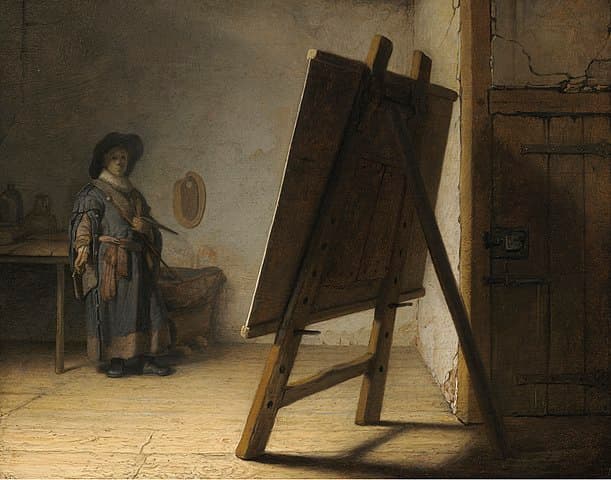
The painting is in the National Gallery of Art, Washington, part of the Andrew W. Mellon Collection. For more Rembrandt, see Artist in his Studio and Storm on the Sea, and compare Monet's quick, outdoor-minded Self-Portrait in Beret.
Questions & answers
Where is Rembrandt's 1659 Self-portrait with Beret?
It is in the National Gallery of Art in Washington, D.C., where it came with the Andrew W. Mellon Collection. The canvas measures about 84 by 66 centimeters and is signed and dated 1659 at the left of the background, at about shoulder height.
How old was Rembrandt in this self-portrait?
He was 53. Rembrandt was born in July 1606 in Leiden. The portrait was painted three years after his bankruptcy, when his house and art collection had been sold and he had moved to a more modest home in Amsterdam.
How many self-portraits did Rembrandt paint?
Around 40 painted self-portraits survive, along with about 30 etchings and a number of drawings, made over roughly forty years. Together they form the most extensive visual autobiography by any artist before the modern era, ending with self-portraits made in 1669, the year he died.
More by the artist
Rembrandt

Kindred works
You may also study
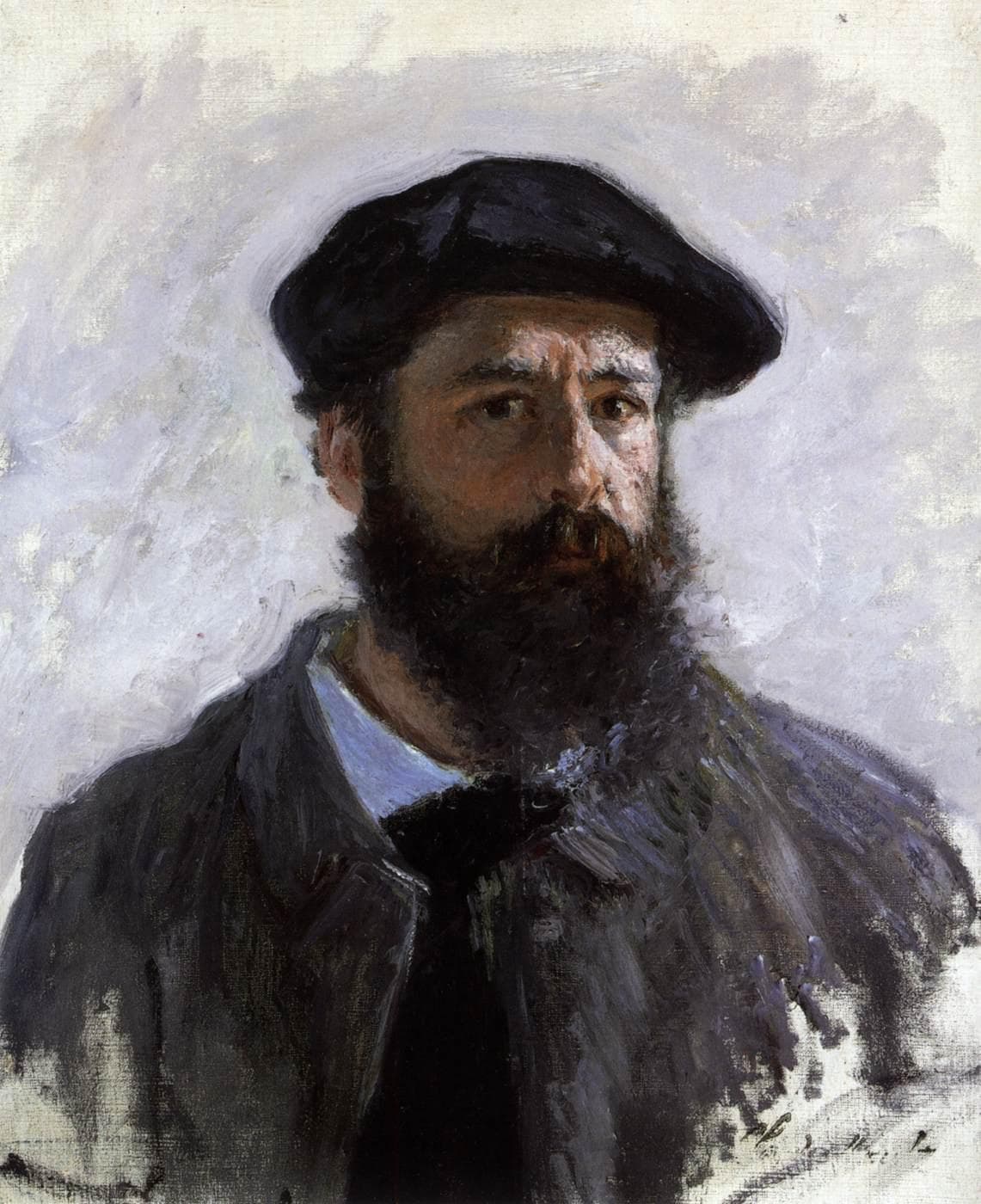
Self-Portrait in Beret
Claude Monet · 1886

The Scream
Edvard Munch · 1893

The Thinker
Auguste Rodin · Modeled 1880–82; enlarged 1902–03; this cast 1904

Saturn Devouring His Son
Francisco Goya · c. 1819–1823

Ophelia
John Everett Millais · 1851–52

Woman with a Parasol – Madame Monet and Her Son
Claude Monet · 1875
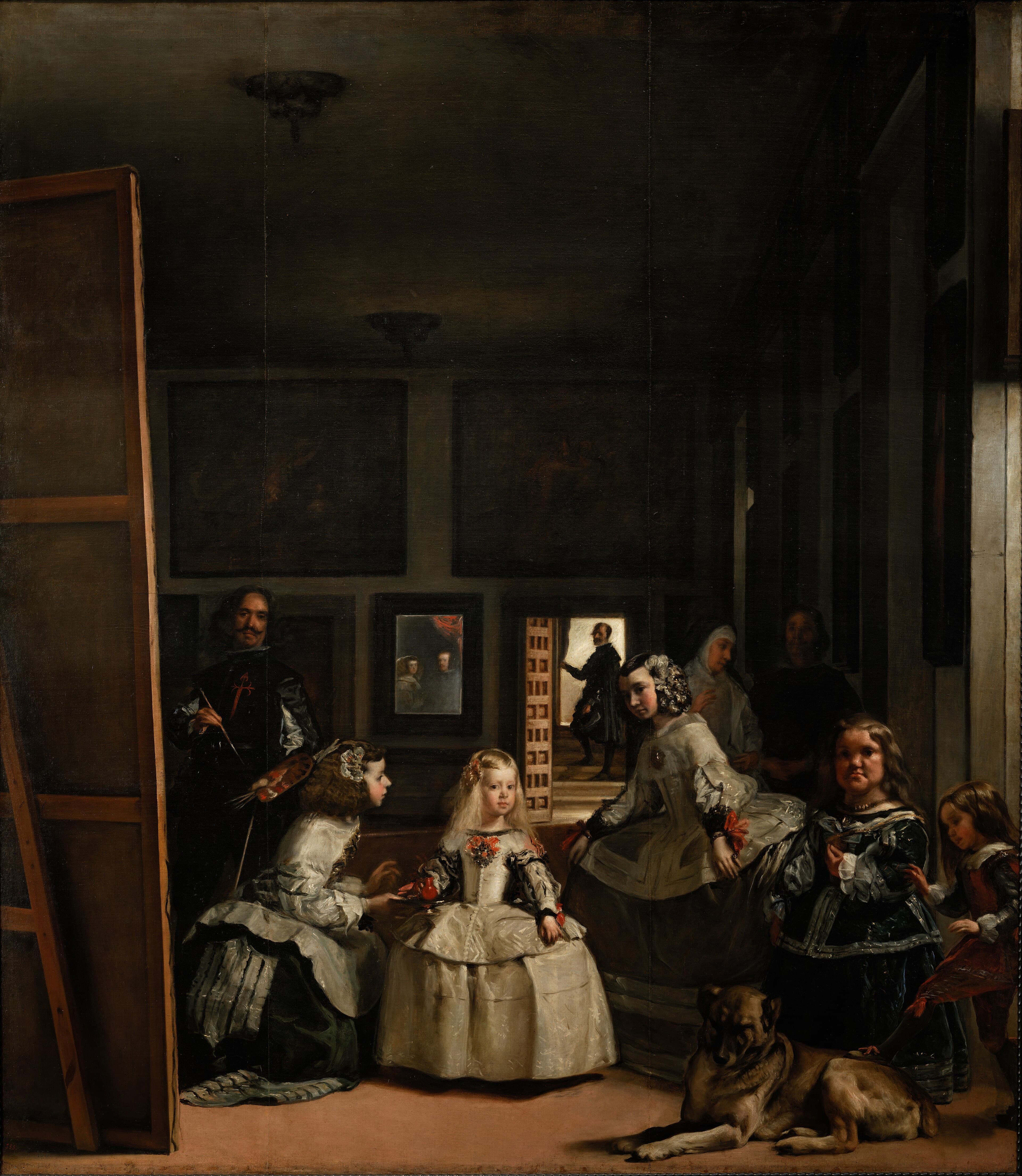
Las Meninas
Diego Velázquez · 1656
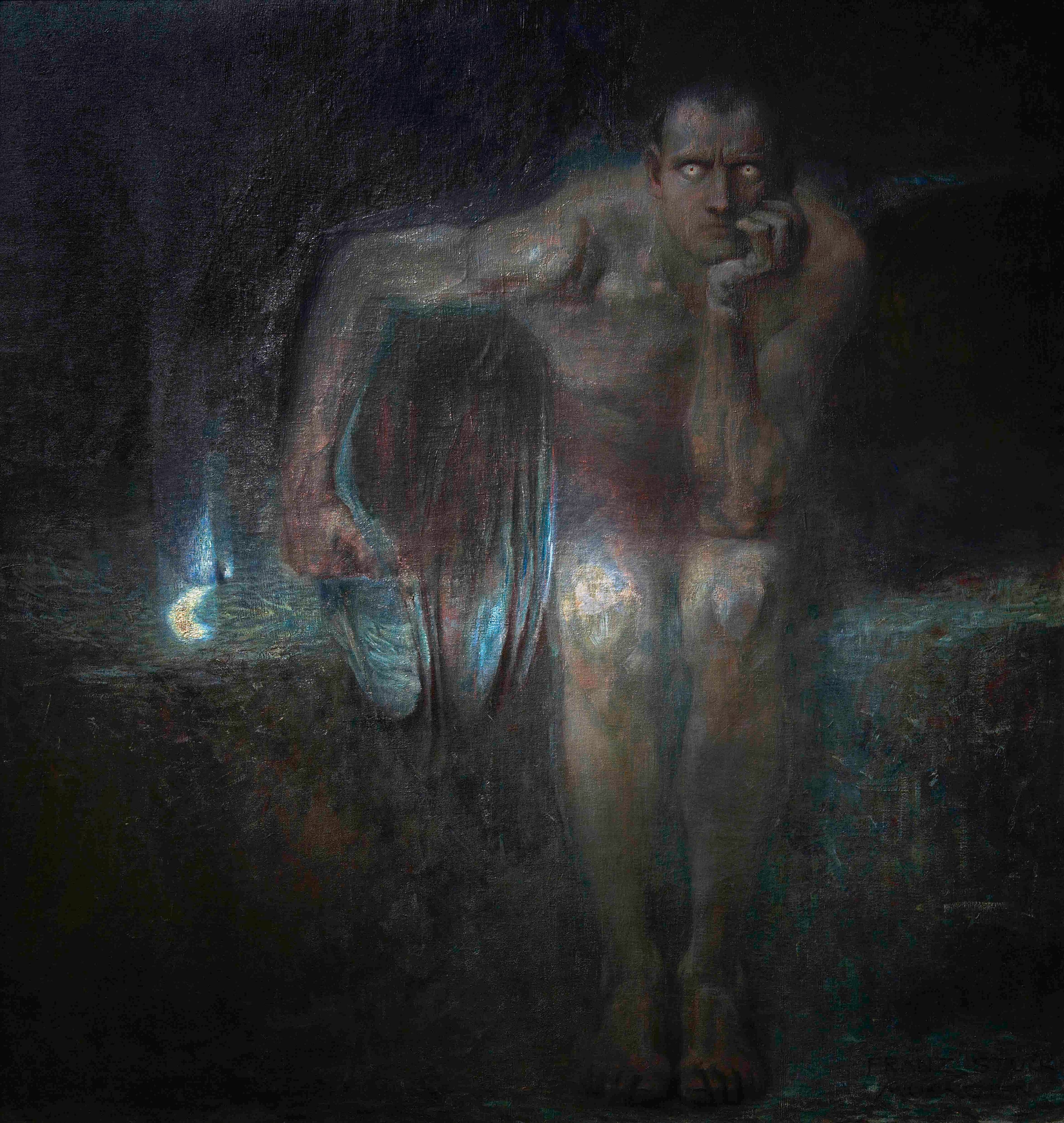
Lucifer
Franz von Stuck · 1890