Dutch Golden Age
Musical Company
Rembrandt, 1626
Musical Company (also called Music Party or Musical Allegory) is a 1626 oil on panel by the 20-year-old Rembrandt, showing four figures making music among books and instruments. It hangs in the Rijksmuseum, Amsterdam.
- Artist
- Rembrandt
- Date
- 1626
- Medium
- Oil on panel
- Dimensions
- 63.5 × 48 cm
- Collection
- Rijksmuseum, Amsterdam, Netherlands
- Movement
- Dutch Golden Age
What you are looking at
Four people crowd a dim interior. In the center a young woman in a brocaded orange-gold gown sits with a large songbook open on her lap and sings, one hand raised as if keeping time. To the left, a mustached man in a striped turban and pale, oriental-style coat plays a viola da gamba, bow drawn across the strings. Behind them a young man in a feathered cap plucks a harp and looks straight out at us. On the right, half hidden, an old woman wrapped in a pink-striped headcloth leans on her hand and listens.
The foreground is a still life in its own right: a lute lying on its back, open and closed books with crumpled pages and a seal hanging from one binding, a gilded beaker on a green tablecloth. On the wall hangs a framed painting of figures in a landscape, which the Rijksmuseum identifies as Lot's flight from Sodom.
The painting is signed and dated "RH 1626," the monogram of Rembrandt Harmenszoon from Leiden. He was twenty.
A young painter in Leiden
In 1626 Rembrandt was working in his home town of Leiden, recently back from six months of training in Amsterdam with the history painter Pieter Lastman. Lastman's influence is everywhere here: the bright, saturated colors, the exotic costumes, the theatrical crowding of figures close to the picture plane. What is already Rembrandt's own is the handling of light. A strong beam falls from the upper left across the singer's face and gown and the open book, and everything else is allowed to sink into shadow by degrees.
The museum notes that Rembrandt drew on his own surroundings. His mother is thought to have modeled for the old woman, a face that appears in several of his early works, and the young harpist has Rembrandt's own features, making this one of the first appearances of the artist in his own painting. That self-insertion would become a lifelong habit.
What does the Musical Company mean?
The subject is genuinely uncertain, and the Rijksmuseum now uses the neutral title Musical Company rather than the older Musical Allegory. Two readings are proposed.
The first is devotional. Music-making, especially singing to string accompaniment, could stand for the praise of God, as in the Psalms. The books, the serious faces and the restrained mood support this.
The second is moralizing. In Dutch painting an old woman beside a richly dressed young one often plays a procuress, and music was a familiar prelude to seduction. The picture of Lot on the wall may be the key: Lot's escape from the sinful city of Sodom warned viewers to flee temptation. Read this way, the painting is a warning dressed up as a concert.
Rembrandt may have intended both to hover. The open books and the vanitas-like heap of objects also suggest the transience of pleasure: music fades as soon as it is played.
Close looking
Look at the textiles, which a young painter used to show what he could do. The singer's gown is built from short, broken strokes of orange, gold and green that read as woven pattern. The tablecloth beside her is a cool blue-green with raised floral bands, painted with a quite different, smoother touch.
The turbaned musician's coat shimmers with pale pink and blue. Then look at the books in the lower right: the pages are curled and dog-eared, the vellum bindings creased, and one carries a hanging seal. Rembrandt loved old books as objects and painted them with a care that rivals the faces.
The harpist's gaze is the detail that ties the picture together. Everyone else is absorbed in the music. He alone looks out at the viewer, and since he wears the painter's own face, it is as if Rembrandt himself were inviting us in.
Leiden and the history painters
Rembrandt's early Leiden pictures were small, crowded and brightly colored, made for a market of collectors who prized fine detail and clever subjects. Alongside his friend and rival Jan Lievens, he was experimenting with how far a single, controlled light source could shape a scene. Musical Company is an early landmark in that search: the light here still falls evenly enough to show off every costume, but it already picks out the singer and the book as the moral and visual center.
Provenance and history
The panel was sold in 1822 at the Wanstead House sale in London and passed through private and dealer hands in Britain, the Netherlands and the United States. In 1940 it was acquired for the museum Hitler planned in Linz; recovered in 1945, it was later returned to the dealers from whom it had come. The Rijksmuseum bought it in 1976 with the support of the Vereniging Rembrandt and other funds.
Related works
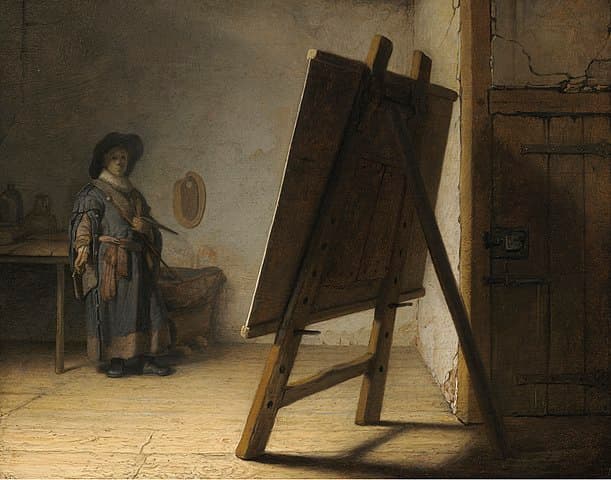
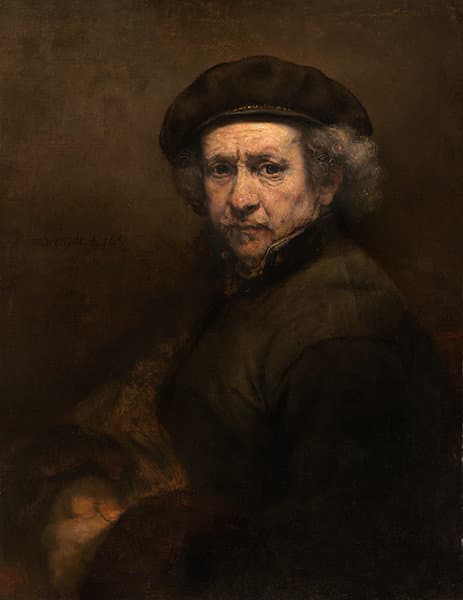
For Rembrandt's other early self-scrutiny, see Artist in his Studio and Self-portrait with Beret; for his later dramatic narratives, Storm on the Sea of Galilee and The Suicide of Lucretia. More of his work is on the Rembrandt artist page.
Where to see it
Musical Company belongs to the Rijksmuseum in Amsterdam (SK-A-4674). Check the museum's website for current display.
Questions & answers
Where is Rembrandt's Music Party today?
The painting, now titled Musical Company, is in the Rijksmuseum in Amsterdam (object number SK-A-4674). The museum bought it in 1976 with support from the Vereniging Rembrandt and others. It is an oil on panel measuring 63.5 × 48 cm.
When did Rembrandt paint the Musical Company?
It is signed and dated RH 1626, so Rembrandt painted it at age twenty while working in Leiden, shortly after training in Amsterdam with Pieter Lastman. The RH monogram stands for Rembrandt Harmenszoon.
Is Rembrandt in the Music Party painting?
Very likely. According to the Rijksmuseum, the young harpist who looks out at the viewer has Rembrandt's own features, and his mother is thought to have modeled for the old woman. It is one of the earliest paintings in which he included himself.
What does Rembrandt's Musical Company mean?
Its meaning is debated. It may be an exhortation to praise God through song and string music, or a warning against seduction, with the old woman as a procuress. The painting of Lot fleeing Sodom on the wall supports a moral reading about escaping temptation.
More by the artist
Rembrandt

Kindred works
You may also study

Nymphs Dancing to Pan's Flute
Joseph Tomanek

Woman with a Parasol – Madame Monet and Her Son
Claude Monet · 1875
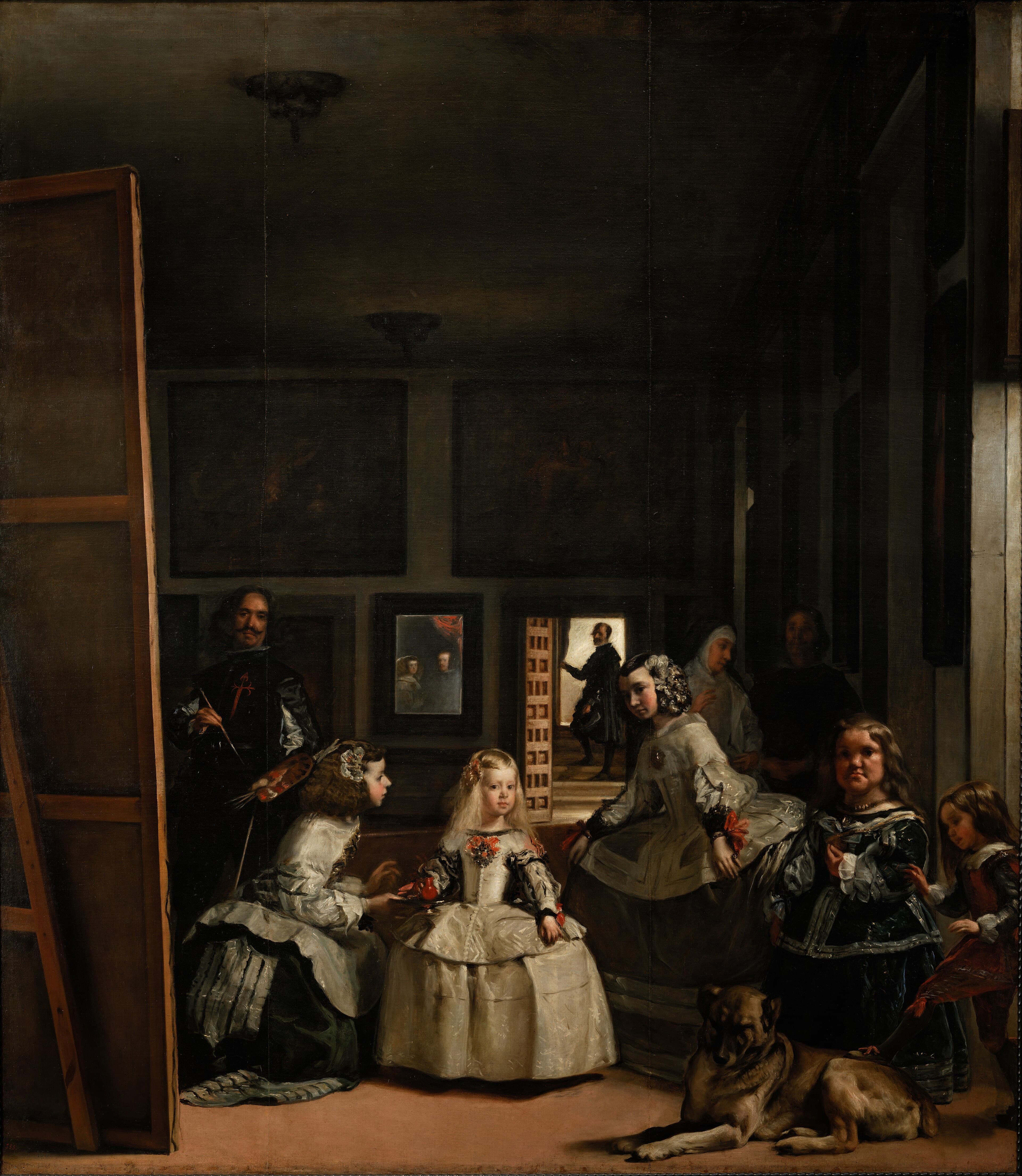
Las Meninas
Diego Velázquez · 1656
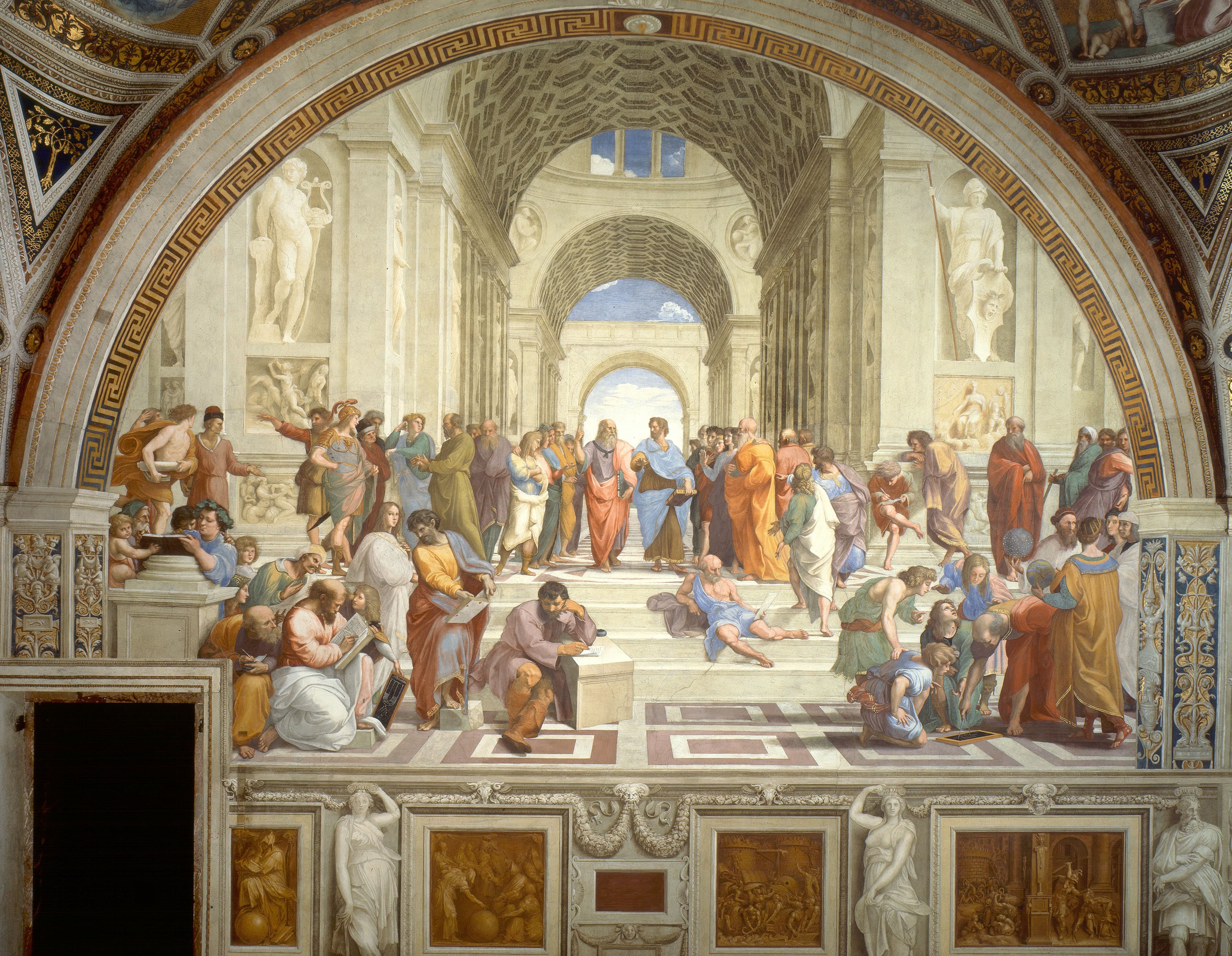
The School of Athens
Raphael · 1509–1511
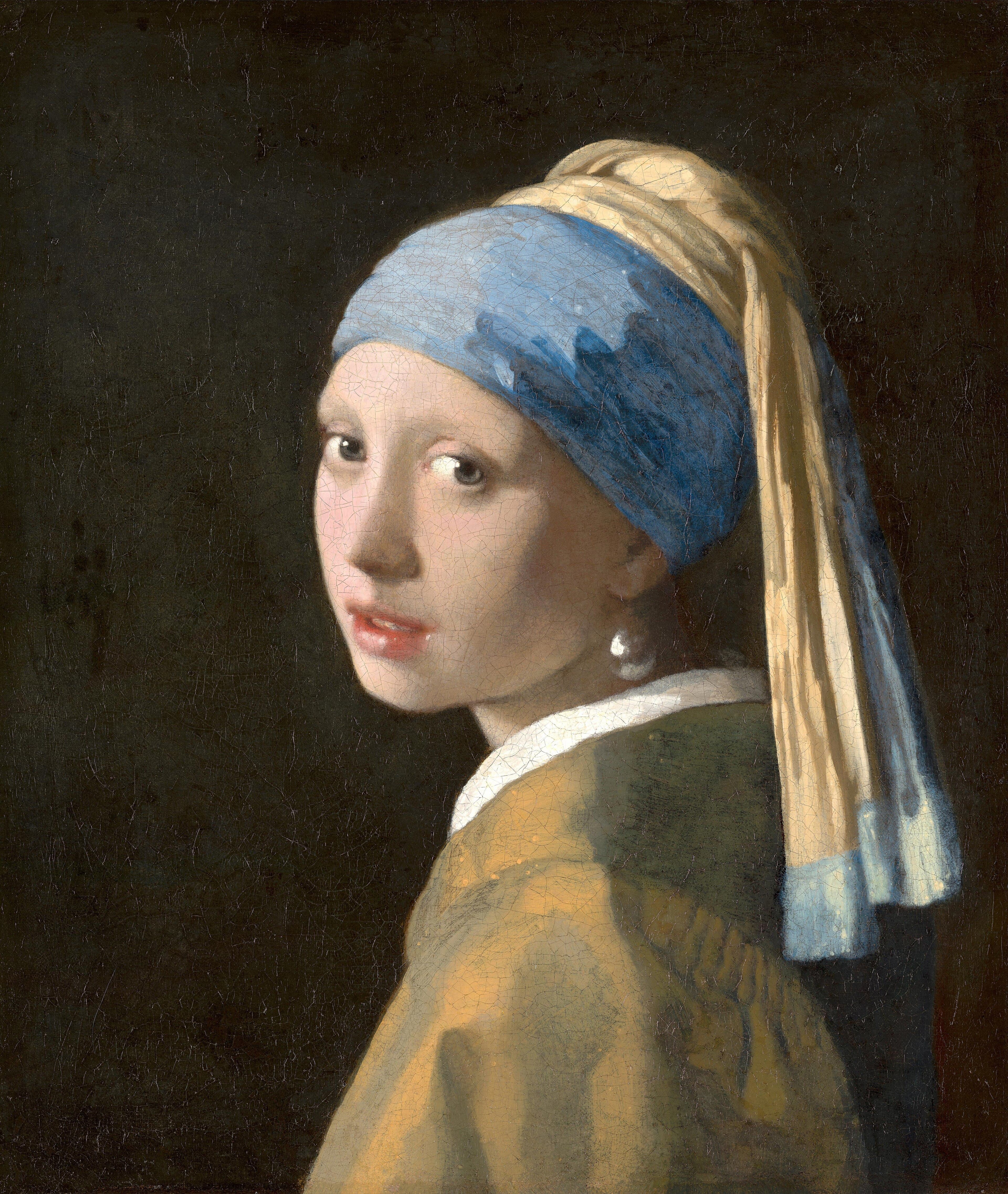
Girl with a Pearl Earring
Johannes Vermeer · c. 1665
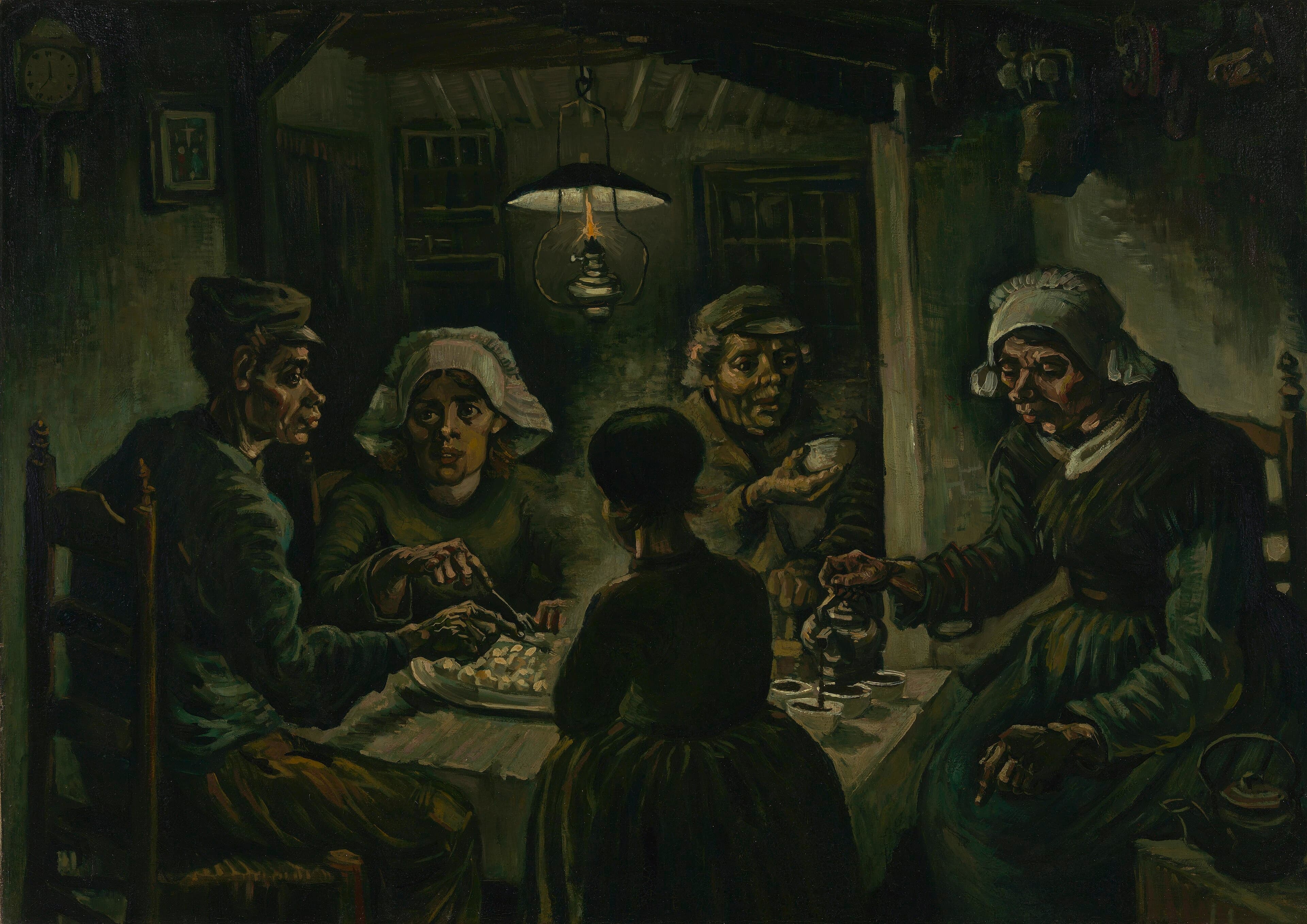
The Potato Eaters
Vincent van Gogh · April–May 1885
The Death of Marat
Jacques-Louis David · 1793
The Arnolfini Portrait
Jan van Eyck · 1434