Expressionism
The Death of Marat
Edvard Munch, 1907
The Death of Marat II is a 1907 painting by Edvard Munch in the MUNCH museum, Oslo. A naked woman stands upright before a bed where a bloodied man lies, a scene that borrows the 1793 murder of Marat to replay Munch's violent break-up with Tulla Larsen.
- Artist
- Edvard Munch
- Date
- 1907
- Medium
- Oil on canvas
- Dimensions
- 153 × 148 cm
- Collection
- MUNCH (Munch Museum), Oslo, Norway
- Movement
- Expressionism
Edvard Munch painted two large canvases called The Death of Marat in 1907, both now in the MUNCH museum in Oslo. The one shown here is The Death of Marat II, a nearly square picture (153 × 148 cm) in which a naked woman stands rigidly upright in front of a bed where a naked man lies sprawled and bloodied. The title refers to the murder of the French revolutionary Jean-Paul Marat by Charlotte Corday in 1793, but the subject is Munch's own life: the end of his engagement to Tulla Larsen in 1902, which finished with a gunshot wound to his hand.
What you're looking at
The woman is the axis of the painting. She stands frontally, just right of center, arms hanging straight at her sides, her red hair loose, her face a calm, almost expressionless oval. Her body is painted in pale yellows and creams, outlined in red and brown. She does not look at the man.
Behind her, the man lies diagonally across the bed, his head on the left in shadow, his torso and outstretched arm painted in hot oranges and browns. Red spots and smears scatter across the white sheet near his hand, the only explicit sign of violence. Both figures are nude, and the man's position, one arm trailing, deliberately recalls Jacques-Louis David's famous image of the dead Marat in his bath.
What sets this version apart is the brushwork. The whole surface, walls, bed and floor, is built from long, separate strokes of color, laid mainly horizontally and vertically like the threads of a coarse weave: greens and grays in the wall at top left, purples and browns at right, blues and whites across the bed, dark grids of black and orange at the bottom. Munch had been experimenting with this "streaked" technique in 1907; it makes the room vibrate while the woman stays almost still. Up close the strokes barely describe anything; from a distance they resolve into wallpaper, bedding and floorboards.
The story behind it
Munch met Tulla Larsen, the daughter of a wealthy Kristiania wine merchant, in 1898. Their relationship was intense and unhappy; she wanted marriage, and he resisted. In 1902, during a final confrontation at his summer house in Åsgårdstrand, a revolver went off and shot away part of the middle finger of his left hand. Accounts of exactly what happened differ, and Munch's own versions changed over the years, but he came to see himself as the victim.
Five years later, in Warnemünde on the German Baltic coast, Munch recast the episode as a historical murder. Marat, the radical journalist stabbed in his bath by a young woman, gave him a ready-made image of a man destroyed by a woman. The wound in the painting is on the man's hand, a pointed reference to his own injury.
The two versions
The Death of Marat I, also of 1907, is a broader, horizontal composition in which the woman stands beside the bed and the bright streaked brushwork is even more aggressive. Around the same time Munch painted Still Life (The Murderess), in which the woman stands in a room with a table of fruit while the dead man lies in the background. Together the pictures form a small cycle on the same trauma.
Meaning
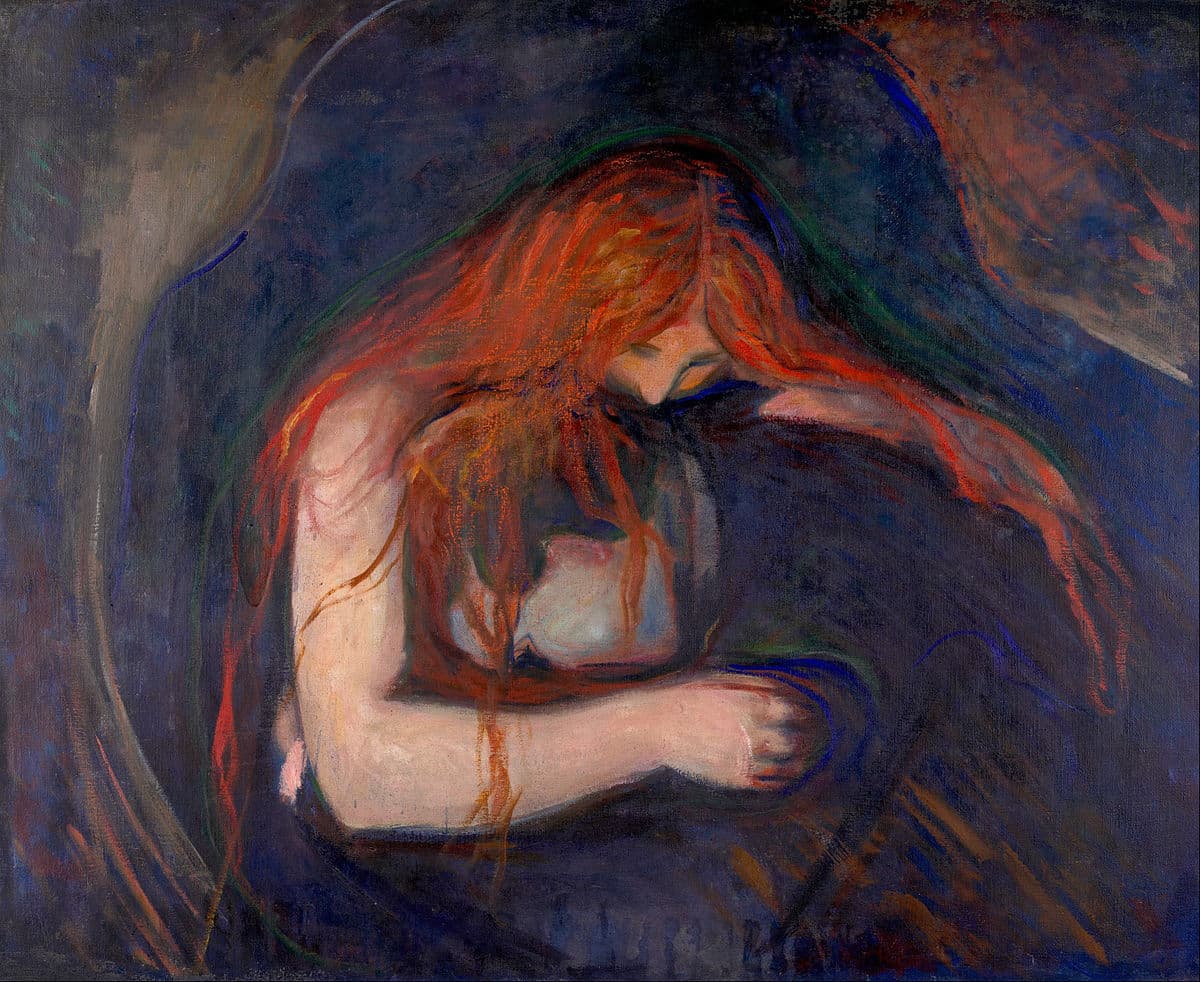
The painting is a self-portrait as martyr, and it should be read with that bias in mind. Munch casts the woman as cold and indifferent, a type he had explored throughout the 1890s in works such as Vampire (Love and Pain). Modern writers note how one-sided this is: Larsen's own account of 1902 was never given equal weight, and the "murderess" in the image is a projection.
Formally, the canvas marks Munch's move toward a looser, more physical painting style after 1907, the year before his nervous breakdown and treatment in Copenhagen. The streaked technique anticipates his later, freer work and has been compared with the brushwork of the Fauves and German Expressionists he was then in contact with.
Munch and David
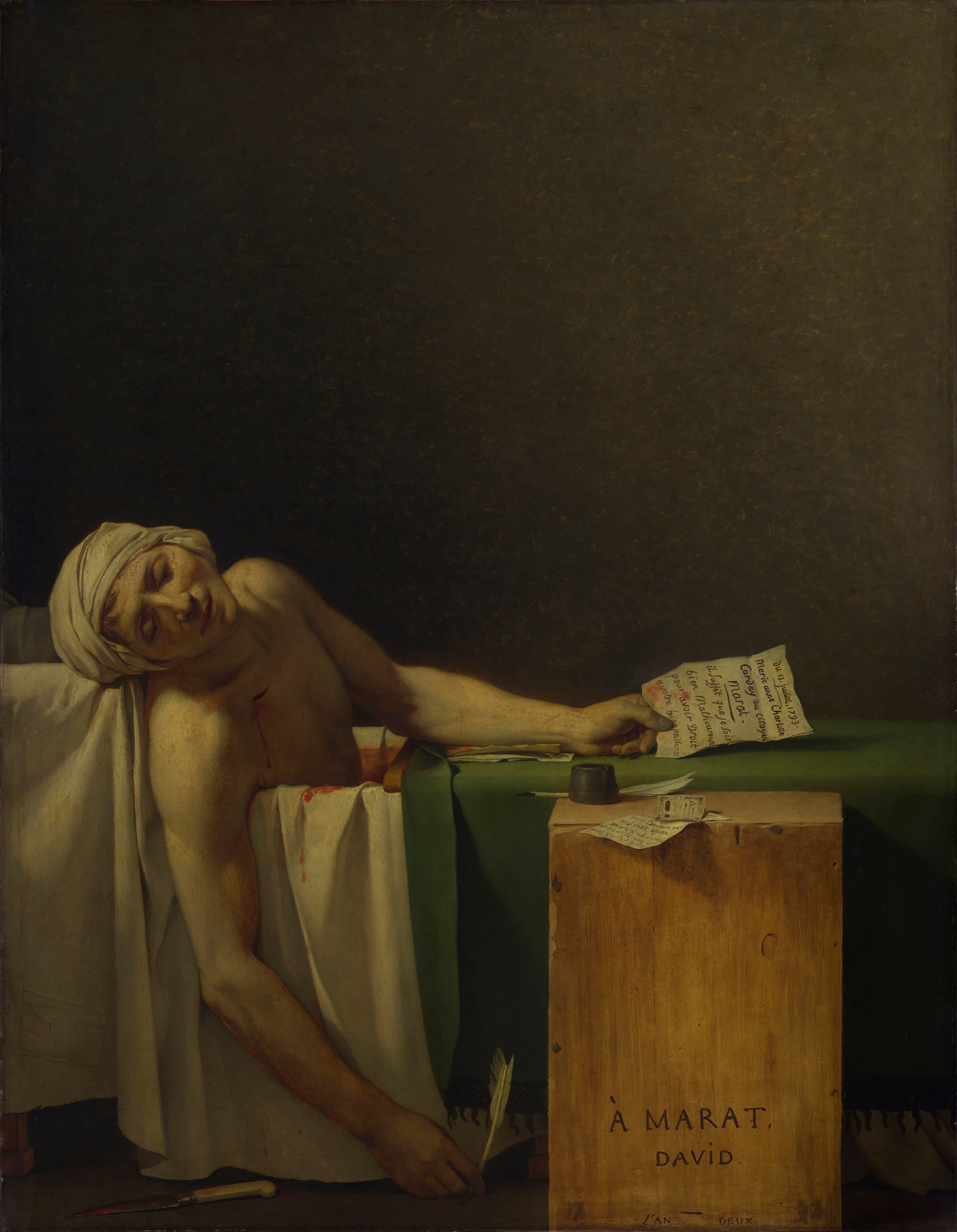
Jacques-Louis David's The Death of Marat (1793) was the model for every later version of the subject. David shows Marat alone, a secular martyr; Munch moves the killer to the center and turns the bath into a bed, changing a political image into a sexual one. See David's The Death of Marat for the original.
Related works
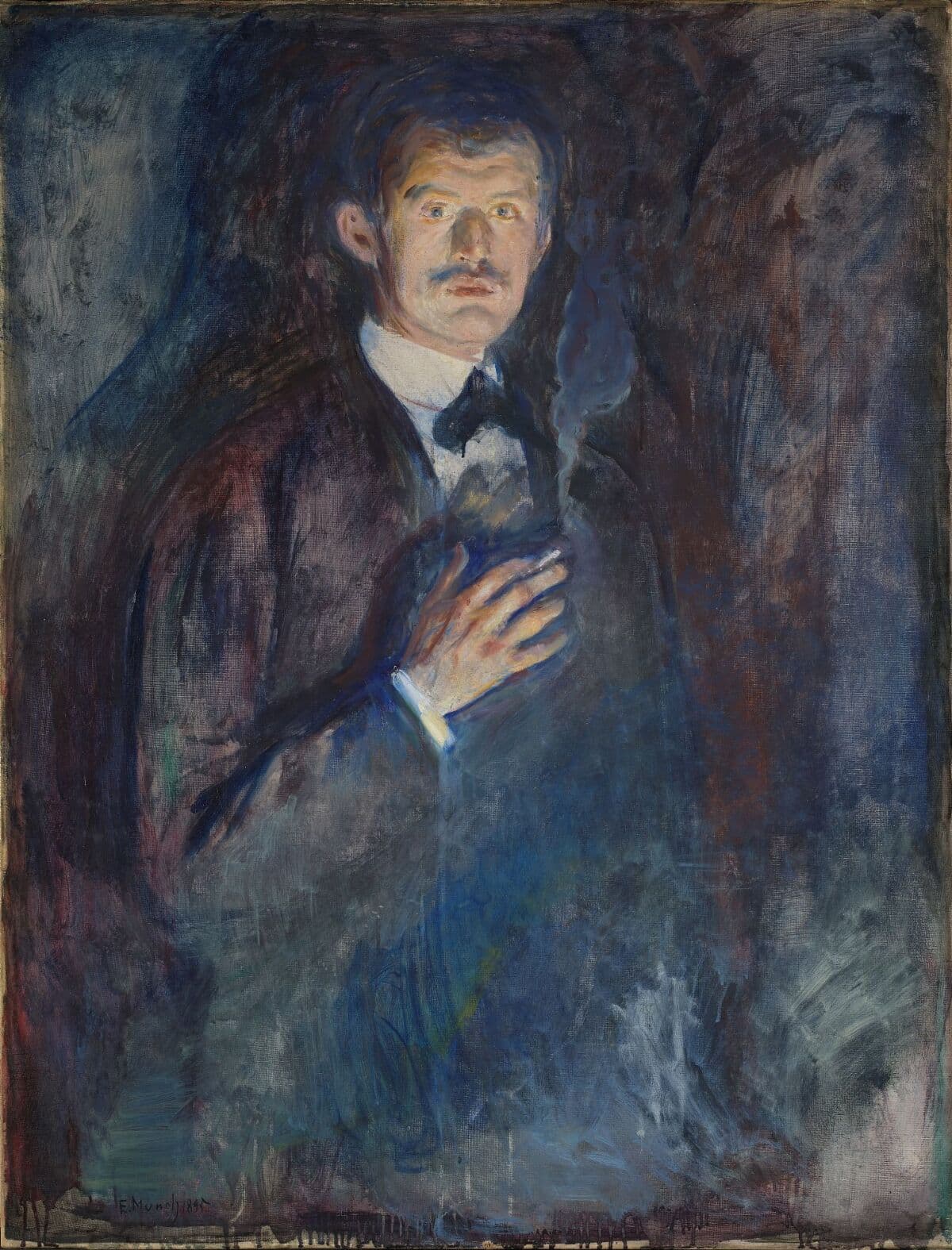
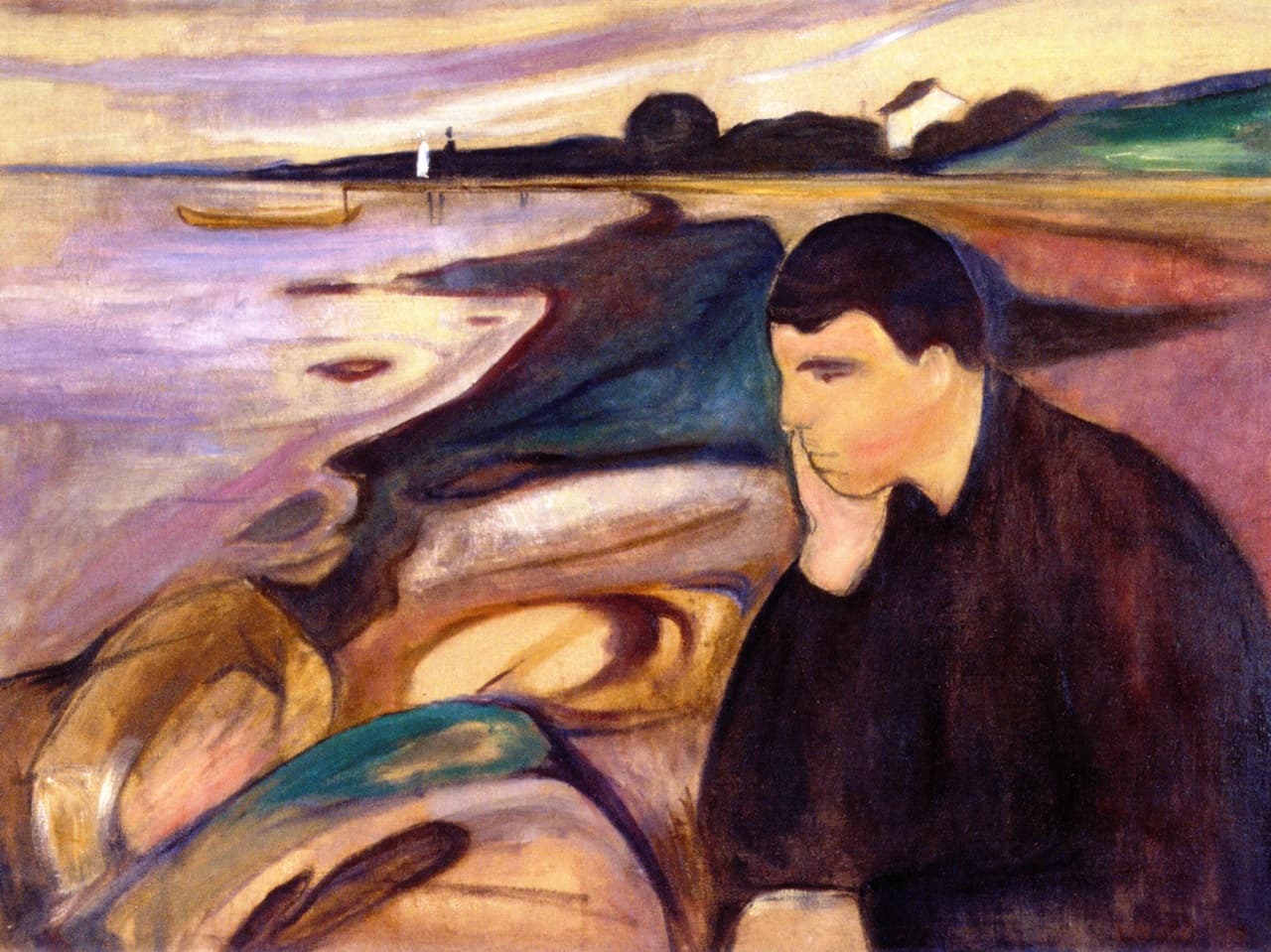
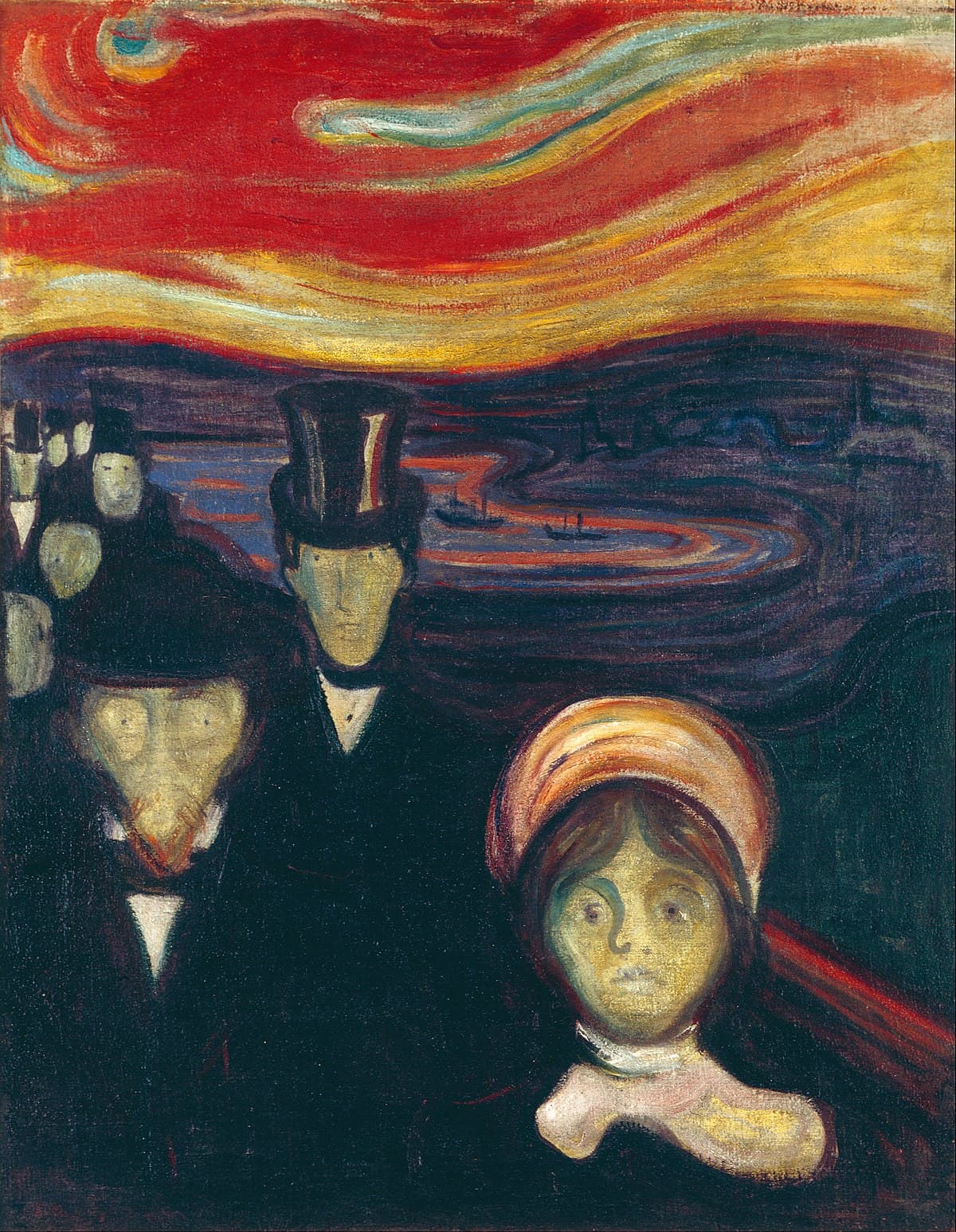
Munch's other images of desire and anxiety include Anxiety, Melancholy and Self-portrait with Cigarette. For the wider theme, see Death in Art.
Where to see it
MUNCH, the Munch Museum in Bjørvika, Oslo, which holds the artist's own bequest of his work. Paintings rotate through the permanent displays, so check whether The Death of Marat II is on view before visiting. Munch died in 1944, and his work is in the public domain in most countries.
Questions & answers
Where is The Death of Marat by Edvard Munch?
Both versions, The Death of Marat I and The Death of Marat II, both painted in 1907, are in MUNCH, the Munch Museum in Oslo, Norway. The museum holds the large body of work Munch bequeathed to the city of Oslo, and its displays rotate.
What is the meaning of Munch's The Death of Marat?
Munch uses the 1793 murder of Jean-Paul Marat by Charlotte Corday as a mask for his own story: the violent end of his relationship with Tulla Larsen in 1902, when a gunshot injured his left hand. The naked woman is cast as the killer and the bloodied man as Munch himself.
When did Munch paint The Death of Marat?
He painted both versions in 1907, in Warnemünde on Germany's Baltic coast, five years after the 1902 incident with Tulla Larsen. Around the same time he painted the related Still Life (The Murderess), which returns to the same scene. Munch spent that summer in the Baltic resort working intensively.
Who was Marat?
Jean-Paul Marat was a radical journalist and politician of the French Revolution. On 13 July 1793 he was stabbed to death in his bath by Charlotte Corday, a supporter of the rival Girondins. Jacques-Louis David's painting of the scene made it one of the most famous images in Western art.
More by the artist
Edvard Munch

Kindred works
You may also study
The Death of Marat
Jacques-Louis David · 1793

Venus de Milo
Alexandros of Antioch · c. 150–125 BC

Nymphs Dancing to Pan's Flute
Joseph Tomanek

The Thinker
Auguste Rodin · Modeled 1880–82; enlarged 1902–03; this cast 1904

Saturn Devouring His Son
Francisco Goya · c. 1819–1823
The Creation of Adam
Michelangelo · c. 1511–12

Ophelia
John Everett Millais · 1851–52
Lucifer
Franz von Stuck · 1890