Movement
Symbolism Art: Dreams, Death and the Femme Fatale
Islands of the dead, brooding angels and skeletal gardeners: the late nineteenth-century painters who turned away from the visible world to paint the soul.
Symbolism art is the movement of roughly 1880 to 1910 in which painters across Europe rejected realism and painted ideas, dreams and emotions instead: death, desire, the soul, the occult and the darker side of the imagination. Its masterpieces include Arnold Böcklin's Isle of the Dead, Gustave Moreau's visions of Salome, Odilon Redon's charcoal dreams, Franz von Stuck's Lucifer, Gustav Klimt's golden women and Edvard Munch's The Scream.
The Symbolists believed that the visible world was only a surface, and that art's task was to suggest what lay behind it through mood, myth and image rather than description. Their pictures are often hard to "read" in a literal way, and they meant them to be. This page explains where Symbolism came from, its recurring themes, the key painters from Paris to Helsinki, how to recognize a Symbolist work, and where to see the paintings in the collection below.
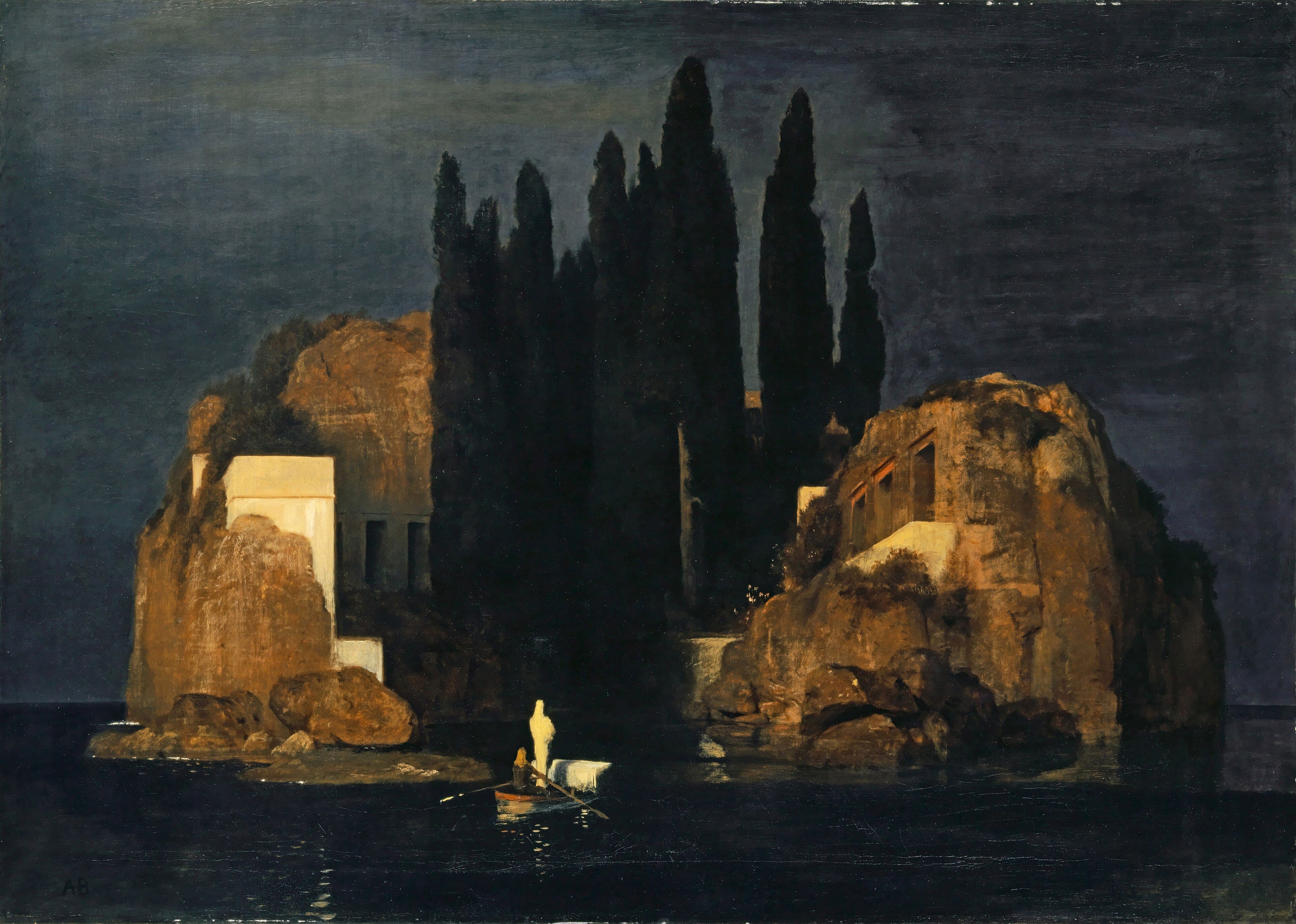
Isle of the Dead
Arnold Böcklin · 1880 (first version); five versions 1880–86
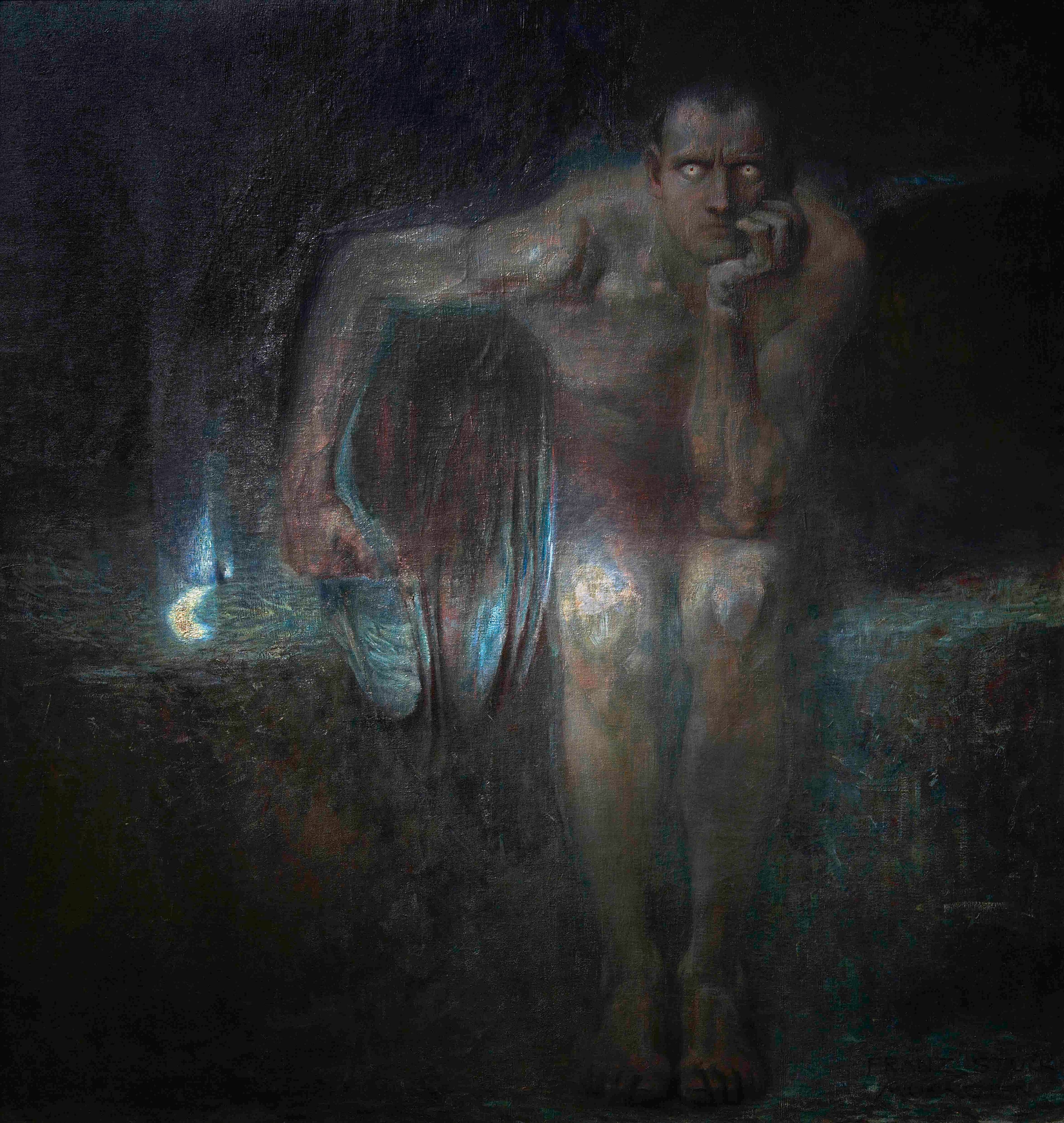
Lucifer
Franz von Stuck · 1890
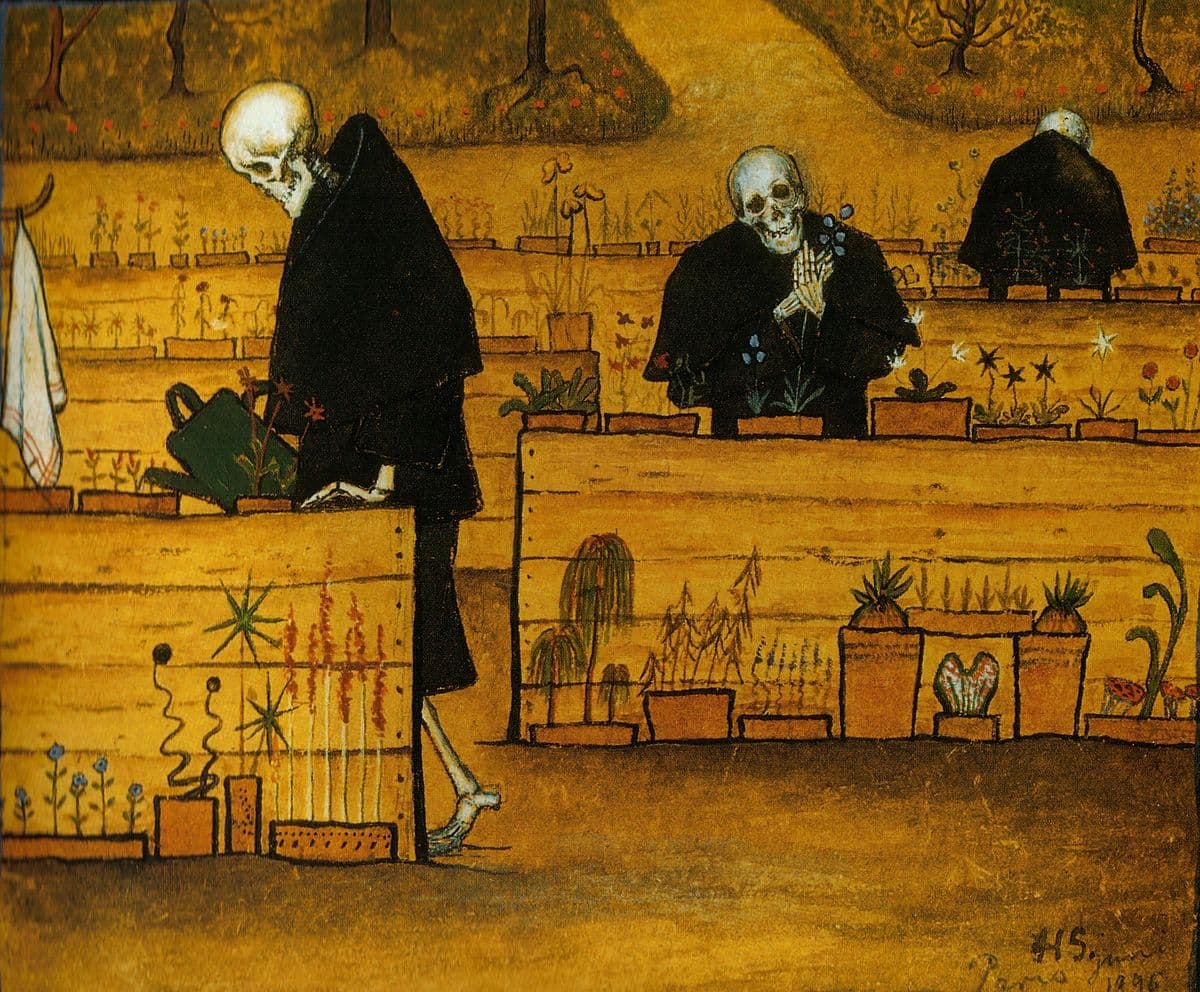
The Garden of Death
Hugo Simberg · 1896
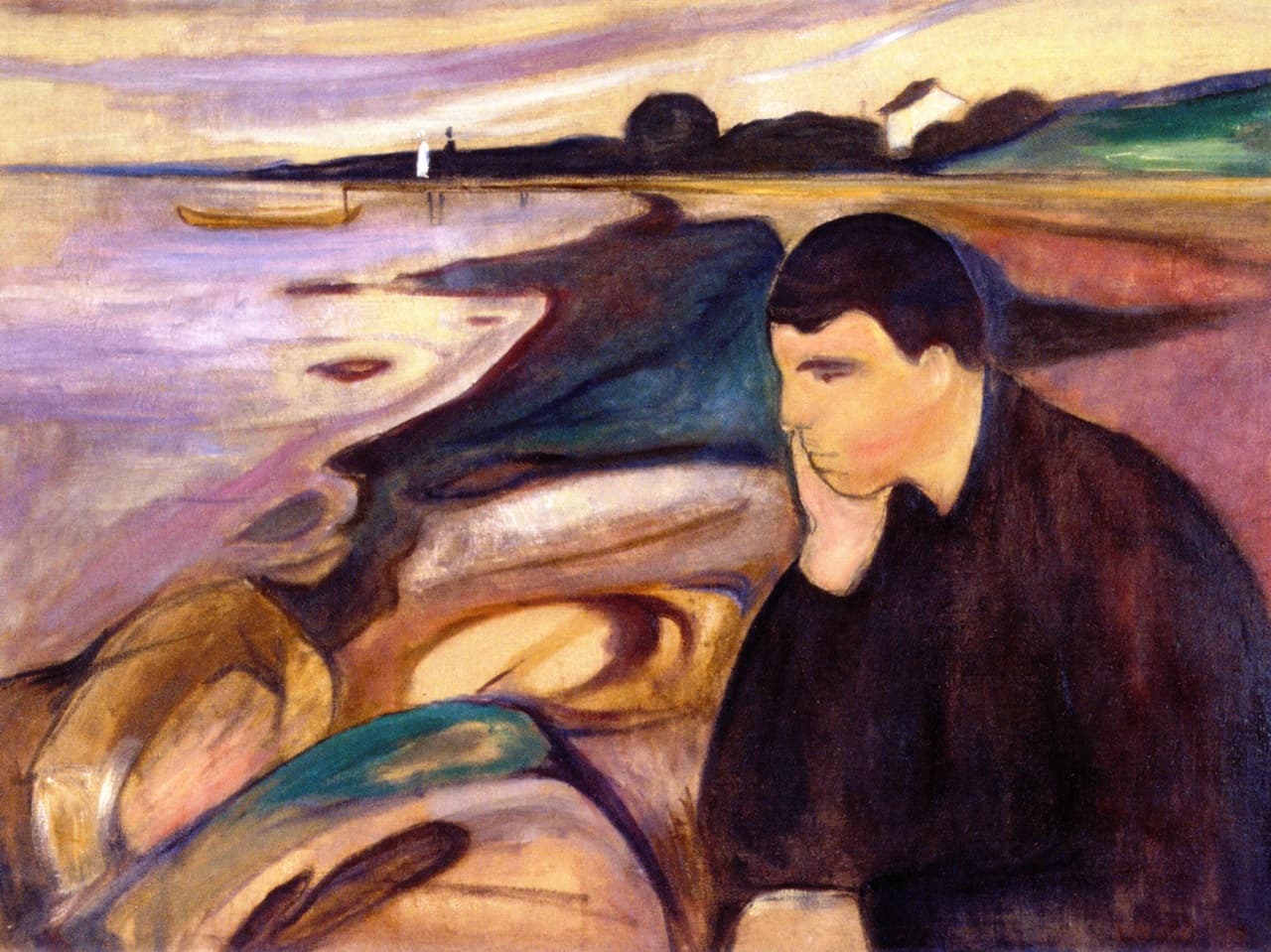
Melancholy
Edvard Munch · 1894–96
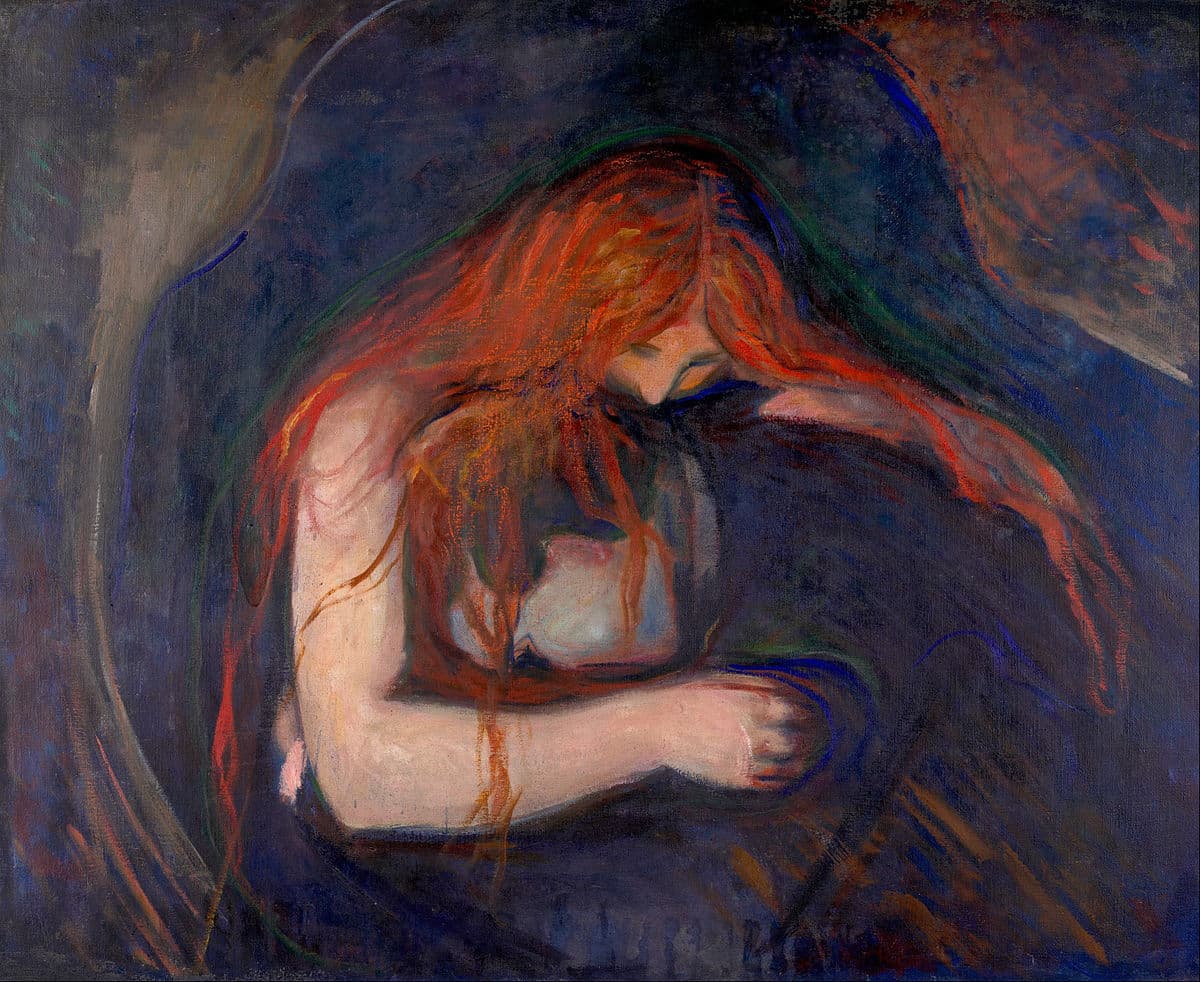
Vampire (Love and Pain)
Edvard Munch · 1895
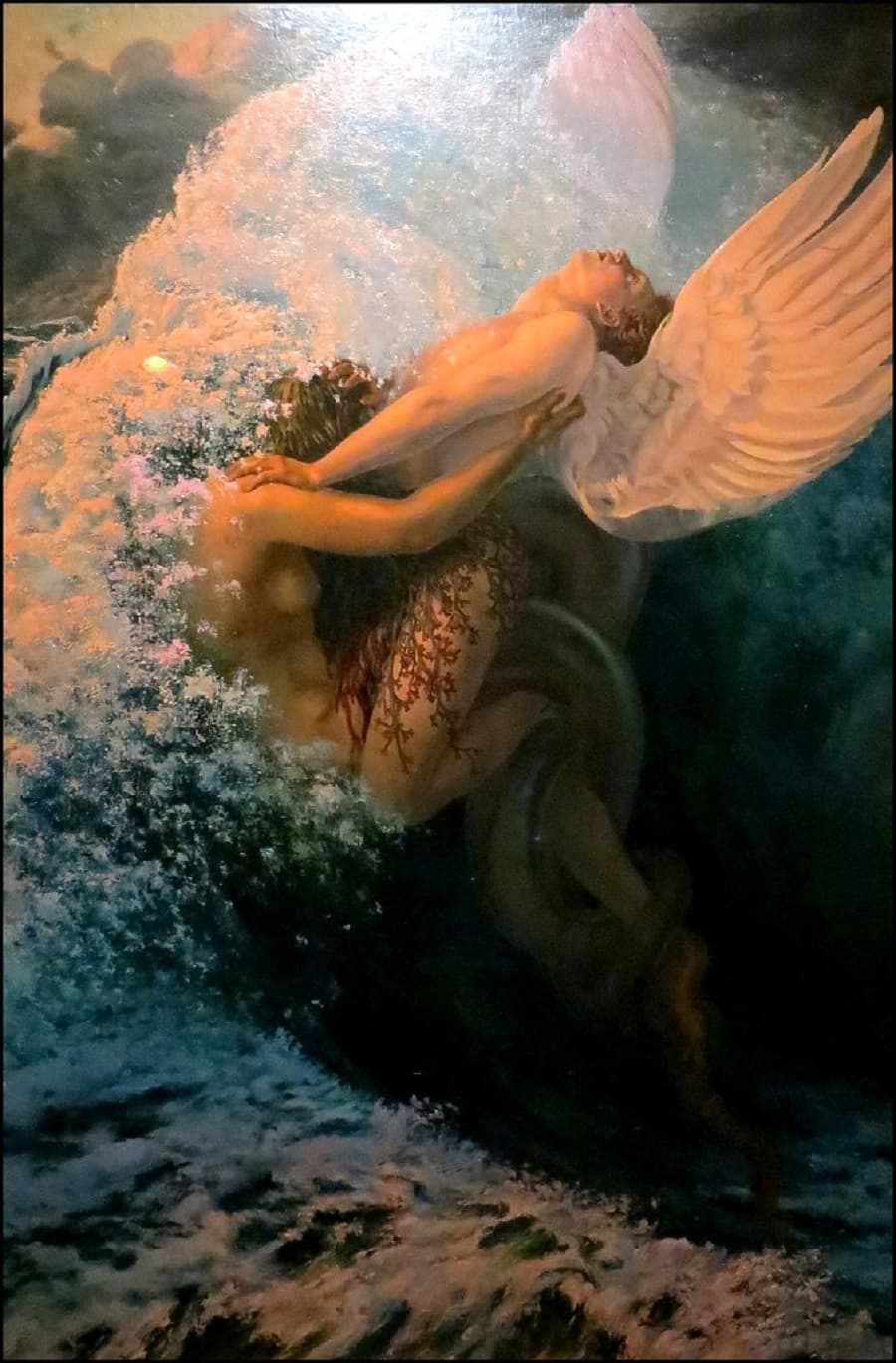
Spleen et Idéal
Carlos Schwabe · 1907
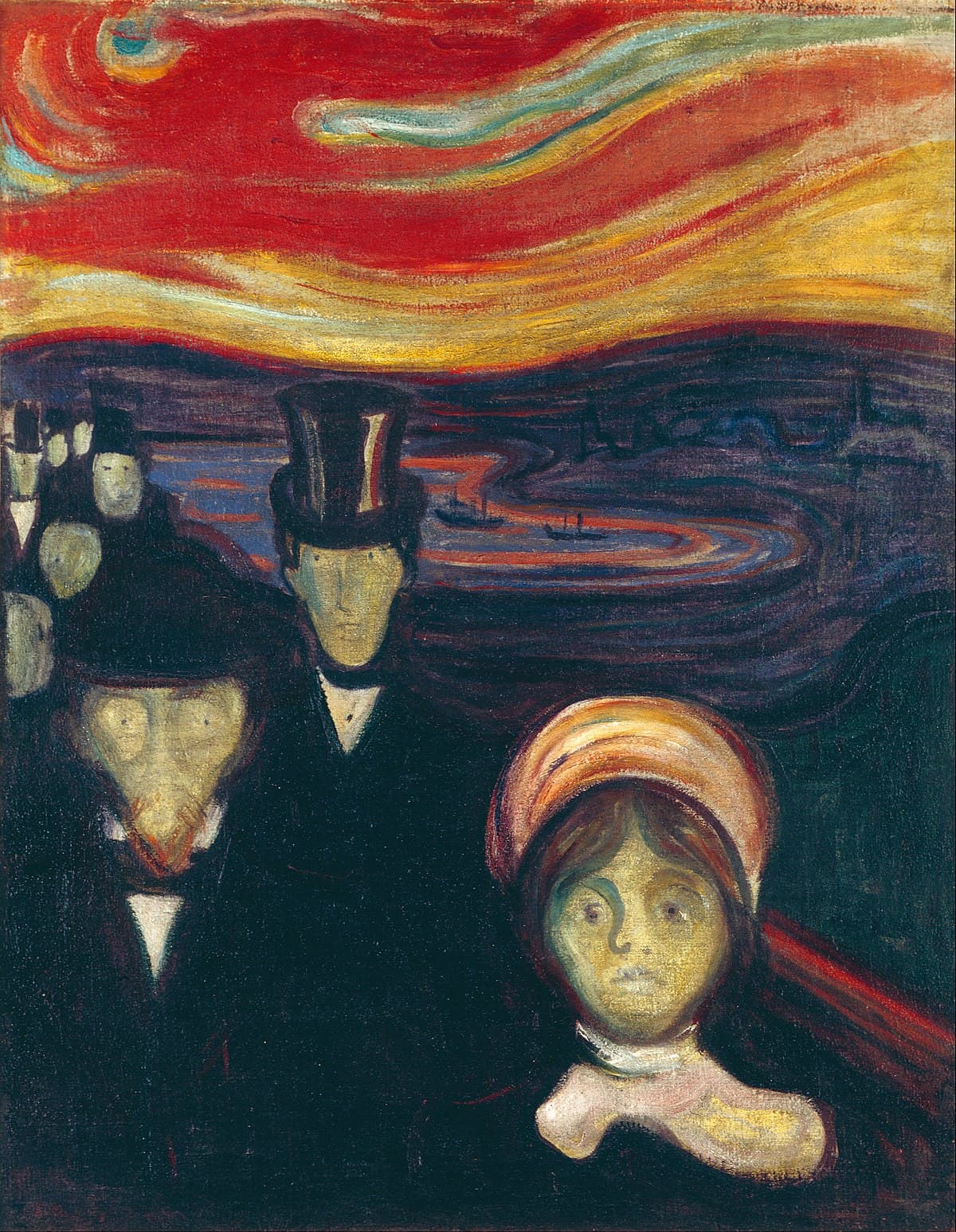
Anxiety
Edvard Munch · 1894
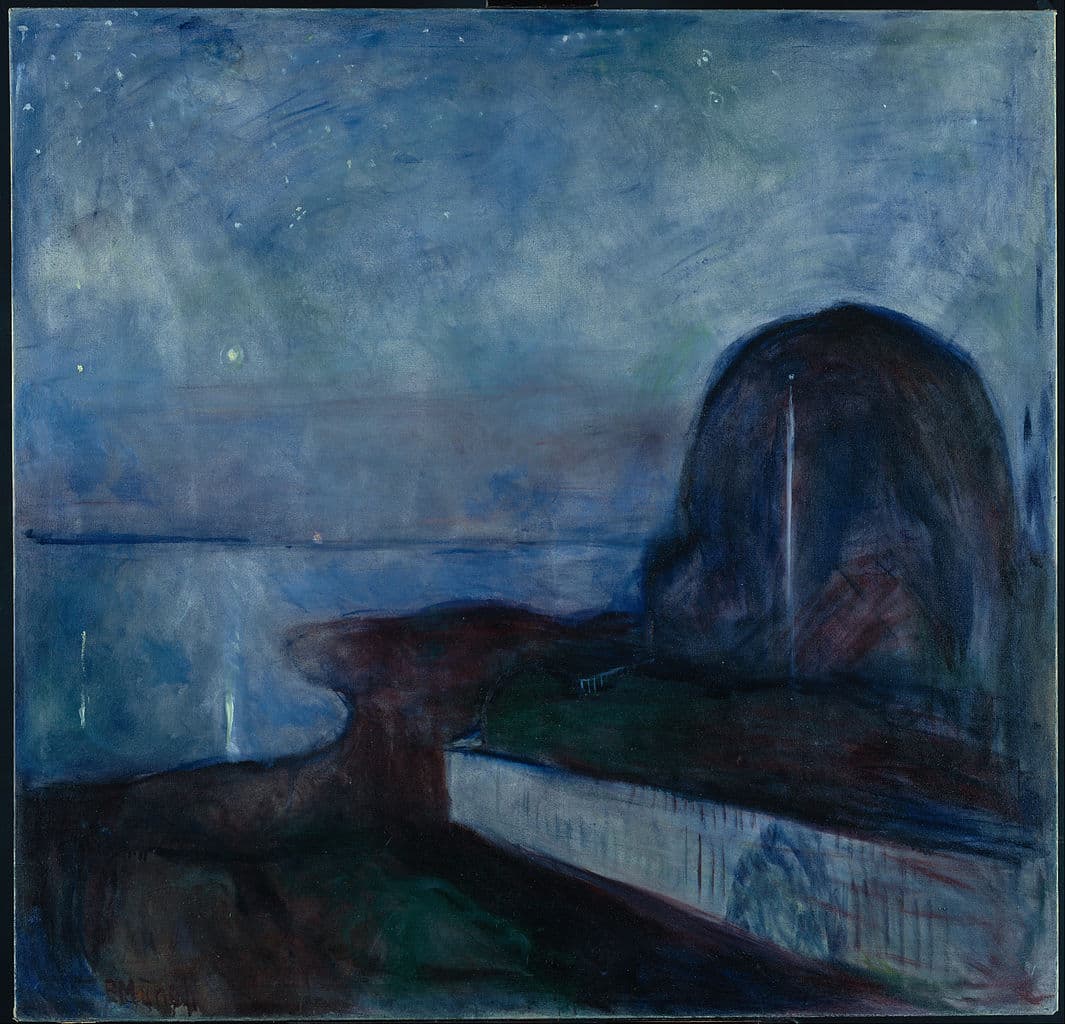
Starry Night (Munch)
Edvard Munch · 1893
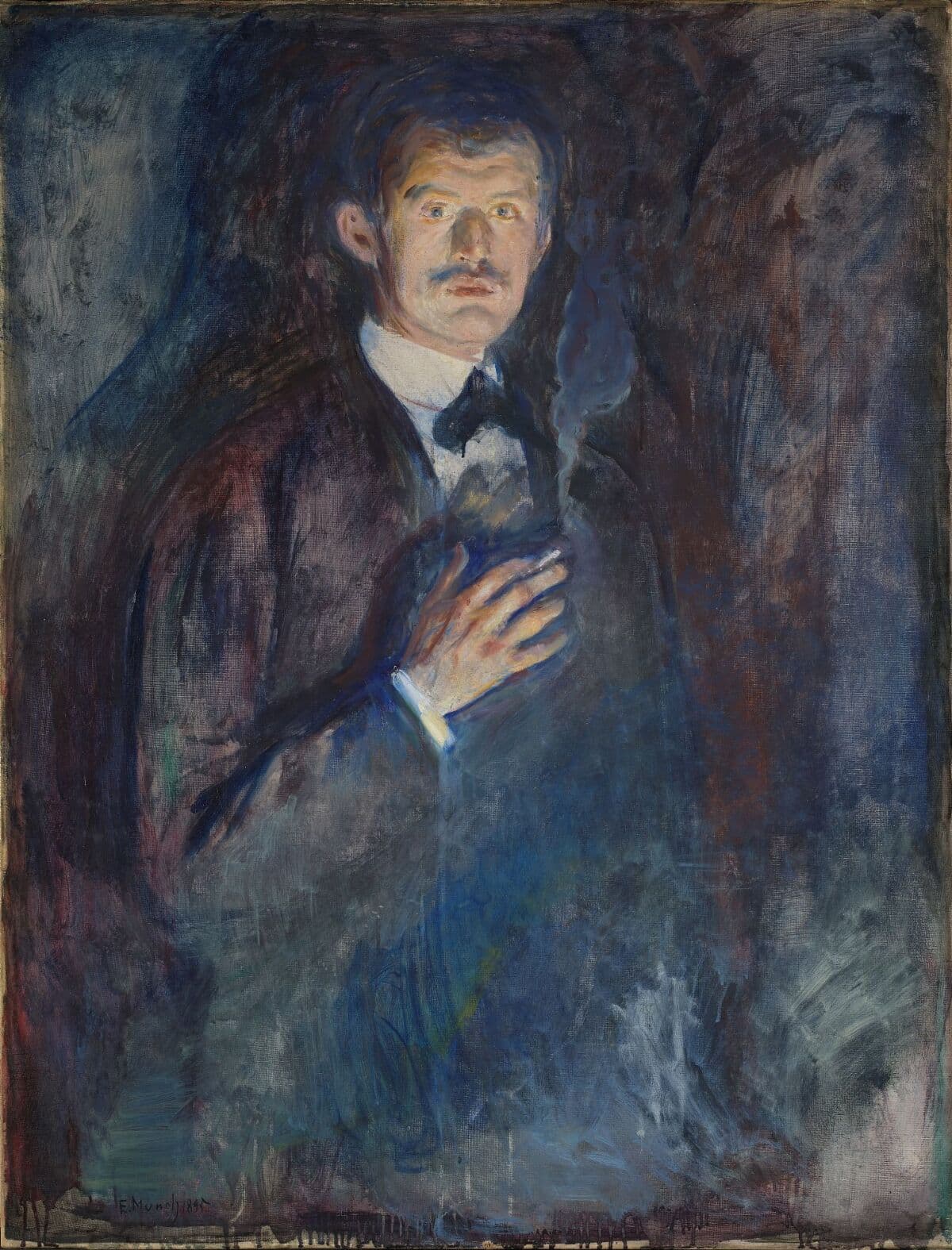
Self-Portrait with Cigarette
Edvard Munch · 1895
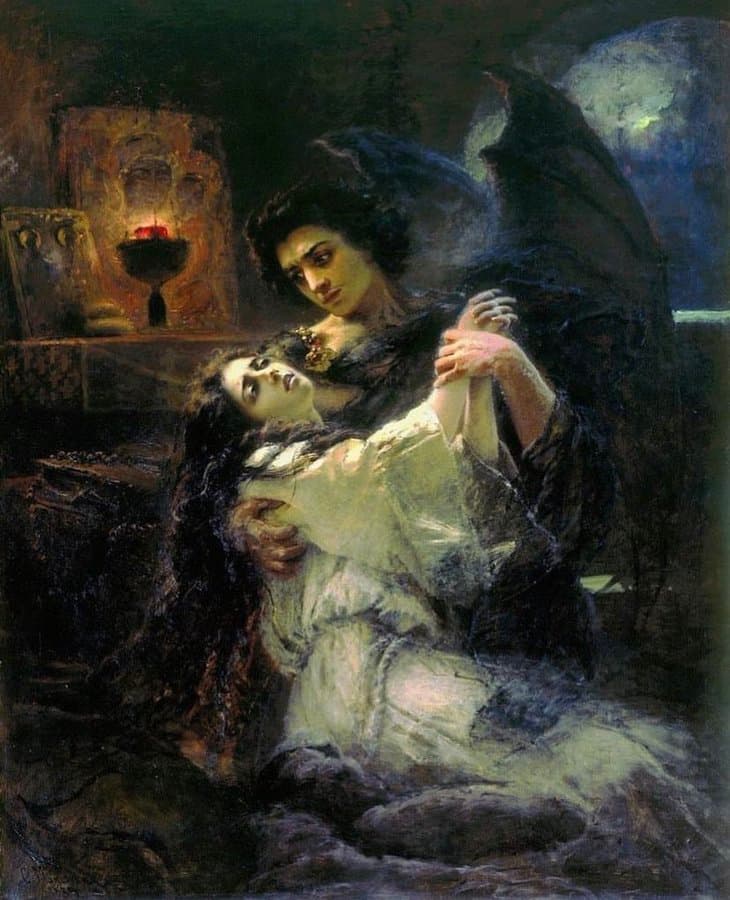
Tamara and Demon
Konstantin Makovsky · 1889
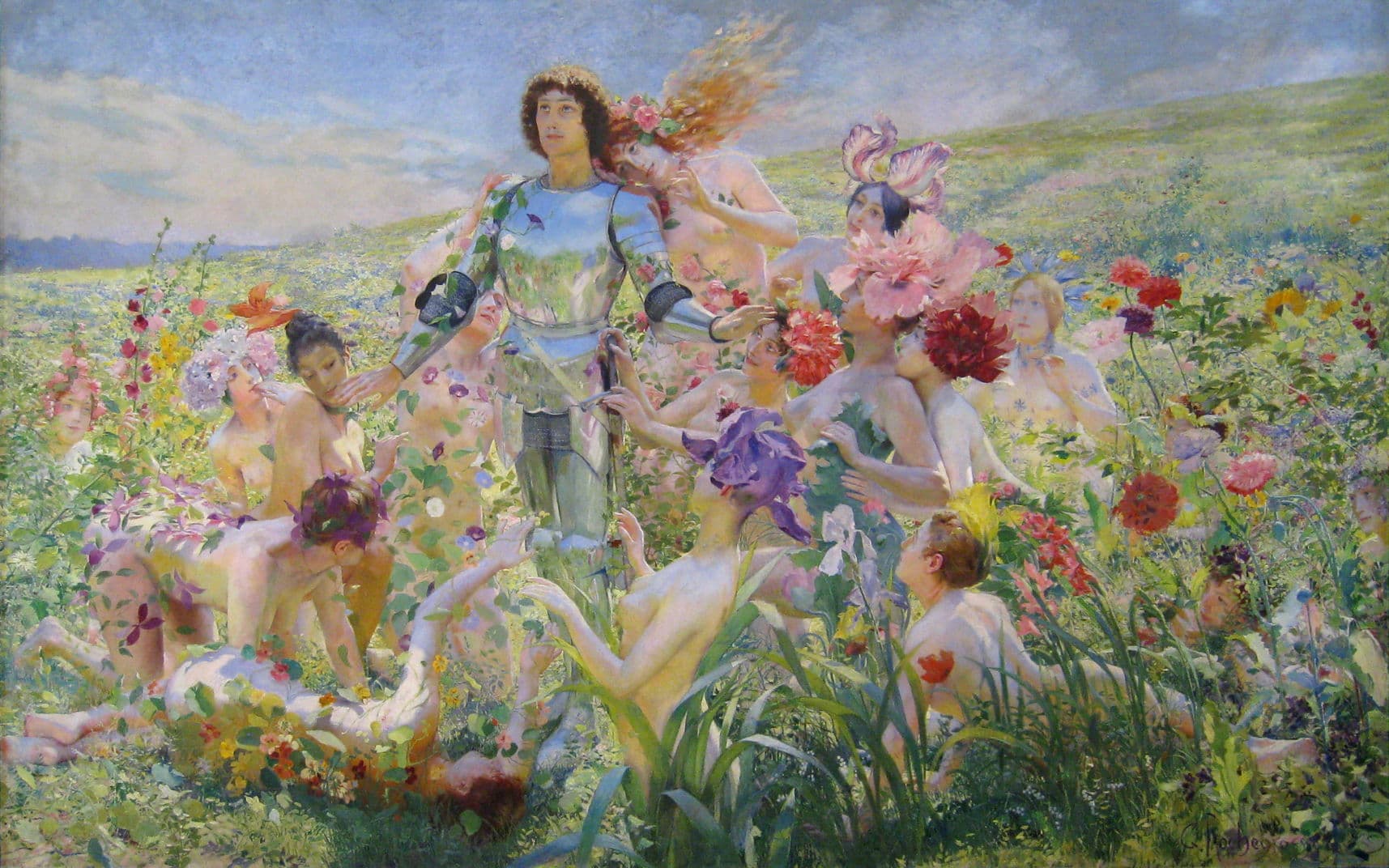
The Knight of the Flowers
Georges Rochegrosse · 1894
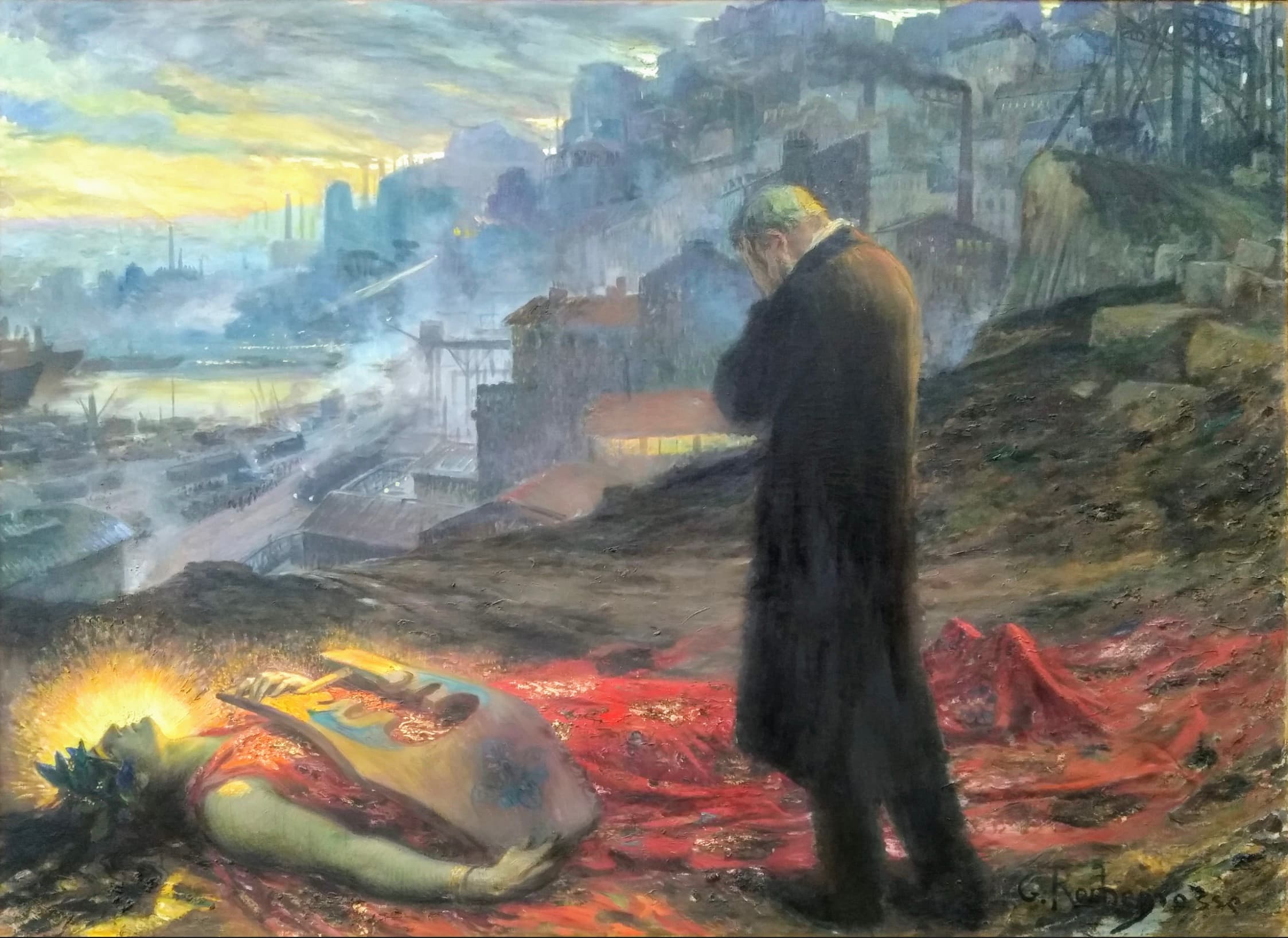
La Mort de la pourpre
Georges Rochegrosse · 1914
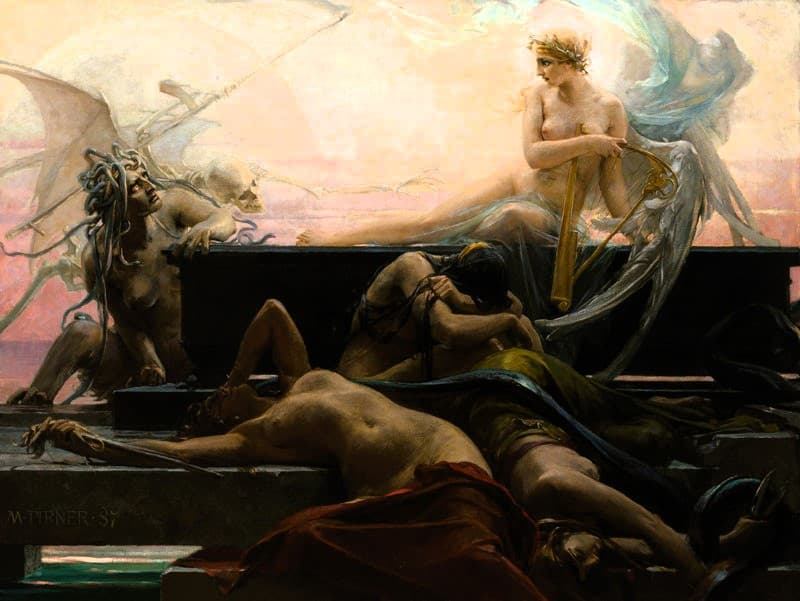
Finis (The End of All Things)
Maximilian Pirner · 1887
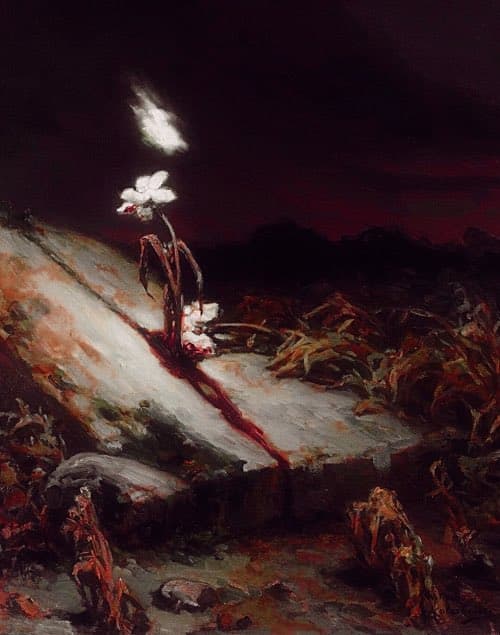
Grave of a Suicide Victim
Wilhelm Kotarbiński · c. 1900
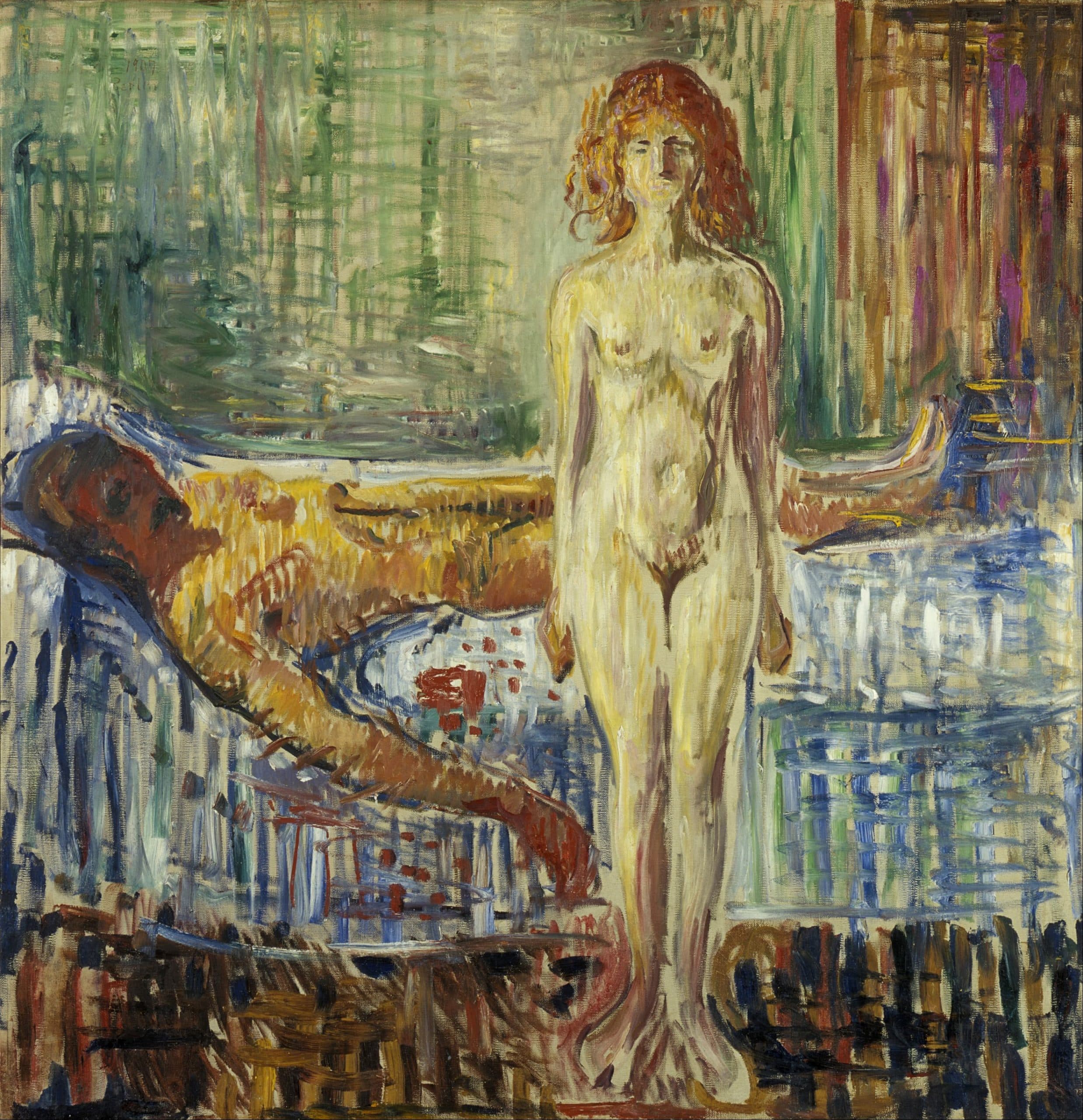
The Death of Marat
Edvard Munch · 1907
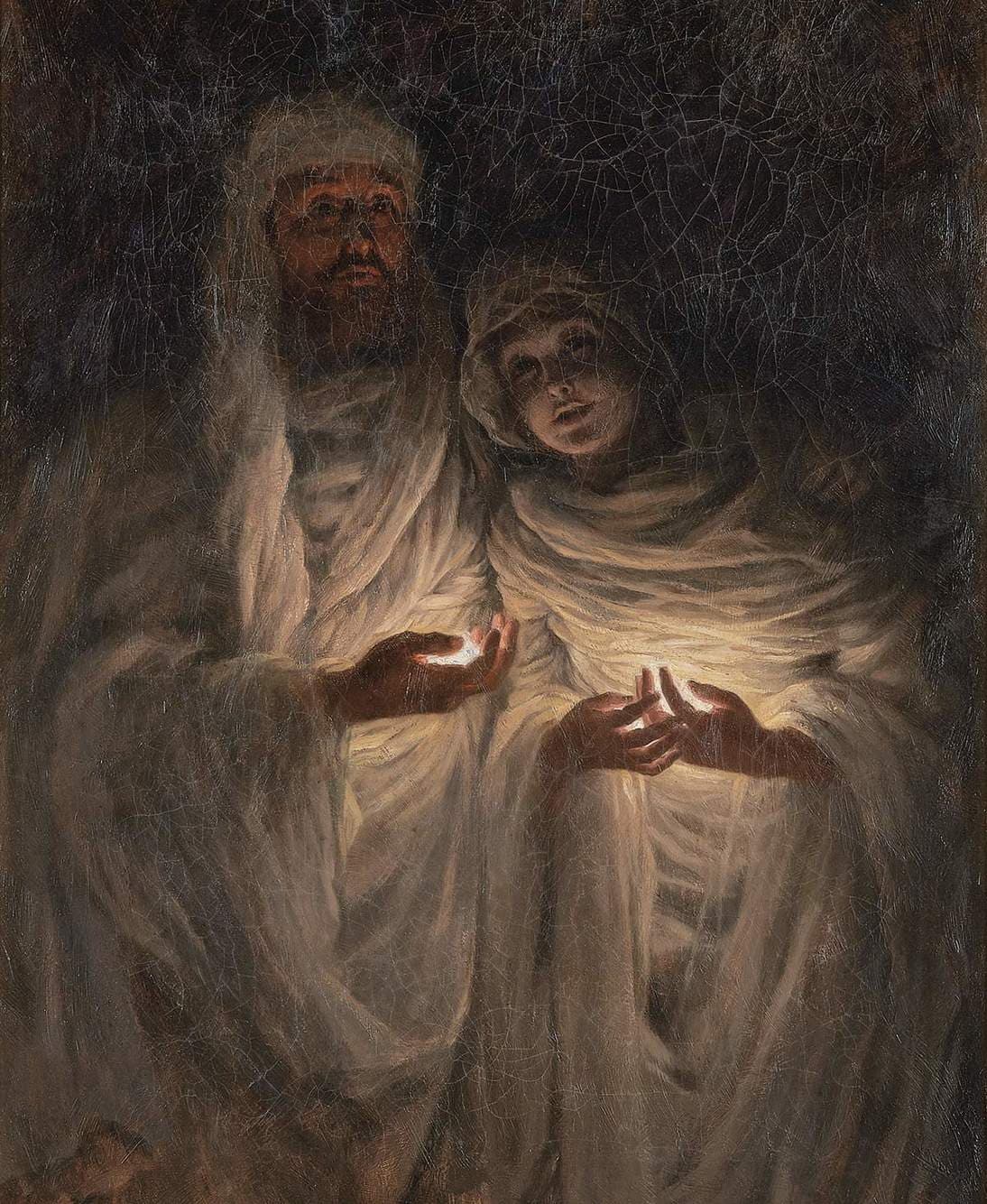
The Apparition
James Tissot · 1885
What is Symbolism in art?
Symbolism began as a literary movement in France and became one of the most international art movements of the nineteenth century, stretching from Paris and Brussels to Munich, Vienna, Oslo, Helsinki and Moscow. It was not a style so much as a shared conviction: that art should express inner truths rather than record appearances.
The Symbolists were reacting against two dominant trends. Realism, led by Gustave Courbet, insisted on painting the ordinary world as it is. Impressionism, at its height in the 1870s and 1880s, painted the fleeting effects of light on the surface of things. The Symbolists found both too materialist. As the poet Jean Moréas wrote in the Symbolist manifesto published in Le Figaro on 18 September 1886, the aim was to "clothe the Idea in a sensitive form."
Literary roots
Painting followed poetry here. Charles Baudelaire's Les Fleurs du mal (1857), with its fusion of beauty, sin, decay and spiritual longing, was the movement's sacred text. His sonnet "Correspondences" described nature as a "forest of symbols" whose scents, colors and sounds answer one another, and that idea underlies much Symbolist painting. Stéphane Mallarmé and Paul Verlaine were its living poets, and J.-K. Huysmans's novel À rebours (1884), whose decadent hero collects paintings by Gustave Moreau and Odilon Redon, made them famous among aesthetes.
The themes of Symbolism
Death and the beyond. Graves, islands of the dead, skeletal figures, and the soul's passage into another world.
The femme fatale. Salome, Medusa, the Sphinx, sirens and vampires: women as beautiful, dangerous and unknowable, a fixation that says more about the anxieties of male artists than about women.
Dreams and the unconscious. A decade before Freud's Interpretation of Dreams (1899), Symbolist painters were already mapping the night side of the mind.
Myth, religion and the occult. Classical and biblical stories, angels and demons, Rosicrucian mysticism and spiritualism, often mixed freely.
Melancholy and decadence. The sense that a civilization was ending, captured in the phrase fin de siècle.
Paris and Brussels
Gustave Moreau, working in near-isolation in Paris, painted encrusted, jewel-like visions of myth and scripture. His watercolor The Apparition (1876), in which the severed head of John the Baptist appears in a burst of light before a near-naked Salome, became an icon of the movement. Odilon Redon spent decades on his noirs, charcoal drawings and lithographs of floating eyes, spiders with human faces and heads on platters, before turning in later life to explosions of pastel color. Pierre Puvis de Chavannes painted calm, pale murals of a timeless Arcadia that influenced Gauguin and the young Picasso.
Paul Gauguin, too, was claimed by the movement. In 1891 the critic Albert Aurier published an essay in the Mercure de France hailing Gauguin as the leader of Symbolism in painting, praising his flat areas of unnatural color and simplified forms as a way of expressing ideas rather than copying nature. The young painters of the Nabis group, including Paul Sérusier and Maurice Denis, followed his lead. Denis's famous remark of 1890, that a picture is "essentially a flat surface covered with colors assembled in a certain order" before it is a horse or a nude, shows how Symbolism helped open the door to modern abstraction.
In Belgium, Fernand Khnopff and Jean Delville gave the movement its cool, enigmatic women, while Félicien Rops supplied its erotic and satanic etchings. In 1892 the eccentric critic Joséphin Péladan launched the Salons de la Rose+Croix in Paris, mystical exhibitions that welcomed Symbolist painters and banned landscapes and still lifes. Among the exhibitors was the Swiss-German Carlos Schwabe, whose illustrations for an edition of Baudelaire's Les Fleurs du mal (1900) are among the finest of the period; his painting Spleen et Idéal takes its title from the first section of the poems.
Germany and Switzerland
Arnold Böcklin, Swiss-born and largely based in Italy, painted the movement's most haunting image. Isle of the Dead exists in five versions painted between 1880 and 1886: a small boat carrying a standing white-shrouded figure and a draped coffin approaches a rocky island of cypress trees and tomb doorways carved into the cliffs. Böcklin added the figure and coffin to the second version at the request of a recently widowed patron, Marie Berna, who wanted a picture to dream over. The title was given by his dealer. By the early twentieth century reproductions hung in homes all over Germany, and Rachmaninoff composed a symphonic poem after the image in 1909.
In Munich, Franz von Stuck co-founded the Munich Secession in 1892 and painted brooding mythological figures with dark, polished surfaces. Lucifer (1890, National Gallery, Sofia) shows the fallen angel crouched in darkness, chin in hand, his eyes glowing out at the viewer with an unnerving directness. His The Sin (1893) shows a nude woman wrapped in an enormous snake. For more angels cast out of heaven, see fallen angel paintings.
Vienna, Scandinavia and the North
In Vienna, Gustav Klimt led the Secession from 1897, combining Symbolist themes of love, death and the femme fatale with gold leaf and Byzantine pattern in works like The Kiss (1907–08) and Judith and the Head of Holofernes (1901).
Edvard Munch, in Norway and Berlin, pushed Symbolism toward Expressionism. His Frieze of Life, a cycle on love, anxiety and death, includes The Scream (1893) and Melancholy, in which a man sits brooding on the shore at Åsgårdstrand while a couple walks toward a jetty in the distance; the model is usually identified as Munch's friend Jappe Nilssen, then suffering through an unhappy love affair. Vampire (1895) began life as Love and Pain; the critic Stanisław Przybyszewski called it a vampire, and the name stuck to a picture that may simply show a woman comforting a man with her lips against his neck.
In Finland, Hugo Simberg painted death as a gentle, almost comic presence. In The Garden of Death (1896, Ateneum, Helsinki), skeletons in black robes tend flowers in a walled garden, watering and potting them with tender care. Simberg later repainted the scene as a fresco in Tampere Cathedral, alongside his Wounded Angel. In Russia, Mikhail Vrubel painted the demon of Mikhail Lermontov's poem in a series of fractured, crystalline canvases, and Konstantin Makovsky took up the same poem in Tamara and the Demon. Polish-Russian painter Wilhelm Kotarbiński painted night scenes of graves and spirits.
How to recognize Symbolist art
- A subject that is an idea, not an event: Silence, Sin, Death, Melancholy, the Soul.
- Mythological, biblical or literary figures used as symbols rather than characters in a story.
- Dreamlike, ambiguous scenes with no clear narrative and an air of mystery.
- Flattened, decorative compositions, often with stylized line, gold or rich pattern.
- Muted, twilight palettes, or else jewel-like, unnatural color.
- Recurring motifs: closed eyes, flowers (especially lilies and poppies), water, swans, sphinxes, serpents, skulls and angels.
Symbolism's legacy
Symbolism fed directly into Art Nouveau, Expressionism and Surrealism. Salvador Dalí, Max Ernst and René Magritte admired Böcklin and Redon, and the movement's dark imagination lives on in film, fantasy illustration, album covers and online aesthetics. Its brooding angels and gardens of death have found new admirers among followers of dark academia.
Where to see Symbolist art
Paris has the Musée Gustave Moreau, in the painter's own house and studio, and fine Symbolist rooms at the Musée d'Orsay. Brussels's Royal Museums of Fine Arts, the Munch Museum and National Museum in Oslo, the Ateneum in Helsinki, the Belvedere in Vienna and Munich's Villa Stuck are essential. Böcklin's Isle of the Dead can be seen in Basel's Kunstmuseum, New York's Metropolitan Museum, Berlin's Alte Nationalgalerie and Leipzig's Museum der bildenden Künste.
Questions & answers
What is Symbolism in art?
Symbolism was a late nineteenth-century movement, active from about 1880 to 1910, in which artists rejected realism to depict ideas, emotions, dreams and spiritual states through myth, allegory and suggestive imagery. It began in French poetry and spread across Europe, from Paris to Vienna, Oslo and Moscow.
Who are the most famous Symbolist painters?
Leading Symbolist painters include Gustave Moreau, Odilon Redon and Pierre Puvis de Chavannes in France, Fernand Khnopff and Jean Delville in Belgium, Arnold Böcklin and Carlos Schwabe in Switzerland, Franz von Stuck in Germany, Gustav Klimt in Austria, Edvard Munch in Norway, Hugo Simberg in Finland and Mikhail Vrubel in Russia.
What are the main themes of Symbolist art?
The main themes are death and the afterlife, dreams and the unconscious, the femme fatale, love and desire, mysticism and the occult, and melancholy. Symbolists drew on mythology, the Bible and poetry, especially Baudelaire, using figures like Salome, Medusa, angels and sphinxes as symbols.
What is the difference between Symbolism and Impressionism?
Impressionism tried to capture the visible world as it appears in a passing moment of light and color, often painted outdoors. Symbolism turned away from appearances to express invisible things: ideas, emotions, dreams and spiritual meaning. The two movements overlapped in time but pursued opposite goals.
What is the most famous Symbolist painting?
Edvard Munch's The Scream (1893) is the most famous painting associated with Symbolism, though it also anticipates Expressionism. Within the movement itself, Arnold Böcklin's Isle of the Dead, Gustave Moreau's The Apparition and Gustav Klimt's The Kiss are its best-known images.