Symbolism
Self-Portrait with Cigarette
Edvard Munch, 1895
Self-Portrait with Cigarette is an 1895 oil painting by Edvard Munch, showing the artist emerging from blue smoke with a lit cigarette held to his chest. It belongs to the National Museum (Nasjonalmuseet) in Oslo.
- Artist
- Edvard Munch
- Date
- 1895
- Medium
- Oil on canvas
- Dimensions
- 110.5 × 85.5 cm
- Collection
- Nasjonalmuseet (National Museum of Art, Architecture and Design), Oslo, Norway
- Movement
- Symbolism
What you are looking at
A man in a dark suit stands in near-darkness, so close to the picture's surface that the frame cuts him at the knees. The background is a churning field of deep blue, violet and smoky gray, thinly brushed and scraped, with patches where the canvas almost shows through. Out of that murk come only two things in full light: his face and his right hand. The hand is held flat against his chest, a lit cigarette between two fingers, and a thread of blue-white smoke curls up past his shoulder and dissolves into the dark around him.
The light is strange. It does not fall from a window or a lamp but seems to come from below, the way a footlight or a stage lamp lights an actor. It catches the underside of his jaw, his cheekbones and the white of his collar, and leaves his eyes in shadow beneath the brows. He looks straight out at us with a fixed, slightly startled stare, as if someone has just walked into the room. Look at the bottom edge of the canvas: Munch lets the figure fade into a haze of blue and white strokes, so the man seems to rise out of the smoke rather than stand on a floor.
Munch's technique adds to the effect. Much of the background is painted with thinned, liquid oil, brushed and rubbed in so that it behaves almost like watercolor, with drips and bare patches left visible. The face and hand, by contrast, are modeled more firmly, so they seem to sit in front of the haze. The suit dissolves into the background at its edges; only the white collar and cuff hold their shape.
The palette is almost monochrome, a world of blues, with the warm flesh tones of face and hand as the only contrast. That restraint is what gives the picture its intensity.
When and why Munch painted it
Edvard Munch (1863–1944) painted the self-portrait in 1895, at the height of the most productive period of his career. He was dividing his time between Kristiania (now Oslo) and Berlin, where he moved in a bohemian circle of writers and artists around the Swedish playwright August Strindberg and the Polish writer Stanisław Przybyszewski, who met at a Berlin tavern nicknamed Zum schwarzen Ferkel ("The Black Piglet"). The same years produced the paintings Munch later grouped as The Frieze of Life, including The Scream (1893), Anxiety (1894), Melancholy and Love and Pain, also known as Vampire.
The National Museum describes the work as a picture in which Munch celebrates himself as an artist: a figure of the modern, nervous, nocturnal life of the city, poised and self-aware. The cigarette, at that time a fashionable sign of the bohemian intellectual, is a pose as much as a habit.
A scandal in Kristiania
The painting was first shown in Berlin in 1895 and, in the autumn of that year, at the Blomqvist gallery in Kristiania, where it provoked heated debate in the press. Critics were not shocked by the cigarette so much as by what they saw as a sick, decadent art. During a public discussion at the Student Society, a young medical student argued that Munch's work showed signs of mental abnormality. The episode wounded Munch deeply and fed his lifelong fear of being labeled mad.
Despite the controversy, the picture was bought for the National Gallery in Kristiania that same year, an unusually early purchase that shows how seriously some Norwegian officials took Munch's art, even as others attacked it.
Meaning
Munch painted himself more than seventy times in oils, and dozens more in drawings and prints, from youth to old age. In many later self-portraits he appears ill, isolated or haunted. Here, at thirty-one, he presents himself as the artist of the dark, someone at home in the night and the smoke, with an almost hypnotic presence. The hand on the heart can read as a gesture of sincerity or of self-display; the uplighting suggests the stage, as if the painter were also a performer. Scholars often connect the picture with Munch's interest in spiritualism and photography, both of which fascinated him in the 1890s and both of which deal in figures emerging from darkness.
Later viewers have also read the smoke and decay of the figure through Munch's personal history of illness and death, his mother and sister having died of tuberculosis in his childhood. That reading is a retrospective one: Munch himself did not explain the painting.
Where to see it
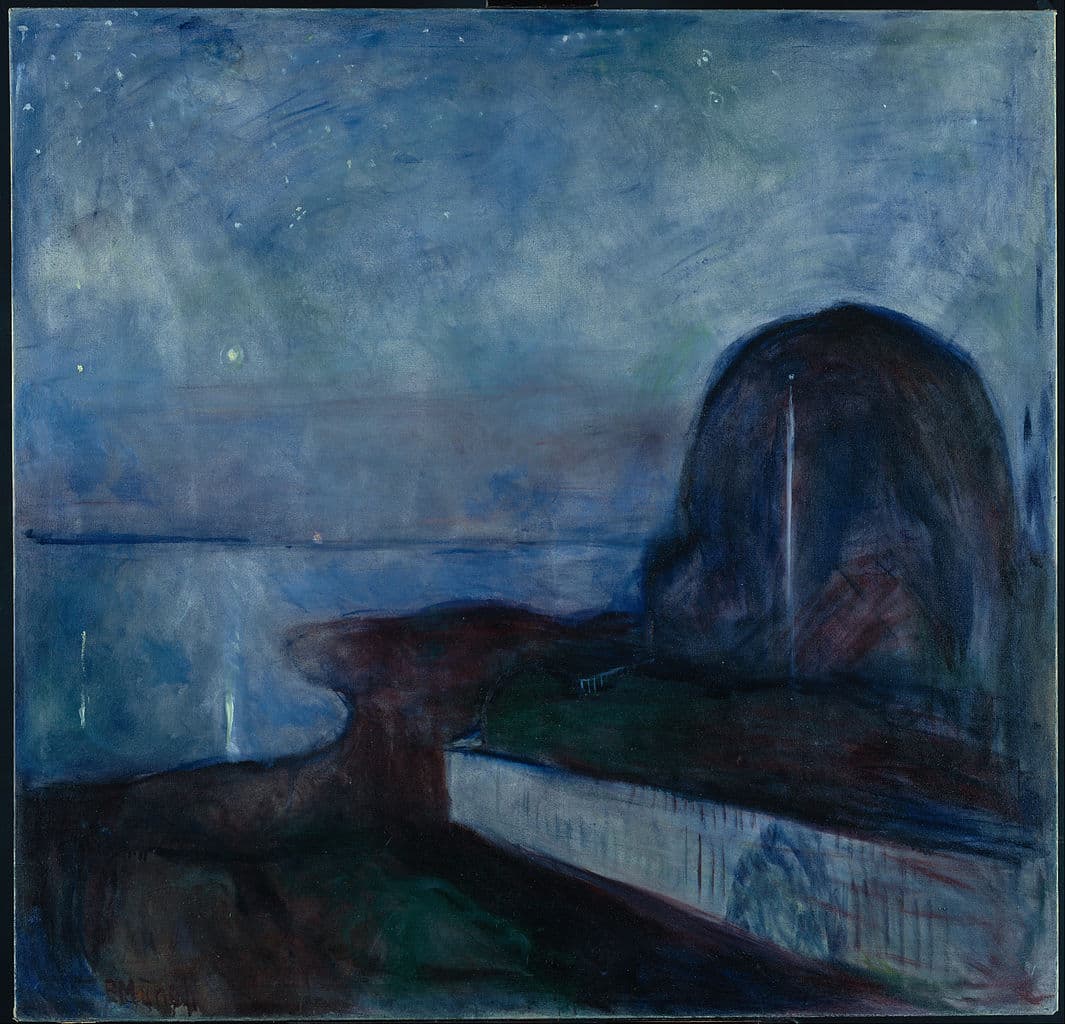
The painting is in the collection of the Nasjonalmuseet in Oslo, which since 2022 has housed the former National Gallery's collection in its new building on the waterfront. It is usually displayed in the Munch room alongside the museum's version of The Scream and Madonna. For more by Munch in our catalogue, see Starry Night and The Death of Marat, and the Symbolism collection.
Questions & answers
Where is Munch's Self-Portrait with Cigarette?
It is in the Nasjonalmuseet (National Museum of Art, Architecture and Design) in Oslo, Norway, which acquired it for the former National Gallery in 1895. It is usually displayed in the museum's Munch room.
Why was Self-Portrait with Cigarette controversial?
When it was shown in Kristiania (Oslo) in autumn 1895, critics attacked Munch's art as sick and decadent, and in a public debate a medical student suggested his paintings showed signs of mental abnormality. The episode deeply hurt Munch.
What does the cigarette mean in Munch's self-portrait?
In the 1890s the cigarette was a sign of the modern bohemian artist and intellectual. Munch uses it, with the smoke and the stage-like light, to present himself as a creature of night, nerves and city life. He left no explanation of his own.
How big is Self-Portrait with Cigarette?
The oil on canvas measures 110.5 × 85.5 cm, so the figure is close to life-size from the knees up, which adds to the sense that Munch is standing right in front of you.
More by the artist
Edvard Munch

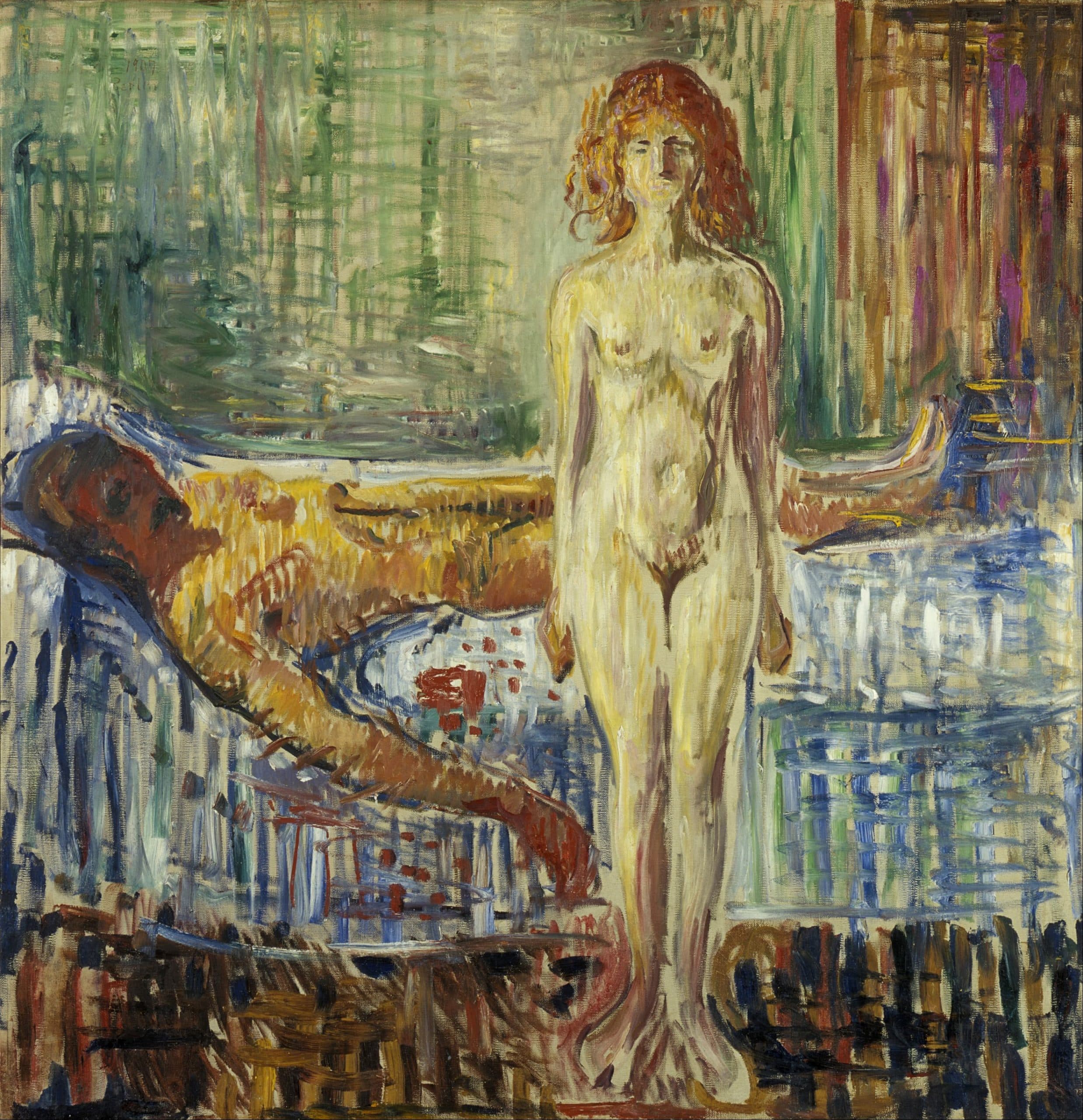
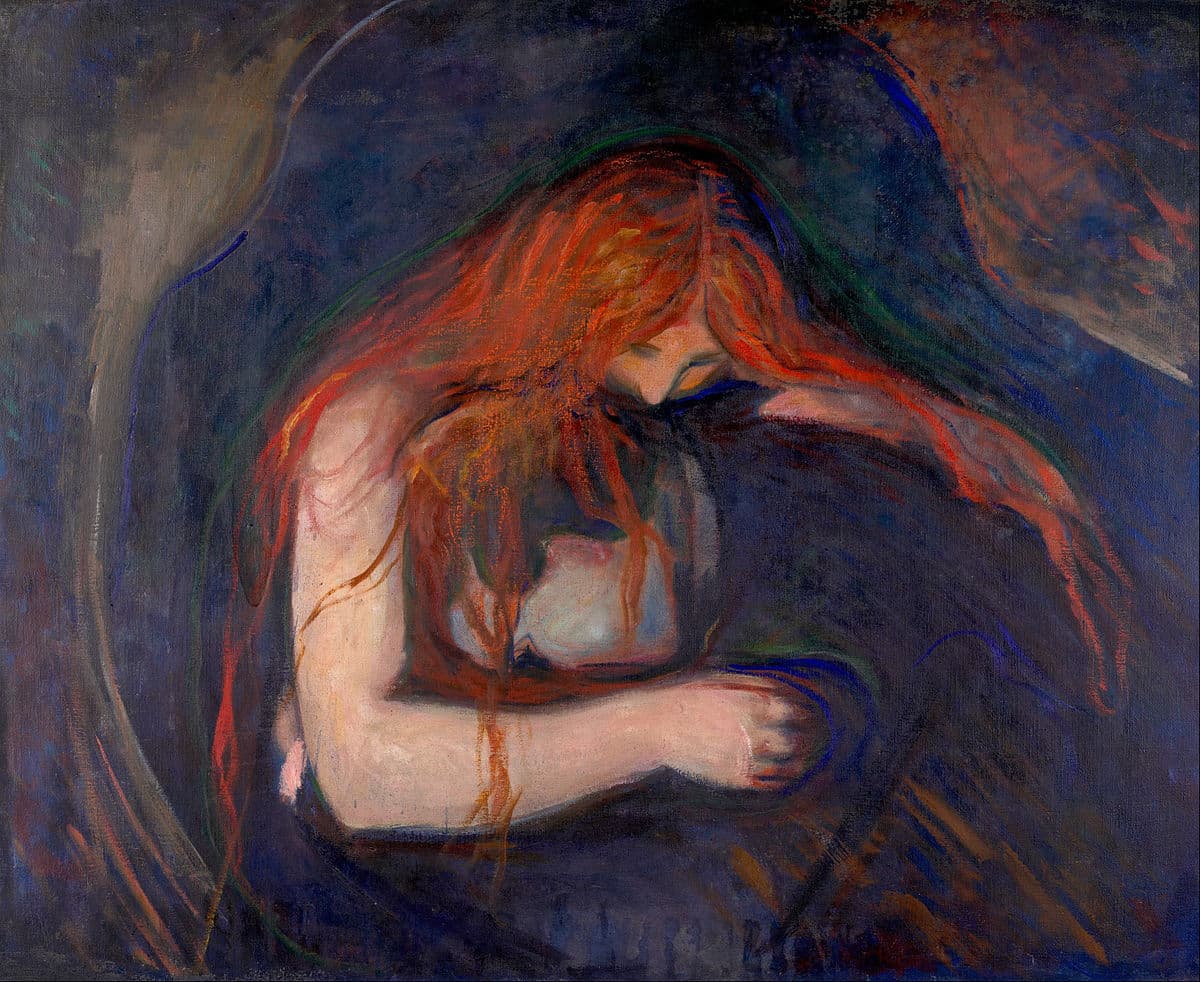
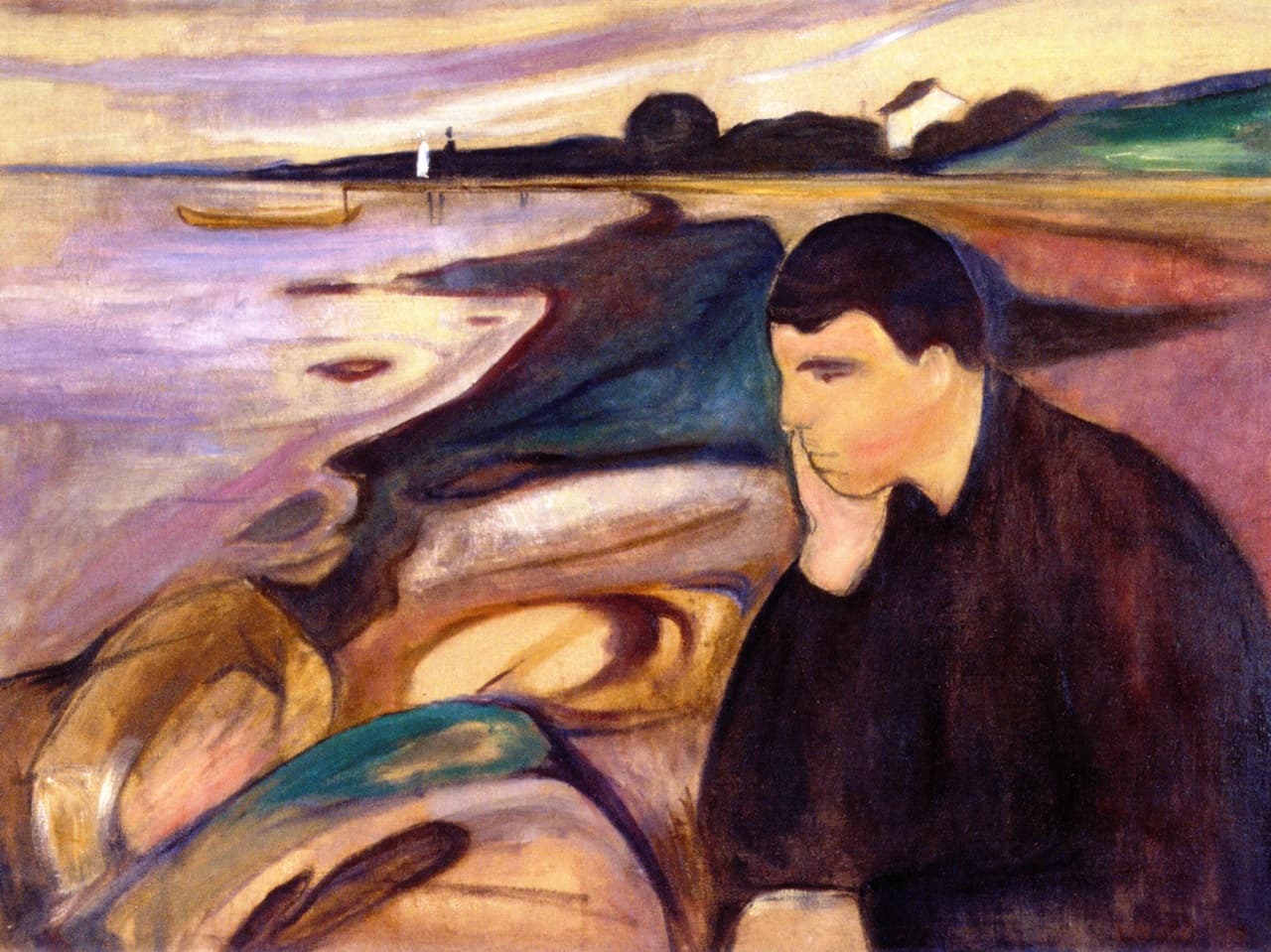
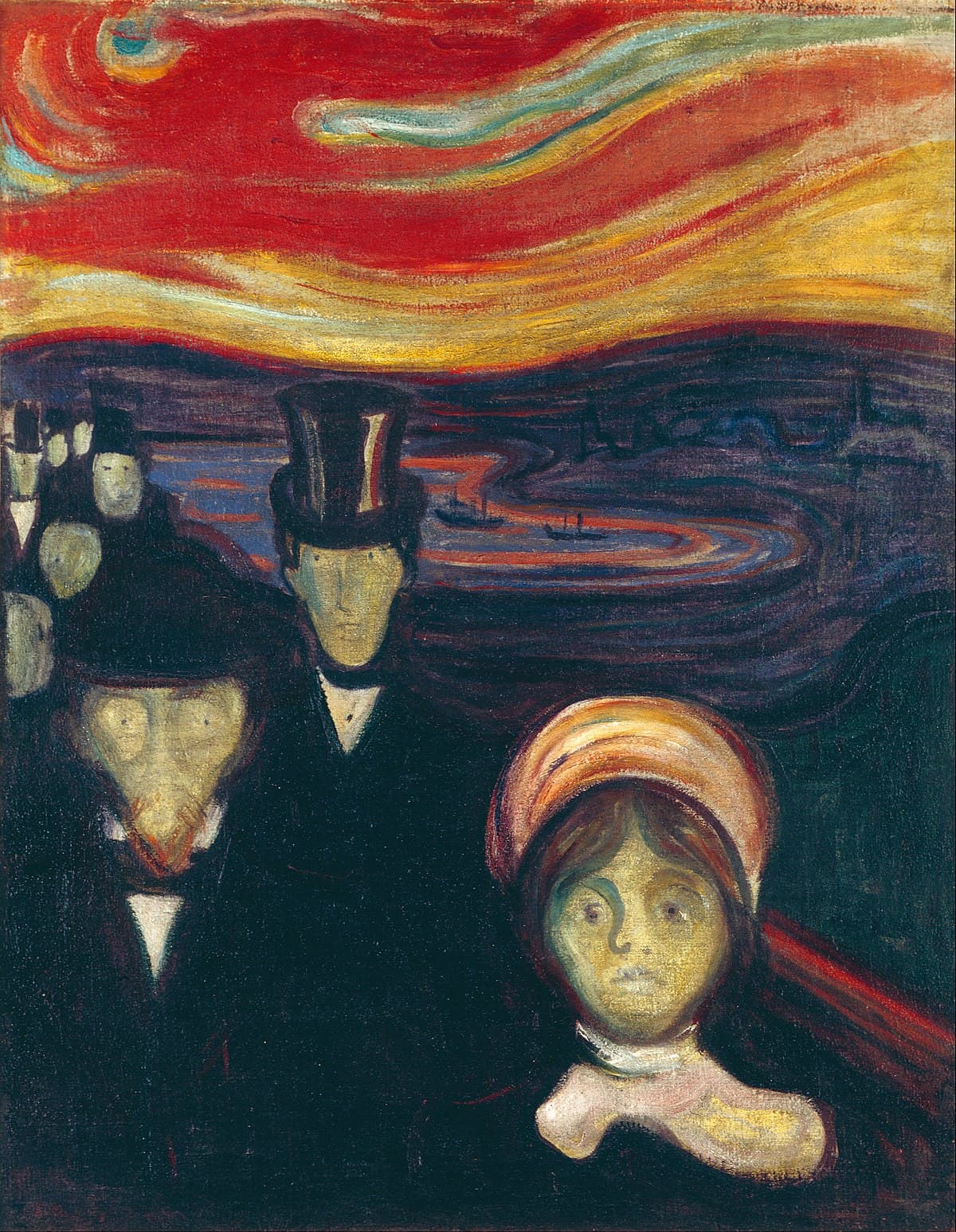
Kindred works
You may also study
Head of a Skeleton with a Burning Cigarette
Vincent van Gogh · 1886

Nymphs Dancing to Pan's Flute
Joseph Tomanek

Woman with a Parasol – Madame Monet and Her Son
Claude Monet · 1875
Las Meninas
Diego Velázquez · 1656
Lucifer
Franz von Stuck · 1890
The Garden of Earthly Delights
Hieronymus Bosch · c. 1490–1510
The School of Athens
Raphael · 1509–1511
Girl with a Pearl Earring
Johannes Vermeer · c. 1665