Academic art
Tamara and Demon
Konstantin Makovsky, 1889
Tamara and Demon is an 1889 painting by Konstantin Makovsky illustrating Mikhail Lermontov's poem The Demon: the winged Demon holds the dying Princess Tamara. It is in the Serpukhov Historical and Art Museum, Russia.
- Artist
- Konstantin Makovsky
- Date
- 1889
- Medium
- Oil on canvas
- Collection
- Serpukhov Historical and Art Museum, Serpukhov, Russia
- Movement
- Academic art
What you are looking at
In a dim, curtained room a dark-haired young woman lies back, fainting or dying, her white dress spilling across the lower half of the canvas. Behind her a pale young man with black wings and wild black hair gathers her into his arms and looks out, past her, with a sad and watchful face. His wings fill the upper right corner, their feathers barely separated from the shadows. On the left, a small oil lamp burns in a niche beside an icon, the only warm light in the room.
This is Tamara and Demon, painted in 1889 by Konstantin Makovsky (1839–1915), one of the most fashionable Russian painters of the late nineteenth century. It is in the Serpukhov Historical and Art Museum, south of Moscow.
The story
The scene comes from The Demon, a long romantic poem by Mikhail Lermontov, written over more than a decade and finished in 1839. A fallen spirit, exiled from heaven and weary of evil, flies over the Caucasus and falls in love with the Georgian princess Tamara. Her bridegroom is killed; she retreats to a convent; the Demon follows her there, and with a kiss, her death. An angel then carries her soul to heaven and the Demon is left alone again.
Makovsky paints the moment after the kiss. The lamp and icon at the left mark the convent cell, and they are the sign of what the Demon has invaded. Tamara's head falls back, her eyes closed; the Demon's expression is not triumph but something closer to grief. Lermontov's Demon is a tragic figure, and Makovsky keeps him so.
Looking closely
Makovsky was famous for sumptuous surfaces, and his brushwork here is looser than in his society portraits. The white dress is built from quick, broken strokes that glint against the dark, and the Demon's wings are painted almost as smoke. Notice the color of his skin: a cold, greenish pallor beside the warmer flesh of Tamara's arm. Two worlds touch where his hand meets her shoulder.
Context
1889 was the fiftieth anniversary of the poem's completion, and a new illustrated edition brought it fresh attention. The best-known images of the Demon are by Mikhail Vrubel, who drew illustrations for that edition and returned to the subject obsessively. Makovsky's version, more theatrical and more conventional, shows how widely the theme of the sympathetic demon had spread in Russian art.
Where to see it
The painting is in Serpukhov. For other fallen and tormented spirits, see Fallen Angels in Art and The Fall of the Rebel Angels.
Questions & answers
Where is Tamara and Demon by Makovsky?
Konstantin Makovsky's Tamara and Demon (1889) is in the Serpukhov Historical and Art Museum in Serpukhov, a town in the Moscow region of Russia. The museum holds a notable collection of Russian and European paintings from the eighteenth to the early twentieth century.
What story does Tamara and Demon illustrate?
It illustrates Mikhail Lermontov's poem The Demon, completed in 1839. A fallen spirit falls in love with the Georgian princess Tamara, follows her into a convent and kills her with a kiss. Makovsky shows the Demon holding Tamara as her life leaves her.
Who else painted Lermontov's Demon?
The most famous images of the Demon are by Mikhail Vrubel, who illustrated the poem for an 1891 edition and painted Demon Seated and Demon Downcast. Makovsky's painting is a more theatrical, academic treatment of the same tragic theme.
Kindred works
You may also study
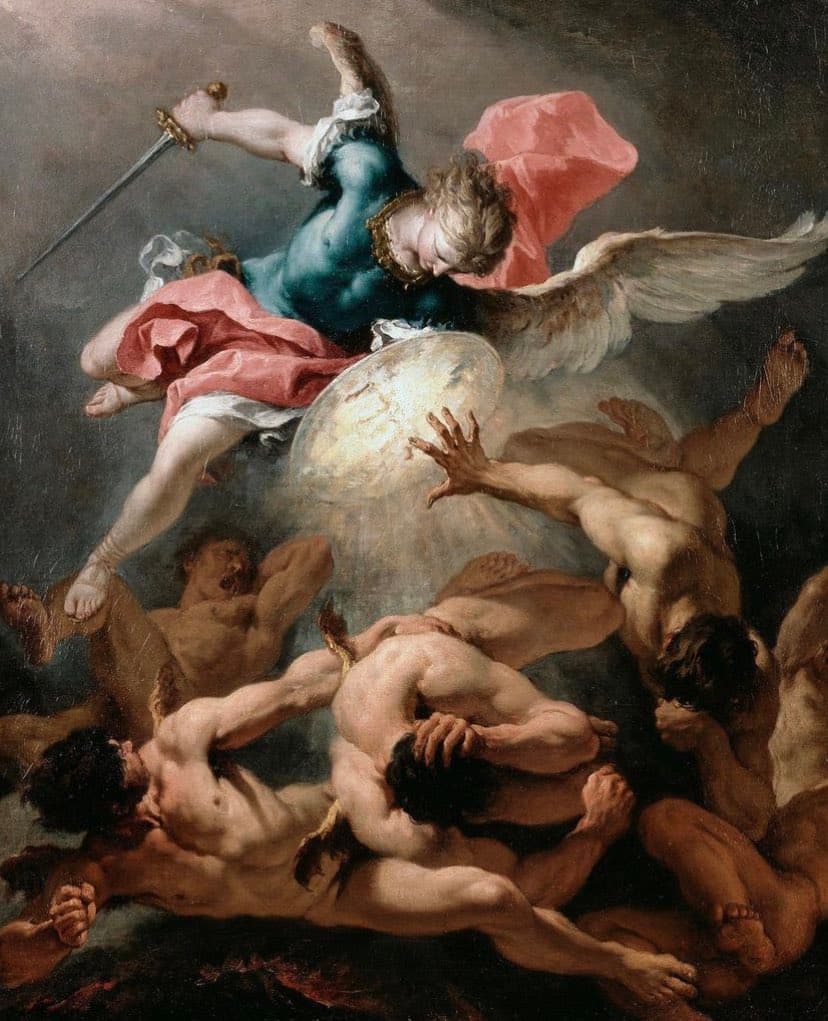
The Fall of the Rebel Angels
Sebastiano Ricci · c. 1720
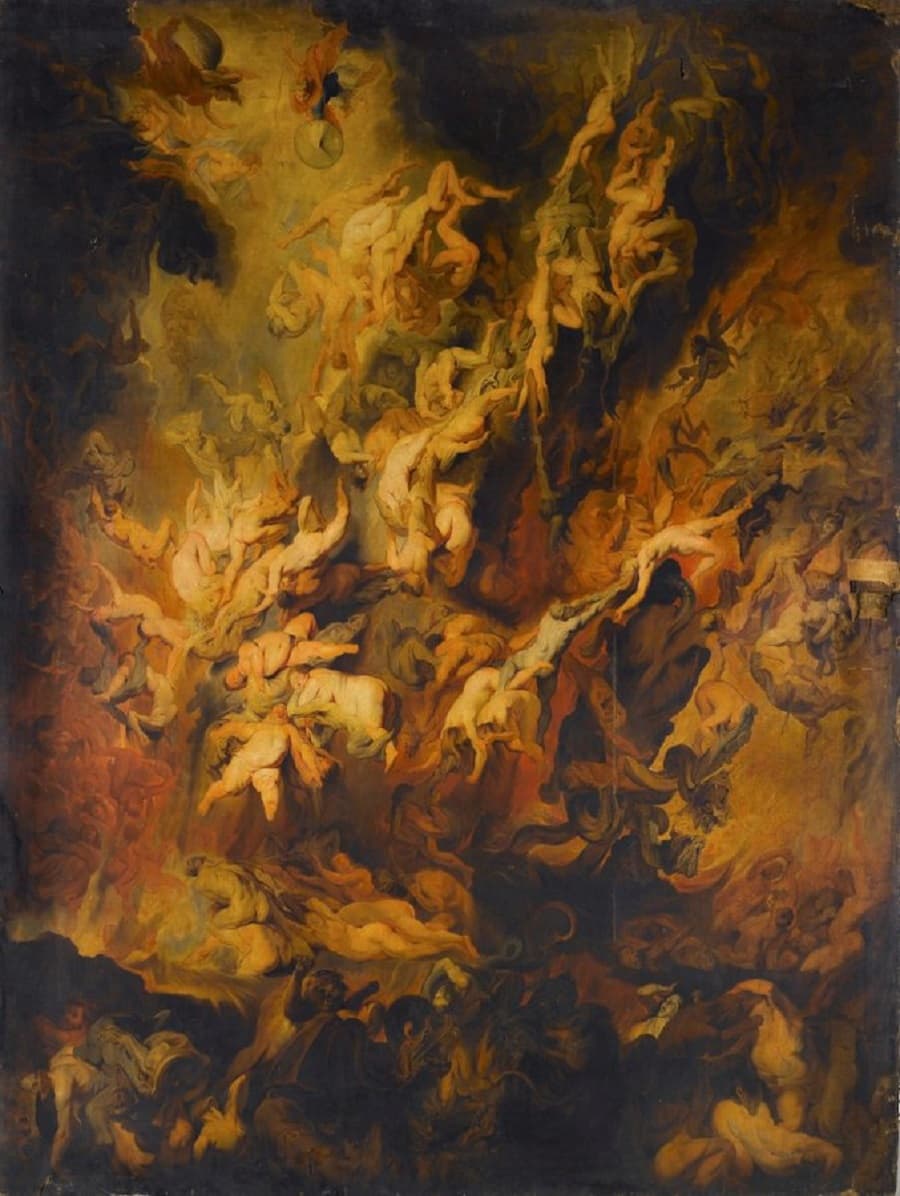
The Fall of the Damned
Guy Head · before 1799
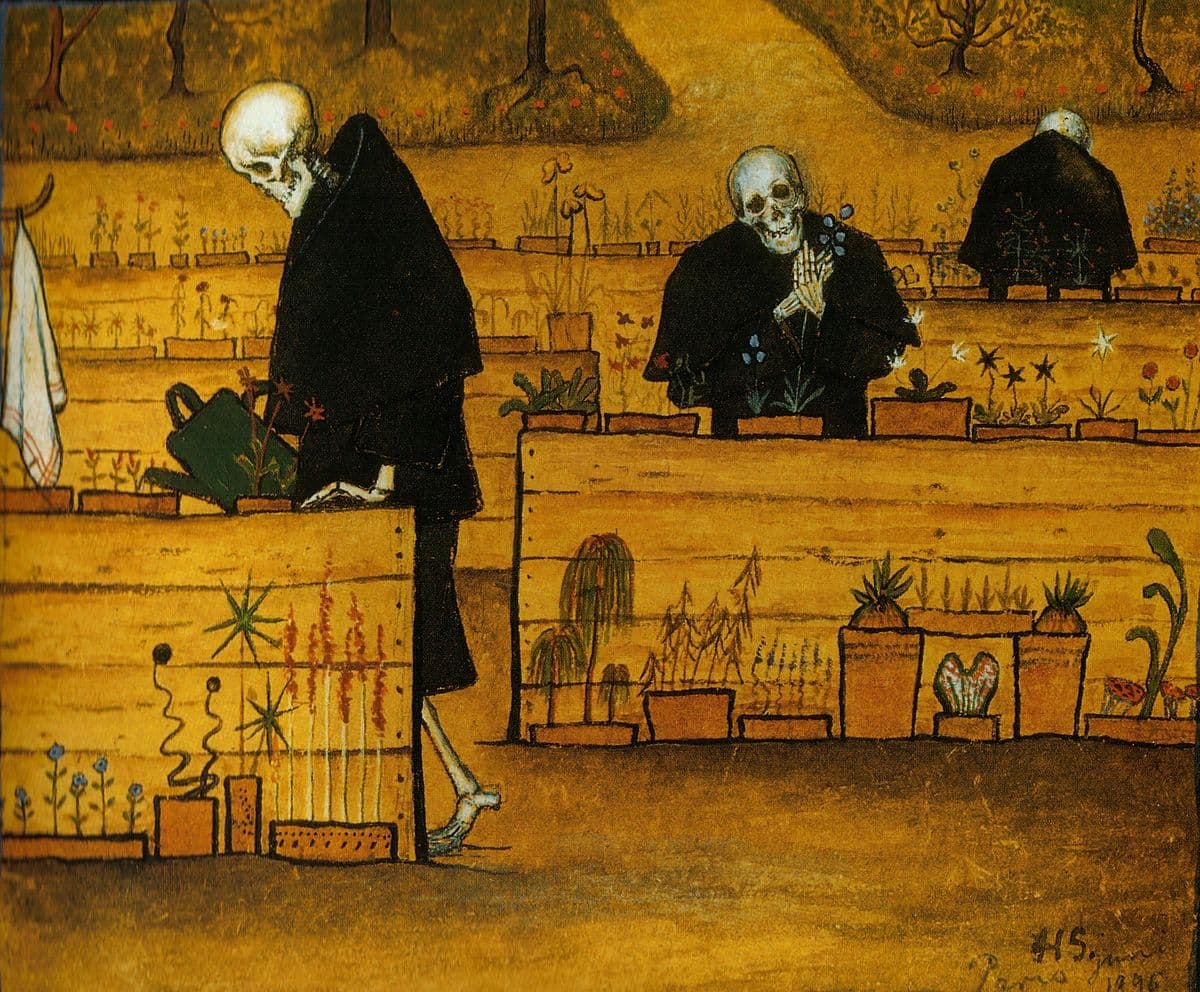
The Garden of Death
Hugo Simberg · 1896
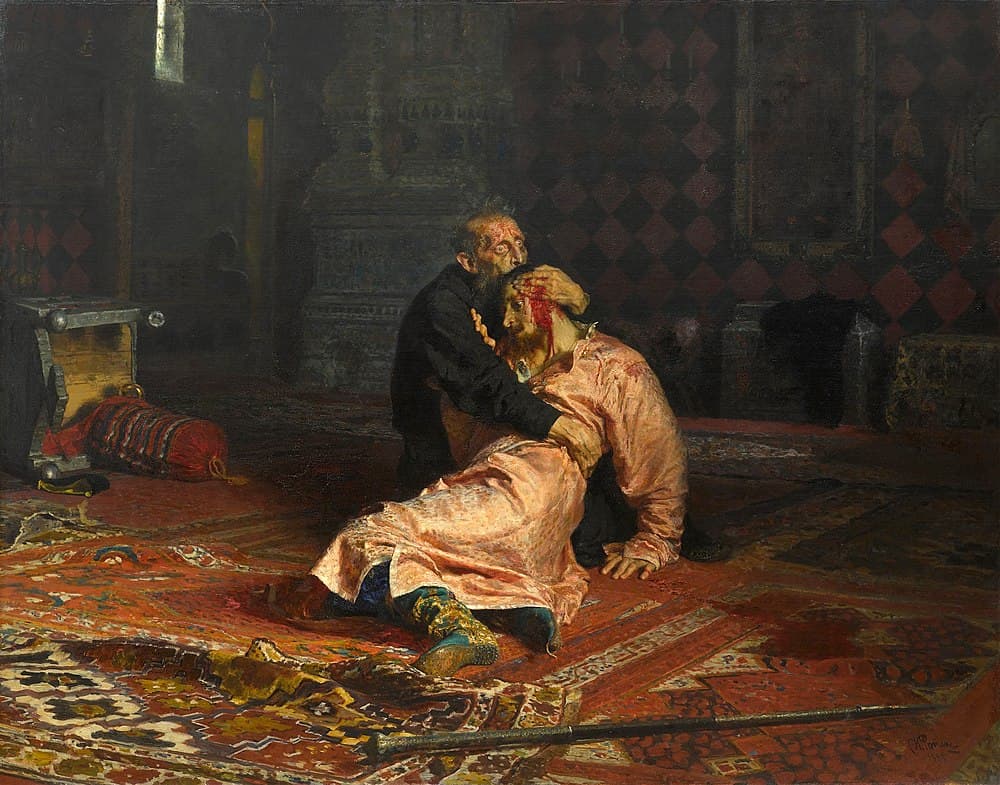
Ivan the Terrible and His Son Ivan
Ilya Repin · 1883–85

Venus de Milo
Alexandros of Antioch · c. 150–125 BC

The Scream
Edvard Munch · 1893

The Thinker
Auguste Rodin · Modeled 1880–82; enlarged 1902–03; this cast 1904

Saturn Devouring His Son
Francisco Goya · c. 1819–1823