Symbolism
Grave of a Suicide Victim
Wilhelm Kotarbiński, c. 1900
Grave of a Suicide Victim (Mogiła samobójcy) is a c. 1900 oil painting by Wilhelm Kotarbiński: a white lily bleeding from a lone grave slab at night. It is in the National Museum in Warsaw; a larger version is in Kraków.
- Artist
- Wilhelm Kotarbiński
- Date
- c. 1900
- Medium
- Oil on canvas
- Dimensions
- 139 × 80.5 cm
- Collection
- National Museum in Warsaw, Warsaw, Poland
- Movement
- Symbolism
What you are looking at
Almost nothing happens in this picture, and that is the point. A tilted slab of pale stone lies in a patch of waste ground at night. There is no cross, no name, no railing, no mourner. From a crack in the slab a single white lily has pushed its way up, and from the place where its stem meets the stone a thin stream of dark red runs down the slab, follows the crack and drips over the edge into the soil.
Above the flower, in the dark air, hangs a small smudge of greenish-white light. Kotarbiński paints it softly, without a contour, so that it reads less as an object than as a glow: a will-o'-the-wisp, or the soul itself, hovering over the place where the body lies. High in the upper right, easy to miss in a small reproduction, a single star shows through the cloud.
The rest of the canvas is given over to dry, broken stalks. Withered weeds lean over the slab from the right, and a few dead plants stand up in the foreground like small, bent figures. The palette is almost entirely brown, umber and smoky gray, so the three light notes (the slab, the lily and the floating glow) carry the whole picture. The tall, narrow format, nearly twice as high as it is wide, pulls the eye upward from the bleeding stone to the light and then on to the star.
Look closely at the bottom right corner and you will find the painter's signature, worked into the dark earth.
Why is the grave outside the cemetery?
The title explains the bleakness of the setting. For centuries, Christian churches in Eastern Europe, as elsewhere, refused burial in consecrated ground to people who had taken their own lives. Suicides were buried outside the cemetery wall, at crossroads, on the edge of fields or in waste land, often without a marker. Polish and Ukrainian folk belief held that such souls could not rest and might wander near the grave as lights or apparitions.
Kotarbiński sets his scene in exactly that kind of unconsecrated ground: a forgotten stone among weeds, far from any church. The pale light over the grave draws on the folk image of the restless soul. The lily, a traditional sign of purity and of the Virgin, grows out of the very spot the Church declared unholy, and the red stream suggests both the blood of the death and a kind of weeping. The painting does not preach. It simply places a sign of innocence and grief on a grave that custom said should have none.
That reading comes from the picture's title and from the symbolic vocabulary Kotarbiński used across his late work. He did not, as far as is known, leave a written explanation of this canvas.
Wilhelm Kotarbiński and Symbolism in Kyiv
Wilhelm Kotarbiński (1848–1921) was born in Nieborów, in the Polish lands then ruled by Russia. He trained at the Warsaw School of Drawing and then at the Accademia di San Luca in Rome, where he studied until 1875. In 1888 he moved to Kyiv at the invitation of the painter Pavel Svedomsky, and he spent the rest of his life there. Between 1889 and 1894 he worked on the decoration of St. Volodymyr's Cathedral alongside Viktor Vasnetsov and the Svedomsky brothers, and he painted murals for wealthy Kyiv collectors such as Bohdan Khanenko.
His public work was academic and religious. His private easel paintings were something else: moonlit seashores, ghostly women, sleeping water nymphs, columbaria and graves. Around 1900 these quiet, eerie pictures placed him among the Eastern European painters of Symbolism, the movement that preferred suggestion and mood to narrative. An obvious point of comparison is Arnold Böcklin, whose Isle of the Dead had made the lonely, silent burial place a favorite Symbolist subject.
Two versions: Warsaw and Kraków
Kotarbiński painted the subject more than once. The version shown here is the narrower canvas in the National Museum in Warsaw (inventory MP 1072), oil on canvas, 139 × 80.5 cm, dated c. 1900. Its Polish title is Mogiła samobójcy, usually translated "Grave of a Suicide Victim" or "Suicide's Grave."
A second, larger version, Grób samobójcy (Tomb of a Suicide), 212 × 142 cm, also dated 1900, belongs to the National Museum in Kraków (MNK II-b-539). The two are close in composition. The Kraków canvas is wider, shows more of the cloudy sky and a brighter star, and paints the lily and the blood more boldly. The Warsaw picture is tighter and darker, with the slab cut by a long crack that the blood follows.
Both are public domain, and both museums publish high-resolution scans in their digital collections.
Reception
In Kotarbiński's lifetime his mystical easel paintings found a ready market among Kyiv collectors. After his death, and through the Soviet period, he was remembered mainly as a church decorator. Interest in his Symbolist work has since revived, not least online, where Grave of a Suicide Victim now circulates as one of the most recognizable images of the darker side of fin-de-siècle painting. It sits naturally beside other images of death in art, such as Hugo Simberg's The Garden of Death.
Where to see it
The Warsaw version is held by the National Museum in Warsaw, though collection records list it in storage rather than on display, so check before visiting. The Kraków version belongs to the National Museum in Kraków. Both can be viewed online in each museum's digital collection.
Questions & answers
Who painted Grave of a Suicide Victim?
The Polish Symbolist Wilhelm Kotarbiński (1848–1921) painted it around 1900, while living in Kyiv. Its Polish title is Mogiła samobójcy. Kotarbiński is best known in Ukraine for his decorative work in St. Volodymyr's Cathedral, but his private canvases of graves, ghosts and moonlit scenes made him a leading Symbolist of the region.
Where is Grave of a Suicide Victim today?
The version shown here, oil on canvas, 139 × 80.5 cm, belongs to the National Museum in Warsaw (inventory MP 1072), which lists it in storage. A larger version, Tomb of a Suicide (212 × 142 cm, 1900), is in the National Museum in Kraków. Both can be seen in the museums' online collections.
What does Grave of a Suicide Victim mean?
Suicides were traditionally refused burial in consecrated ground and laid in unmarked graves outside cemeteries. Kotarbiński paints such a grave: a bare slab among weeds. A pure white lily grows from it and bleeds, while a pale light, the restless soul of folk belief, hovers above. The picture offers grief and dignity where custom gave none.
What is the light floating above the grave?
Kotarbiński does not explain it, but in Polish and Ukrainian folk tradition the souls of those who died by suicide were believed to wander near their graves as lights or apparitions. The soft, shapeless glow above the lily is usually read as that soul, or as a will-o'-the-wisp of the kind seen over marshy waste ground.
Kindred works
You may also study
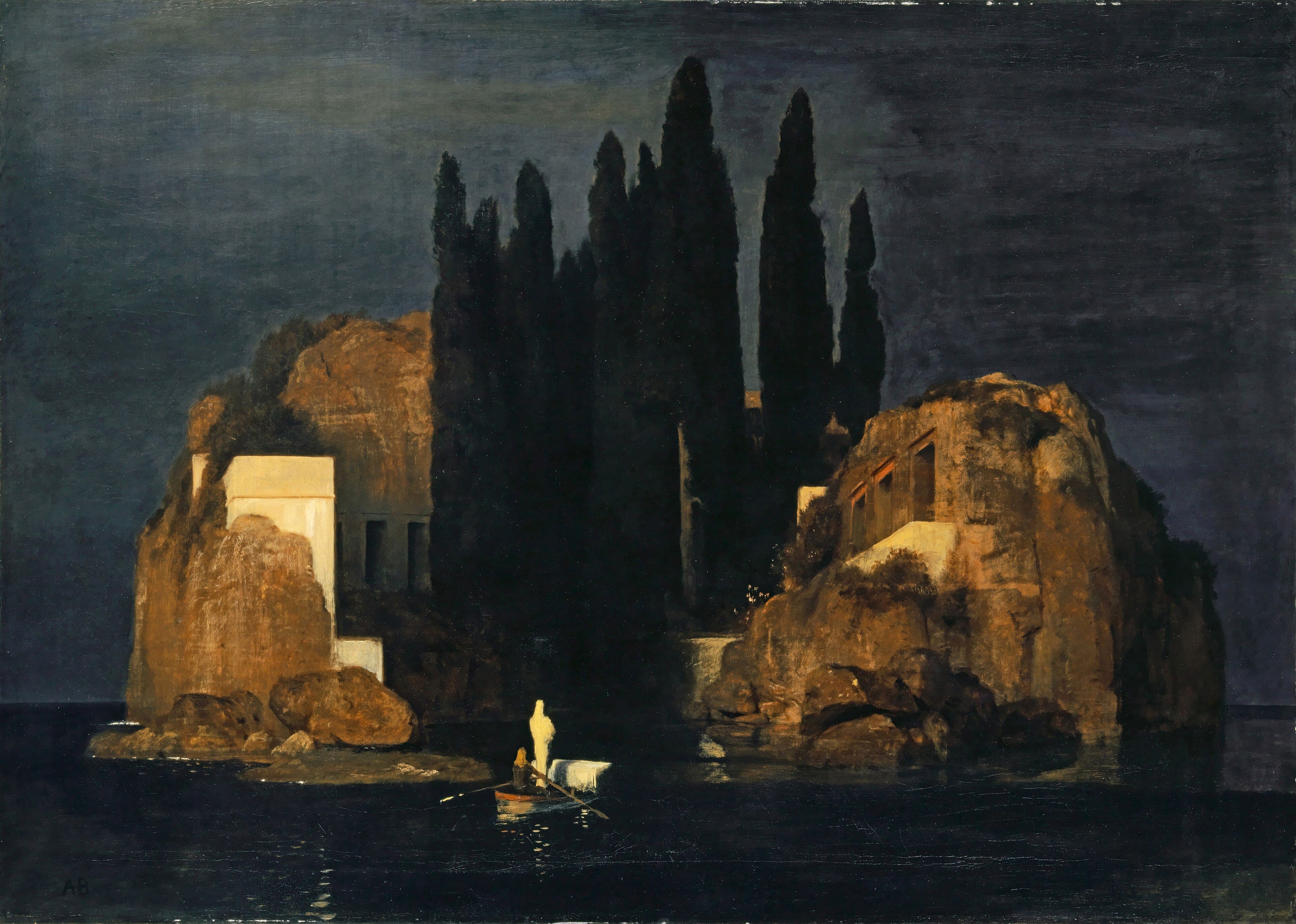
Isle of the Dead
Arnold Böcklin · 1880 (first version); five versions 1880–86
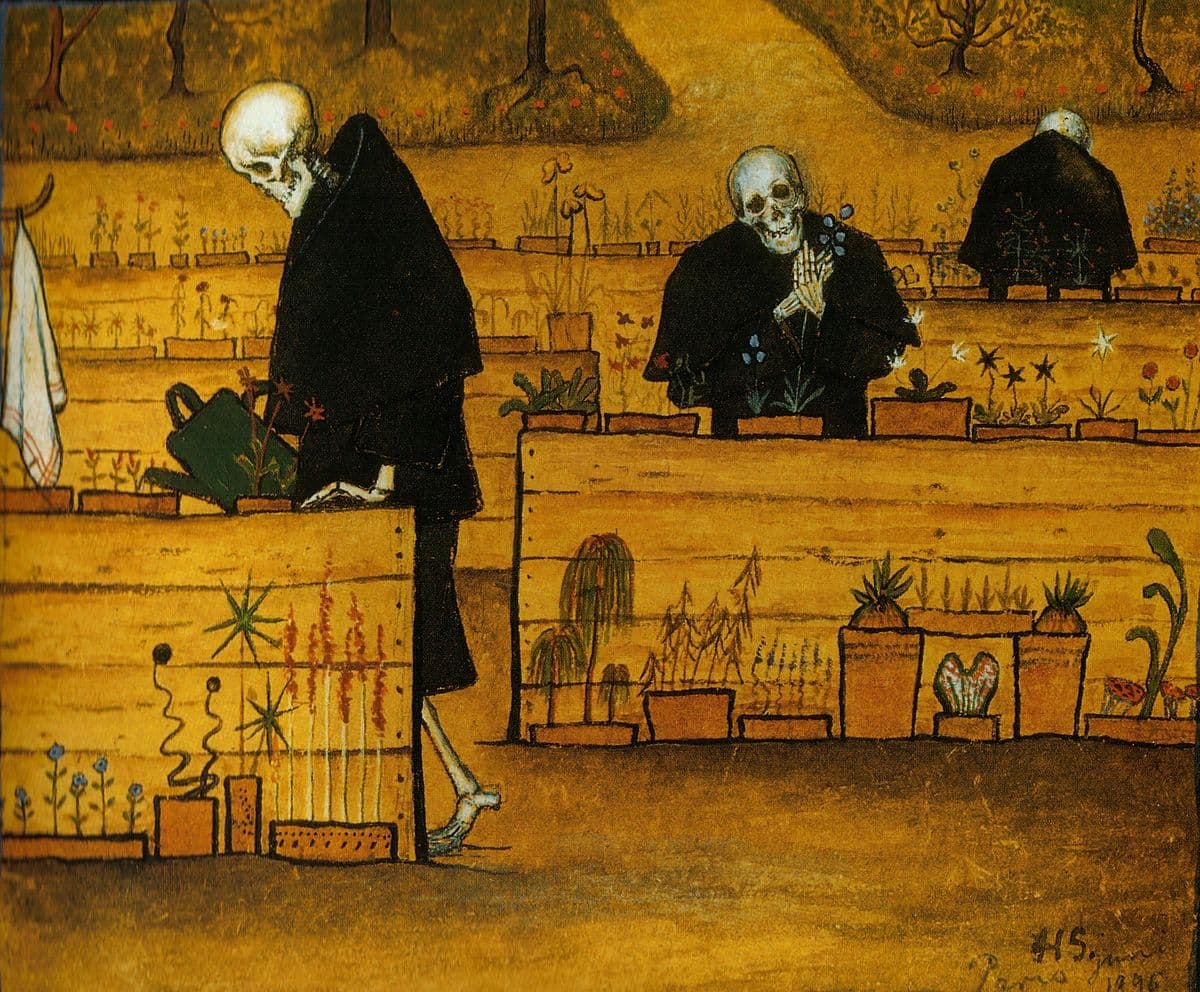
The Garden of Death
Hugo Simberg · 1896

Lucretia
Rembrandt · 1664
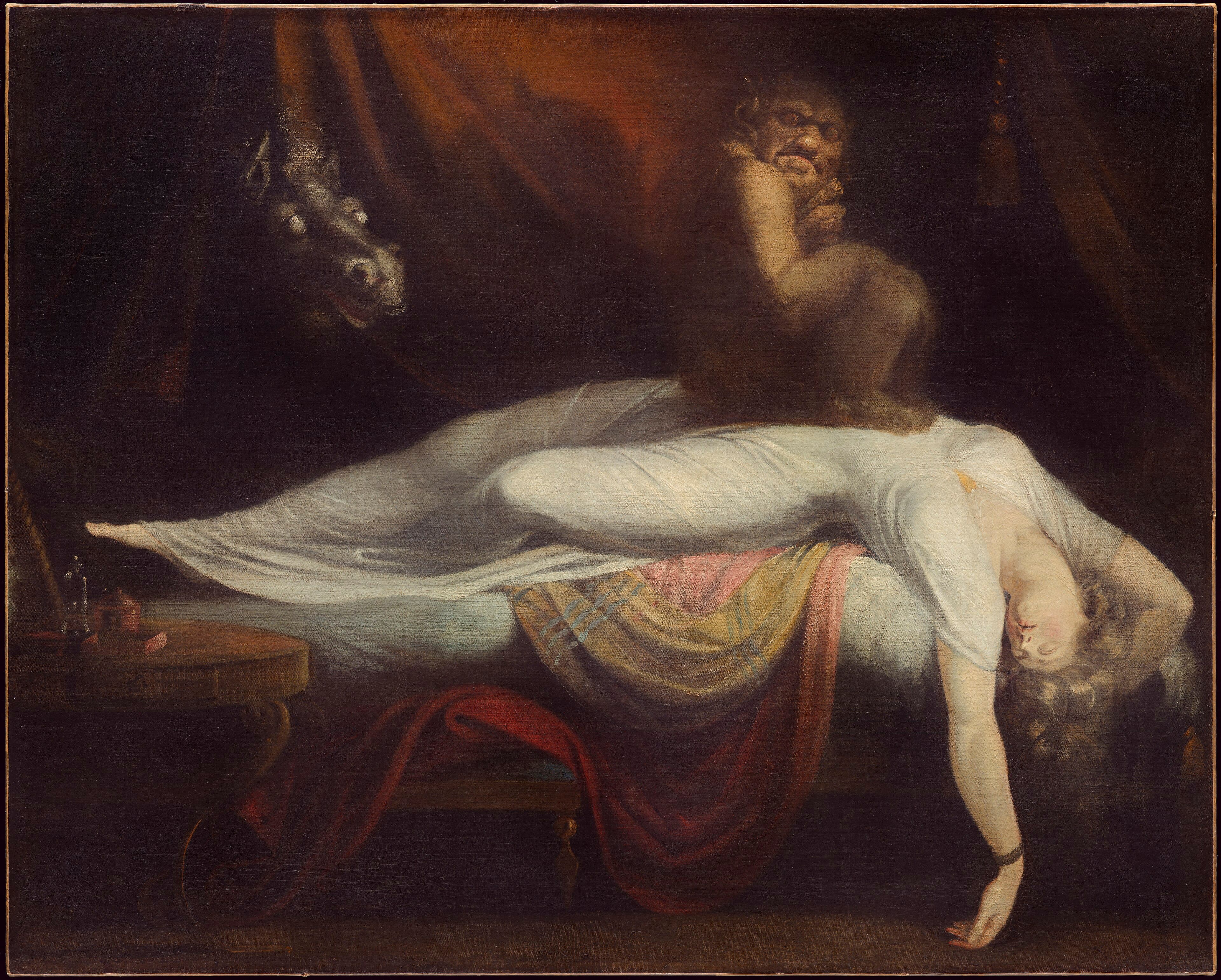
The Nightmare
Henry Fuseli · 1781
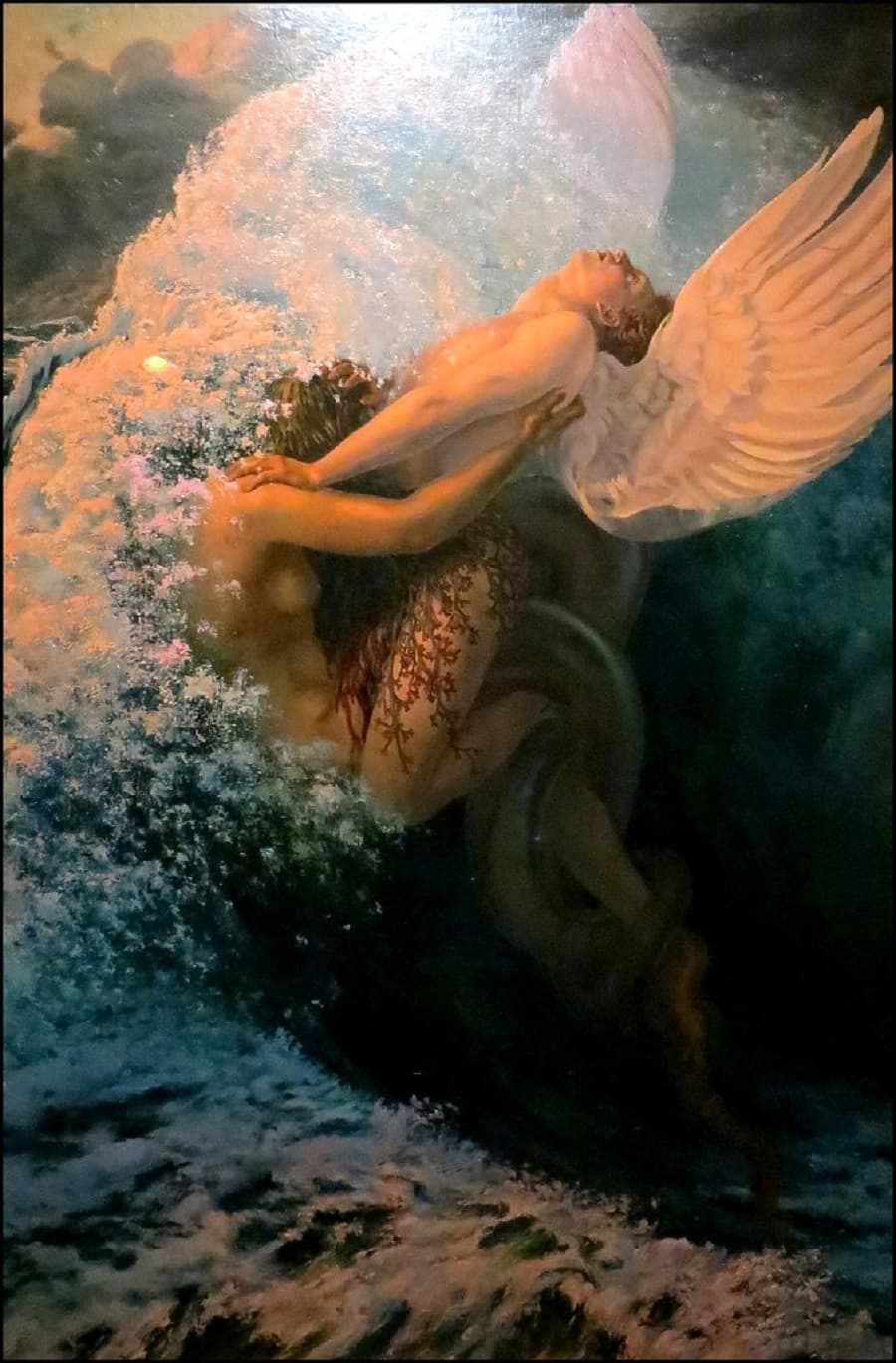
Spleen et Idéal
Carlos Schwabe · 1907
Nymphs Dancing to Pan's Flute
Joseph Tomanek

The Scream
Edvard Munch · 1893

Saturn Devouring His Son
Francisco Goya · c. 1819–1823