Image: Miniwark / Wikimedia Commons · CC BY-SA 3.0 · via Wikimedia Commons
Neoclassicism
The Three Graces
James Pradier, 1831
Les Trois Grâces is a life-size marble group by the Geneva-born sculptor James (Jean-Jacques) Pradier, shown at the Paris Salon of 1831 and bought for the French crown that year. It is now in the Musée du Louvre in Paris.
- Artist
- James Pradier
- Date
- 1831
- Medium
- Marble
- Dimensions
- approx. 172 × 102 cm
- Collection
- Musée du Louvre, Paris, France
- Movement
- Neoclassicism
What you are looking at
Three nude young women stand side by side on a low marble base, facing the viewer, their bodies touching from shoulder to hip. The central Grace is the pivot of the group. She stands with her weight on one leg, head tilted back and to the side, and lays her right arm loosely over the shoulder of her companion on the left, the hand hanging relaxed. The Grace on the right leans into her, resting her head on the central figure's shoulder with closed eyes, one hand drawn up to her own breast and the other reaching around to rest on her friend's shoulder. The Grace on the left looks down and away, holding a garland of flowers that falls against her thigh.
Behind them, partly hidden, stands a small altar or pedestal hung with carved garlands, and at their feet lies a little casket spilling a string of pearls or flowers, details that tie the group to Venus, whose companions the Graces were. The sculpture stands about 1.72 m high and is carved from white marble.
Pradier pays as much attention to surfaces as to pose. The skin is polished to a soft sheen, while the hair is cut into crisp curls and bound with ribbons, and each face has its own expression: dreamy, sleepy, pensive. Look at the hands, which rest on shoulders and press very slightly into the flesh, a small illusion of softness in stone that viewers often miss on a first look. Notice too how the three bodies are almost identical in proportion but differ in their turn and lean, so that the group sways gently from left to right like a single figure seen three times.
Who were the Three Graces?
In Greek myth the Charites, known in Latin as the Gratiae, were daughters of Zeus and companions of Aphrodite. Hesiod names them Aglaia (splendor), Euphrosyne (mirth) and Thalia (good cheer). From antiquity onward they stood for beauty, charm and the giving and receiving of favors, which is why they were often shown with linked arms in a circle: a gift passes from one to the next and returns. Renaissance painters such as Raphael and Botticelli revived the subject, and by the early nineteenth century it was one of the standard tests of a sculptor's skill with the female nude.
How Pradier made it
Pradier's group sits in the shadow of the most famous modern version, The Three Graces by Antonio Canova (1814–17). The classical formula, known from Roman wall paintings and the ancient marble group in Siena, shows the central Grace from behind between two seen from the front. Canova broke with it by turning all three toward one another, and Pradier, like Canova, turns all three the same way, here frankly toward the viewer. What he changes is the temperature. Canova's Graces are cool and idealized; Pradier's are fuller, more individual and more openly sensual, and their faces look less like antique types than like portraits of the models who posed in his studio.
Born in Geneva in 1790 and trained in Paris, Pradier won the Prix de Rome in 1813 and spent five years at the French Academy in Rome studying ancient sculpture. By 1831 he was a professor at the École des Beaux-Arts and one of the most successful sculptors in France. His studio worked on a near-industrial scale, and the Three Graces were later reproduced in reductions of marble, bronze and plaster, a common practice that spread a popular design to private homes.
History and royal purchase
The marble was exhibited at the Salon of 1831, the first Salon after the July Revolution of 1830 brought Louis-Philippe to the throne. It was bought for the crown by the minister of the Maison du Roi in September 1831 and placed in the royal collections at Versailles, where it remained until it entered the Louvre in 1928. The purchase fitted the new regime's taste for safe, graceful mythological subjects alongside the history paintings it commissioned for Versailles.
Meaning and reception
Read through the classical tradition, the group is an allegory of friendship and generosity. Read in its own time, it was also a fashionable display of the female body sanctioned by myth. Pradier's critics, then and since, have accused him of making antiquity an excuse for erotic charm; his admirers, including Gustave Flaubert, who was a regular in his studio, valued exactly that warmth. Both views are fair. The Graces mark the point where French Neoclassicism started to soften into the polished sensuality of later Second Empire sculpture, the line that runs on to Bouguereau's Birth of Venus.
Pradier's reputation fell sharply in the twentieth century, when polished academic marble went out of favor, and has recovered since the 1980s as museums have looked again at nineteenth-century sculpture. Today the group is valued both for its craft and as a document of how Romantic-era Paris imagined antiquity.
Where to see it
The Three Graces are in the Musée du Louvre, Paris,, in the department of sculptures; check the museum's online collection for its current room before a visit. For other treatments of classical myth in marble, see Psyche Revived by Cupid's Kiss, famous sculptures and Greek statues.
Questions & answers
Where is Pradier's Three Graces?
The marble Three Graces by James Pradier is in the Musée du Louvre in Paris. It was shown at the Salon of 1831, bought for the crown that year, kept at Versailles and transferred to the Louvre in 1928.
Who are the Three Graces in mythology?
They are the Charites, daughters of Zeus and companions of Aphrodite. Hesiod names them Aglaia (splendor), Euphrosyne (mirth) and Thalia (good cheer). They stand for beauty, charm and generosity, and are traditionally shown with linked arms.
How is Pradier's Three Graces different from Canova's?
Both sculptors abandon the classical pose in which the middle Grace is seen from behind. Canova's group of 1814–17 turns the three inward toward one another and is cool and idealized. Pradier's 1831 group stands side by side facing the viewer and is fuller and more openly sensual.
Was Jean-Jacques Pradier Swiss or French?
Both, in a sense. He was born in Geneva in 1790, but he trained in Paris, won the French Prix de Rome in 1813 and made his whole career in France, where he was known as James Pradier.
Kindred works
You may also study
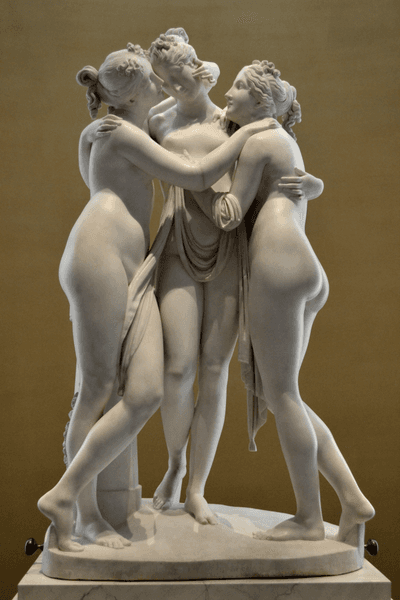
The Three Graces
Antonio Canova · 1814–17
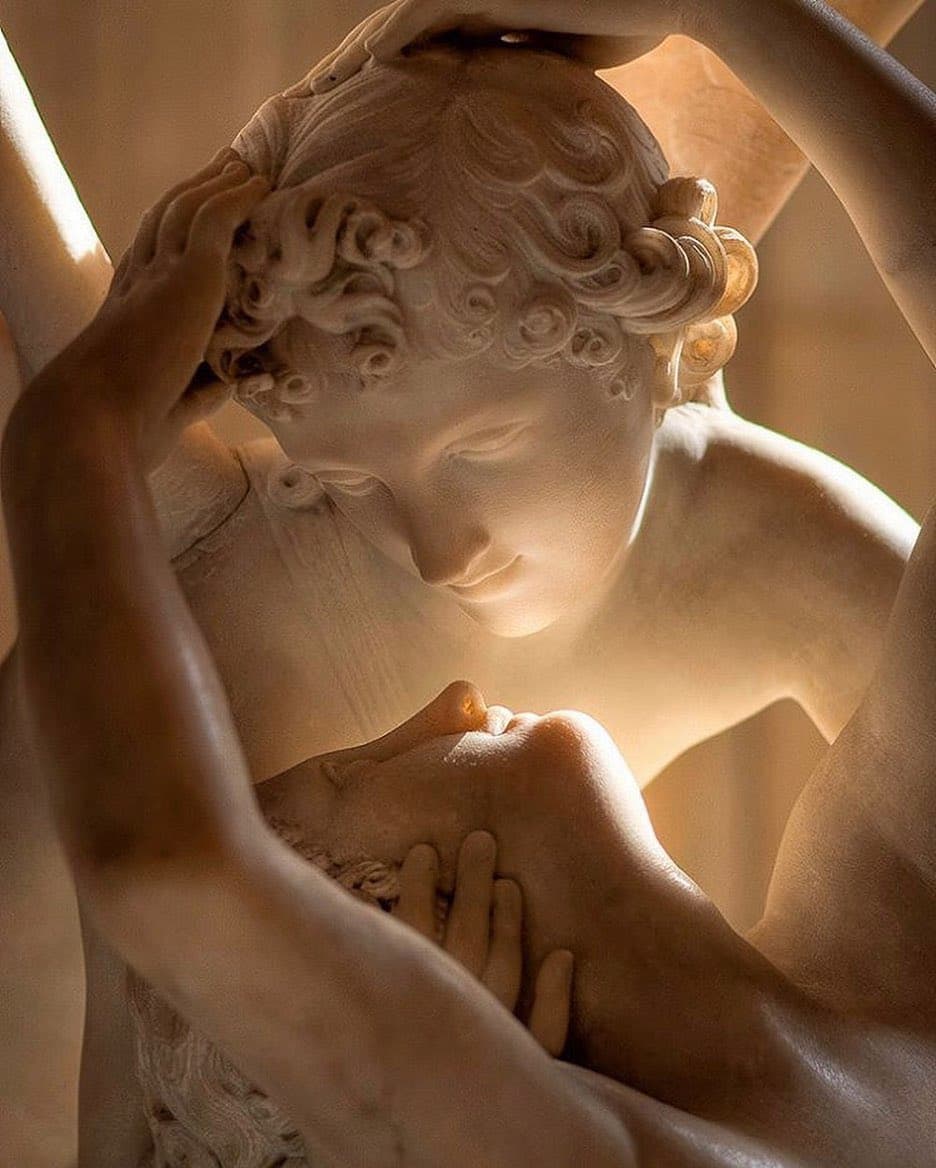
Psyche Revived by Cupid's Kiss
Antonio Canova · 1787–1793
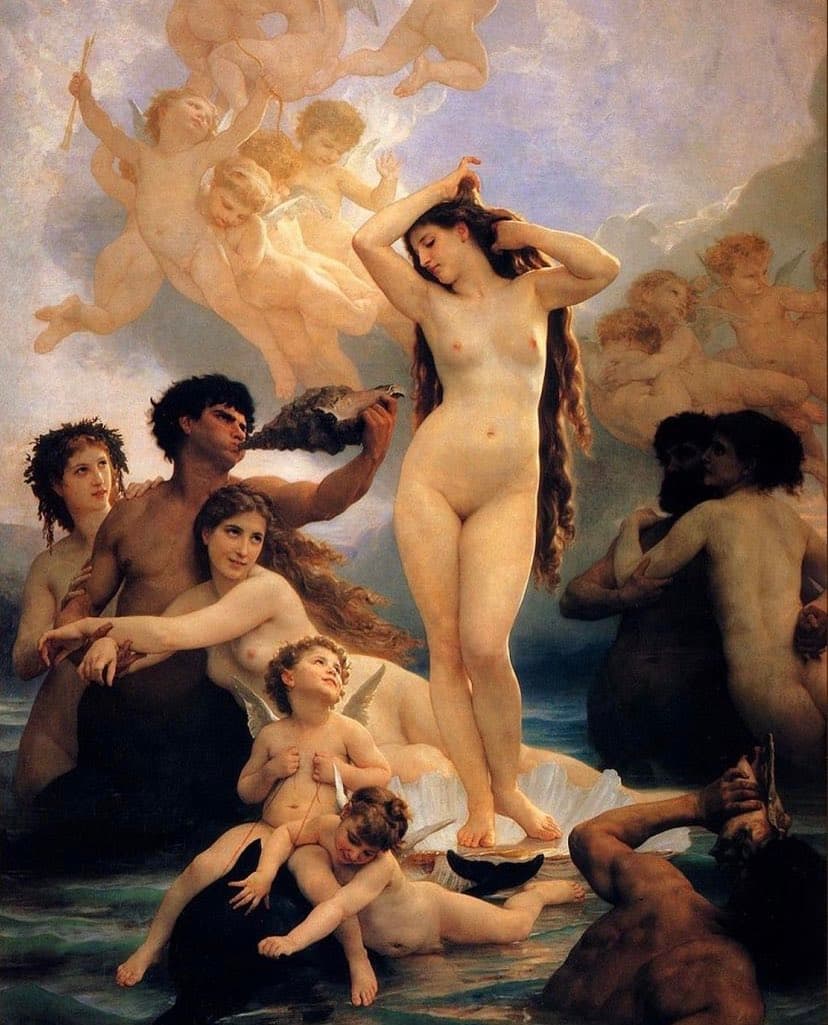
The Birth of Venus
William-Adolphe Bouguereau · 1879

Venus de Milo
Alexandros of Antioch · c. 150–125 BC

Nymphs Dancing to Pan's Flute
Joseph Tomanek
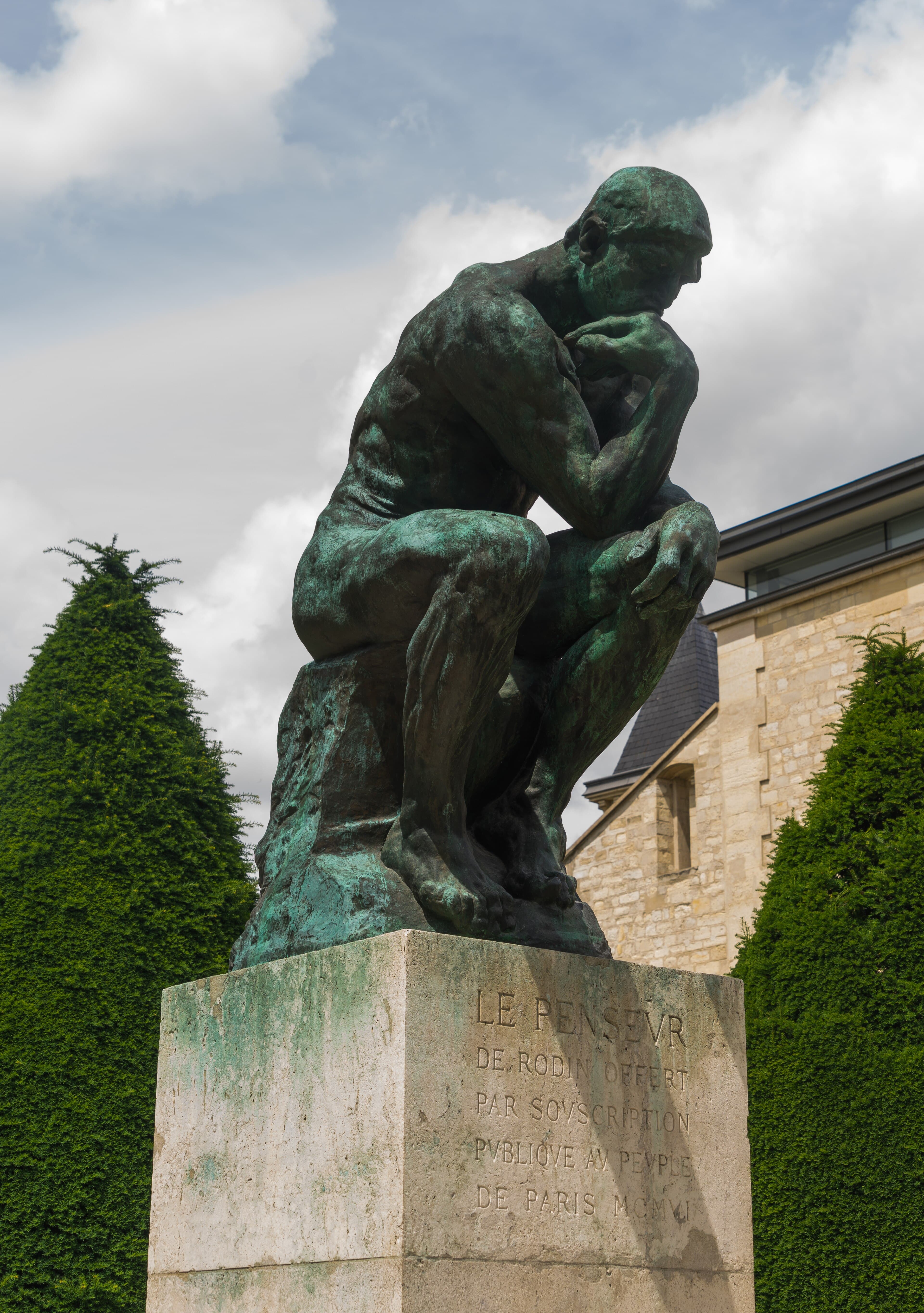
The Thinker
Auguste Rodin · Modeled 1880–82; enlarged 1902–03; this cast 1904

Saturn Devouring His Son
Francisco Goya · c. 1819–1823
The Creation of Adam
Michelangelo · c. 1511–12