Dutch Baroque
Atlas, Royal Palace Amsterdam
Artus Quellinus & Jacob van Campen & Daniël Stalpaert, c. 1662–63
The Atlas statue at the Royal Palace on Dam Square, Amsterdam, was designed by Artus Quellinus: a bronze cast in 1663 stands on the rear roof, and its full-size white model, carrying a starry celestial globe, is inside the Burgerzaal.
- Artist
- Artus Quellinus & Jacob van Campen & Daniël Stalpaert
- Date
- c. 1662–63
- Medium
- Full-scale casting model for the bronze roof statue, painted white (stone or wood; sources differ)
- Dimensions
- About 7 m high
- Collection
- Royal Palace (Koninklijk Paleis), Burgerzaal, Amsterdam, Netherlands
- Movement
- Dutch Baroque
Two Atlases, one design
Visitors searching for the Atlas statue in Amsterdam are usually looking for one of two figures, and they are closely related. The first is the bronze Atlas on the roof of the Royal Palace, standing on the peak of the rear (west) pediment, high above the street, with a celestial globe on his shoulders. The second is the full-size white Atlas indoors, set high above the west entrance of the Burgerzaal, the palace's great marble hall. The photograph on this page shows the indoor figure.
Both come from the workshop of the Flemish sculptor Artus Quellinus, who covered Amsterdam's new town hall with sculpture between about 1650 and 1665. The indoor figure is the full-scale model from which the bronze roof statue was cast. The palace dates it to about 1662–63 and gives its height as about 7 meters.
What you are looking at
Seen from the floor of the Burgerzaal, Atlas appears from the chest up, as if he had pushed through the cornice. His head is bowed under the weight. A thick beard and a crown of curling hair and leaves frame a face set in effort. Both arms are raised: the right fist clenched against the sphere, the left hand spread open beside it. The muscles of his shoulders and upper arms are carved in hard, swelling masses, the anatomy of a man at the limit of his strength.
What he carries is not the Earth. The sphere is painted a soft blue-green and scattered with gilded stars, crossed by bands of gold dots that trace the circles of the heavens. It is a celestial globe: the sky itself. That is the correct version of the myth. In Greek legend the Titan Atlas, punished after the Titans' war against the gods, was condemned to hold up the heavens at the western edge of the world. The image of Atlas carrying the Earth is a later confusion, encouraged by the use of his figure on the title pages of map books.
The setting matters too. The figure is white, but the walls around it are real veined marble, so the painted model blends into the stone architecture. Above it is the edge of the hall's painted ceiling.
The bronze Atlas on the roof
The bronze version was cast in 1663 by the brothers François and Pieter Hemony, Amsterdam's famous bell founders, after Quellinus's model. The globe is not solid bronze but a wooden form covered in copper plate. Atlas stands at the apex of the west front, facing away from Dam Square, flanked lower down by bronze figures of Temperance and Vigilance.
Over three and a half centuries in polluted city air the bronze turned green. In 2024 Atlas came down for restoration in Antwerp. The corrosion was cleaned off, returning the figure to a darker bronze color, and he went back up in spring 2026; his globe was hoisted into place on 1 May 2026, the last of Quellinus's six roof statues to be restored.
How it was made
Quellinus worked out the design in small clay models first. The Rijksmuseum holds terracotta models of Atlas from 1650–51, about 90 cm high, made long before the bronze was cast. One account entry from 1651 records payment for "another atlas," an improved second version, and Quellinus's handling of the back and buttocks borrows from the famous antique Belvedere Torso in Rome.
The sources differ on the material of the indoor full-size model. The Royal Palace's 2025 exhibition texts describe it as Avesnes stone (a fine French limestone) painted white; an older Rijksmuseum catalogue entry calls it a wooden casting model. Either way, it is the working full-scale version of the bronze, kept and displayed indoors for more than three centuries.
What does the Atlas statue mean?
The town hall's sculpture was planned as one moral program for a merchant republic at the height of its power. On the east front, facing Dam Square, the figure of Peace is flanked by Justice and Prudence. On the west front, Atlas is flanked by Temperance and Vigilance. Together, as the Rijksmuseum explains, they say that peace on earth and in heaven depends on these four virtues.
Inside, Atlas plays a further role. The Burgerzaal was conceived as a model of the cosmos, with maps of the hemispheres and the heavens inlaid in its marble floor, so that the citizens of Amsterdam walked across the world. Atlas, bearing the sky above the doorway, turns the hall into a universe with Amsterdam at its center. For other ways artists have pictured Atlas, compare Jason deCaires Taylor's underwater Ocean Atlas, or browse Greek mythology in art.
The building
The palace began as Amsterdam's town hall. Construction started in 1648, the year the Peace of Münster ended the war with Spain, to designs by Jacob van Campen; the city architect Daniël Stalpaert oversaw much of the later work. It opened in 1655 and was completed in the 1660s. Built on 13,659 wooden piles, it was the largest secular building in the Dutch Republic and a showpiece of Dutch classicism, an important companion to the Baroque art of its age. Rembrandt's The Night Watch later hung inside. In 1808 Louis Bonaparte, King of Holland, converted it into a royal palace, and it remains a palace of the Dutch monarchy, used for state visits and open to the public as a museum.
Where to see it
The indoor Atlas is above the west entrance of the Burgerzaal in the Royal Palace (Koninklijk Paleis) on Dam Square, Amsterdam, which is open to visitors on most days when it is not in use for royal events. The bronze Atlas can be seen from the street at the back of the palace, on Nieuwezijds Voorburgwal.
Questions & answers
Where is the Atlas statue in Amsterdam?
There are two, both at the Royal Palace on Dam Square. A bronze Atlas with a celestial globe stands on the peak of the rear (west) facade, visible from Nieuwezijds Voorburgwal. Inside, a full-size white Atlas, the model for the bronze, sits above the west entrance of the Burgerzaal, the palace's great hall, which visitors can enter.
Who made the Atlas statue on the Royal Palace?
The Flemish sculptor Artus Quellinus (1609–1668) and his workshop designed it as part of the sculpture for Amsterdam's town hall, the building designed by Jacob van Campen. The bronze was cast in 1663 by the Hemony brothers, Amsterdam's bell founders, from Quellinus's full-scale model.
Is Atlas holding the Earth or the sky?
The sky. The blue sphere is a celestial globe studded with gilded stars, true to the Greek myth in which the Titan Atlas was condemned to hold up the heavens. The idea of Atlas carrying the Earth is a later confusion, helped along by his image on the title pages of map collections.
What does the Atlas statue mean?
On the west front Atlas is flanked by Temperance and Vigilance, while Peace stands between Justice and Prudence on the east front. Together they express that peace in heaven and on earth depends on these virtues. Inside, Atlas bearing the heavens crowns the Burgerzaal, a hall designed as an image of the cosmos.
When was the Atlas statue made?
Quellinus made clay models around 1650–51, and the full-size model is dated about 1662–63. The bronze was cast in 1663 and set on the roof of the town hall, built from 1648 and later converted into a royal palace in 1808. The bronze was restored in Antwerp and returned to the roof in 2026.
Kindred works
You may also study

Ocean Atlas
Jason deCaires Taylor · 2014
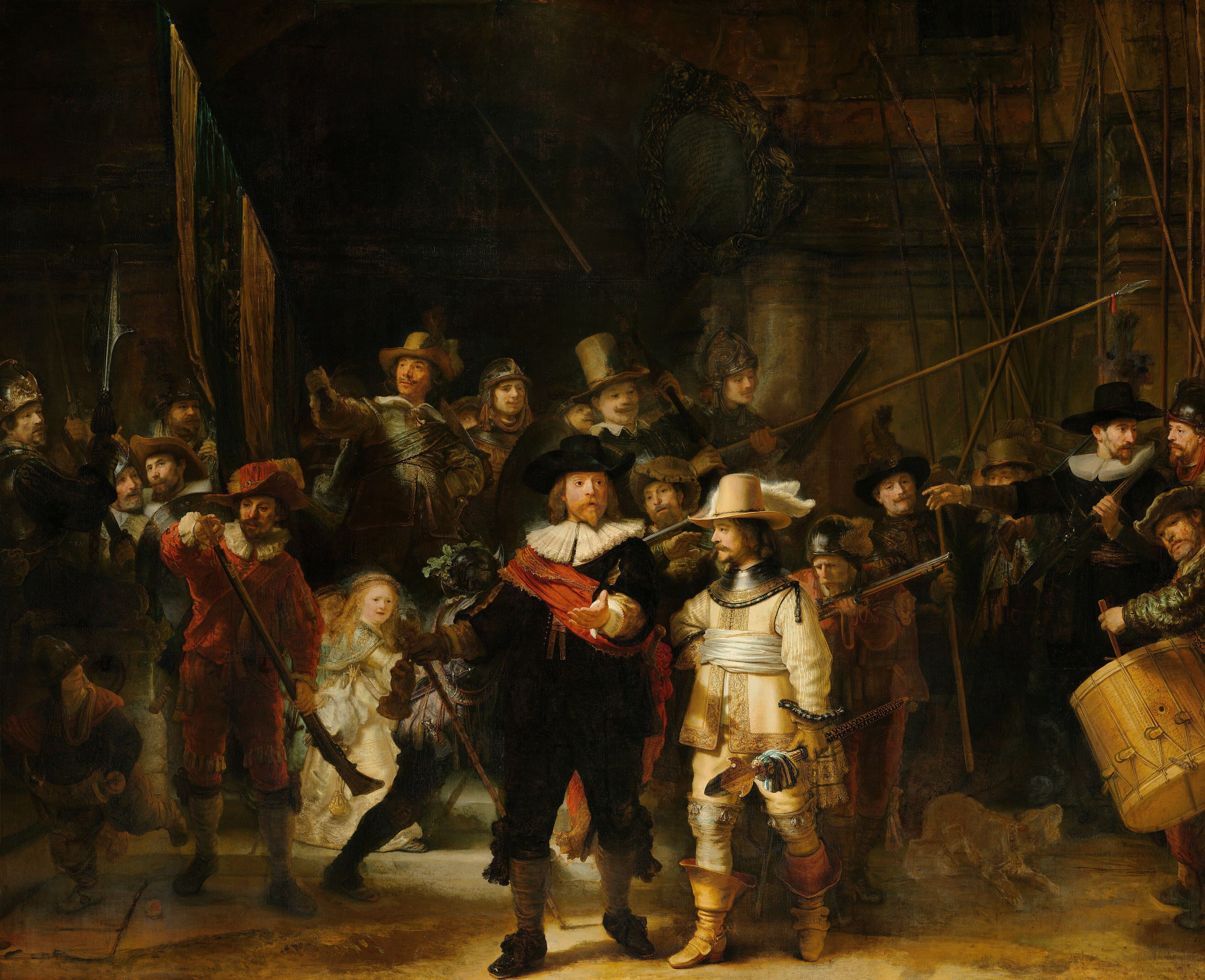
The Night Watch
Rembrandt · 1642
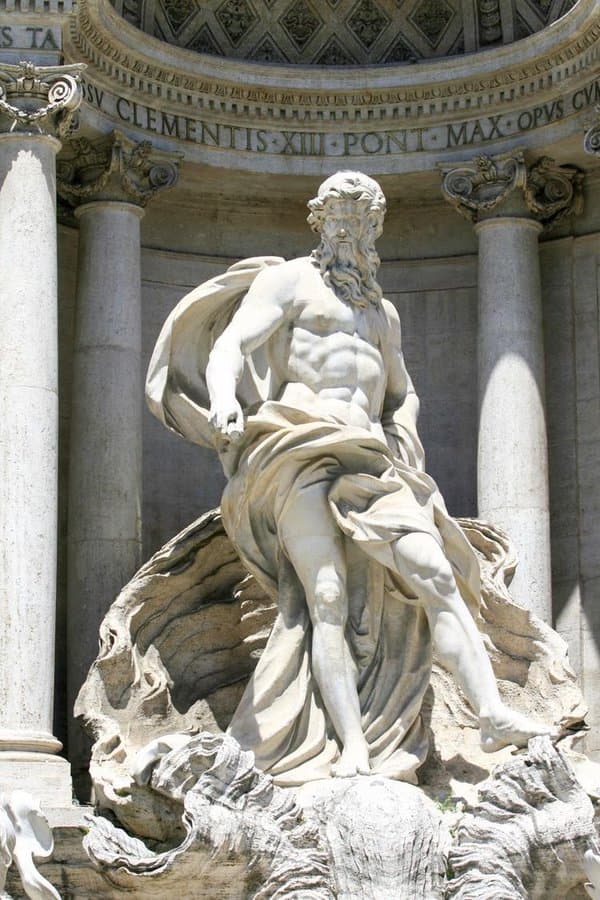
Oceanus, Trevi Fountain
Pietro Bracci & Nicola Salvi & Giuseppe Pannini · 1732–62
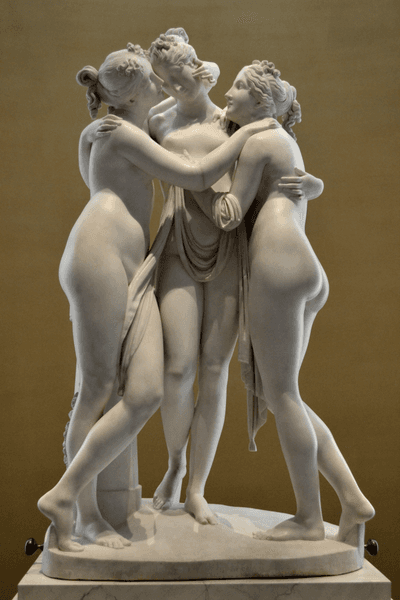
The Three Graces
Antonio Canova · 1814–17

Venus de Milo
Alexandros of Antioch · c. 150–125 BC

Nymphs Dancing to Pan's Flute
Joseph Tomanek

Saturn Devouring His Son
Francisco Goya · c. 1819–1823
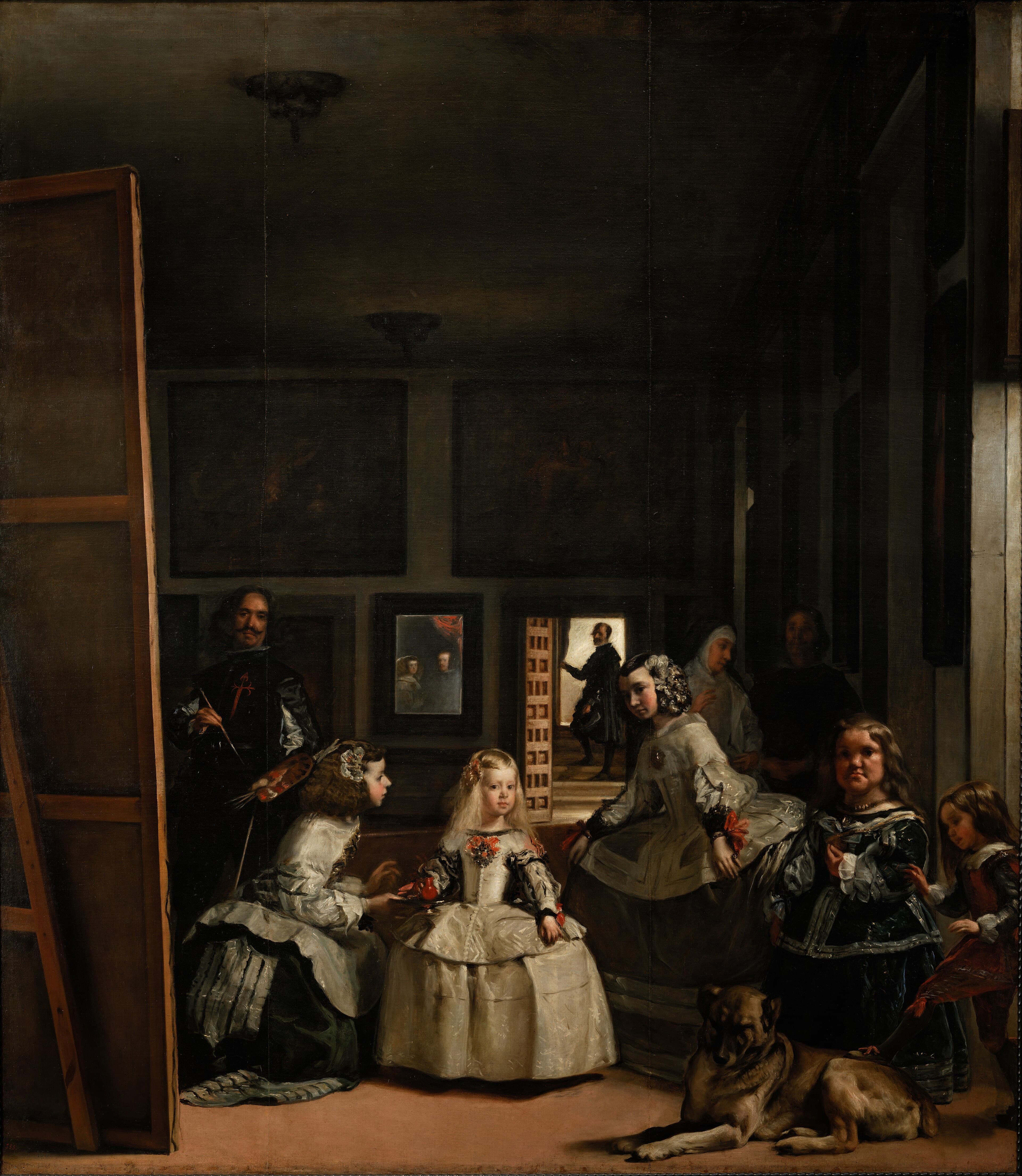
Las Meninas
Diego Velázquez · 1656