Image: National Gallery, London / Wikimedia Commons · Public domain · via Wikimedia Commons
Early Netherlandish
The Arnolfini Portrait
Jan van Eyck, 1434
The Arnolfini Portrait is Jan van Eyck's 1434 oil painting on oak of an Italian merchant and a woman in a room in Bruges, signed above a convex mirror. It hangs in the National Gallery, London.
- Artist
- Jan van Eyck
- Date
- 1434
- Medium
- Oil on oak panel
- Dimensions
- 82.2 × 60 cm
- Collection
- National Gallery, London, United Kingdom
- Movement
- Early Netherlandish
The Arnolfini Portrait is an oil painting on an oak panel, 82.2 by 60 centimeters, made in 1434 by the Flemish painter Jan van Eyck in Bruges. It shows a man, almost certainly the Italian merchant Giovanni di Nicolao Arnolfini, and a woman standing hand in hand in a bedroom. It has been in the National Gallery in London since 1842 and is one of the most debated pictures in the history of art: no one agrees on what event, if any, it records.
What you're looking at
A man and a woman stand in a well-furnished room lit by a window on the left. He wears a huge, dark straw hat and a plum-colored tabard trimmed with fur; his face is pale and long, his eyelids heavy. He raises his right hand, palm outward, in a gesture that may be a greeting, a blessing or an oath. With his left he holds the woman's right hand, palm up.
She wears a green woolen gown, lavishly lined with fur, with long, pleated, scalloped sleeves, over a blue underdress. She holds up a great mass of the gown's skirt in front of her stomach. Her head is covered with a white linen headdress with layered, crimped edges.
Around them the room is full of objects painted with almost microscopic precision: a pair of wooden pattens (clogs) cast off on the floorboards at the left; red slippers further back; oranges on the windowsill and on the chest; a brass chandelier with a single lit candle in broad daylight; a red bed; a carved chair; a string of crystal beads hanging on the wall; a whisk brush; and at their feet a small, alert dog, an early griffon terrier type.
The mirror and the signature
At the center of the back wall hangs a convex mirror. In its distorted reflection we see the backs of the couple and, beyond them in the doorway, two more figures, one in blue and one in red. These are standing where we stand, entering the room. Set around the frame of the mirror are ten tiny roundels, each smaller than a fingernail, painted with scenes from the Passion of Christ, from the Agony in the Garden to the Resurrection.
Above the mirror, in elegant Gothic script, Van Eyck wrote Johannes de eyck fuit hic 1434: "Jan van Eyck was here, 1434." The phrasing is unusual. It reads less like a signature than like a witness's statement, which is why many have suggested that one of the two figures in the mirror is the artist himself.
Is the woman pregnant?
This is the most common question about the painting, and the answer is almost certainly no. The rounded stomach is the result of the fashion of the time: the voluminous, high-waisted gown was gathered up and held in front of the body. Female saints known to be virgins, such as Saint Catherine, are painted with the same silhouette in Van Eyck's other works. The pose follows an ideal of feminine beauty and, perhaps, a hope of fertility, not a record of pregnancy.
What does the Arnolfini Portrait mean?
In 1934 the art historian Erwin Panofsky argued that the painting is a kind of pictorial marriage certificate: the couple is taking vows, the artist and another person in the mirror are witnesses, and every object carries a hidden religious meaning. The single candle is the presence of God; the discarded shoes show that this is holy ground; the dog stands for fidelity; the oranges for innocence before the Fall, or for wealth; the carved figure on the chair, probably Saint Margaret, patron saint of childbirth, for the hope of children.
Many later scholars have challenged that reading. The couple were long identified as Giovanni di Arrigo Arnolfini and Giovanna Cenami, until documents showed that they married only in 1447, thirteen years after the date on the panel. The man is now usually identified as his cousin Giovanni di Nicolao Arnolfini, whose wife, Costanza Trenta, seems to have died by 1433, a year before the date on the painting. Some propose that the woman is Costanza and that the painting is a memorial, which would explain the single candle burning on the man's side and the burnt-out stub on hers, and the Passion scenes on the mirror frame, with scenes of death on her side and resurrection on his. Others suggest a different Arnolfini cousin. Still others read it not as a marriage but as a statement of the man's authority, giving his wife the right to act on his behalf.
What is not in doubt is the display of wealth: imported oranges, expensive fur, a costly brass chandelier, a Turkish-style carpet and a fine mirror. This is a portrait of prosperity, as much as of a couple.
How it was made
Jan van Eyck did not invent oil painting, but he brought it to a level never reached before. He built up translucent layers of oil-based glaze over a white chalk ground, allowing light to pass through the paint and reflect back, which gives the colors their jewel-like depth. Infrared examination shows that he changed many details as he went, including the position of the hands and the outlines of the figures, a sign that the picture was worked out on the panel itself.
Reception and provenance
The painting passed through several remarkable owners, including Margaret of Austria, regent of the Netherlands, and later the Spanish royal collection, where it hung in the Madrid palaces. It was probably there that Velázquez saw it, and its mirror is often cited as an inspiration for Las Meninas. Taken during the Napoleonic Wars, it surfaced in London and was bought by the National Gallery in 1842. Its detail and its mysteries made it a favorite of the Pre-Raphaelites, whose love of minute observation it anticipates; see the Pre-Raphaelites.
Where to see it
The painting hangs in the National Gallery in London, on Trafalgar Square, among the early Netherlandish pictures. Entry to the permanent collection is free. Get close: the mirror is tiny, and its miniature scenes reward a long look. For other famous mirrors and portraits, see Holbein's The Ambassadors, also in the National Gallery, Vermeer's Girl with a Pearl Earring and our selection of famous paintings.
Questions & answers
Where is the Arnolfini Portrait?
It is in the National Gallery in London, on Trafalgar Square, where it has been since the gallery bought it in 1842. Entry to the permanent collection is free. It hangs with the early Netherlandish paintings.
Is the woman in the Arnolfini Portrait pregnant?
Almost certainly not. Her rounded shape comes from the fashionable, voluminous gown she gathers up in front of her body. Van Eyck painted virgin saints with the same silhouette, so the pose reflects an ideal of beauty rather than pregnancy.
What does the Arnolfini Portrait mean?
Erwin Panofsky read it as a marriage record with symbolic objects, but this is disputed. Records suggest Arnolfini's first wife, Costanza Trenta, had died by 1433, so it may be a memorial portrait. All agree it displays the couple's wealth and Van Eyck's virtuosity.
What is written on the wall in the Arnolfini Portrait?
Above the mirror Van Eyck wrote 'Johannes de eyck fuit hic 1434,' meaning 'Jan van Eyck was here, 1434.' The wording is like a witness's statement, and one of the two figures reflected in the mirror may be the artist himself.
What is in the mirror in the Arnolfini Portrait?
The convex mirror reflects the couple from behind and two figures entering the room, standing where the viewer stands. Its frame holds ten tiny scenes of Christ's Passion.
Kindred works
You may also study
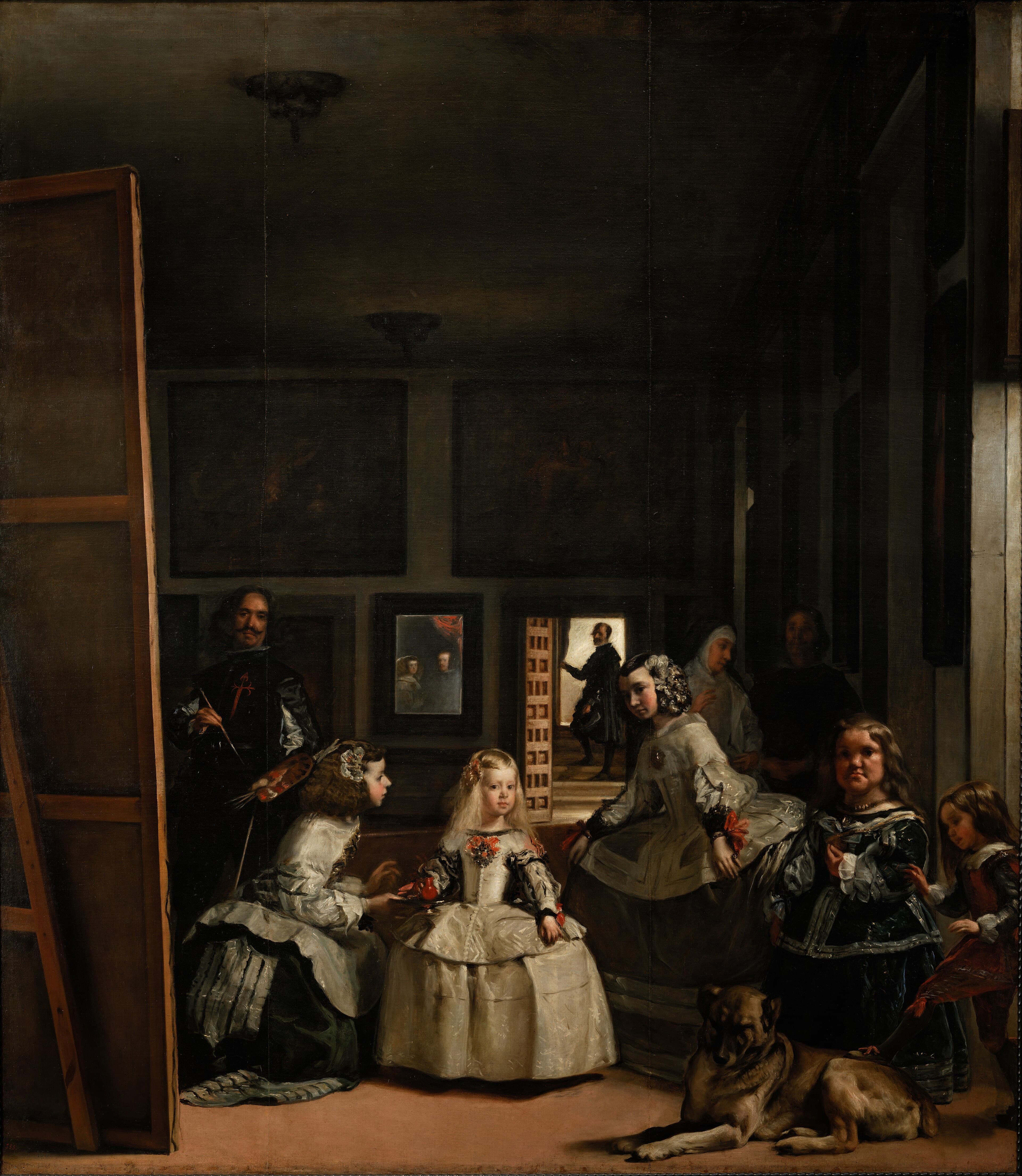
Las Meninas
Diego Velázquez · 1656
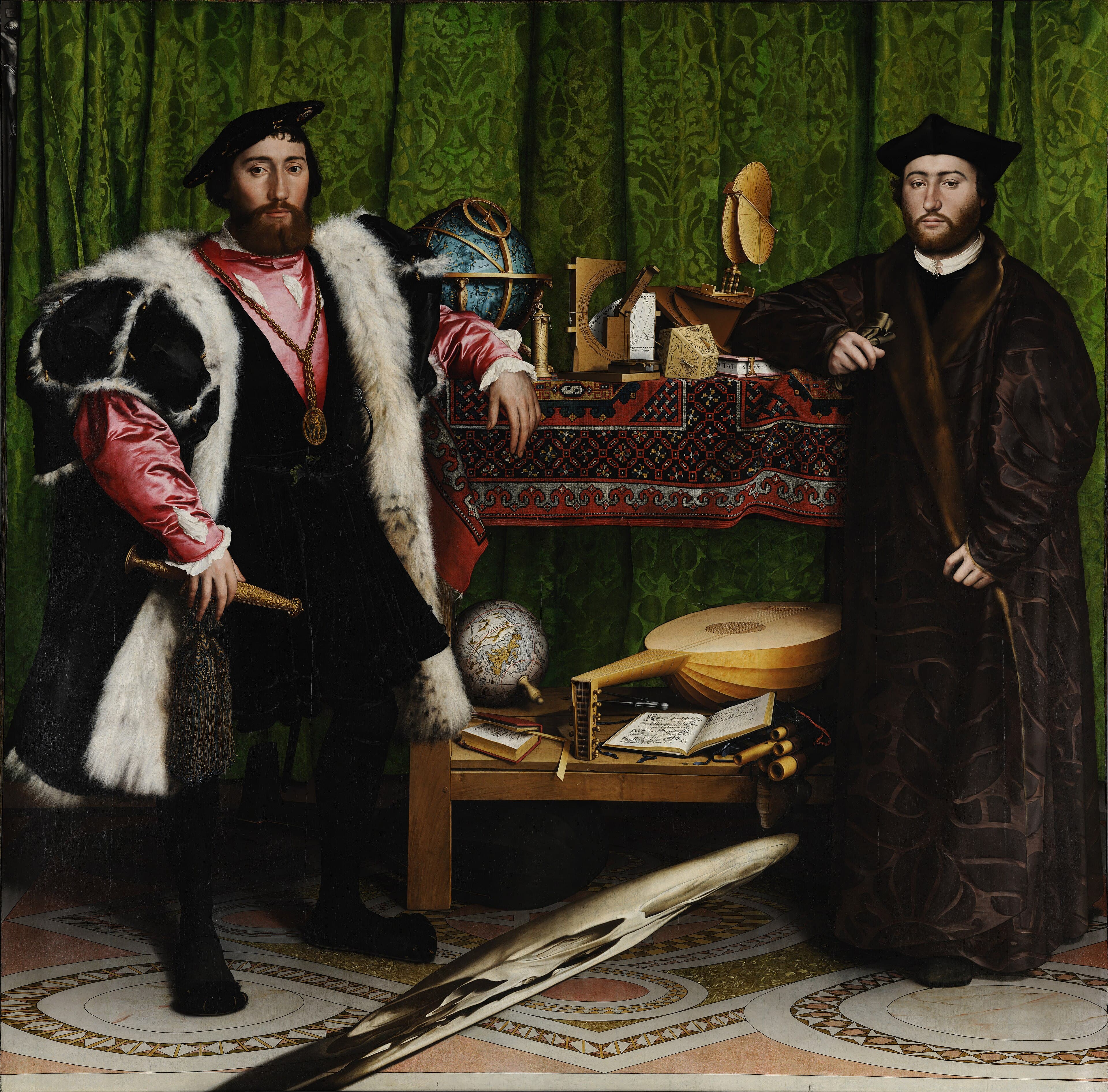
The Ambassadors
Hans Holbein the Younger · 1533
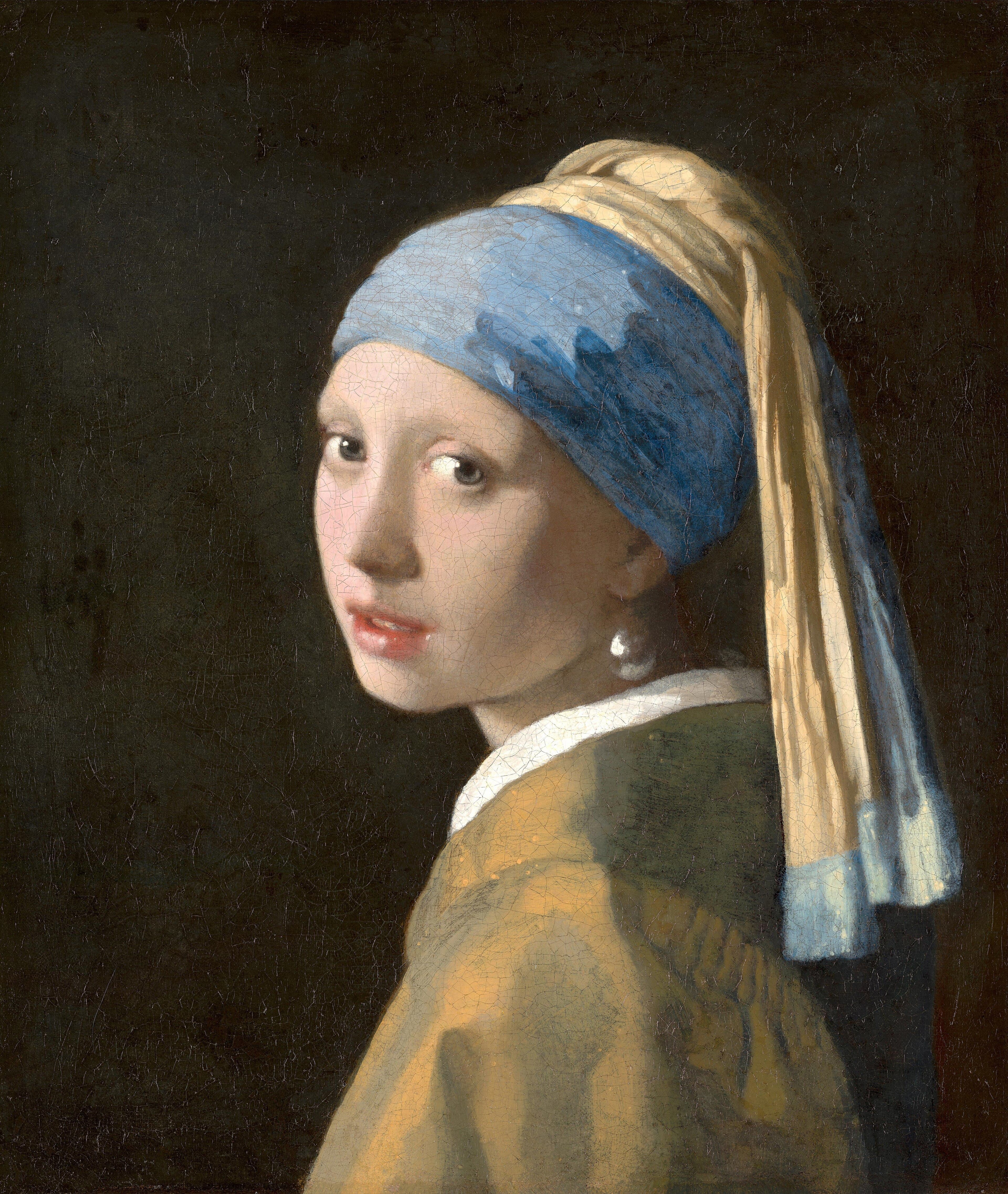
Girl with a Pearl Earring
Johannes Vermeer · c. 1665
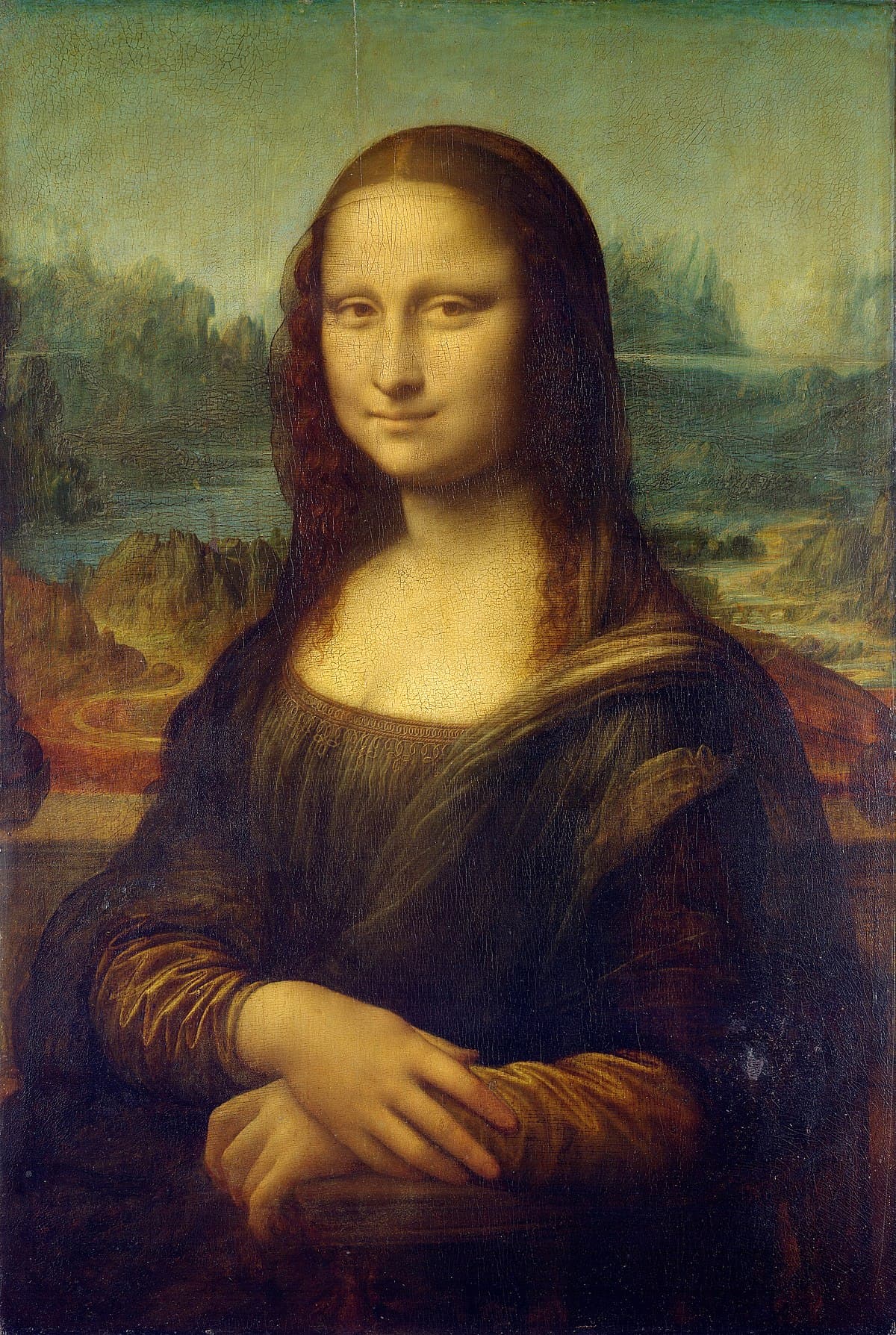
Mona Lisa
Leonardo da Vinci · c. 1503–1519
The Night Watch
Rembrandt · 1642

Venus de Milo
Alexandros of Antioch · c. 150–125 BC

Ophelia
John Everett Millais · 1851–52

Woman with a Parasol – Madame Monet and Her Son
Claude Monet · 1875