British · Victorian Classicism · Academic art
Herbert James Draper
b. 1863, London — d. 22 September 1920, London
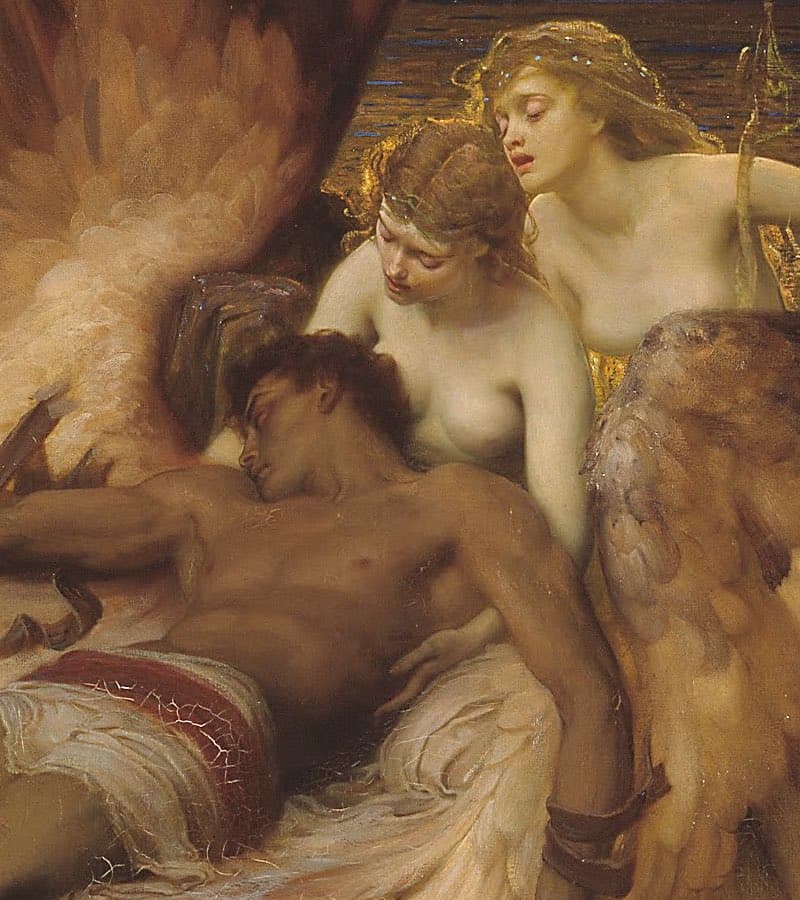
Herbert James Draper (1863–1920) was an English painter of Victorian classical mythology, best known for The Lament for Icarus (1898, Tate) and for sea nymphs and mist spirits painted in luminous color.
3 works in the collection
Works by Herbert James Draper
Herbert James Draper (1863–1920) was an English painter of mythological subjects in the late Victorian and Edwardian classical tradition. His best-known work, The Lament for Icarus (1898), won a gold medal at the Paris Exposition Universelle of 1900 and was bought for the Tate.
Life in brief
Draper was born in London, was educated at Bruce Castle School in Tottenham, and studied at the Royal Academy Schools, where he won a gold medal and travelling studentship in 1889. Trips to Rome and Paris between 1888 and 1892 brought him into contact with continental academic painting. He worked for a time as an illustrator, married Ida Williams in 1891, and from the mid-1890s concentrated on large mythological canvases, exhibiting at the Royal Academy every year, though he was never elected a member. He also decorated the ceiling of the livery hall of the Drapers' Company in the City of London. As taste turned against mythology after 1900 he painted more portraits. He died in London in 1920.
Style
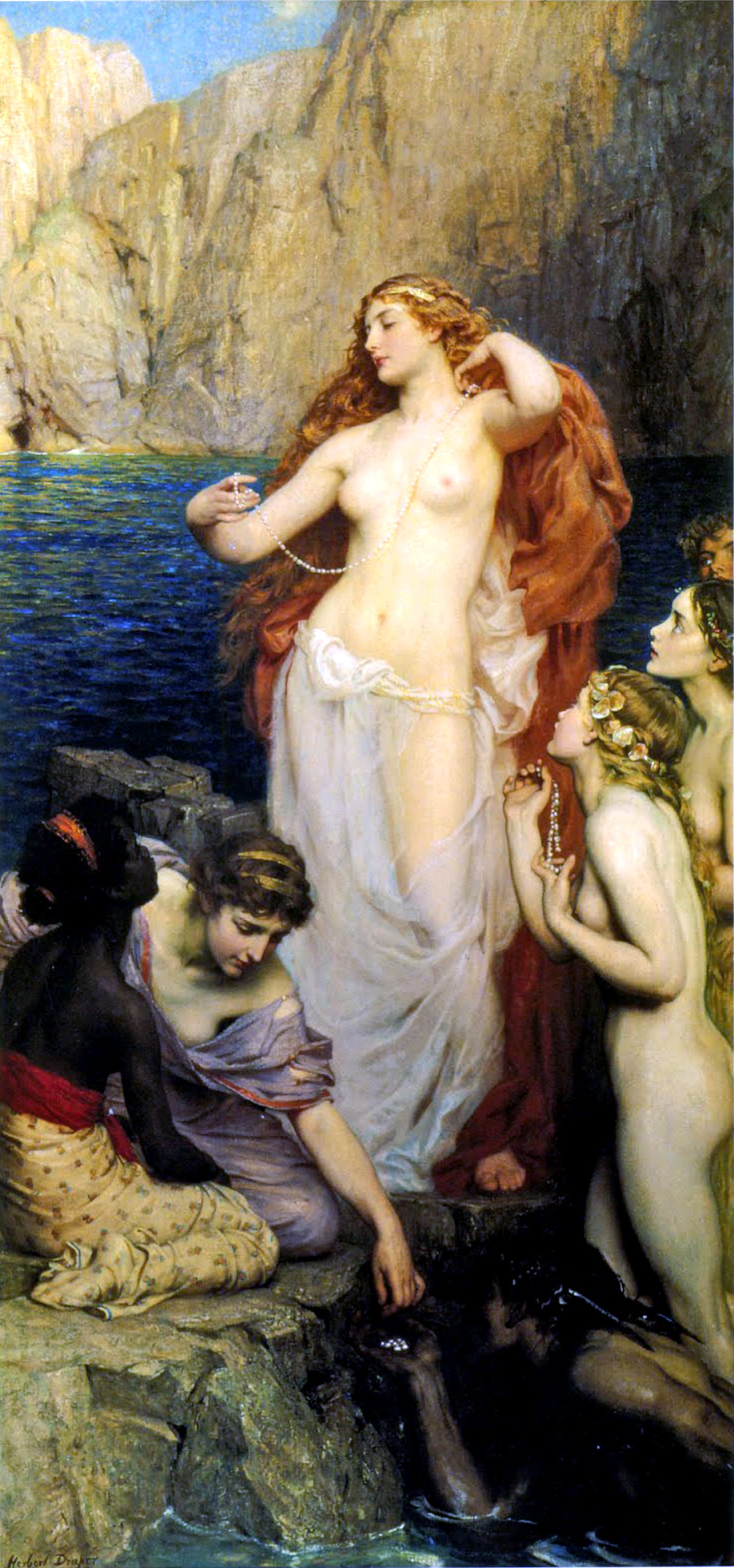
Draper's pictures combine academic drawing with a rich, almost Pre-Raphaelite color and a feeling for water, mist and open air unusual among the classicists. His nymphs are realistic young women, modeled from life, placed in seascapes painted with real observation.
The Lament for Icarus
Icarus lies dead on a rock by the sea, his great brown wings spread out beneath him, while three sea nymphs mourn him. One plays a lyre. The sunburned skin of the boy contrasts with the pale nymphs, a reminder that he flew too close to the sun. It is in Tate Britain.
Clyties of the Mist
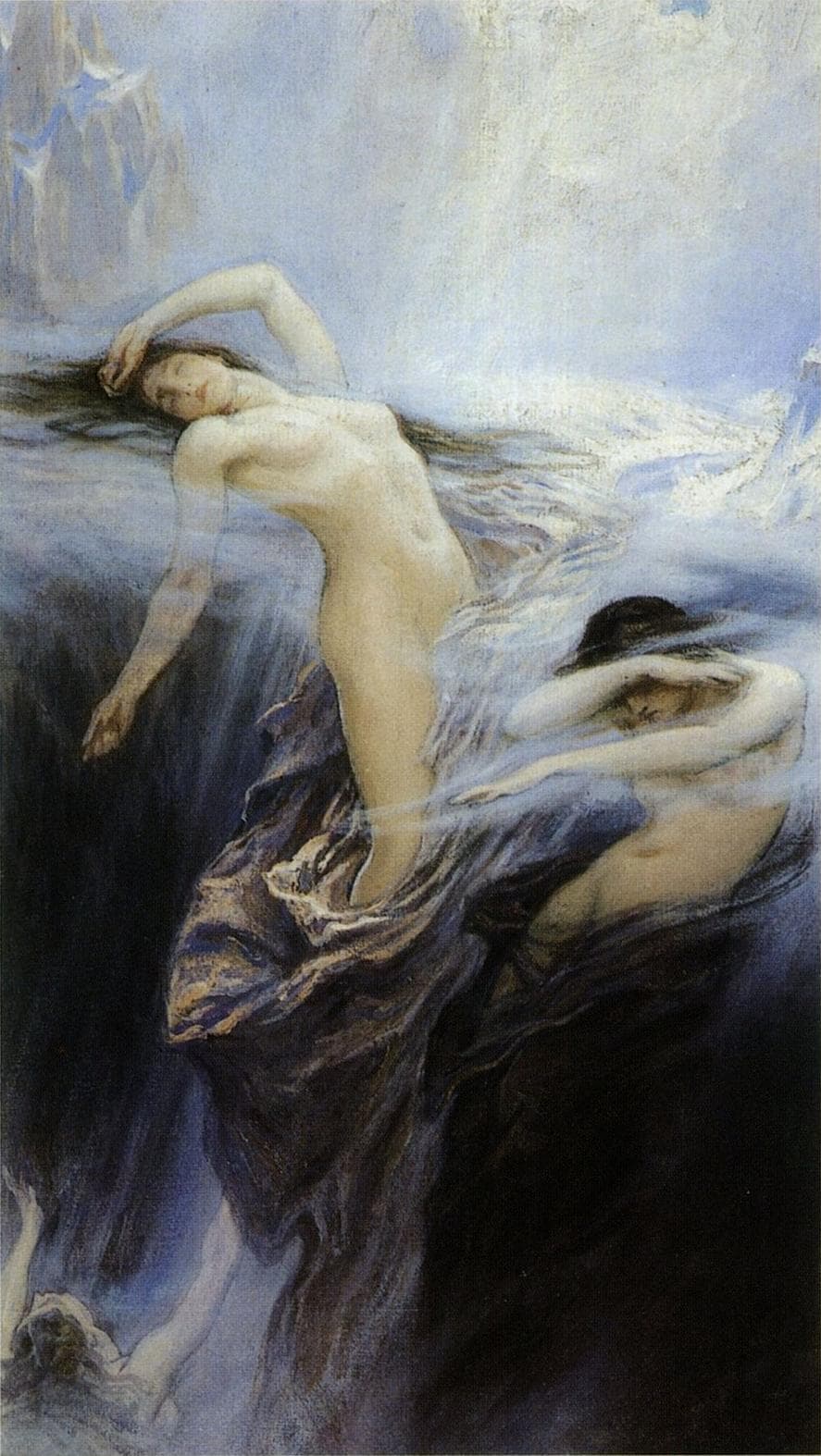
Clyties of the Mist (1912) personifies the morning mist as a train of nude, weightless figures drifting across a landscape toward the sun breaking through the clouds. The title borrows the myth of Clytie, the nymph who loved the sun god so faithfully that she watched him cross the sky every day until she turned into a sunflower. Draper's mists, like Clytie, are drawn to the sun that will dissolve them.
See more in Greek Mythology in Art and Academic Art.
Where to see his work
Tate Britain has The Lament for Icarus, and the Ferens Art Gallery in Hull has Ulysses and the Sirens (1909).
Questions & answers
Where is The Lament for Icarus by Draper?
The Lament for Icarus (1898) by Herbert James Draper is in Tate Britain, London. It was bought by the Chantrey Bequest and won a gold medal at the Paris Exposition Universelle of 1900.
What does Clyties of the Mist mean?
Draper's 1912 painting shows morning mist as a stream of floating nymphs drifting toward the sun. The title refers to Clytie, the nymph in Greek myth who longed for the sun god and turned into a sunflower, always facing the sun.
What kind of art did Herbert James Draper paint?
Draper painted scenes from Greek mythology, especially sea nymphs, sirens and sea-related stories such as Icarus and Ulysses, in a late Victorian classical style. Later in his career he concentrated on portraits.