Italian (Florentine) · High Renaissance · Mannerism
Michelangelo
b. 6 March 1475, Caprese, Republic of Florence — d. 18 February 1564, Rome
Michelangelo Buonarroti (1475–1564) was the Florentine sculptor, painter, architect and poet of the High Renaissance who carved David and the Pietà and painted the Sistine Chapel ceiling and The Last Judgment.
4 works in the collection
Works by Michelangelo
Michelangelo di Lodovico Buonarroti Simoni was a sculptor first, though he also became the greatest fresco painter and one of the boldest architects of the Italian Renaissance. His David and the Sistine Chapel ceiling are among the most famous works of art ever made.
Life in brief
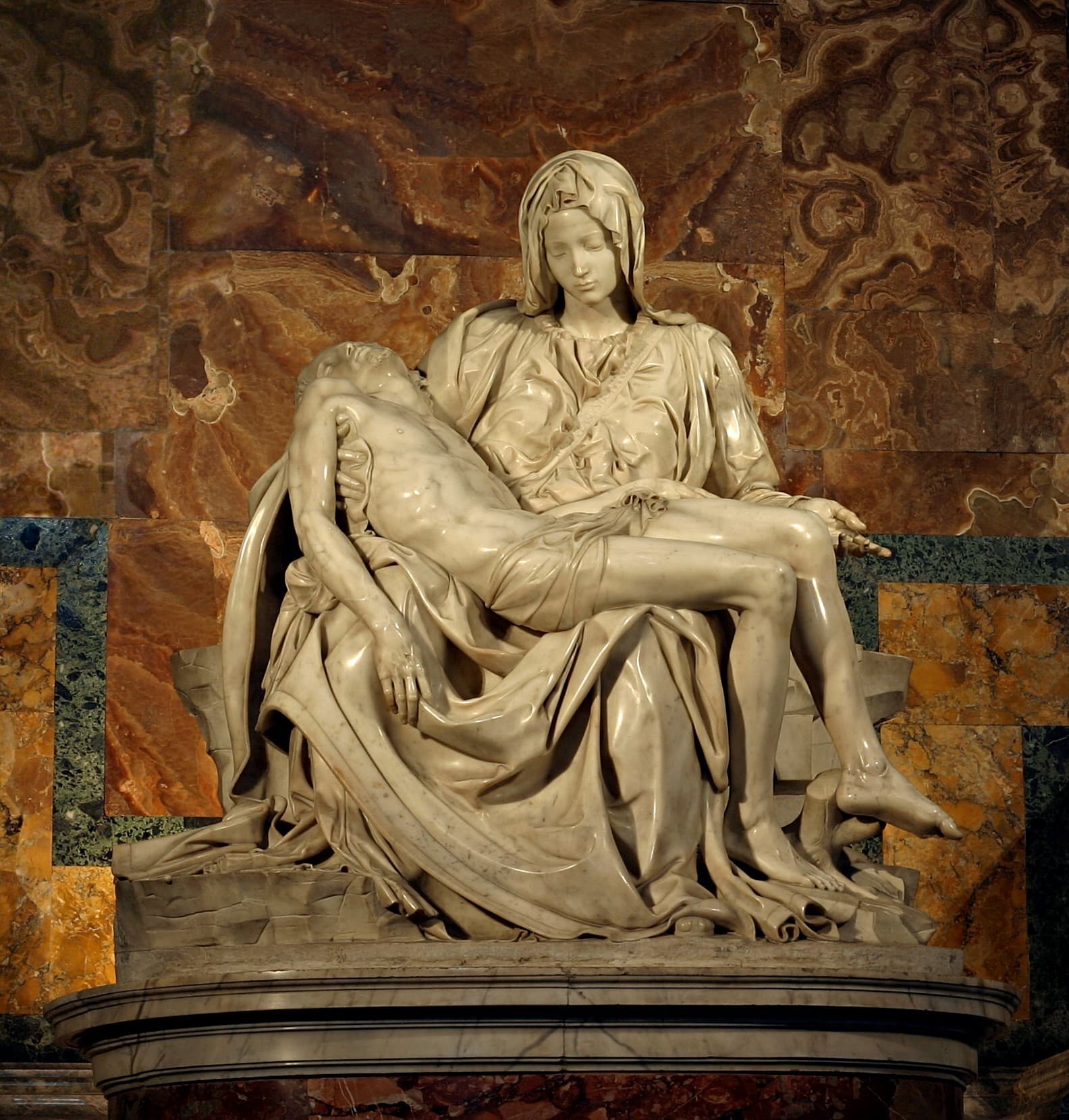
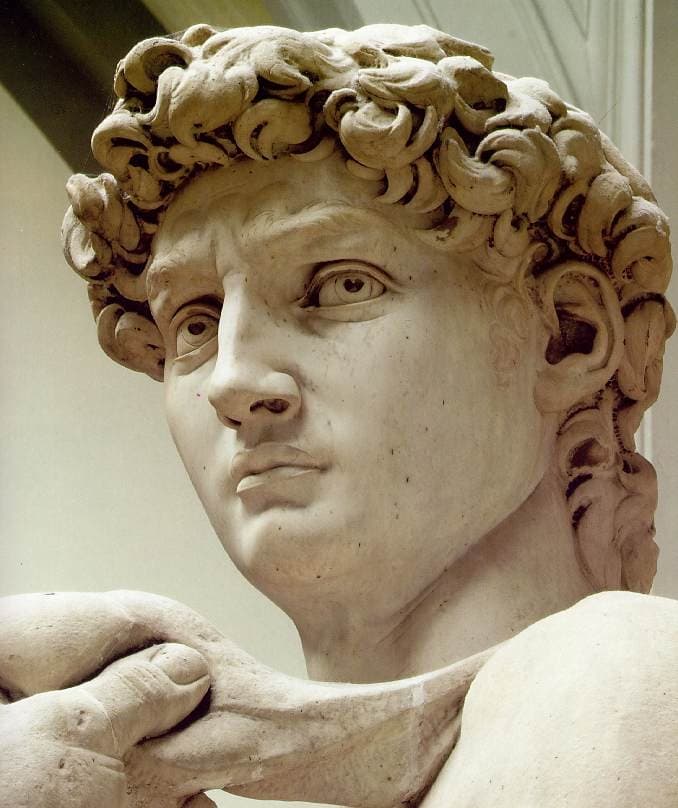
He was born on 6 March 1475 at Caprese, in Florentine territory, and grew up in Florence. He trained briefly in the workshop of Domenico Ghirlandaio and then studied antique sculpture in the Medici garden under the patronage of Lorenzo the Magnificent. In Rome he carved the Pietà for St Peter's (1498–99), and back in Florence the colossal marble David (1501–04), now in the Galleria dell'Accademia.
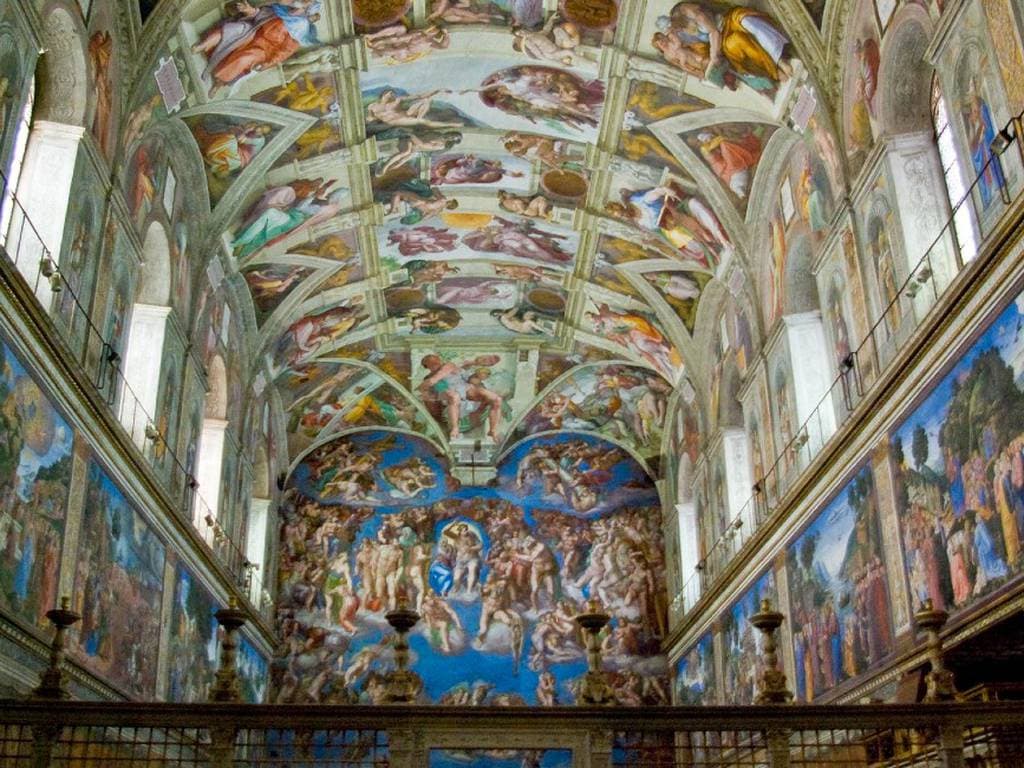
Pope Julius II called him to Rome for a tomb that would occupy him for decades, then set him to paint the Sistine ceiling (1508–12). Later came the Medici Chapel and Laurentian Library in Florence, The Last Judgment on the Sistine altar wall (1536–41), and, from 1546, the direction of St Peter's Basilica, whose dome follows his design. He died in Rome on 18 February 1564, aged 88.
Style
Michelangelo thought of the human body, above all the male nude, as the vehicle for every idea. His figures twist, strain and turn in space, with an anatomy he learned partly by dissection. As a carver he described freeing the figure from the block; several unfinished statues show the process. He was the first Western artist to have biographies published in his lifetime, by Giorgio Vasari (1550) and Ascanio Condivi (1553), and contemporaries called him Il Divino.
Key works in the catalogue
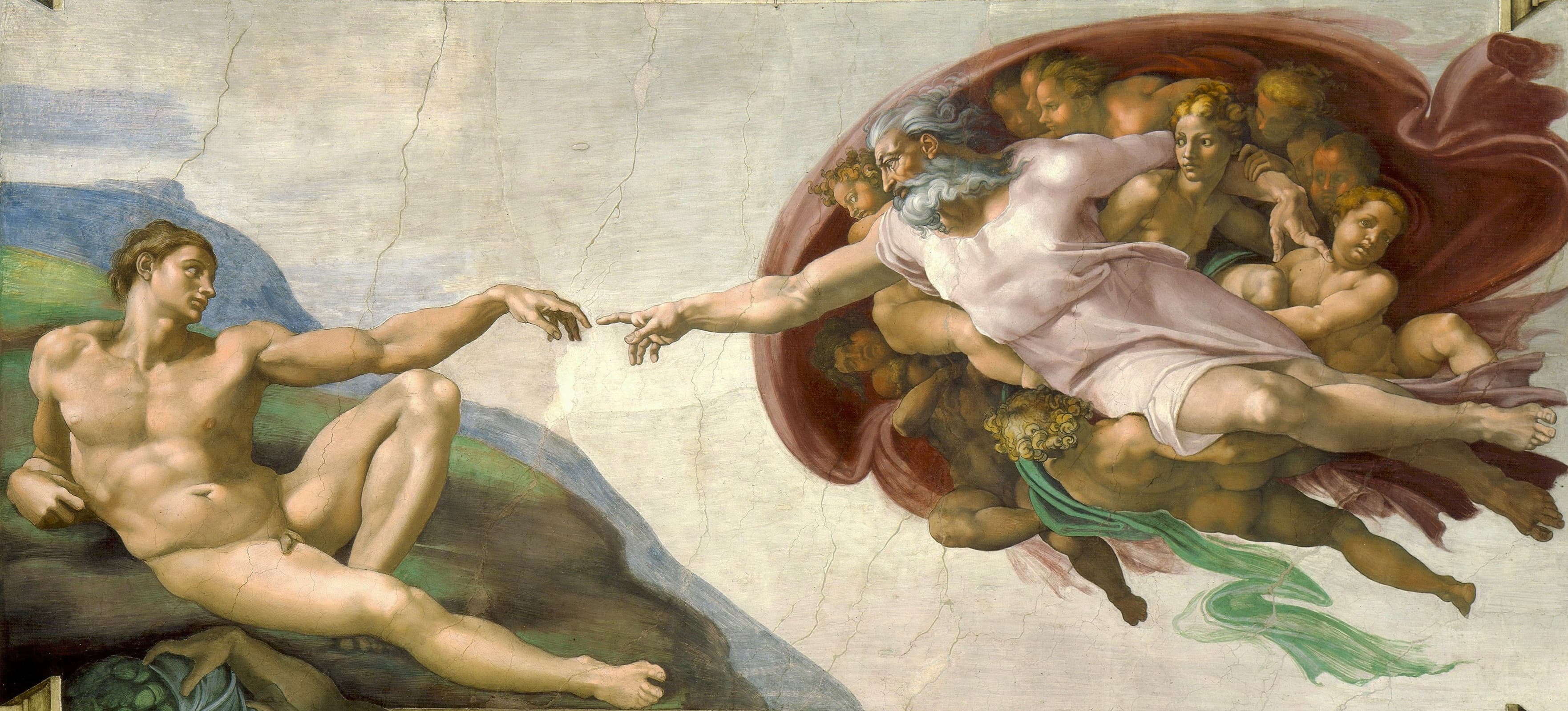
The ceiling's nine Genesis scenes include The Creation of Adam, whose almost-touching fingers have become a universal image. For the wider period, see our guide to Renaissance paintings and the work of his elder rival Leonardo da Vinci.
Where to see his work
The Vatican (Sistine Chapel and St Peter's), Florence (Accademia, Bargello, Medici Chapels, Casa Buonarroti) and Rome (San Pietro in Vincoli, with the Moses) hold most of his surviving work.
Questions & answers
What are Michelangelo's most famous works?
His most famous works are the marble David (1501–04) in Florence, the Pietà (1498–99) in St Peter's Basilica, the Sistine Chapel ceiling (1508–12) and The Last Judgment (1536–41) in the Vatican, and the dome of St Peter's.
Where is Michelangelo's David?
The original marble David is in the Galleria dell'Accademia in Florence, where it was moved in 1873 to protect it. A copy stands on its first site outside the Palazzo Vecchio in Piazza della Signoria.
How long did Michelangelo take to paint the Sistine Chapel ceiling?
About four years. He worked on the ceiling for Pope Julius II from 1508 to 1512, painting in fresco from scaffolding, with assistants mainly for preparatory tasks.