Italian · Baroque · Caravaggism
Artemisia Gentileschi
b. 8 July 1593, Rome — d. after 1654 (c. 1656), Naples
Artemisia Gentileschi (1593–c. 1656) was an Italian Baroque painter, one of the most accomplished followers of Caravaggio, famed for powerful heroines such as her Judith Slaying Holofernes in the Uffizi.
1 work in the collection
Works by Artemisia Gentileschi
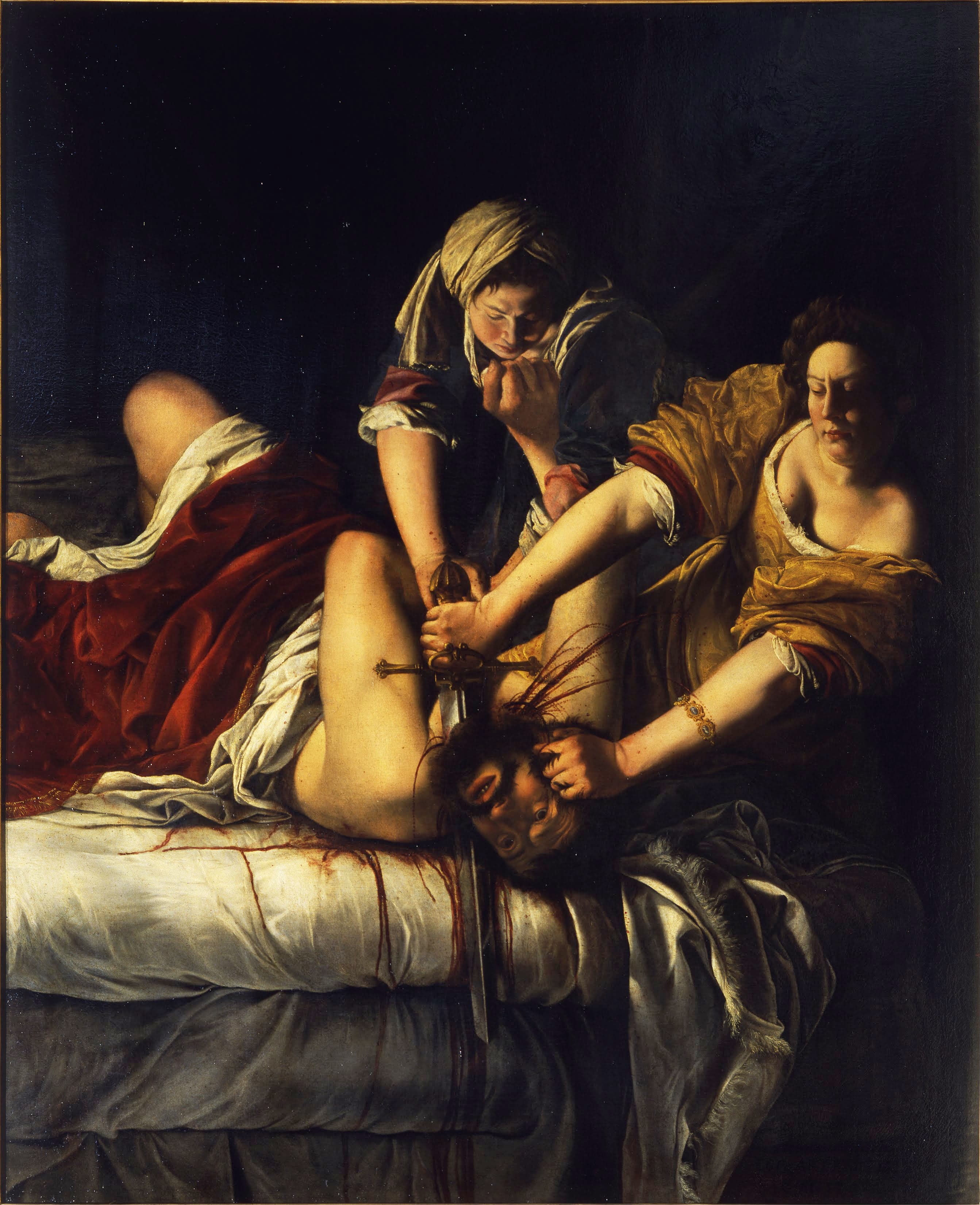
Artemisia Gentileschi was a Baroque painter who worked in Rome, Florence, Venice, Naples and London and became the most celebrated woman artist of seventeenth-century Europe. Her Judith Slaying Holofernes (c. 1620), in the Uffizi Gallery, Florence, is one of the most forceful paintings of the age.
Life in brief
She was born in Rome in 1593, the eldest child of the painter Orazio Gentileschi, a friend and follower of Caravaggio, and trained in his workshop. Her first signed work, Susanna and the Elders (1610, Pommersfelden), made at seventeen, already shows remarkable command.
In 1611 she was raped by the painter Agostino Tassi, her father's collaborator and her teacher in perspective. Orazio brought a case against him in 1612, and during the trial Artemisia was questioned under torture with thumbscrews to test her testimony. Tassi was convicted but never served his sentence. Shortly afterward she married Pierantonio Stiattesi and moved to Florence, where in 1616 she became the first woman admitted to the Accademia delle Arti del Disegno. She worked for the Medici and knew Galileo.
After years in Rome and Venice she settled in Naples around 1630, apart from a stay in London in 1638–40 at the court of Charles I, where her father was working. Her Self-Portrait as the Allegory of Painting (c. 1638–39) remains in the Royal Collection. She was still active in Naples in 1654; the date of her death is not known.
Style
Artemisia took Caravaggio's raking light, dark grounds and solid, unidealized bodies and used them for subjects drawn from the Bible and history, often heroines: Judith, Susanna, Lucretia, Esther, Cleopatra. Her women act with physical conviction. In Judith Slaying Holofernes Judith and her maid pin the Assyrian general down with their full weight while blood sprays across the sheets. An earlier version (c. 1612–13) is in the Museo di Capodimonte, Naples. Compare Caravaggio's Judith and Fede Galizia's calmer treatment.
Reputation
Long overshadowed, she was rediscovered in the twentieth century, first by Roberto Longhi and then by feminist art historians. The National Gallery, London, bought her Self-Portrait as Saint Catherine of Alexandria in 2018 and devoted a major exhibition to her in 2020.
Where to see her work
The Uffizi and Palazzo Pitti in Florence, Capodimonte in Naples, the National Gallery in London and the Royal Collection hold key works. See also Baroque Art and Famous Paintings of Women.
Questions & answers
What is Artemisia Gentileschi famous for?
Artemisia Gentileschi is famous for dramatic Baroque paintings of strong women from the Bible and history, above all Judith Slaying Holofernes, and for her success as a professional woman painter in the seventeenth century. She was the first woman admitted to Florence's Accademia delle Arti del Disegno, in 1616.
Where is Judith Slaying Holofernes by Artemisia?
There are two versions. The larger, later one (c. 1620) is in the Uffizi Gallery in Florence; it was painted for Grand Duke Cosimo II de' Medici. The earlier version (c. 1612–13) is in the Museo di Capodimonte in Naples.
Did Artemisia's rape influence her paintings?
Many writers have linked the violence of her Judith paintings to her rape by Agostino Tassi in 1611 and the trial that followed. Historians now caution against reading her whole career through that event: Judith was a popular subject, and Artemisia was also a shrewd professional working for major patrons.