French · Neoclassicism
Jean-Baptiste Giraud
b. 1752, Aix-en-Provence, France — d. 14 February 1830, Fontenailles, France
Jean-Baptiste Giraud (1752–1830) was a French Neoclassical sculptor from Aix-en-Provence who studied antiquity for years in Italy and is remembered for his Dying Achilles and for opening his Paris collection of casts to young artists.
1 work in the collection
Works by Jean-Baptiste Giraud
Jean-Baptiste Giraud was a French sculptor of the late eighteenth century, born in Aix-en-Provence in 1752. He is a minor but telling figure of French Neoclassicism: a wealthy amateur turned professional, more important in his day for what he collected and shared than for a large body of work.
Life in brief
An inheritance from an uncle freed Giraud from the need to earn a living, and he spent about eight years in Italy studying ancient sculpture at first hand. Back in France he was received into the Royal Academy of Painting and Sculpture, and his work appeared at the Salon of 1789, the year the Revolution began. He bought a town house on the Place Vendôme in Paris and filled it with plaster casts after the most admired antique statues, which he opened free of charge to students and artists who could not travel to Rome. He died in 1830 at Fontenailles, near Melun.
Style
Giraud worked in the idiom his generation learned from Rome: heroic nudes, clear outlines, and subjects from Homer and ancient history, treated with restraint rather than Baroque drama. His collection of casts shows the same conviction that modern art should be built on the close study of antiquity.
Dying Achilles
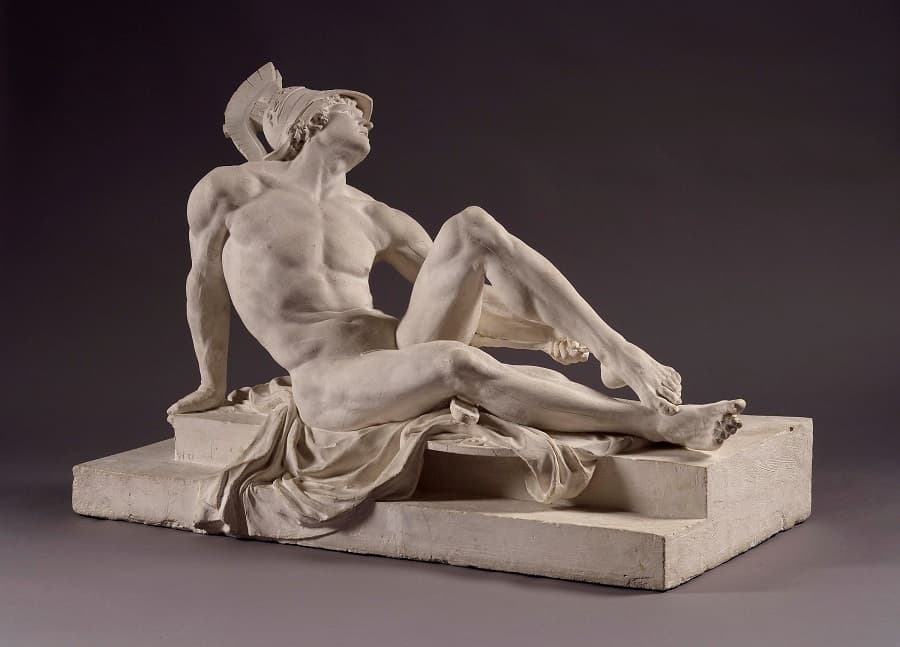
His best-known work is Achille Mourant (Dying Achilles), datable to around 1788–89 and associated with the Musée Granet in his native Aix. The Greek hero, struck in the heel by the arrow of Paris, reclines in the moment between strength and death, a subject that let Giraud show both the ideal male body and its vulnerability. Compare later French treatments of mythological heroes such as Laurent Marqueste's Perseus and the Gorgon.
Where to see his work
The Musée Granet in Aix-en-Provence is the place to start. More heroic nudes are gathered in Greek Statues and Greek Mythology in Art.
Questions & answers
Who was Jean-Baptiste Giraud?
Jean-Baptiste Giraud (1752–1830) was a French Neoclassical sculptor from Aix-en-Provence. After about eight years studying ancient art in Italy, he exhibited at the Salon of 1789 and opened his Paris collection of antique casts to artists free of charge.
Where is Giraud's Dying Achilles?
Giraud's Dying Achilles (Achille mourant), datable to about 1788–89, is associated with the Musée Granet in Aix-en-Provence, the sculptor's home town.
Why is Achilles shown dying?
In Greek myth the hero Achilles was invulnerable except for his heel, where Paris's arrow struck him at Troy. Neoclassical sculptors liked the subject because it joined an ideal heroic body to the pathos of its one weakness.