Image: Birmingham Museums Trust · Public domain · via Wikimedia Commons
Pre-Raphaelite / Arts and Crafts
Hope Comforting Love in Bondage
Sidney Harold Meteyard, 1901
Hope Comforting Love in Bondage is Sidney Harold Meteyard's 1901 allegory of the winged boy Love, bound in gray bands and crowned with roses, consoled by the figure of Hope in green. It belongs to Birmingham Museums Trust.
- Artist
- Sidney Harold Meteyard
- Date
- 1901
- Medium
- Oil on canvas
- Dimensions
- 104.2 × 109.2 cm
- Collection
- Birmingham Museum & Art Gallery (Birmingham Museums Trust), Birmingham, United Kingdom
- Movement
- Pre-Raphaelite / Arts and Crafts
What you are looking at
Two figures sit side by side on a stone bench in a shadowy room. On the left is a young man with huge wings of deep crimson and purple that spread behind both figures and fill the top of the picture. He is Love, the classical Cupid or Eros, but he is not triumphant. His body is wrapped and his legs are tied with strips of gray cloth, his hands hang between his knees, and he stares at nothing with a dull, exhausted expression. On his head is a wreath of red roses.
Beside him sits Hope, a young woman in a long green dress under a saffron-gold cloak, her hair bound in a patterned cap. She lays one hand on his shoulder and reaches the other toward his arm, looking at him with grave, steady attention.
At Love's feet lie his weapons, discarded: a quiver of arrows on a ribbon, a bow and a loose arrow on the floor. Sprigs of white blossom are caught in his feathers, and a branch of pink blossom appears on the bench at the right. Behind, a small leaded window shows a glimpse of trees and hills. The overall palette is rich and jewel-like, deep reds, greens and golds, typical of the late Pre-Raphaelite painters.
How Meteyard made it
Sidney Harold Meteyard (1868–1947) was a Birmingham artist, a student and later teacher at the Birmingham School of Art and a member of the Birmingham Group, the circle of painters and craftsmen inspired by Edward Burne-Jones (himself Birmingham-born) and William Morris. Meteyard worked across many media, including stained glass, enamel, book illustration and tempera, and his oil paintings share the decorative, carefully patterned style of the Arts and Crafts movement. This canvas, almost square at about 104 by 109 centimeters, was painted in 1901.
What does the painting mean?
The picture is an allegory built from personifications rather than a scene from a specific story. Love in bondage is an old theme in Renaissance and later art, in which Cupid is bound, disarmed or punished, sometimes to show love restrained by chastity or reason, sometimes to show love suffering. Here the emphasis is on suffering: Love is captive and despairing, his power to wound set aside on the floor.
Hope's role is to console. Green has long been the traditional color of Hope in Christian and allegorical imagery, and she wears it here. The blossoms, signs of spring, may reinforce the promise that the season of captivity will pass.
A Victorian viewer would have recognized the mood from G. F. Watts's famous Hope (1886) and Burne-Jones's allegories of love. Meteyard does not appear to have left a written explanation, so these readings rest on the conventions of the imagery rather than on the artist's own words.
Where to see it
The painting belongs to Birmingham Museums Trust (accession 1948P5) and is part of the collection of Birmingham Museum & Art Gallery, which holds one of the world's great collections of Pre-Raphaelite art. Check the museum's website for current display. It makes a fitting companion to the Pre-Raphaelites and to classical love subjects such as Canova's Cupid and Psyche and Edward Poynter's Psyche in the Temple of Love. The painting is in the public domain.
Questions & answers
Where is Hope Comforting Love in Bondage?
Sidney Meteyard's Hope Comforting Love in Bondage (1901) belongs to Birmingham Museums Trust (accession 1948P5) and is part of the collection of Birmingham Museum & Art Gallery in England. Check the museum's website to see whether it is currently on display.
What does Hope Comforting Love in Bondage mean?
It is an allegory. Love, shown as winged Cupid, sits bound and despairing with his bow and arrows cast aside, while Hope, dressed in her traditional green, comforts him. It suggests that even when love is captive or suffering, hope remains beside it.
Who was Sidney Harold Meteyard?
Sidney Harold Meteyard (1868–1947) was a Birmingham painter and designer, a member of the Birmingham Group influenced by Edward Burne-Jones and William Morris. He worked in oil, tempera, stained glass, enamel and book illustration.
Why is Hope wearing green?
Green has been the traditional color of Hope in Christian and allegorical art for centuries, associated with spring and renewal. Meteyard follows that convention, and adds sprigs of blossom that echo the promise of new growth.
Kindred works
You may also study
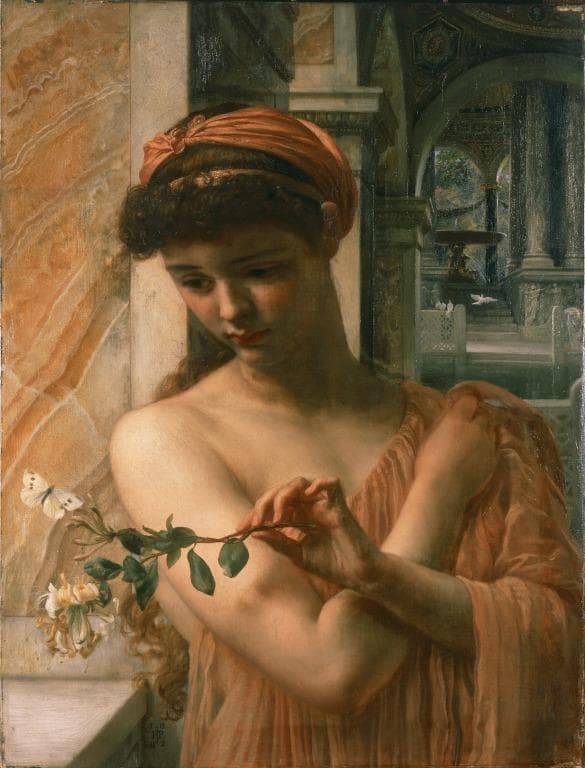
Psyche in the Temple of Love
Edward John Poynter · 1882
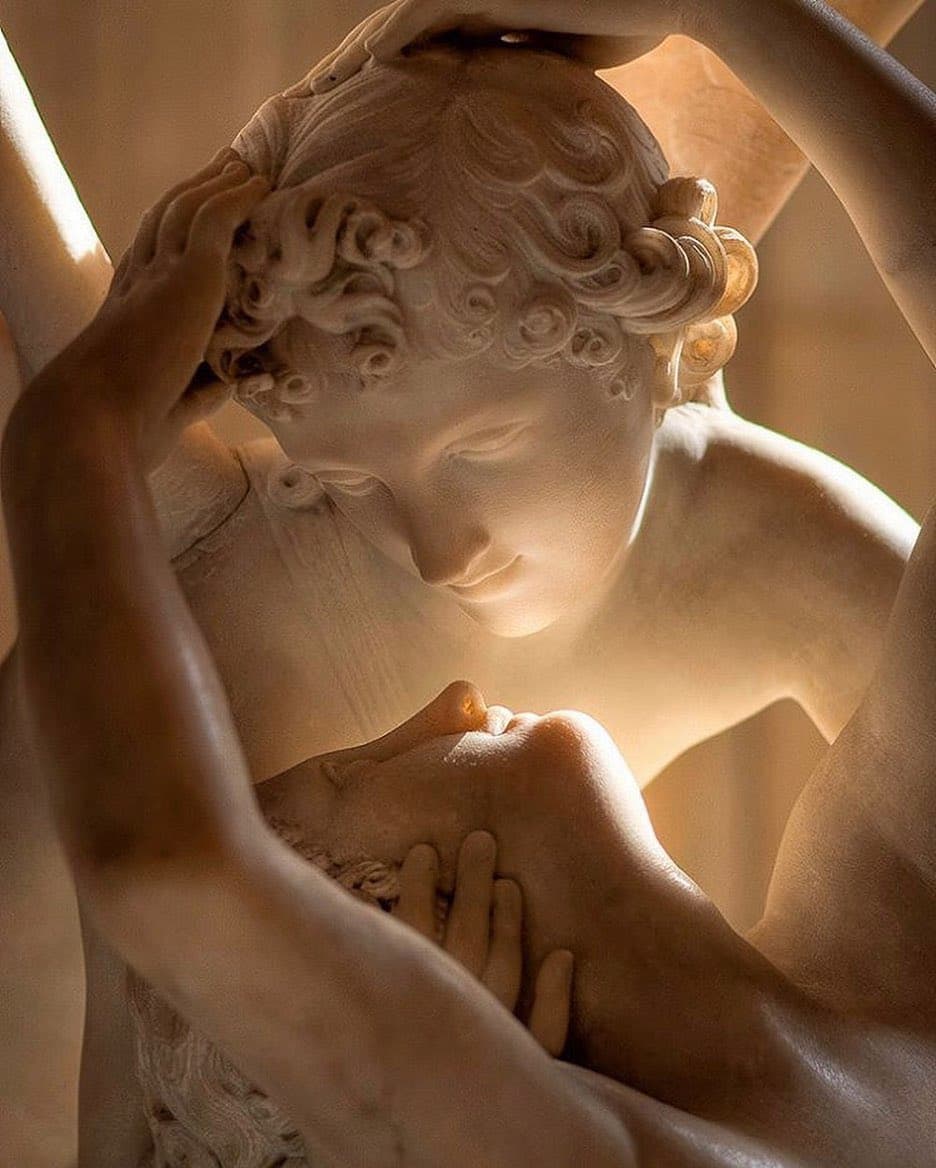
Psyche Revived by Cupid's Kiss
Antonio Canova · 1787–1793
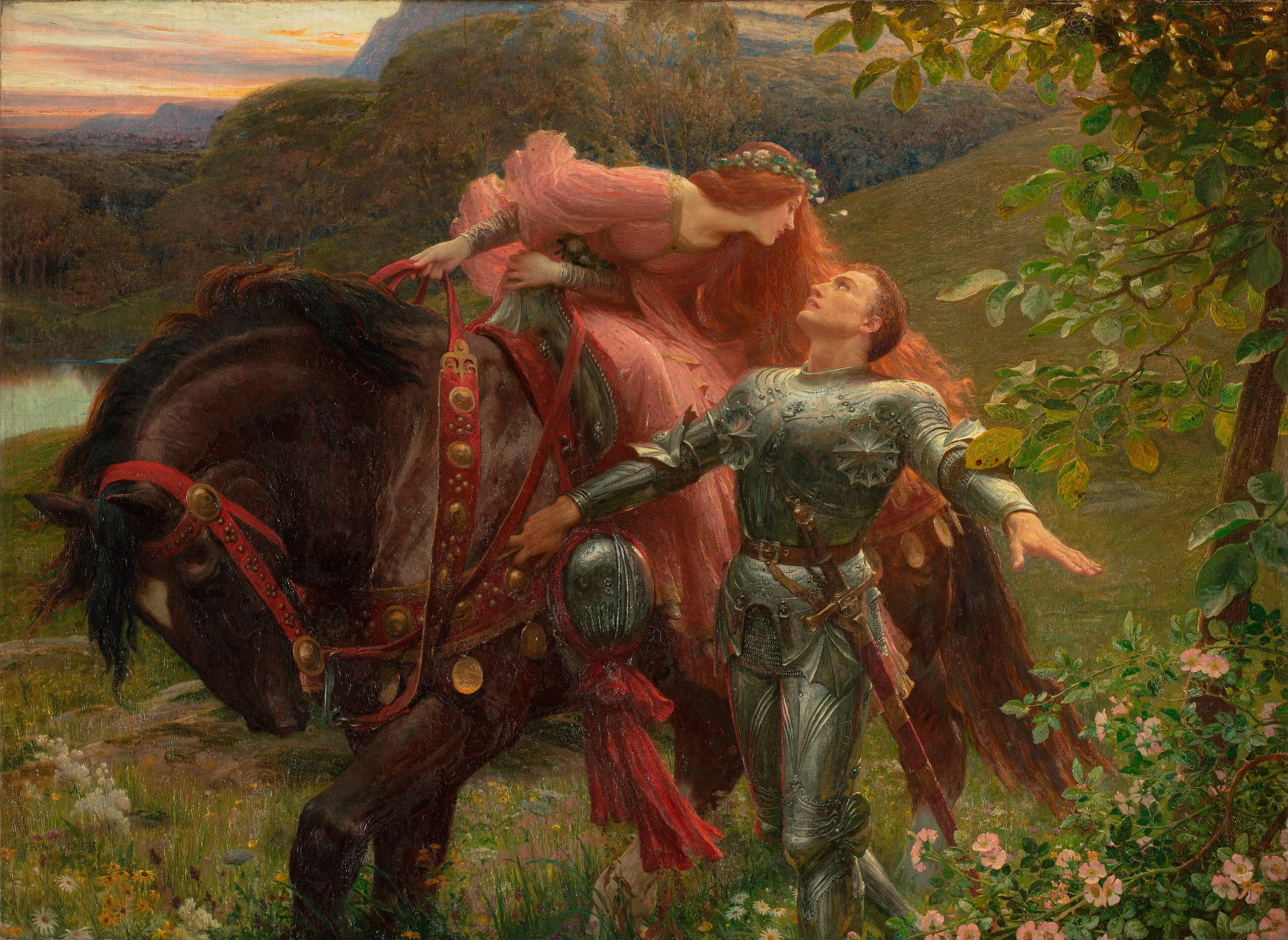
La Belle Dame sans Merci
Sir Frank Dicksee · 1901
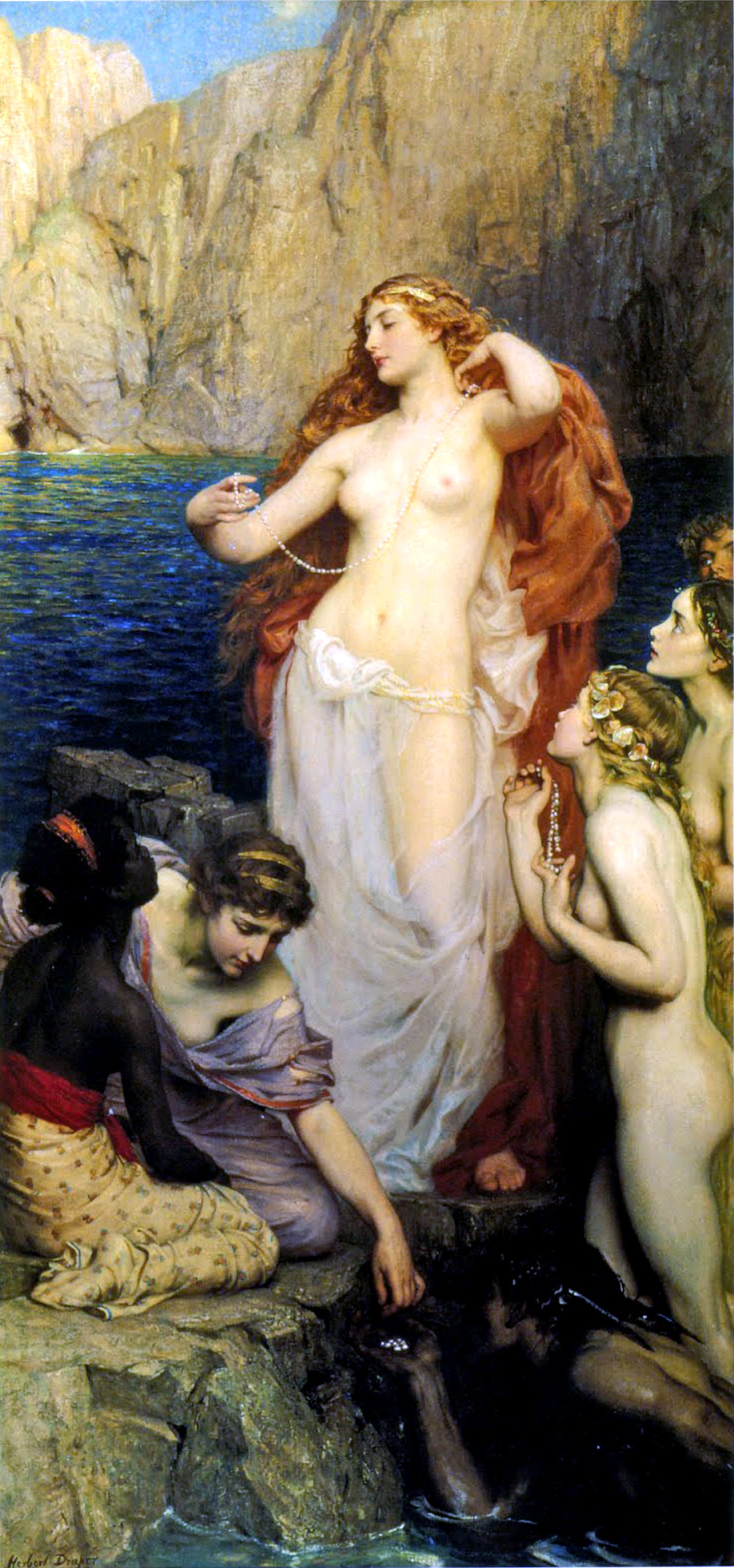
The Pearls of Aphrodite
Herbert James Draper · 1907

Venus de Milo
Alexandros of Antioch · c. 150–125 BC

Nymphs Dancing to Pan's Flute
Joseph Tomanek

The Scream
Edvard Munch · 1893

The Thinker
Auguste Rodin · Modeled 1880–82; enlarged 1902–03; this cast 1904