Netherlandish (Flemish) · Northern Renaissance · Flemish Renaissance
Pieter Bruegel the Elder
b. c. 1525–30, probably Brabant (birthplace uncertain) — d. 9 September 1569, Brussels
Pieter Bruegel the Elder (c. 1525/30–1569) was the greatest Flemish painter of the sixteenth century, known for crowded peasant scenes, seasonal landscapes such as Hunters in the Snow, and the apocalyptic Triumph of Death.
1 work in the collection
Works by Pieter Bruegel the Elder
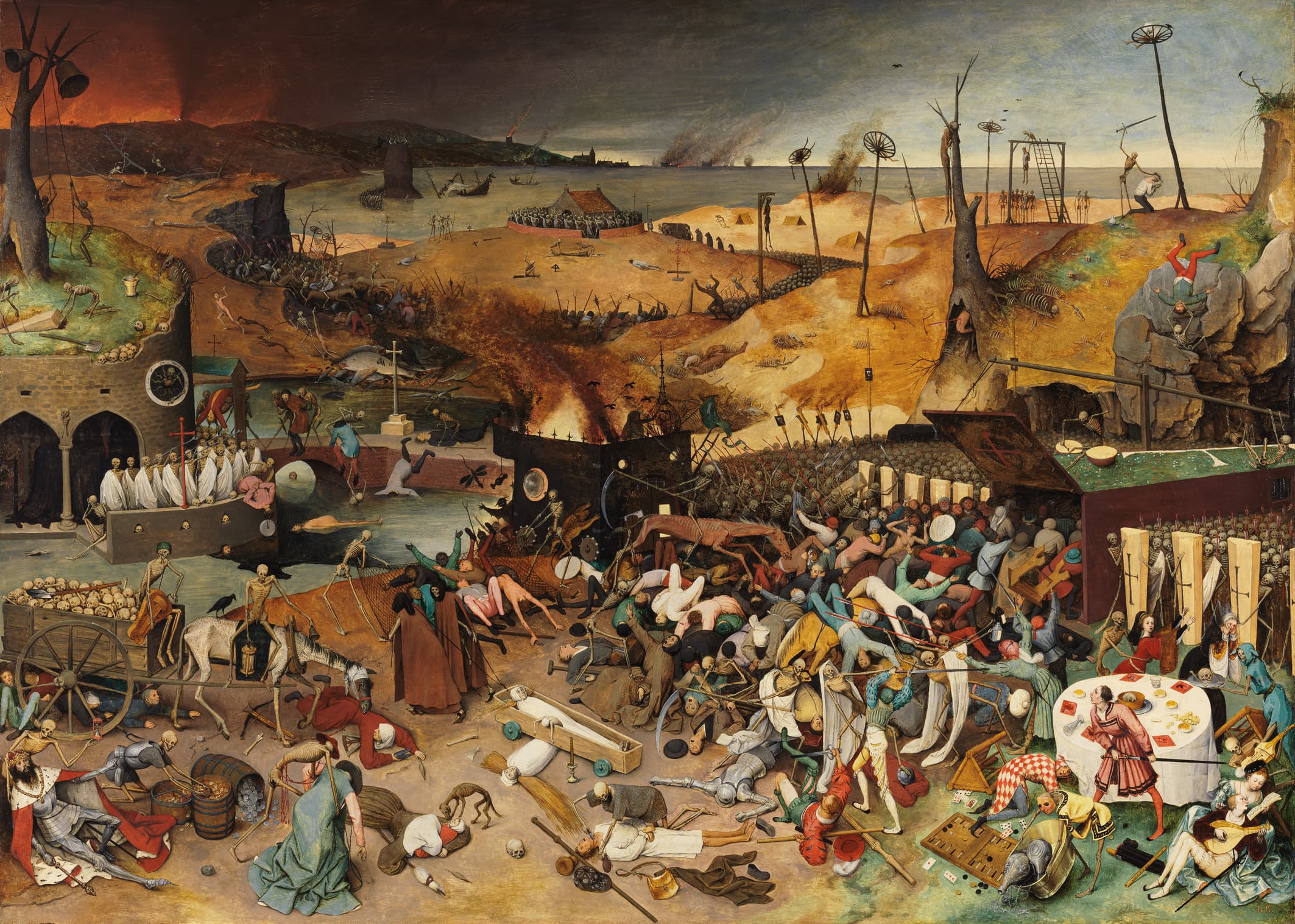
Pieter Bruegel the Elder was a Netherlandish painter and print designer who worked in Antwerp and Brussels and turned village life, proverbs and the seasons into subjects for great art. His most terrifying painting, The Triumph of Death (c. 1562), is in the Museo del Prado, Madrid; his best-loved, Hunters in the Snow (1565), is in the Kunsthistorisches Museum, Vienna.
Life in brief
Almost nothing is known of his early life; he was born around 1525–30, probably in the Duchy of Brabant. In 1551 he became a master in the Antwerp painters' guild, and soon after traveled through France and Italy, reaching Rome and Sicily; the Alpine views he drew on the way fed his landscapes for years. Back in Antwerp he designed prints for the publisher Hieronymus Cock, including satirical sheets in the manner of Hieronymus Bosch. In 1563 he married Mayken Coecke, daughter of his probable teacher Pieter Coecke van Aelst, and moved to Brussels, where he died in 1569. His sons, Pieter Brueghel the Younger and Jan Brueghel the Elder, founded a dynasty of painters.
Style and key works
Bruegel painted from a high viewpoint, looking down on swarming crowds in which every figure has a task. Netherlandish Proverbs (1559, Gemäldegalerie, Berlin) illustrates around a hundred sayings in a single village; Children's Games (1560, Vienna) catalogues dozens of pastimes. The Tower of Babel (1563, Vienna) is a vast spiral of masonry built on human folly.
In 1565 he painted a cycle of the months for the Antwerp merchant Niclaes Jongelinck, of which five survive, including Hunters in the Snow and The Harvesters (Metropolitan Museum of Art). These are among the first great landscapes in which ordinary labor and weather are the whole subject. Later works such as The Peasant Wedding (c. 1567, Vienna) and The Blind Leading the Blind (1568, Naples) return to human figures at close range. The early biographer Karel van Mander claimed he dressed as a peasant to attend village weddings, which gave rise to the nickname “Peasant Bruegel.”
The Triumph of Death
In this panel an army of skeletons sweeps across a burned landscape, killing king, cardinal, lovers and peasants alike, herding the living into a huge coffin-like trap. It draws on the medieval Danse Macabre and on Bosch's infernal imagery, but its scale and pitiless detail are Bruegel's own.
Where to see his work
The Kunsthistorisches Museum in Vienna holds the world's largest group, about a dozen paintings. Others are in the Prado, Berlin, Brussels, Antwerp, Naples and New York. See also Death in Art and Memento Mori and Vanitas.
Questions & answers
What is Pieter Bruegel the Elder famous for?
Bruegel is famous for lively panoramic scenes of Flemish peasant life, such as The Peasant Wedding and Netherlandish Proverbs, for seasonal landscapes like Hunters in the Snow (1565), and for the apocalyptic Triumph of Death. Only about forty paintings by him survive.
Where is The Triumph of Death by Bruegel?
The Triumph of Death (c. 1562) is in the Museo del Prado in Madrid. Painted in oil on panel, it came to the museum from the Spanish royal collection. A restoration completed by the Prado in 2018 removed old varnish and revealed much of its original detail and color.
What is the difference between Bruegel and Brueghel?
Pieter Bruegel the Elder dropped the h from his name from about 1559. His sons, Pieter Brueghel the Younger, who made many copies of his father's compositions, and Jan Brueghel the Elder, a painter of flowers and landscapes, kept the spelling Brueghel.