British · Pre-Raphaelite · Academic art
John William Waterhouse
b. 1849 (baptized 6 April), Rome — d. 10 February 1917, London
John William Waterhouse (1849–1917) was the English painter of The Lady of Shalott and Hylas and the Nymphs, whose women from myth and poetry made him the great late heir of the Pre-Raphaelites.
3 works in the collection
Works by John William Waterhouse
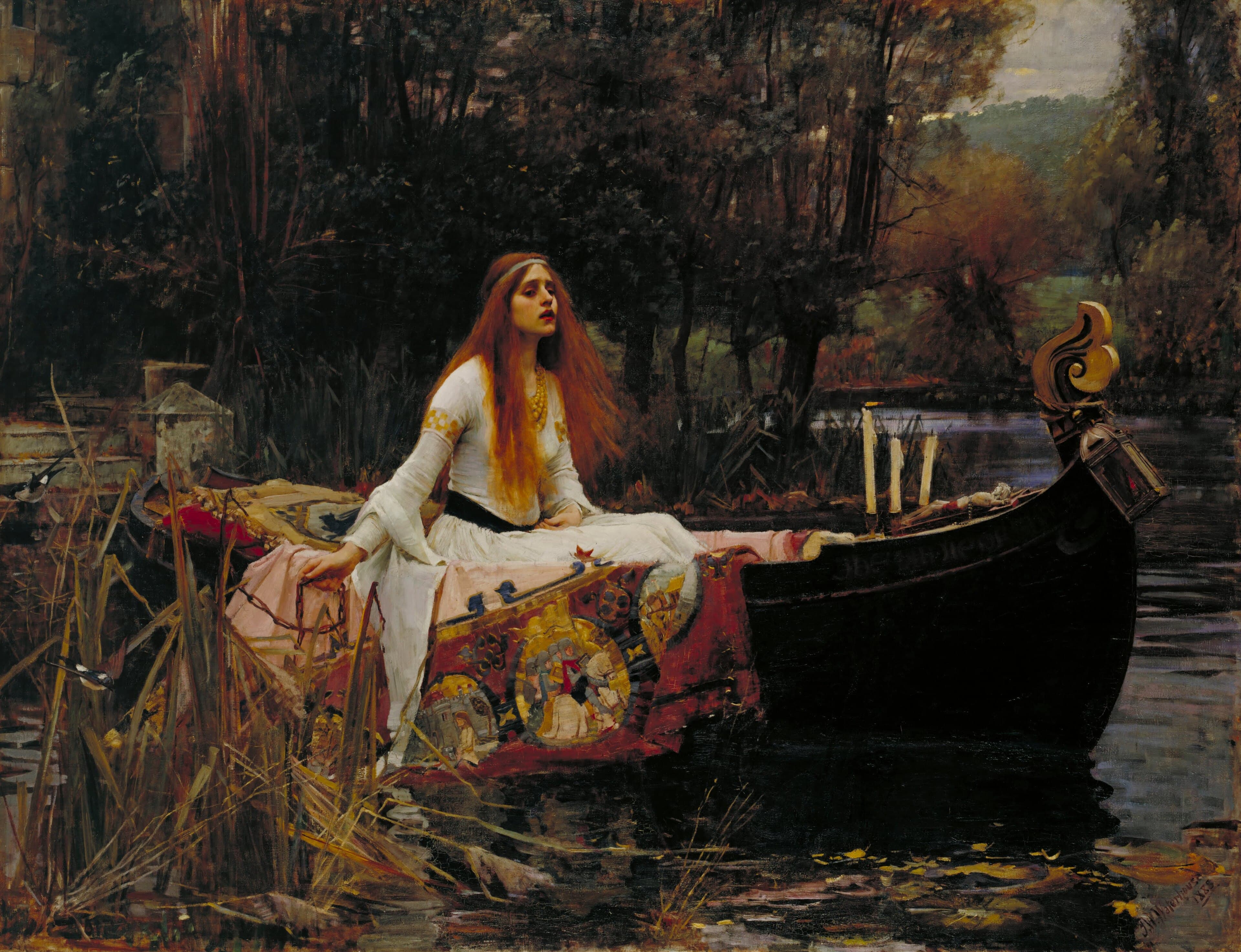
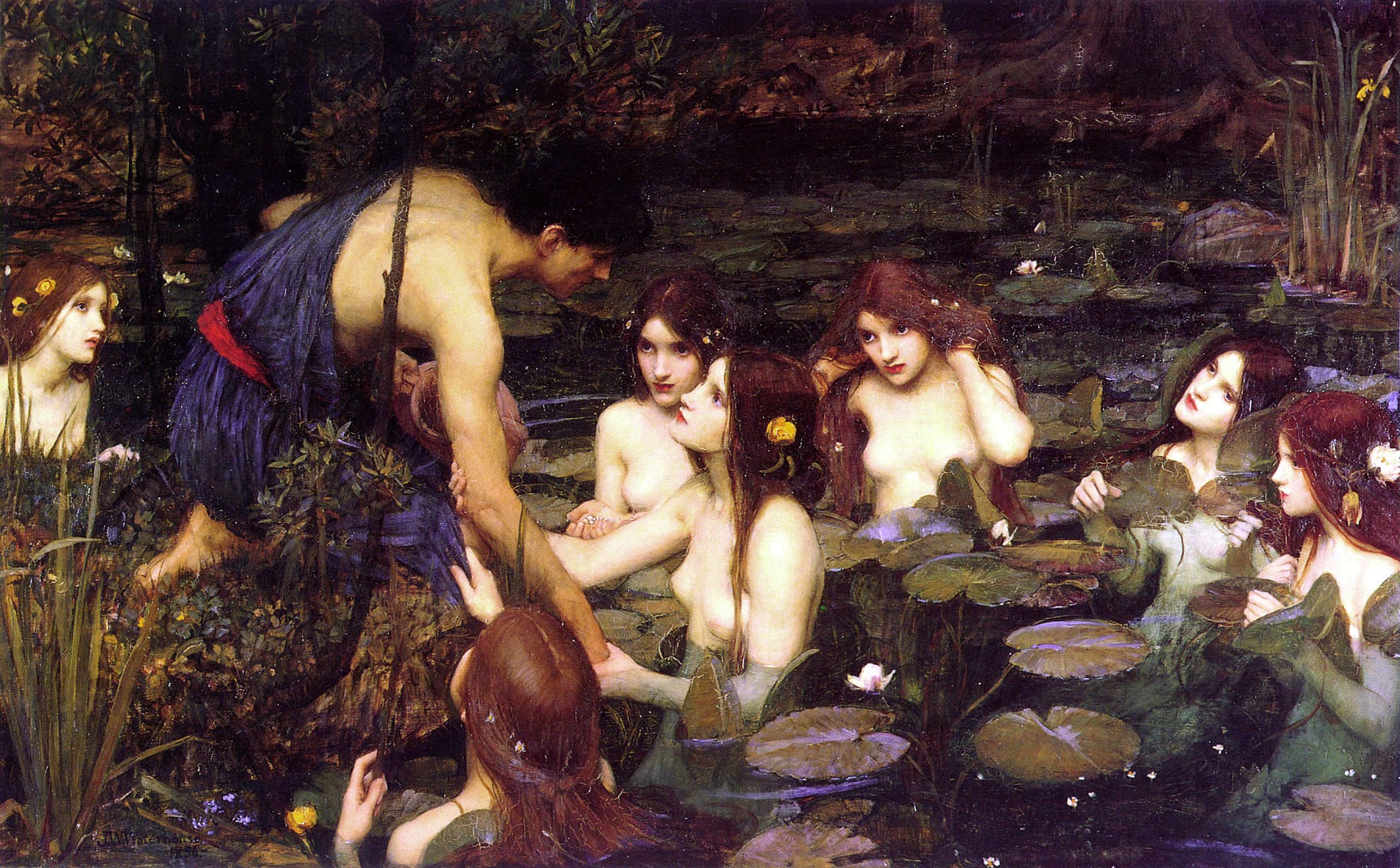
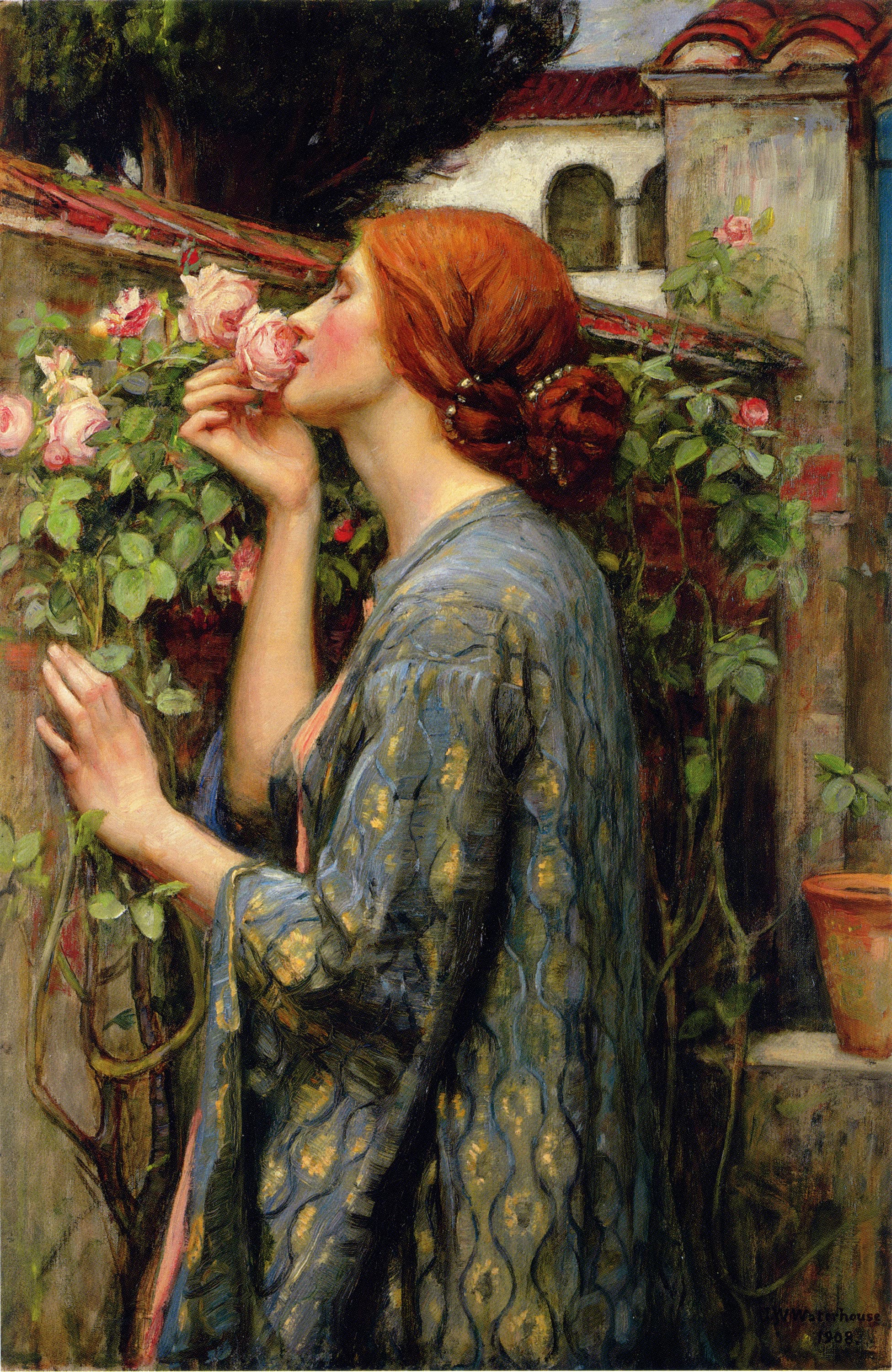
John William Waterhouse was an English painter who combined the academic training of the Royal Academy with the literary subjects and intense color of the Pre-Raphaelites. He is best known for The Lady of Shalott (1888) in Tate Britain, London, and Hylas and the Nymphs (1896) in Manchester Art Gallery, and his enchantresses, nymphs and doomed heroines remain among the most reproduced images of Victorian art.
Life in brief
Waterhouse was born in Rome in 1849, where his parents, both painters, were living; his family called him Nino. They returned to England in the mid-1850s and settled in London, where he helped in his father's studio before entering the Royal Academy Schools in 1870, at first to study sculpture.
His early pictures were scenes of ancient Rome and the East in the manner of Lawrence Alma-Tadema. Saint Eulalia (1885, Tate), showing the body of a young martyr in the snow, attracted attention, and The Magic Circle (1886, Tate), a sorceress drawing a ring of fire on the ground, was bought for the nation. He was elected an Associate of the Royal Academy in 1885 and a full Academician in 1895. In 1883 he married Esther Kenworthy, a painter and the daughter of an art teacher; they had no children. He taught at the St John's Wood Art School and exhibited at the Academy almost every year until his death from cancer in 1917. He is buried in Kensal Green Cemetery.
Style and technique
Waterhouse arrived at Pre-Raphaelite subjects after the original Brotherhood had broken up, and he painted them differently. Where John Everett Millais and his friends had described every leaf with minute precision, Waterhouse worked with looser, more open brushwork, influenced by French plein-air painting, while keeping his figures carefully drawn. His palette is rich and saturated: deep greens, russet hair, the white of skin against dark water.
His subjects come from Homer, Ovid, Keats, Shakespeare and, above all, Tennyson. Again and again he painted women at a moment of fate: the Lady of Shalott, Ophelia, Circe, Lamia, the Sirens, Psyche. Many of his later heroines share a recognizable face, oval with dark auburn hair, and a single favorite model may have posed for several of them, though her identity is not securely known.
The Lady of Shalott
The painting illustrates Tennyson's poem of 1832 (revised 1842). The Lady, cursed to weave the world as she sees it reflected in a mirror and never look at it directly, has turned to look at Sir Lancelot and left her tower. Waterhouse shows her seated in a boat drifting downstream toward Camelot, the tapestry she wove trailing in the water, three candles before her, two already blown out. Her lips are parted as she sings her last song. Beside the candles lies a crucifix, a lantern hangs from the carved prow, and one hand lets slip the chain that moored the boat, the act that sets her on her fatal course. The reeds, the autumn trees and the cool evening light are painted with a freshness that owes much to his outdoor studies. It is one of three paintings he made of the Lady, with versions of 1894 (Leeds Art Gallery) and 1915 (Art Gallery of Ontario).
Hylas and the Nymphs
From the Greek legend of the Argonauts: the young Hylas, sent by Heracles to fetch water, kneels at a pool where seven water nymphs rise among the lily pads and draw him by the arm and tunic into the water, from which he will never return. The nymphs are pale, near-identical and bare to the waist, their gaze both innocent and fatal. In 2018 Manchester Art Gallery briefly took the painting down to provoke discussion about how such images present women's bodies; the public response, largely in its favor, brought it back within a week.
The Soul of the Rose
In The Soul of the Rose (1908, private collection), also called My Sweet Rose, a red-haired young woman in a sunlit walled garden leans toward a pink rose, eyes closed, breathing in its scent. Its title is generally linked to Tennyson's Maud (“Come into the garden, Maud”). It shows the quieter mood of his late work.
Influence
Waterhouse fell out of fashion soon after his death, when modernism dismissed Victorian narrative painting. Interest revived in the 1970s, and the 2009 retrospective J. W. Waterhouse: The Modern Pre-Raphaelite, shown in Groningen, at the Royal Academy in London and in Montreal, confirmed his popularity. Today his images circulate everywhere, from book covers to the aesthetics of dark academia.
Where to see his work
In London, Tate Britain has The Lady of Shalott, Saint Eulalia and The Magic Circle. Hylas and the Nymphs is in Manchester Art Gallery; Circe Offering the Cup to Ulysses in the Gallery Oldham; versions of Ophelia, Lamia and other works are in public and private collections from Leeds and Liverpool to Toronto and Adelaide. Explore The Pre-Raphaelites, Famous Paintings of Women and Dark Academia, or compare Millais's Ophelia.
Questions & answers
Where is The Lady of Shalott by Waterhouse?
The best-known version of The Lady of Shalott (1888) is in Tate Britain in London, where it was given in 1894 by Sir Henry Tate. Waterhouse painted two more versions of the subject: one of 1894 in Leeds Art Gallery and one of 1915 in the Art Gallery of Ontario, Toronto.
Was Waterhouse a Pre-Raphaelite?
Not a member of the original Pre-Raphaelite Brotherhood, which was founded in 1848, the year before he was born. Waterhouse is usually called a late or modern Pre-Raphaelite, because he took up their literary and mythological subjects and rich color, painting them with looser, academic technique.
Where is Hylas and the Nymphs?
Hylas and the Nymphs (1896) is in Manchester Art Gallery, which bought it in 1896, the year it was painted. In 2018 the gallery temporarily removed it from display for about a week to start a debate about the presentation of the female body, before rehanging it.
What is the meaning of Hylas and the Nymphs?
The painting illustrates a Greek myth from the voyage of the Argonauts, told by Apollonius of Rhodes and Theocritus. Hylas, companion of Heracles, goes to fetch water and is lured into a pool by water nymphs and lost forever. It is a classic image of fatal attraction and lost youth.
Who was Waterhouse's model?
No single model can be named with certainty. Many of Waterhouse's later heroines share a similar face, which suggests a favorite sitter, and several names have been proposed, but the evidence is limited. He also used professional models whose names are mostly unrecorded.