Dutch · Dutch Classicism · Dutch Golden Age
Jacob van Campen
b. 2 February 1596, Haarlem — d. 13 September 1657, Amersfoort
Jacob van Campen (1596–1657) was the Dutch painter-architect who introduced classical architecture to the Netherlands, designing the Mauritshuis and Amsterdam's Town Hall, now the Royal Palace on Dam Square.
1 work in the collection
Works by Jacob van Campen
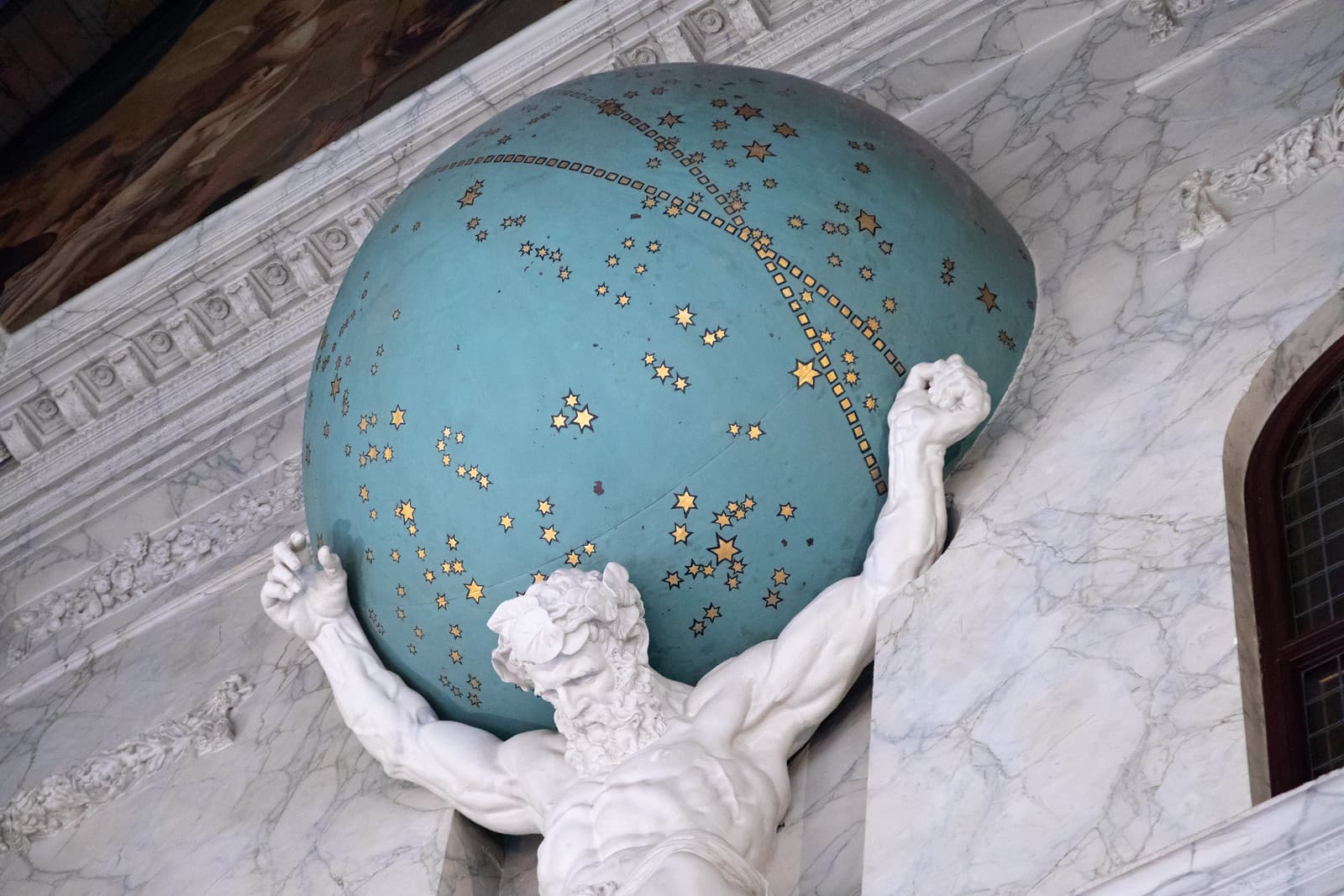
Jacob van Campen (1596–1657) was a Dutch painter and architect, the leading figure of Dutch Classicism. He designed the Mauritshuis in The Hague and Amsterdam's Town Hall on Dam Square, now the Royal Palace, whose roofline and Burgerzaal feature the Atlas statue.
Life in brief
Born into a wealthy family in Haarlem, van Campen trained and registered as a painter there, and probably traveled to Italy in his twenties, where he studied the buildings of Andrea Palladio and Vincenzo Scamozzi. Independent means let him work as a gentleman-architect. In the 1630s, with the architect Pieter Post, he designed the Mauritshuis in The Hague for Johan Maurits of Nassau-Siegen, a compact block with giant pilasters and a pediment that became the model for Dutch classical houses. He also directed the painted decoration of the Oranjezaal in the Huis ten Bosch for Amalia van Solms.
Amsterdam Town Hall
His masterpiece is the Town Hall of Amsterdam, begun in 1648 to celebrate the city's wealth and the Peace of Münster. Faced in sandstone and built on more than 13,000 wooden piles, it was the largest secular building in Europe at its completion. Van Campen planned its program of sculpture and painting, though he withdrew from the project in 1654 after disputes, and the building was finished under others. He died in 1657 at his estate near Amersfoort.
The Atlas statue
The Atlas figure carrying the heavens is part of the sculptural program developed for the Town Hall. It was modeled by the Flemish sculptor Artus Quellinus, who led the building's sculpture team. A bronze Atlas stands on the rear roof, and the full-size white model, carrying a celestial globe, is inside the Burgerzaal. So while the building is van Campen's design, the statue itself is Quellinus's work, a distinction older sources often blur. Atlas holding up the cosmos was a fitting symbol for a trading city that saw itself at the center of the world.
Where to see his work
The Royal Palace in Amsterdam is open to visitors when not in royal use, and the Mauritshuis in The Hague is now the museum of Girl with a Pearl Earring. His paintings are in Dutch museums including the Rijksmuseum. See also Baroque Art and Greek Statues for the classical sources.
Questions & answers
Who designed the Royal Palace in Amsterdam?
The Royal Palace on Dam Square was designed by Jacob van Campen as Amsterdam's Town Hall, begun in 1648. He left the project in 1654, and others completed it. It became a royal palace under Louis Bonaparte in 1808.
Who made the Atlas statue on the Royal Palace?
The Atlas statue was modeled by the Flemish sculptor Artus Quellinus as part of the Town Hall's sculpture program, planned under Jacob van Campen. A bronze Atlas stands on the rear roof, and its full-size model is in the Burgerzaal inside.
What is Jacob van Campen known for?
Jacob van Campen is known for bringing classical, Palladian architecture to the Netherlands. His key buildings are the Mauritshuis in The Hague (with Pieter Post) and the Town Hall of Amsterdam, now the Royal Palace.