Modernism
Don Quixote
Pablo Picasso, 1955
Don Quixote is Pablo Picasso's ink drawing of 10 August 1955 showing Cervantes's knight on Rocinante, with Sancho Panza, windmills and a blazing sun, made for the 350th anniversary of the novel. It was published in Les Lettres françaises.
- Artist
- Pablo Picasso
- Date
- 1955
- Medium
- Ink on paper
- Movement
- Modernism
Don Quixote is a brush-and-ink drawing by Pablo Picasso, dated 10.8.55 (10 August 1955) at lower left. He made it for the French weekly Les Lettres françaises to mark the 350th anniversary of the publication of the first part of Miguel de Cervantes's Don Quixote in 1605, and it appeared in the paper that August. It quickly became one of the most reproduced images Picasso ever made.
What you are looking at
The whole scene is drawn in black on white with fast, heavy strokes. In the center, tall and gaunt, sits Don Quixote on his bony horse Rocinante. His body is a thin vertical scaffold of lines: a stick-like neck, a narrow face with a pointed beard, and on his head a helmet like an upturned bowl, recalling the barber's basin the knight mistakes for the helmet of Mambrino. He holds a long lance upright and a round shield, and his legs dangle in long straight lines toward the ground.
To the left, Sancho Panza is a squat black blob perched on his donkey, whose long ears and spindly legs echo the lance. Above, a sun like a spiky ring of short dashes blazes in the sky. On the low horizon stand small windmills, the giants of the novel's most famous episode. The ground is a few rough marks.
How it was drawn
The drawing has the speed of calligraphy. Picasso reduces each figure to a few gestures and lets the white paper do most of the work. Thick, worked-over strokes around Quixote's torso and arms show where he changed his mind, while Rocinante's legs and neck are single, confident lines. The contrast between the thin knight and the round squire, the visual joke at the heart of Cervantes, is made entirely through shape.
Picasso and Cervantes
As a Spaniard living in France, Picasso had a strong attachment to Don Quixote, the founding novel of Spanish literature, about an idealist who goes out to right the world's wrongs and is mocked for it. Les Lettres françaises, edited by the poet Louis Aragon, was closely linked to the French Communist Party, which Picasso had joined in 1944, and the paper published several of his drawings.
Where is the original?
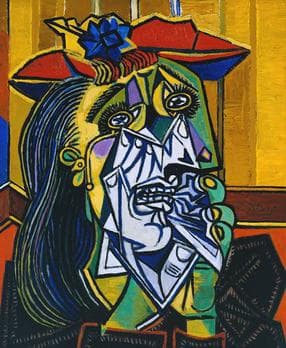
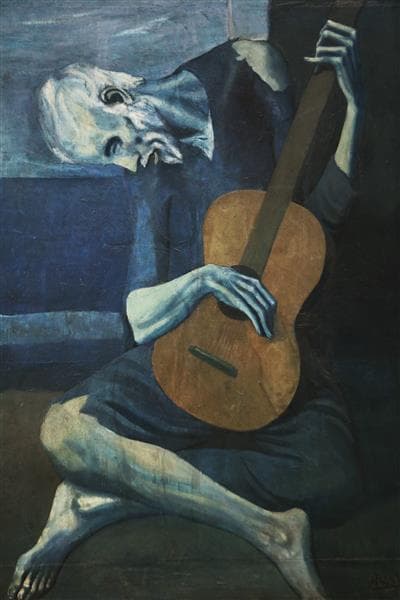
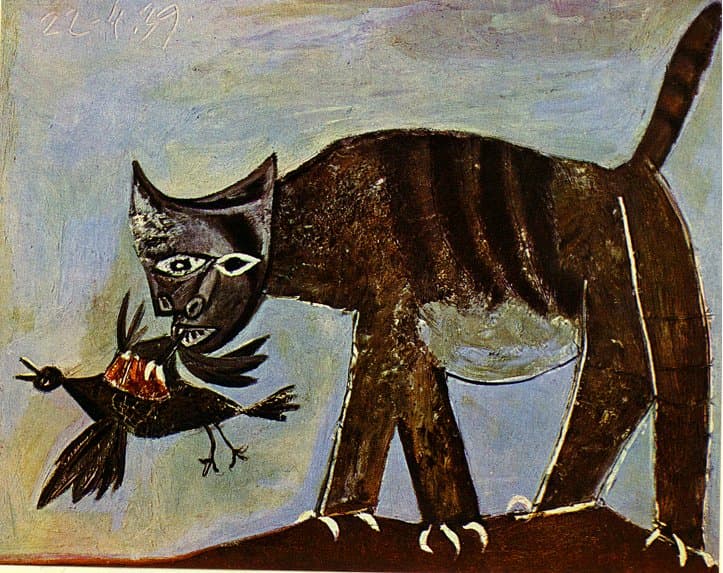
Countless prints and posters derive from the published version. Accounts of where the original sheet is kept vary, and it is not on regular public display. For Picasso's paintings see The Old Guitarist, Weeping Woman and Cat Catching a Bird, and more at Pablo Picasso.
Questions & answers
When did Picasso draw Don Quixote?
Picasso dated the drawing 10 August 1955. He made it quickly, in ink, for the French weekly Les Lettres françaises, which published it that month to celebrate the 350th anniversary of the first part of Cervantes's novel Don Quixote, published in 1605.
What does Picasso's Don Quixote show?
It shows the knight Don Quixote on his thin horse Rocinante, holding a lance and shield, with his squire Sancho Panza on a donkey beside him. A blazing sun hangs overhead, and small windmills, which the deluded knight mistakes for giants in Cervantes's best-known episode, stand on the horizon.
Where is the original Picasso Don Quixote drawing?
The original ink drawing is not on regular public display, and published accounts of its whereabouts differ. What most people know is the version reproduced in Les Lettres françaises in August 1955, which has since been copied in countless prints, posters and reproductions.
More by the artist
Pablo Picasso
Kindred works
You may also study

The Thinker
Auguste Rodin · Modeled 1880–82; enlarged 1902–03; this cast 1904

Ophelia
John Everett Millais · 1851–52
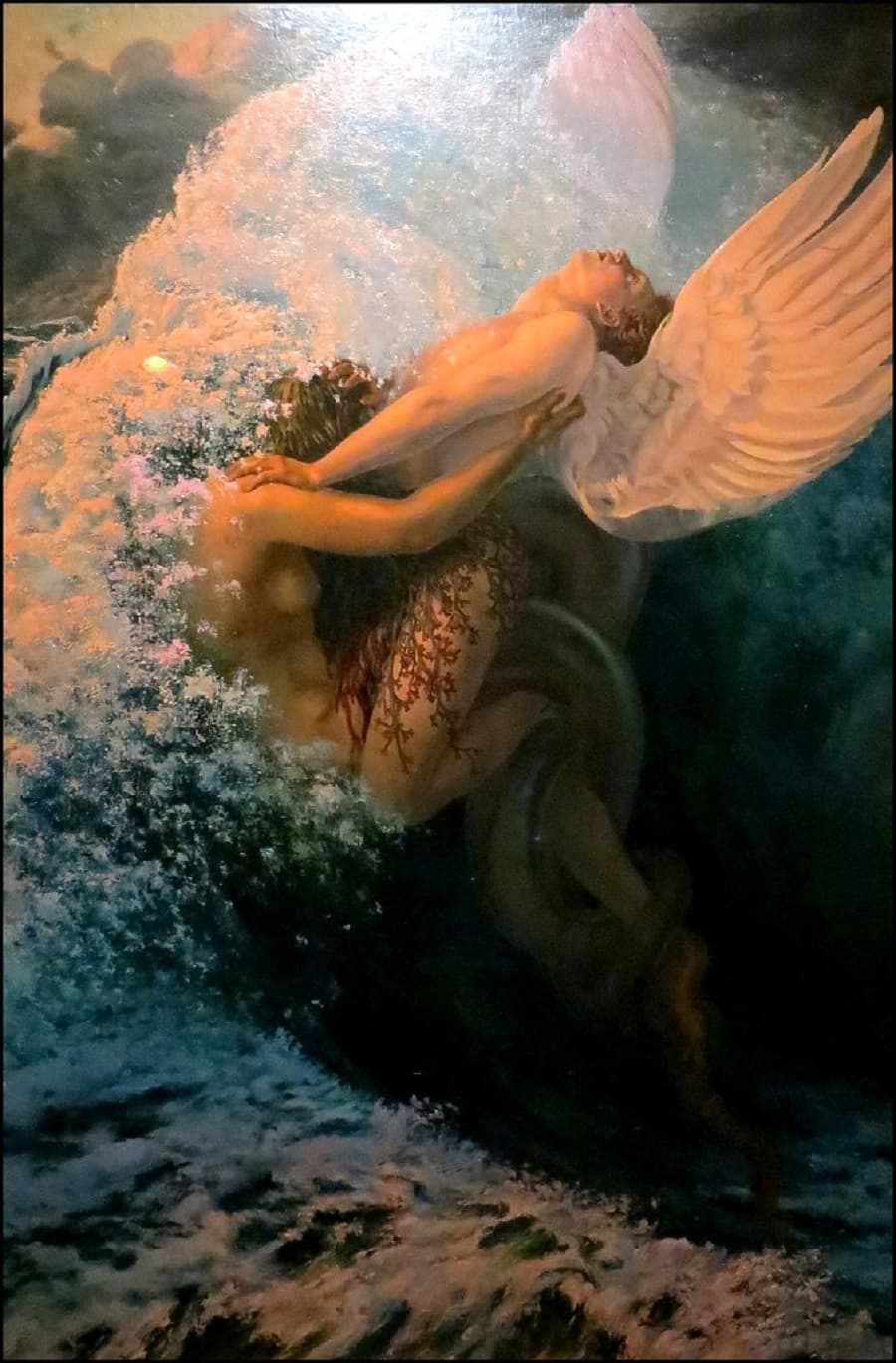
Spleen et Idéal
Carlos Schwabe · 1907
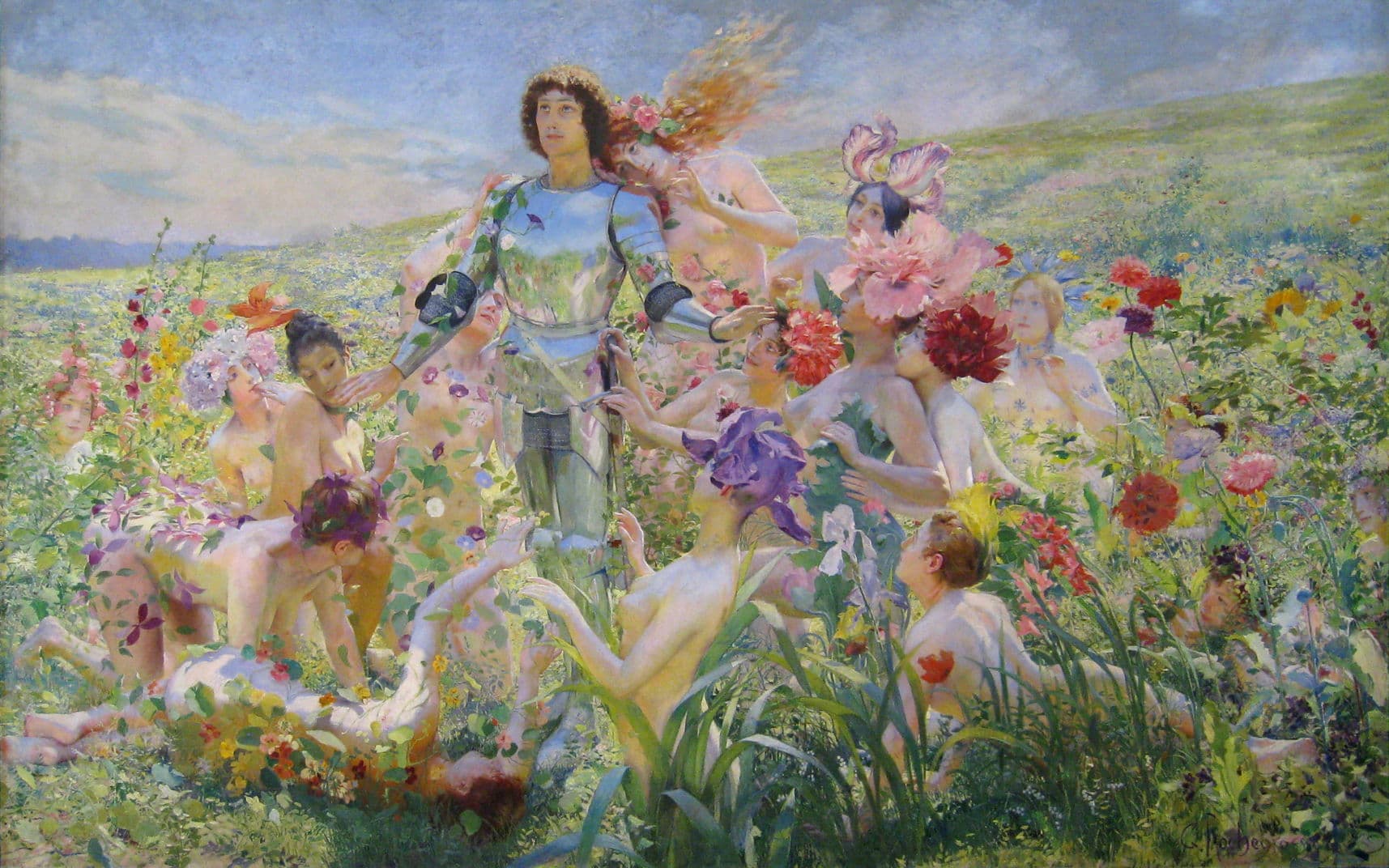
The Knight of the Flowers
Georges Rochegrosse · 1894
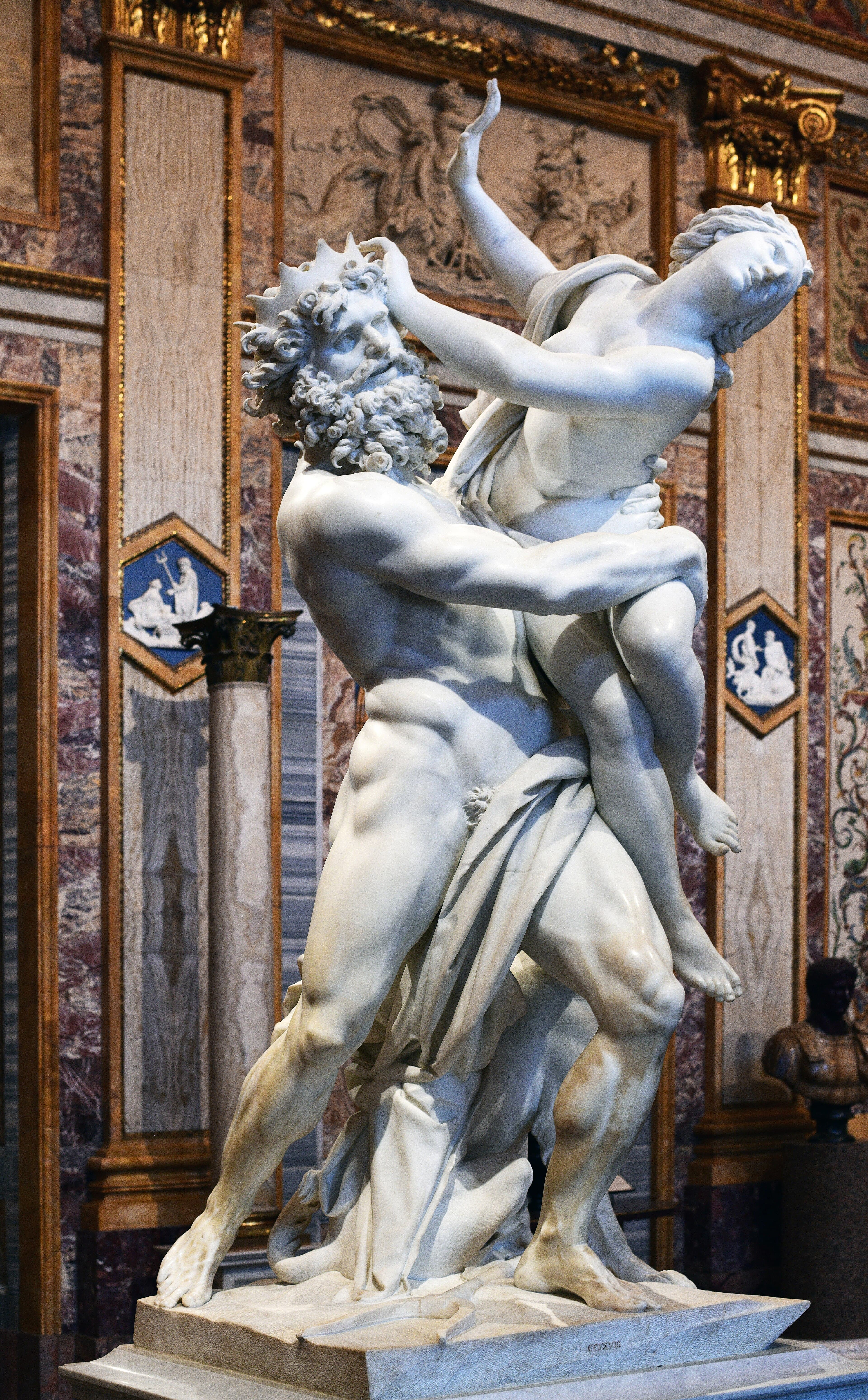
The Rape of Proserpina
Gian Lorenzo Bernini · 1621–1622
The Death of Socrates
Jacques-Louis David · 1787
The Lady of Shalott
John William Waterhouse · 1888

Springtime
Claude Monet · 1872