Various
Windows to the Soul (Eyes in Painting)
Various Artists or Collaborations
Windows to the Soul is a collage of close-up details of eyes cropped from historical paintings, arranged in a grid to show how artists from the Renaissance to the nineteenth century painted the eye. The individual sources are not labeled.
- Medium
- Digital collage of details from paintings
- Movement
- Various
What you are looking at
Some twenty strips and squares, each showing a pair of eyes or a single eye cropped from an oil painting, are fitted together into a grid. The eyes belong to young women and men, children and old people. Some look straight out; some glance sideways; one pair, under a furrowed brow, stares in alarm; another, rimmed in red, holds a tear. The skin around them ranges from porcelain pink to deep olive and brown, and in several the fine network of cracks in old varnish is visible. Colors of iris run from pale gray-blue to near black.
The effect is uncanny. Cut out of their faces, the eyes still seem to look back at the viewer.
The idea
The phrase "the eyes are the window of the soul" is proverbial and goes back at least to antiquity; Cicero wrote that the face is the image of the mind and the eyes its interpreters. Painters have long treated the eye as the point where a portrait comes alive. Renaissance and later treatises on painting advised artists to give special care to the catchlight, the tiny reflection that makes an eye look wet and alive, and to the edge of the lower lid.
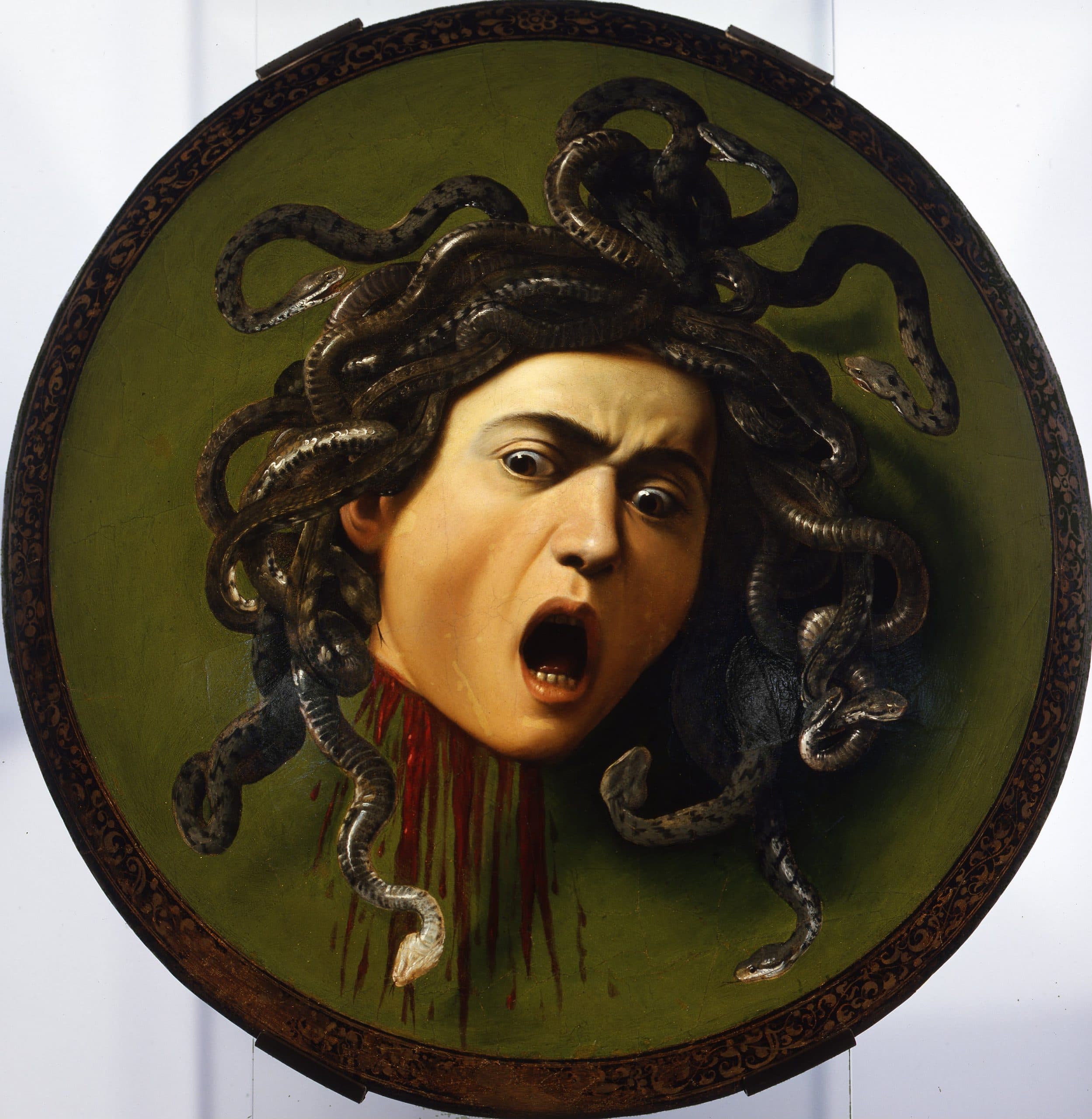
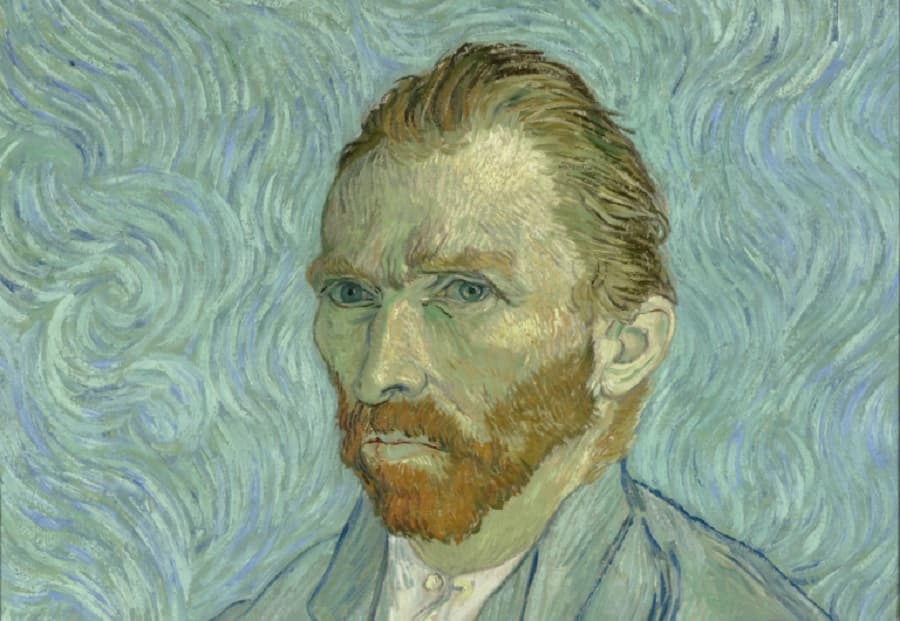
Collages like this one circulate widely online, especially in the dark academia aesthetic, which prizes old paintings, close details and melancholy moods. The sources are rarely credited. Among the works such grids often draw on are Mona Lisa, Fallen Angel by Alexandre Cabanel, whose angel weeps a single tear of rage, Medusa by Caravaggio, and Van Gogh's self-portraits, such as Self-Portrait (1889). We have not confirmed which paintings are used in this particular collage.
Close looking
Look for the catchlights: in almost every eye there is a single small white highlight, placed on the upper part of the iris. Painters added it last, with the tip of a fine brush, and its position tells you where the light in the original picture came from.
Notice too how many of these eyes are wet: a line of pink or white along the lower lid suggests moisture, the trick that separates a living gaze from a doll's. And in the cracked examples you can see that the eyes have survived centuries of aging varnish, yet still hold attention.
Where to see it
This is a digital compilation with no single original. For the paintings themselves, see Dark Academia and Famous Paintings of Women, where many of these faces appear in full.
Questions & answers
What is the Windows to the Soul collage?
It is a grid of close-up details of eyes taken from historical oil paintings, assembled into a single image. Collages like this circulate widely online, particularly in the dark academia aesthetic. The individual paintings are not credited in the image itself.
Why are eyes called the windows to the soul?
The saying is very old: ancient writers such as Cicero described the eyes as interpreters of the mind. Portrait painters took the idea seriously, giving the eyes the most careful finish so that the sitter's thoughts and feelings seem to show through them.
How did old masters make painted eyes look alive?
They used a few small touches: a bright catchlight on the iris to show reflected light, a moist line of pink or white along the lower lid, soft shadows in the corners, and careful attention to where the gaze is directed. Without these, a painted eye looks flat.
More by the artist
Various Artists or Collaborations
Kindred works
You may also study
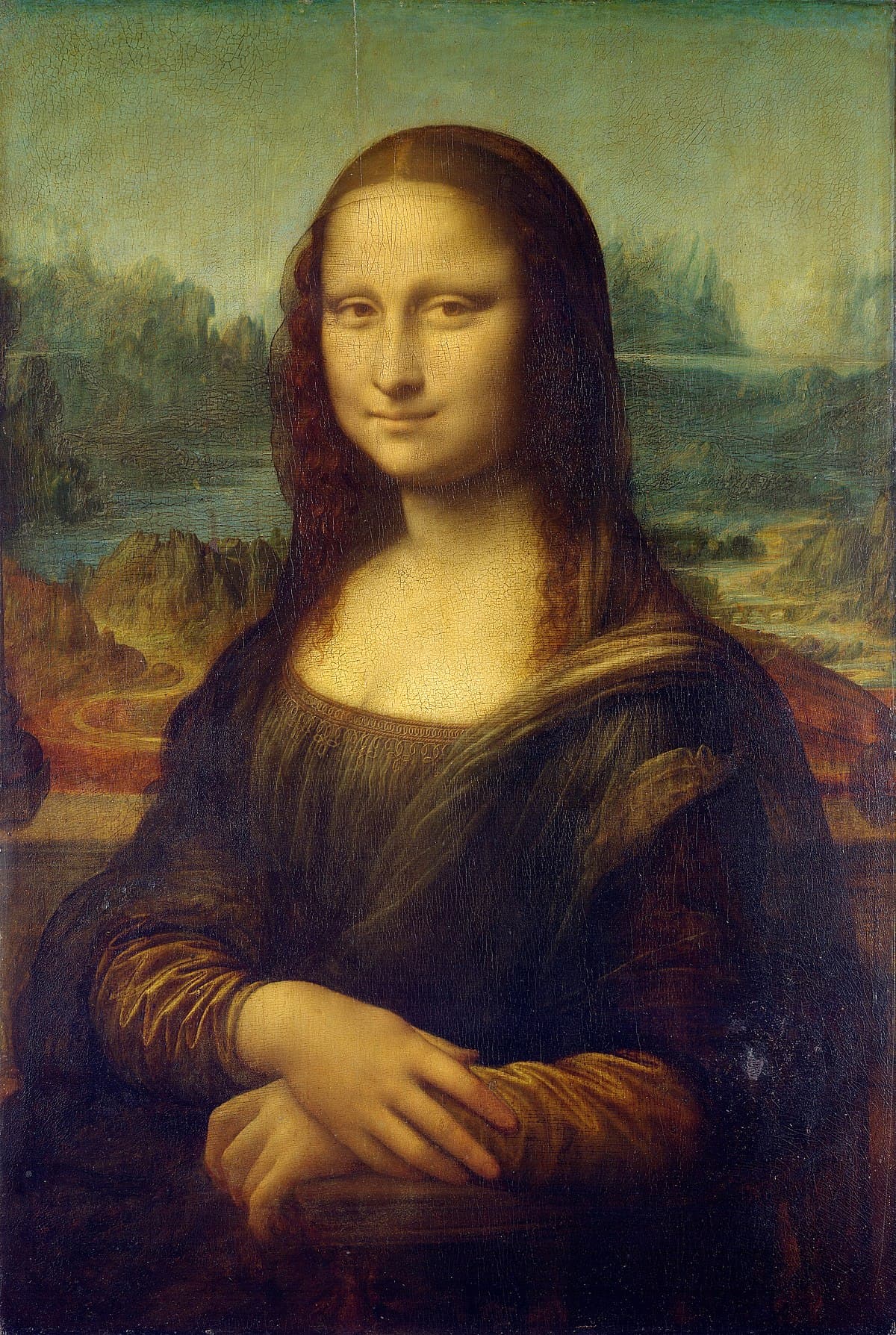
Mona Lisa
Leonardo da Vinci · c. 1503–1519
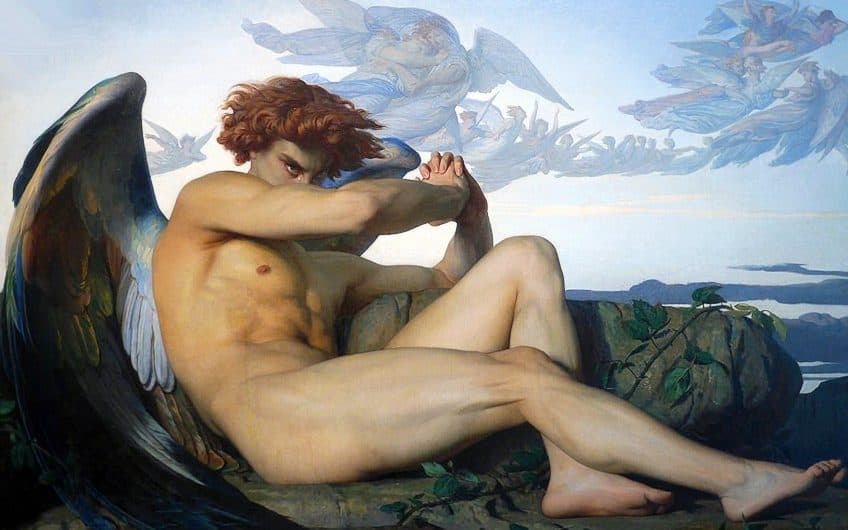
Fallen Angel
Alexandre Cabanel · 1847
Medusa
Caravaggio · c. 1597–98
Self-Portrait (1889, Musée d'Orsay)
Vincent van Gogh · 1889
Girl Writing (La scrittrice)
Giovanni Spertini · 1866

The Scream
Edvard Munch · 1893

The Thinker
Auguste Rodin · Modeled 1880–82; enlarged 1902–03; this cast 1904

Saturn Devouring His Son
Francisco Goya · c. 1819–1823