Contemporary (after a 1930 funerary sculpture)
The Kiss of Death
Veronese Design, c. 2020
The Kiss of Death is a small resin statue by Veronese Designs of a winged skeleton kissing a young man, a decorative replica inspired by El Petó de la Mort, the 1930 funerary sculpture in Barcelona's Poblenou Cemetery.
- Artist
- Veronese Design
- Date
- c. 2020
- Medium
- Cold-cast resin, hand-painted bronze finish
- Dimensions
- 25 × 15 × 11 cm
- Movement
- Contemporary (after a 1930 funerary sculpture)
What you are looking at
A winged skeleton bends down over a young figure and presses its skull to the youth's forehead in a kiss. Its bony arms wrap around the body it holds; its great wings, every feather picked out, rise behind and frame the pair. The figure in its arms leans back, eyes closed and long hair falling, surrendering rather than struggling. The whole group is finished in a dark, antiqued bronze color, rubbed to highlight the ribs, feathers and strands of hair.
This version is a decorative statue produced by Veronese Designs, a maker of resin figurines, around 2020. It stands about 25 centimeters tall and is cast in resin and hand-painted to imitate bronze. It is not a unique artwork but a commercial reproduction, made in quantity.
The original
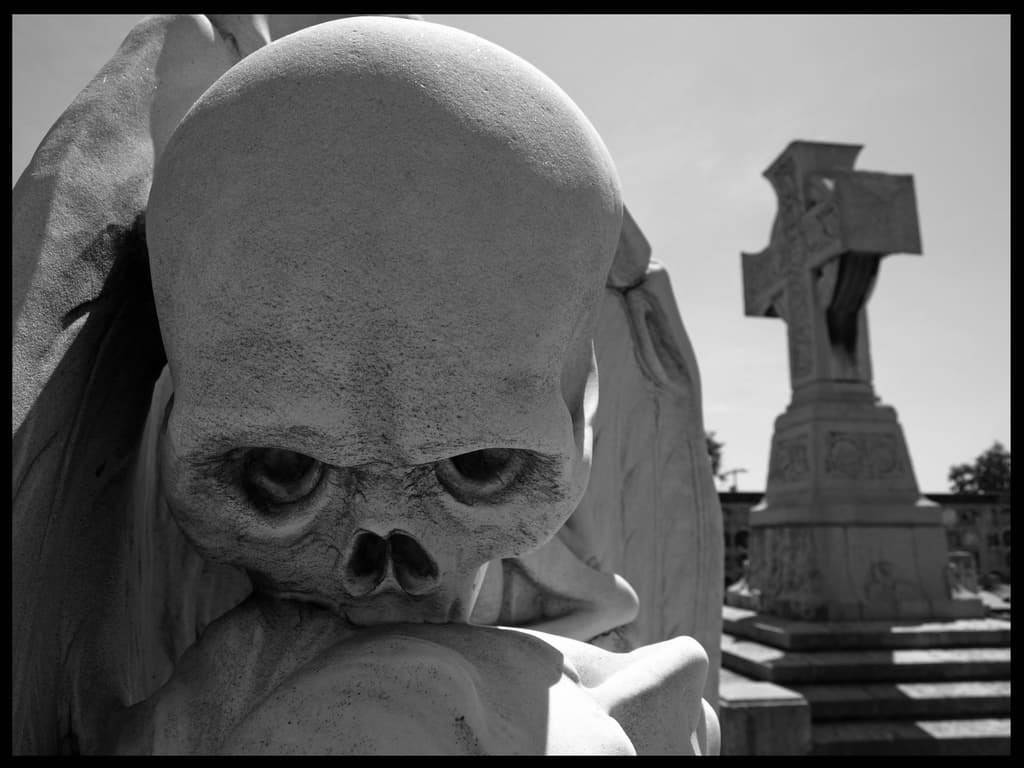
The composition comes from El Petó de la Mort, "the kiss of death," a marble funerary monument of 1930 in the Poblenou Cemetery in Barcelona. It marks the grave of a young man from the Llaudet family, who died young, and shows Death as a winged skeleton taking the youth with a kiss. The sculpture is usually attributed to Jaume Barba, though some credit Joan Fontbernat, his collaborator in the workshop. See El Petó de la Mort for the full story.
The original carries an inscription from the poet Jacint Verdaguer, lamenting a life ended so young. Its mix of tenderness and horror, Death as lover rather than reaper, made it one of the most photographed graves in Europe, and replicas like this one spread the image far beyond Barcelona.
Looking closely
Compared with the marble original, the replica exaggerates texture: the feathers are deeply cut and the skeleton's joints are crisp, because the bronze-effect finish needs edges to catch the highlights. The base is decorated with interlacing knots that do not appear on the original. Notice how the figure's hands are posed. One rests on the skeleton's arm, as though accepting the embrace.
Context
The image belongs to an old tradition. The medieval Danse Macabre showed Death leading people of every rank away, and nineteenth-century artists recast the encounter as a kind of seduction, from "Death and the Maiden" in German Romanticism to Symbolist painting. Barba's sculpture, and replicas of it, carry that idea into the twentieth century and into popular gothic taste.
Where to see it
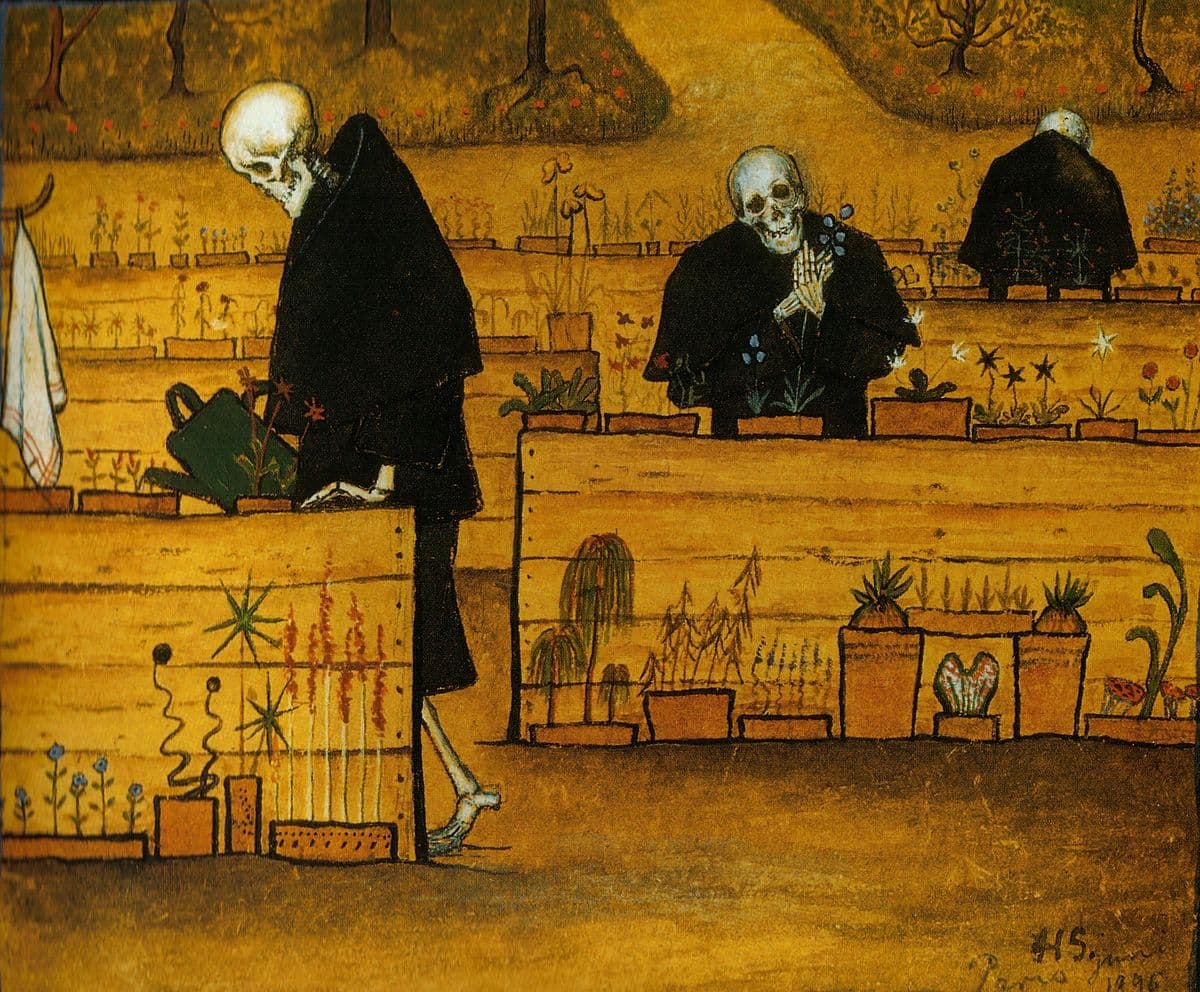
The original sculpture is in the Poblenou Cemetery, Barcelona, and can be visited. See also Memento Mori & Vanitas and The Garden of Death.
Questions & answers
What is the Kiss of Death statue based on?
It is a small replica of El Petó de la Mort, a marble funerary sculpture of 1930 in the Poblenou Cemetery, Barcelona. The original marks the grave of a young man and shows a winged skeleton kissing him. It is usually attributed to the sculptor Jaume Barba.
Where is the original Kiss of Death sculpture?
The original El Petó de la Mort is in the Poblenou Cemetery (Cementiri de Poblenou) in Barcelona, Spain, on the tomb of the Llaudet family. The cemetery is open to visitors and the sculpture is one of its best-known monuments.
What does the Kiss of Death sculpture mean?
It presents Death not as a violent reaper but as a tender, even loving figure who claims a young life with a kiss. The image mixes grief, eroticism and acceptance, drawing on the Death and the Maiden tradition and the medieval Dance of Death.
Kindred works
You may also study
The Kiss of Death (El Petó de la Mort)
Jaume Barba & Joan Fontbernat · 1930
The Garden of Death
Hugo Simberg · 1896
The Angel, the Death, and the Devil
Roberto Ferri · 2018
Requiem
Ignacio Trelis
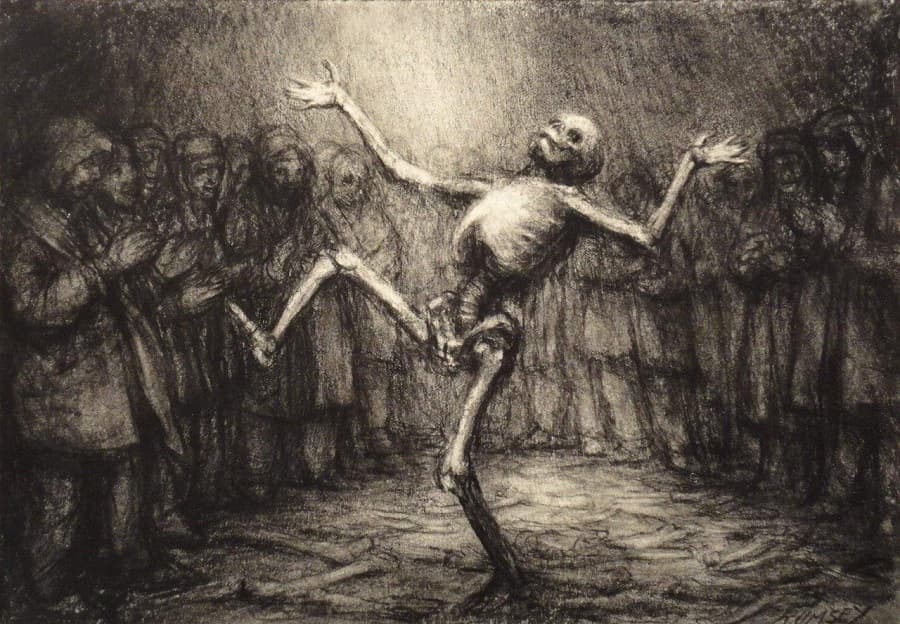
The Danse Macabre Series
Paul Rumsey

Venus de Milo
Alexandros of Antioch · c. 150–125 BC

The Scream
Edvard Munch · 1893

Saturn Devouring His Son
Francisco Goya · c. 1819–1823