French · Beaux-Arts · Academic art
Laurent Marqueste
b. 12 June 1848, Toulouse, France — d. 5 April 1920, Paris, France
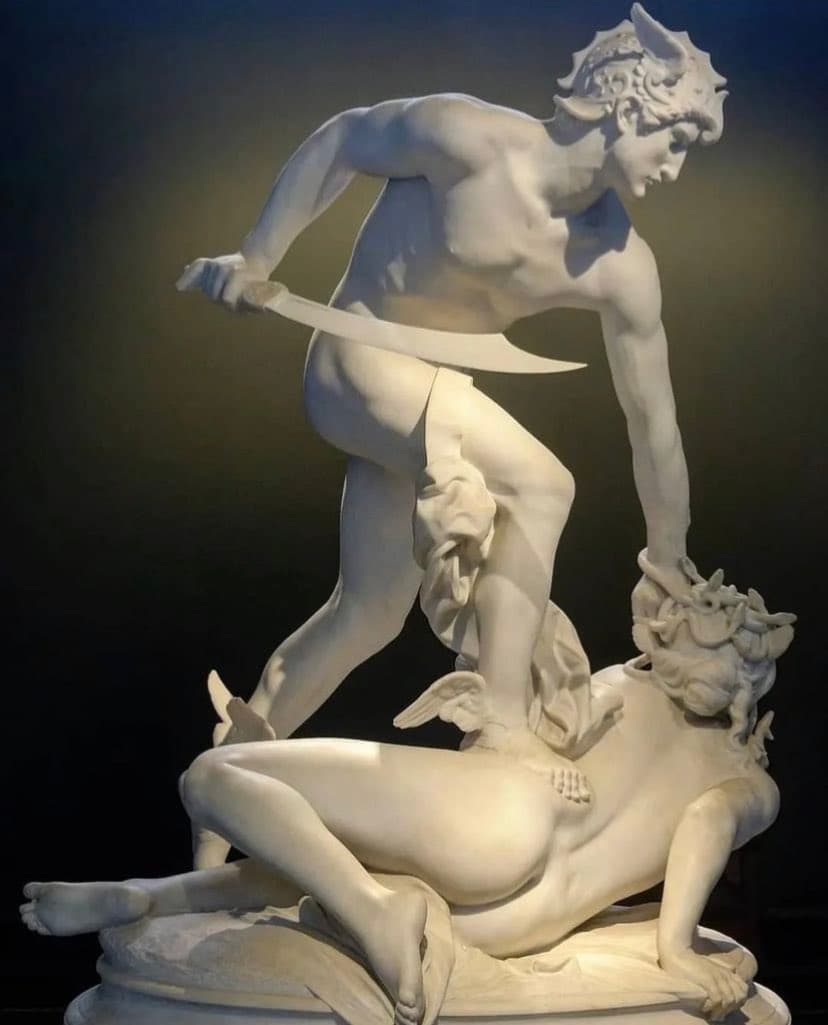
Laurent-Honoré Marqueste (1848–1920) was a French sculptor from Toulouse, a Prix de Rome winner and Beaux-Arts professor known for dramatic mythological groups such as Perseus and the Gorgon and for monuments across Paris.
1 work in the collection
Works by Laurent Marqueste
Laurent-Honoré Marqueste was a French sculptor of the Third Republic, born in Toulouse in 1848, who worked in the energetic, neo-Baroque manner taught at the École des Beaux-Arts. He is best known for mythological groups of two struggling figures and for a long list of public and architectural commissions in Paris.
Life in brief
Marqueste trained first in Toulouse and then in Paris under François Jouffroy and Alexandre Falguière, another sculptor from Toulouse. He won the Prix de Rome in 1871 and made his Salon debut in 1874. Honors followed steadily: the Legion of Honor in 1884, rising to commander in 1903; membership of the Institut de France in 1894; a grand prize at the 1900 Exposition Universelle. From 1893 he taught at the École des Beaux-Arts. He died in Paris in 1920.
Style
Marqueste liked compositions that set two bodies against each other, as in Nessus and Deianira (1892) in the Tuileries Gardens. As was usual among French sculptors of his generation, he modeled the figures himself and left much of the marble carving to specialist assistants, who enlarged his plasters with a pointing machine. His public work includes figures for the Gare d'Orsay (now the Musée d'Orsay), the Grand Palais and the Sorbonne, where his statue of Victor Hugo stands, and monuments as far away as Baltimore.
Perseus and the Gorgon
Perseus and the Gorgon, also called Perseus Slaying Medusa, occupied Marqueste for years and exists in several versions in plaster, bronze and marble. Perseus grips the snake-haired Medusa and raises his sword over her as she twists to escape. Marble versions are in the Musée des Beaux-Arts in Lyon and the Ny Carlsberg Glyptotek in Copenhagen. Compare the earlier Medusa by Caravaggio and the modern reversal of the story in Medusa on Her Throne.
Where to see his work
The Musée des Augustins in his native Toulouse holds his seated Velléda (1877) and many sketches and statuettes. In Paris his works stand in the Tuileries, at the Sorbonne and on the Musée d'Orsay building. See more in Greek Mythology in Art.
Questions & answers
Who sculpted Perseus and the Gorgon?
Perseus and the Gorgon is by the French sculptor Laurent-Honoré Marqueste (1848–1920). He made several versions; marbles are in the Musée des Beaux-Arts in Lyon and the Ny Carlsberg Glyptotek in Copenhagen.
Who was Laurent Marqueste?
Laurent Marqueste was a sculptor from Toulouse who won the Prix de Rome in 1871, taught at the École des Beaux-Arts from 1893 and joined the Institut de France in 1894. He made mythological groups and many public monuments.
Where can I see Marqueste's sculptures in Paris?
His Nessus and Deianira stands in the Tuileries Gardens, his Victor Hugo is at the Sorbonne, and he made sculpture for the facade of the former Gare d'Orsay, now the Musée d'Orsay.