Greek (Athenian) · Classical Greek sculpture · High Classical
Phidias
b. c. 480 BC, Athens — d. c. 430 BC
Phidias (active c. 465–430 BC) was the most celebrated sculptor of ancient Greece. He made the gold-and-ivory Athena Parthenos and Zeus at Olympia, one of the Seven Wonders, and directed the Parthenon's sculpture in Athens.
2 works in the collection
Works by Phidias
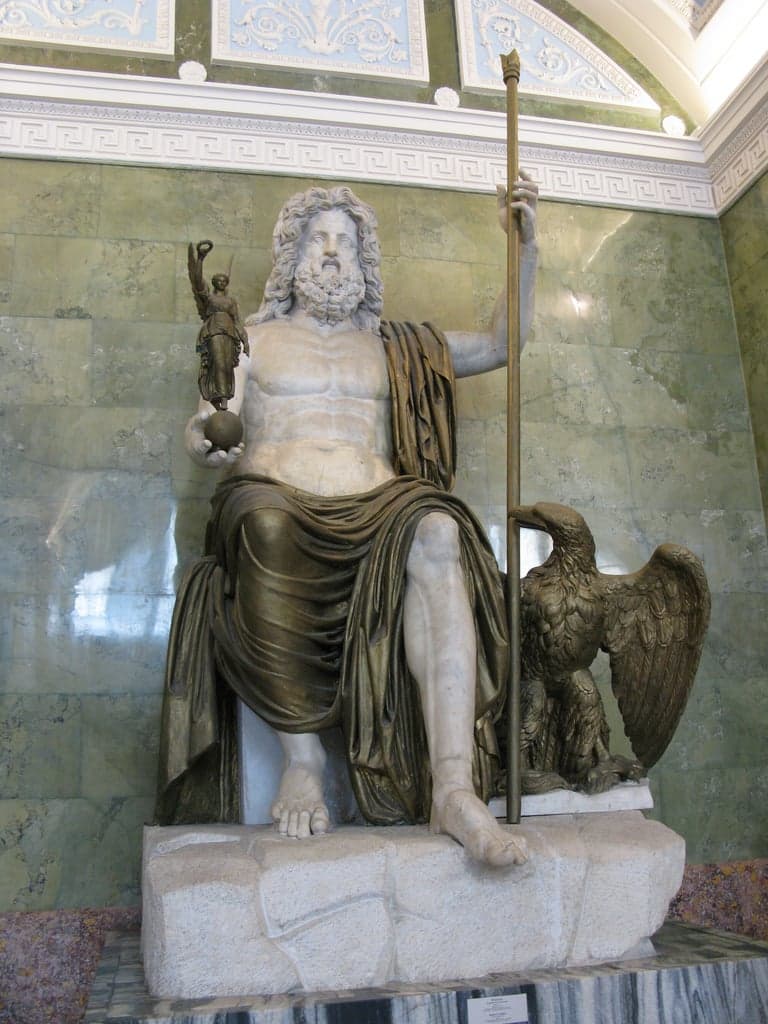
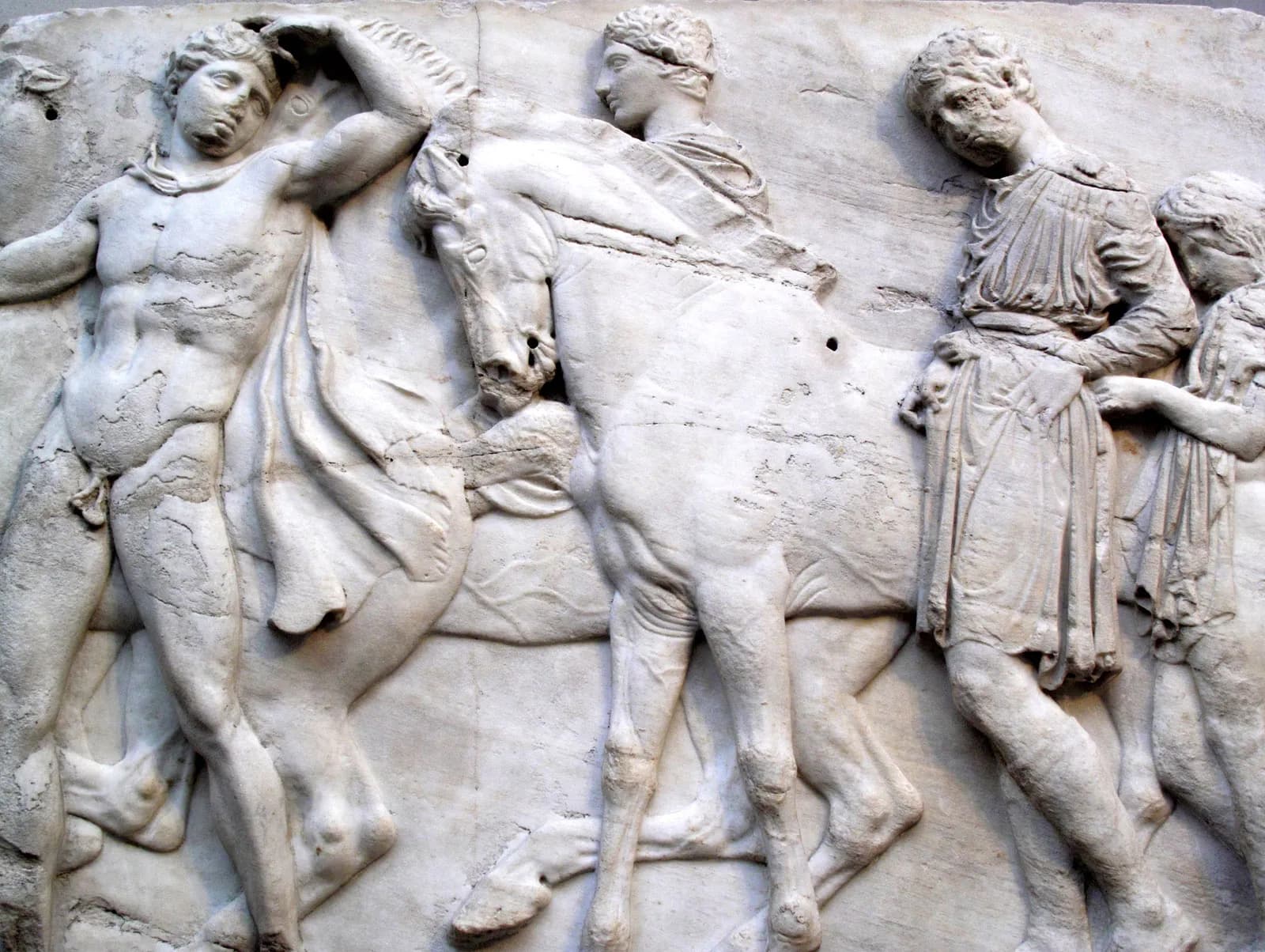
Phidias was an Athenian sculptor of the 5th century BC, active roughly from 465 to 430 BC, and in the judgment of the ancient world the greatest of all Greek sculptors. He made the colossal gold-and-ivory statues of Athena Parthenos in the Parthenon and of Zeus at Olympia, the latter counted among the Seven Wonders of the World, and he oversaw the sculptural program of the Parthenon, including the Parthenon Frieze. None of his major statues survives; we know them from ancient descriptions, coins, small copies and the marbles carved under his direction.
Life
Phidias was the son of Charmides of Athens. Ancient writers name Hegias of Athens and Ageladas (Hageladas) of Argos as his teachers, though the tradition is not secure. He was also trained, by some accounts, as a painter. His career belongs to the decades after the Persian Wars, when Athens, rich from its maritime empire, rebuilt the temples the Persians had burned in 480 BC.
His friendship with Pericles, the statesman who led Athens in those years, made him the city's artistic director in all but name. Plutarch says Phidias had charge of all the works on the Acropolis. That friendship also brought trouble. According to Plutarch, Pericles's enemies attacked him through Phidias, accusing the sculptor first of stealing gold meant for the Athena Parthenos, a charge he answered by removing and weighing the gold plates, which had been made detachable, and then of impiety for portraying himself and Pericles among the figures on Athena's shield. Plutarch says he died in prison; other ancient sources say he went into exile and worked at Olympia. The truth is unknown, and the order of events is disputed.
Phidias's major works
Athena Parthenos (dedicated 438 BC). The cult statue inside the Parthenon, about 12 meters high, built over a wooden core with ivory for the flesh and sheets of gold for the armor and drapery. Athena stood holding a figure of Victory (Nike) in her right hand, with her shield and a great serpent at her side. Its appearance is known from small Roman copies such as the Varvakeion Athena in the National Archaeological Museum, Athens.
Athena Promachos. A colossal bronze of Athena "who fights in the front line," set up on the Acropolis between the Parthenon and the Propylaia gateway. Ancient writers say the gleam of her spear tip could be seen by sailors approaching Athens.
Zeus at Olympia (c. 435 BC). For the Temple of Zeus at Olympia he made a seated Zeus of gold and ivory, about 12 meters tall, so large that ancient visitors joked he would break through the roof if he stood up. The god held a Victory in one hand and a scepter in the other, on a throne carved and painted with myths. The statue was lost in late antiquity. Its form survives in coins of Elis and in later statues modeled on it, such as the Roman Seated Zeus (Jupiter) in the Hermitage, St. Petersburg.
In the 1950s excavators at Olympia found the workshop where the Zeus was made, with clay molds for gold drapery, tools, and a small black-glazed cup inscribed on the base "I belong to Pheidias," one of the most moving finds in classical archaeology.
Other statues attributed to him include the bronze Lemnian Athena, known through copies, and a wounded Amazon for Ephesus, made according to legend in a competition with Polykleitos.
The Parthenon sculptures
Between about 447 and 432 BC the Parthenon was built and decorated: 92 metopes, the continuous frieze about 160 meters long, and two crowded pediments showing the birth of Athena and her contest with Poseidon. No single hand could carve all of this, and Phidias's role is best understood as designer and director of a large workshop. The consistent style of the frieze, with its calm horsemen, flowing drapery and gods seated at ease, is usually taken to reflect his vision. Most of the surviving sculpture is divided between the British Museum in London and the Acropolis Museum in Athens.
What were Phidias's contributions to Greek art?
Phidias's contribution was to give the gods a human form of ideal grandeur. Ancient critics praised above all the majesty of his figures: Quintilian wrote that the Zeus added something to traditional religion. In technique he perfected chryselephantine (gold-and-ivory) sculpture on a colossal scale and handled bronze and marble with equal command. In style, the Parthenon marbles mark the high point of the Classical: bodies anatomically convincing but idealized, drapery that reveals the form beneath, and a mood of serene confidence. Later sculptors from Praxiteles to the Romans measured themselves against him, and the Neoclassical sculptors of the 18th and 19th centuries, such as Antonio Canova, studied the Parthenon marbles once they reached London.
Where to see his work
Visit the British Museum and the Acropolis Museum for the Parthenon sculptures, the site and museum at Olympia for the workshop and the cup, and the National Archaeological Museum in Athens for the Varvakeion copy of the Athena Parthenos. A full-scale modern reconstruction of the Athena Parthenos stands in the Parthenon replica in Nashville, Tennessee. See also our guide to Greek statues and Greek mythology in art.
Questions & answers
What were Phidias's main contributions?
Phidias created the gold-and-ivory Athena Parthenos and Zeus at Olympia, the bronze Athena Promachos, and directed the Parthenon's sculpture. He set the ideal of majestic, humanized gods and the serene High Classical style that later Greek, Roman and Neoclassical sculptors followed.
What is Phidias famous for?
He is famous above all for the Statue of Zeus at Olympia, one of the Seven Wonders of the Ancient World, and the Athena Parthenos inside the Parthenon. Both were colossal statues of gold and ivory, about 12 meters tall.
Did Phidias carve the Parthenon sculptures himself?
Not all of them. Phidias designed and supervised the Parthenon's sculpture, made c. 447–432 BC, but the metopes, frieze and pediments were carved by a large workshop. Their unified style is thought to reflect his direction.
Does any work by Phidias survive?
His great cult statues are lost. What survives are the Parthenon marbles made under his direction, ancient copies and coins showing his statues, and finds from his workshop at Olympia, including a cup inscribed 'I belong to Pheidias.'
What happened to Phidias?
According to Plutarch, enemies of Pericles accused Phidias of stealing gold from the Athena Parthenos and of impiety, and he died in prison. Other ancient sources say he went into exile and worked at Olympia. The facts are uncertain.