Flemish-Italian · Mannerism · Late Renaissance
Giambologna
b. 1529, Douai, Flanders — d. 13 August 1608, Florence
Giambologna (1529–1608) was a Flemish-born sculptor who became the Medici court sculptor in Florence, famed for the spiraling Abduction of a Sabine Woman and the giant Apennine Colossus.
2 works in the collection
Works by Giambologna
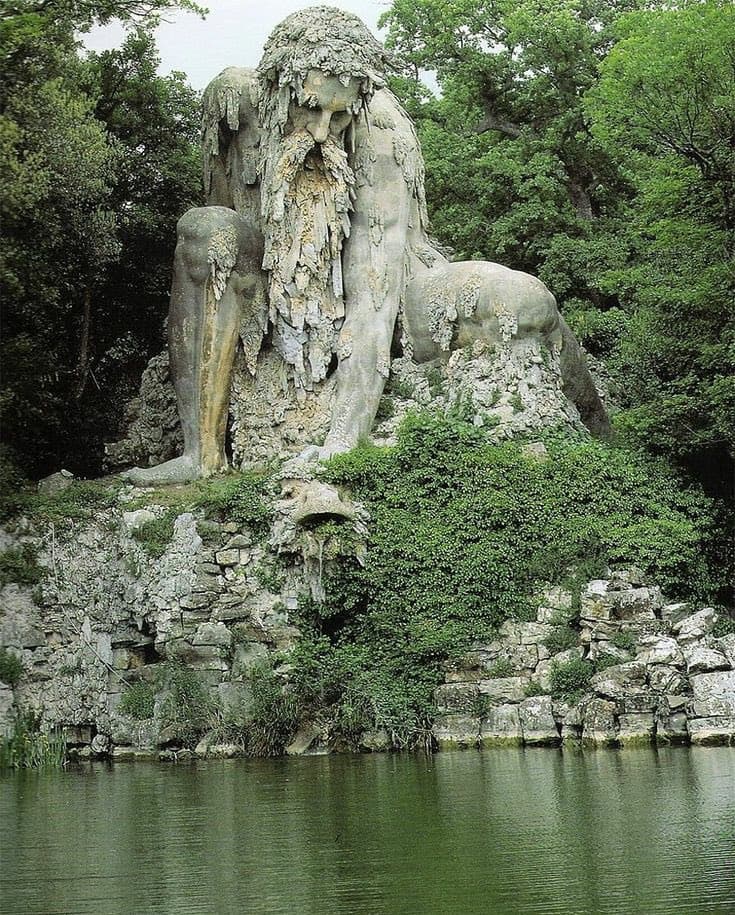
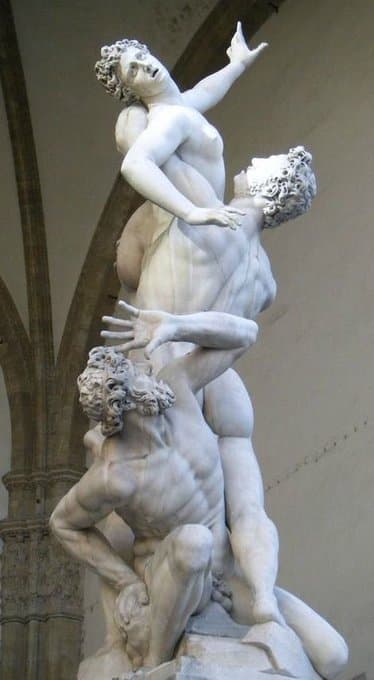
Giambologna (Jean de Boulogne, 1529–1608) was a sculptor born in Flanders who became the most important sculptor in Italy after Michelangelo. Working for the Medici in Florence, he created the spiraling marble Abduction of a Sabine Woman in the Loggia dei Lanzi and the enormous Apennine Colossus in the park at Pratolino.
Life in brief
Born in Douai, then part of the Spanish Netherlands, he trained in Antwerp with the sculptor-architect Jacques du Broeucq and went to Rome around 1550 to study ancient sculpture and Michelangelo. On his way home he stopped in Florence, and stayed for the rest of his life. His first great commission was the bronze Neptune for the fountain in Bologna (1560s). In Florence he became court sculptor to the Medici grand dukes, who reportedly refused to let him leave in case a rival court hired him. He died in Florence in 1608 and is buried in a chapel he designed in Santissima Annunziata.
Style
Giambologna perfected the figura serpentinata, the spiraling figure designed to be seen from all sides. His workshop also produced small bronzes, such as his Mercury poised on one toe, which were sent as diplomatic gifts and spread his style across Europe.
The Abduction of a Sabine Woman
Completed in 1583, this group of three figures was carved from a single block of marble. A young Roman lifts a struggling Sabine woman over an older man crouching below. Giambologna reportedly made it as a technical showpiece, and the subject name was chosen only afterwards. Walk around it and the bodies seem to turn upward like a corkscrew; there is no single main view. Compare Bernini's later answer, The Rape of Proserpina.
The Apennine Colossus
Around 1579–80 Giambologna built, for Francesco I de' Medici's garden at Pratolino, a crouching giant about 11 meters tall representing the Apennine mountains, made of stone, brick and plaster over an internal structure, with rooms inside. He presses down on a monster's head, from whose mouth water poured into a pool. It still stands in the park of Villa Demidoff.
Where to see his work
Florence holds most of his major works, in the Loggia dei Lanzi, the Bargello and Piazza della Signoria. See also Famous Sculptures.
Questions & answers
Where is Giambologna's Abduction of a Sabine Woman?
The marble Abduction of a Sabine Woman, completed in 1583, stands in the Loggia dei Lanzi on Piazza della Signoria, Florence. The full-size plaster model is in the Galleria dell'Accademia.
What is the Apennine Colossus?
The Apennine Colossus is a giant crouching figure about 11 meters tall built by Giambologna around 1579–80 for the Medici garden at Pratolino near Florence. It personifies the Apennine mountains and still stands in the park of Villa Demidoff.
Why is Giambologna important?
Giambologna was the leading sculptor in Italy between Michelangelo and Bernini. He perfected the spiraling multi-view figure, served the Medici for decades, and his small bronzes spread Florentine sculpture throughout Europe's courts.