Digital art
Winter Sleep
Jean-Michel Bihorel, 2020
Winter Sleep is a 2020 digital artwork by the French 3D artist Jean-Michel Bihorel: a snowy mountainside whose rock ridges form a sleeping woman. It went viral, wrongly captioned as Alaska's "Sleeping Lady" mountain.
- Artist
- Jean-Michel Bihorel
- Date
- 2020
- Medium
- 3D digital image
- Movement
- Digital art
What you are looking at
The view is from high above, as if from a plane. A mountainside lies under deep, wind-packed snow, lit by a low sun from the upper left so that every ridge throws a long blue shadow. Across the center, bands of bare brown rock break through the snow, and slowly they resolve into a figure: a woman lying on her side, asleep. A crest of rock at the top reads as her head and loose hair, a curving ridge as her shoulder and bent arm, and the long lower ridges as her hip and drawn-up legs.
The trick works because of the detail around her. The snow is pocked with thousands of tiny shadows from stones and drifts, the gullies are softened by wind, and the scale feels enormous. Nothing looks painted. That realism is why so many people believed the picture was a photograph.
How it was made
Winter Sleep is not a photograph or a retouched aerial picture. The French artist Jean-Michel Bihorel built it entirely as a 3D digital scene, modeling the terrain, snow and light on the computer. He has said the mountain is not based on any real place. Bihorel works professionally in computer graphics as a look-development and lighting artist, and his personal projects use the same tools, procedural modeling and physically based rendering, to make images that look as if they were photographed.
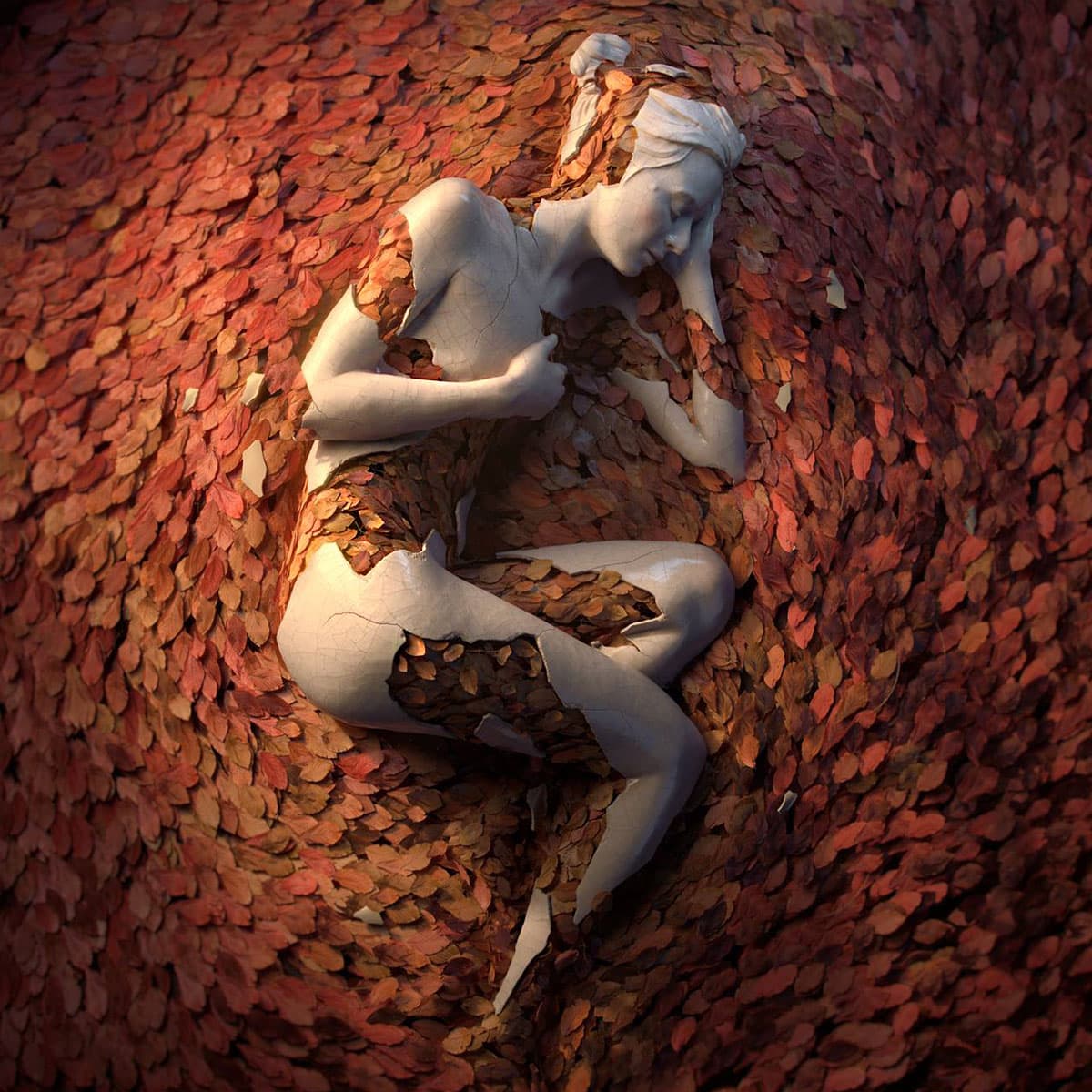
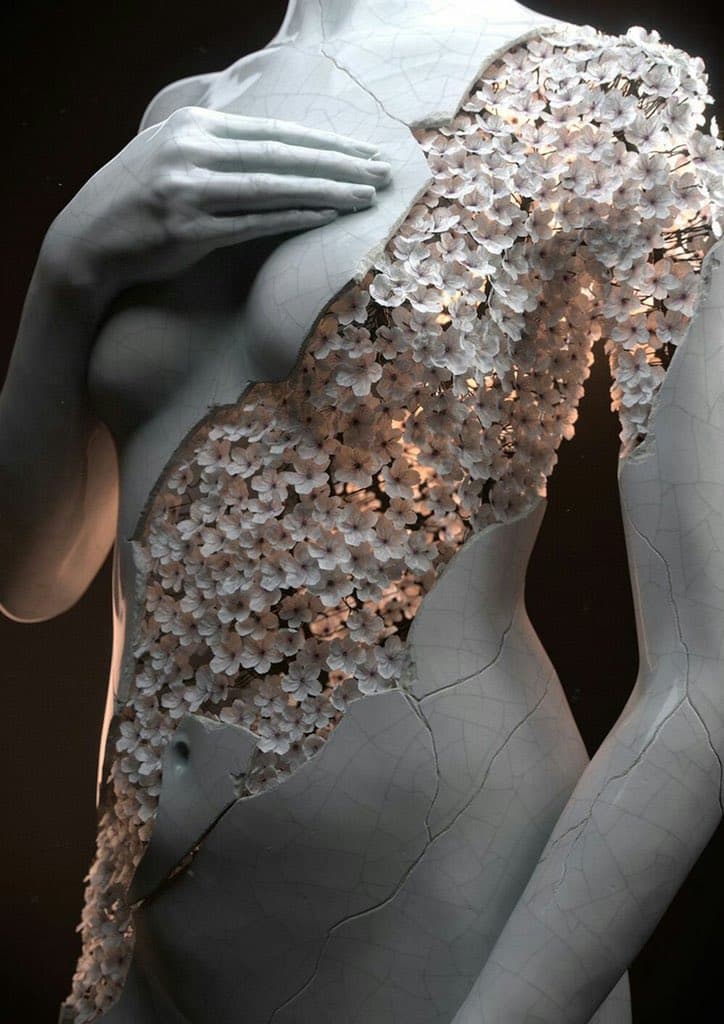
The image appeared on his online portfolio and social media in 2020 under the name Winter Sleep, and it is also listed as part of a series titled Sedimental Memories. Like his Flower Figures, built from scanned dried hydrangea blossoms, it fuses the female body with natural forms.
The "Sleeping Lady" mix-up
In spring 2020 the picture went viral on Facebook with the claim that it showed "the Sleeping Lady," a mountain near Anchorage, Alaska, photographed from a drone or an aircraft. The real Sleeping Lady is Mount Susitna, across Cook Inlet from Anchorage. Seen from the city its long profile does resemble a reclining woman, and a local legend tells of a woman who fell asleep waiting for her beloved to return from war. But Mount Susitna looks nothing like Bihorel's figure from above.
Fact-checkers in the United States and elsewhere traced the image back to Bihorel and confirmed it was digital art. The picture has kept circulating since, sometimes mirrored or relabeled as a peak in Kyrgyzstan or the Italian Apennines, and it is still regularly shared without the artist's name.
What it means
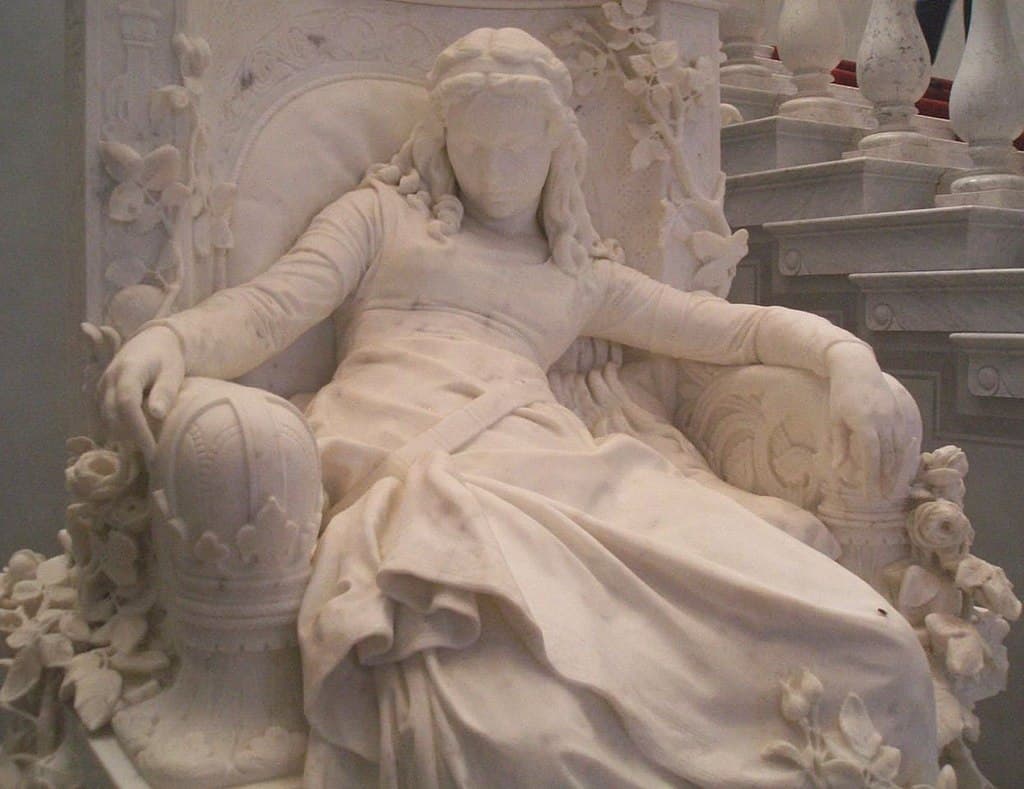
Bihorel's stated aim with images like this was calm: pictures of a sleep so long that it has turned into geology. The idea is an old one. Myths in many cultures explain mountains as sleeping giants or petrified women, and painters have long seen bodies in landscapes. Winter Sleep gives that tradition a photographic surface, which is exactly why it fooled so many viewers. For a marble take on the same theme of endless sleep, see Sussmann-Hellborn's Sleeping Beauty.
Questions & answers
Is the Sleeping Lady mountain picture real?
No. The viral image of a snowy mountain shaped like a sleeping woman is Winter Sleep, a fully computer-generated 3D artwork by the French artist Jean-Michel Bihorel. It is not a drone or aircraft photograph, and Bihorel has said it is not based on any real mountain. Fact-checkers confirmed this in 2020.
What is the real Sleeping Lady in Alaska?
The Sleeping Lady is Mount Susitna, across Cook Inlet from Anchorage. Seen from the city, its long profile resembles a reclining woman, and a local legend tells of a woman who fell asleep waiting for her beloved to return. From above it looks nothing like Bihorel's digital image, which was wrongly attached to it online.
Who made Winter Sleep?
Jean-Michel Bihorel, a French computer graphics artist who works in look development and lighting for film and advertising. His personal work, including Winter Sleep and the Flower Figures series, uses 3D modeling and rendering to make photographic-looking images that merge the female body with natural forms.
How was Winter Sleep made?
It was built entirely in 3D software rather than by editing a photograph. Bihorel modeled the terrain, the snow and the figure formed by exposed rock, then lit the scene with a low raking sun to create long shadows and a convincing sense of scale. That realism is why the image was mistaken for a real aerial photo.
More by the artist
Jean-Michel Bihorel
Kindred works
You may also study
Sleeping Beauty (Dornröschen)
Louis Sussmann-Hellborn · 1878

Bridge over a Pond of Water Lilies
Claude Monet · 1899

Venus de Milo
Alexandros of Antioch · c. 150–125 BC

Nymphs Dancing to Pan's Flute
Joseph Tomanek

The Scream
Edvard Munch · 1893

Ophelia
John Everett Millais · 1851–52

Woman with a Parasol – Madame Monet and Her Son
Claude Monet · 1875

The Great Wave off Kanagawa
Katsushika Hokusai · c. 1830–32