Academic art
Sleeping Beauty (Dornröschen)
Louis Sussmann-Hellborn, 1878
Sleeping Beauty (Dornröschen) is a life-size Carrara marble statue made in 1878 by the Berlin sculptor Louis Sussmann-Hellborn. The artist gave it to the Nationalgalerie in 1888, and it is now in the Alte Nationalgalerie, Berlin.
- Artist
- Louis Sussmann-Hellborn
- Date
- 1878
- Medium
- Carrara marble
- Dimensions
- Life-size
- Collection
- Alte Nationalgalerie, Berlin, Germany
- Movement
- Academic art
What you are looking at
A young woman has fallen asleep sitting up. She sinks back into a tall carved throne, her head tipped a little to one side, her arms laid along the armrests as if she had only meant to rest them there for a moment. Her hands have gone slack: the right one hangs loosely over the rounded end of the armrest, the fingers just curling. Nothing in the figure is posed for an audience. That is the effect Louis Sussmann-Hellborn worked hardest for, and it is why the statue stops visitors in the sculpture galleries of Berlin's Alte Nationalgalerie.
The dress is simple and long-sleeved, gathered high under the bust and cinched with a belt that slips down over the hips. Below the belt the skirt falls in deep, heavy folds across her lap and down to the floor, the marble cut thin enough at the hems to read as cloth. Her hair is loose, parted in the middle and falling in soft ringlets over both shoulders. The face is calm and slightly lowered, the eyelids closed.
The throne is half the story. Its high back is carved with rounded, Romanesque-style arches, and the armrests end in domed knobs ringed with a small crown. Over all of it climb wild roses. Briars wind up the back and sides, leaves and open blossoms crowd against her hands, and more roses spill around her feet. At her feet lies the spindle, the object that put her to sleep.
How it was made
The statue is carved from white Carrara marble and is life-size. Sussmann-Hellborn made it in 1878, on his own initiative rather than for a patron, which was unusual for a work of this scale and expense.
The museum notes a detail most visitors never learn: the sculptor planned a far richer finish. The belt and the throne were to be set with gold and gemstones, and the spindle was made of metal rather than stone. The jeweled decoration was never carried out, so what we see is a white figure that was meant to glitter. The roses, though, were finished to the highest standard. Their undercut leaves and thin petals, standing free of the block, are the passage where Sussmann-Hellborn shows what his chisels could do.
The story behind the statue
The German title, Dornröschen ("Little Briar Rose"), is the name of the tale in the Brothers Grimm collection, and the details follow the Grimm version. A princess is cursed to prick her finger on a spindle and fall asleep; the whole castle sleeps with her, and a hedge of thorny roses grows up around it until a prince breaks through a hundred years later. Charles Perrault had published the French version, La Belle au bois dormant, in 1697, but the briar hedge that gives the Grimm tale its name is the one Sussmann-Hellborn carved.
He chose the instant just after the curse takes effect. There is no prince and no kiss. The roses have already begun to climb, but she has only just closed her eyes.
What does the Sleeping Beauty sculpture mean?
The Staatliche Museen zu Berlin offer two readings. The first is political. The statue was made a few years after the founding of the German Empire in 1871, and audiences could read the sleeping princess as Germany itself, a nation dormant for centuries and now awakened. Fairy tales collected by the Grimms were already bound up with ideas of German national identity, which made the reading easy to reach for.
The second reading is about touch. Polished marble invites the hand, and museum rules forbid it. The museum points out that the work plays on that tension: a virtuous princess undone by touching the one thing she was forbidden to touch, rendered in a material that makes the viewer want to touch it too. It is a sly idea, and it explains why the surfaces are worked so differently, from the soft skin to the crisp rose leaves.
Sleeping women were a favorite nineteenth-century subject, from Fuseli's The Nightmare to the swooning heroine of Pietro Tenerani's Psyche in a Faint. Sussmann-Hellborn's figure is gentler than most. She is not threatened or displayed, only asleep, and the menace is left to the thorns. Set her beside Canova's Psyche Revived by Cupid's Kiss and you see the moment before the awakening that Canova chose to carve.
The sculptor
Louis Sussmann-Hellborn (1828–1908) was born Ludwig Sussmann in Berlin, which is why older labels sometimes call him Ludwig. He trained at the Berlin Academy, studied in France, Belgium and England, and lived in Rome from 1852 to 1856. Back in Berlin he made public monuments, including statues of Frederick the Great, but he was just as active in the applied arts. He helped found Berlin's museum of decorative arts and directed the Royal Porcelain Manufactory (KPM) from 1882 to 1887. That background shows in Sleeping Beauty: the throne, the jeweled belt that was never finished and the rose carving all come from a man who thought like a designer of precious objects.
Reception and legacy
In 1888 Sussmann-Hellborn gave the statue to the Nationalgalerie, the museum founded to collect contemporary German art, and it has belonged there ever since. The date sits close to another famous Sleeping Beauty: Tchaikovsky's ballet premiered in St. Petersburg in 1890. Today the statue is one of the most photographed works in the building, and many people first meet it online as "the Sleeping Beauty statue" without knowing the sculptor's name.
Where to see it
Sleeping Beauty is in the Alte Nationalgalerie on Berlin's Museum Island, part of the Staatliche Museen zu Berlin. It is usually shown with the museum's nineteenth-century sculpture, but works are sometimes moved, so check the museum's website before a visit if you are going for this piece.
Questions & answers
Where is the Sleeping Beauty statue?
Louis Sussmann-Hellborn's Sleeping Beauty (Dornröschen) is in the Alte Nationalgalerie on Museum Island in Berlin, part of the Staatliche Museen zu Berlin. The sculptor gave it to the Nationalgalerie in 1888, and it has stayed in the collection since. It is usually displayed with the museum's nineteenth-century sculpture, but check the museum's website before visiting.
Who made the Sleeping Beauty sculpture in Berlin?
The German sculptor Louis Sussmann-Hellborn (1828–1908), born Ludwig Sussmann in Berlin, carved it in 1878. He made it without a commission. Sussmann-Hellborn also made public monuments, helped found Berlin's museum of decorative arts and ran the Royal Porcelain Manufactory (KPM) from 1882 to 1887.
What is the Sleeping Beauty statue made of?
It is carved from white Carrara marble and is life-size. The spindle at her feet is metal. Sussmann-Hellborn planned to set the belt and throne with gold and gemstones, but that decoration was never carried out, so the statue is almost entirely white marble.
What does the Sleeping Beauty sculpture mean?
It shows the Grimm tale of Little Briar Rose at the moment she falls asleep, with roses already climbing her throne. The Berlin museums note that viewers in the 1870s could read the sleeping princess as Germany, newly awakened by unification in 1871. They also point to a play on touch: a princess undone by touching the forbidden spindle, carved in a marble that invites touching.
Is the statue based on the Grimm or the Perrault version?
The Grimm version. Its German title, Dornröschen (Little Briar Rose), is the Grimm brothers' name for the tale, and the thorny roses climbing the throne refer to the briar hedge that grows around the sleeping castle. Perrault's earlier French version, from 1697, is called La Belle au bois dormant.
Kindred works
You may also study
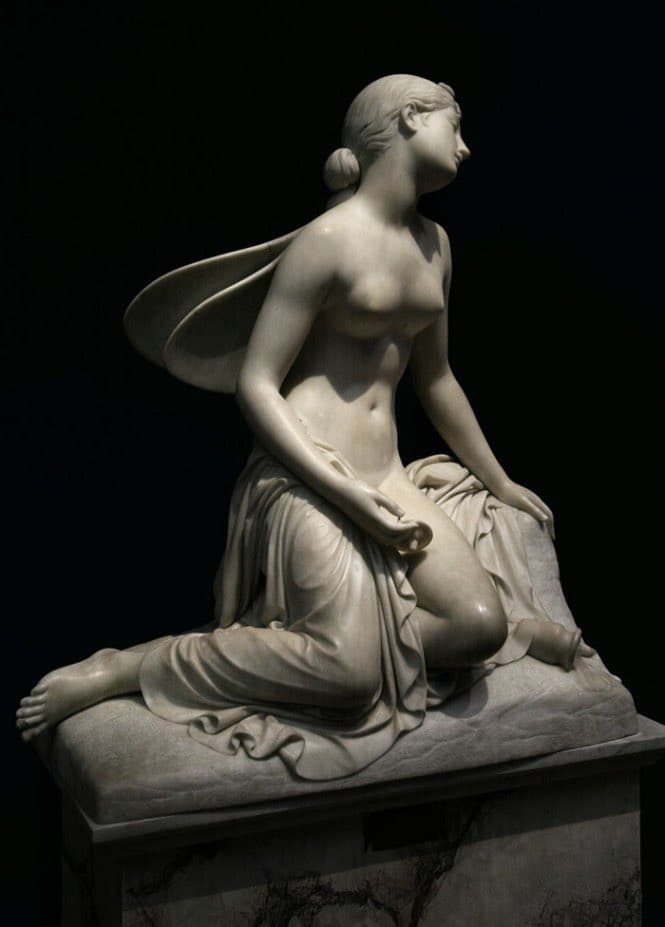
Psyche in a Faint
Pietro Tenerani · composition c. 1822
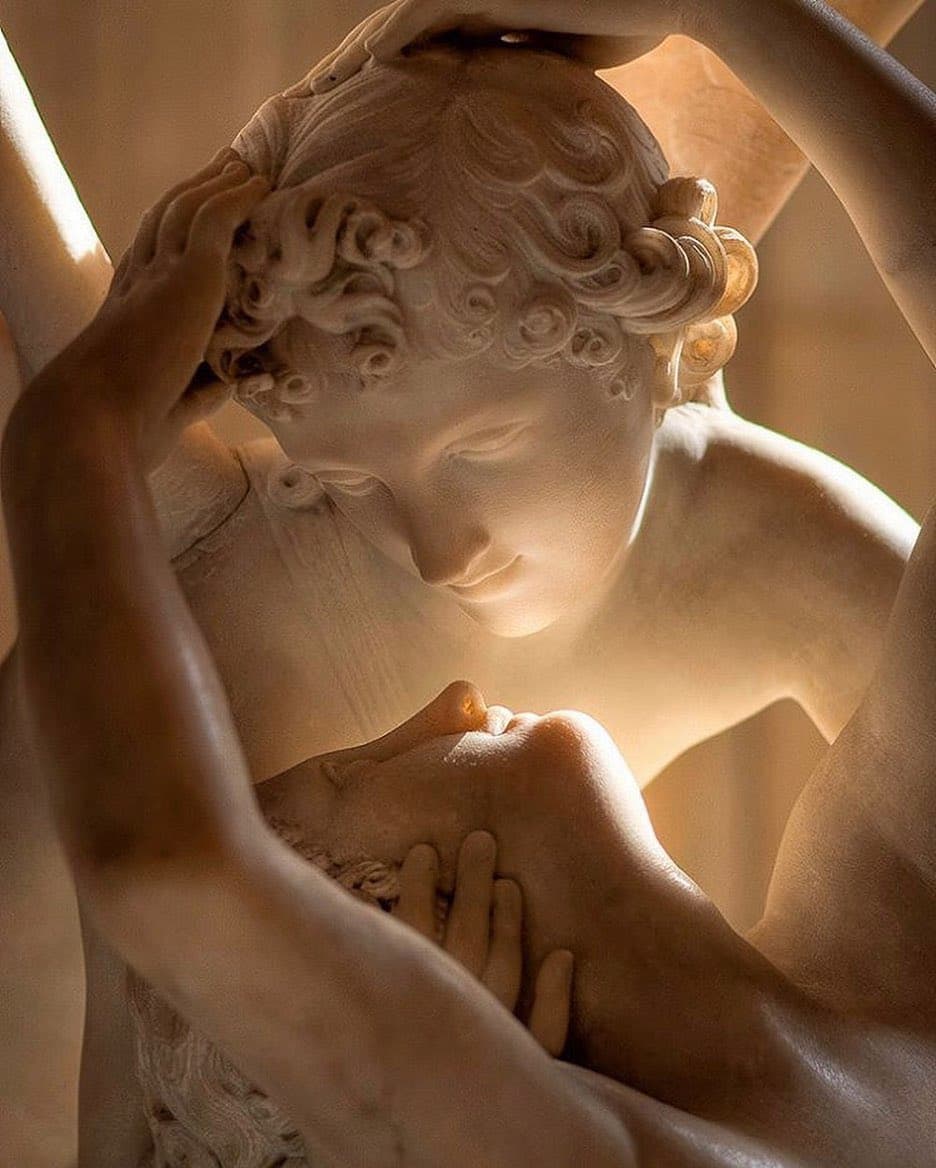
Psyche Revived by Cupid's Kiss
Antonio Canova · 1787–1793
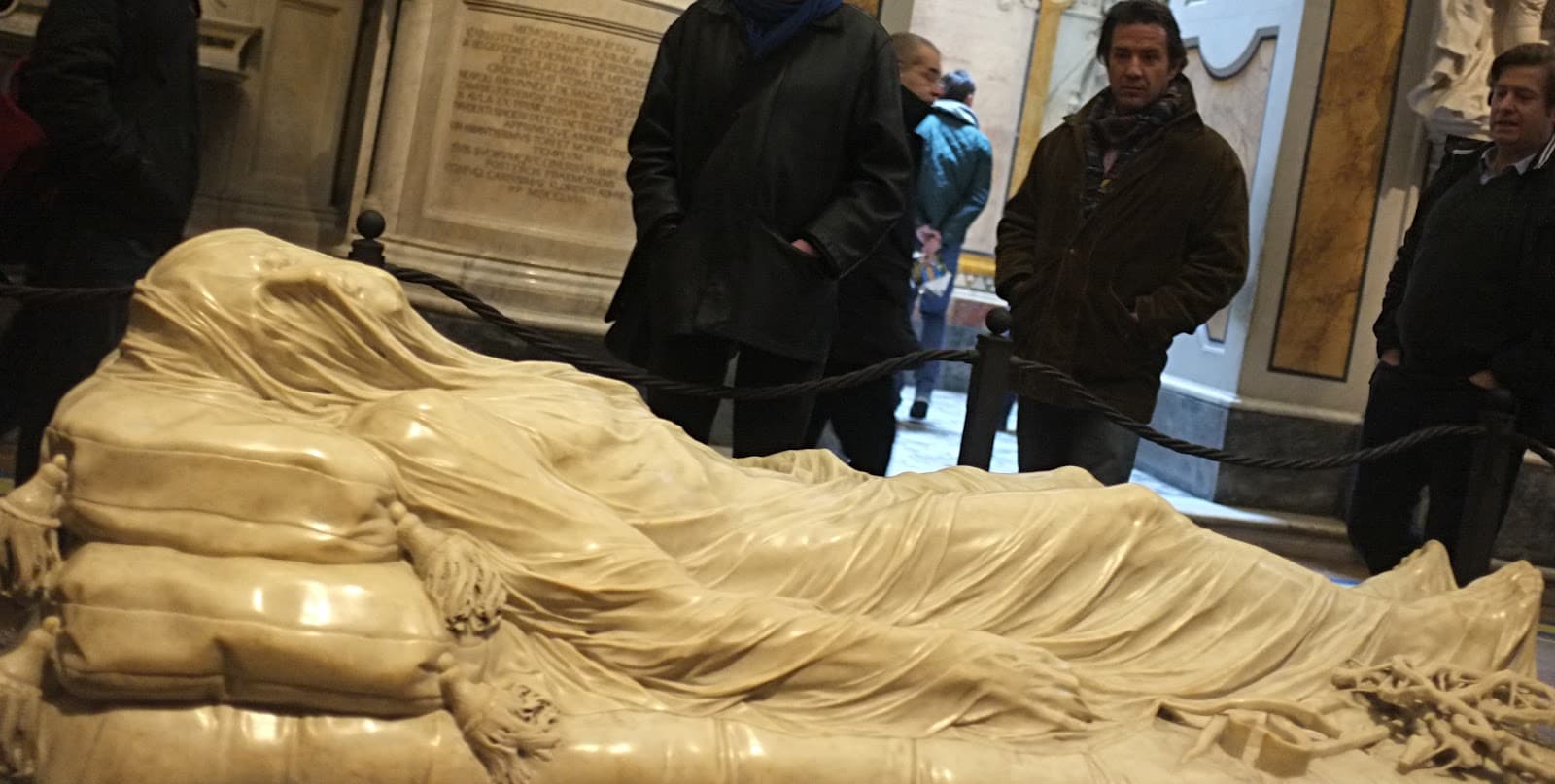
Veiled Christ
Giuseppe Sanmartino · 1753
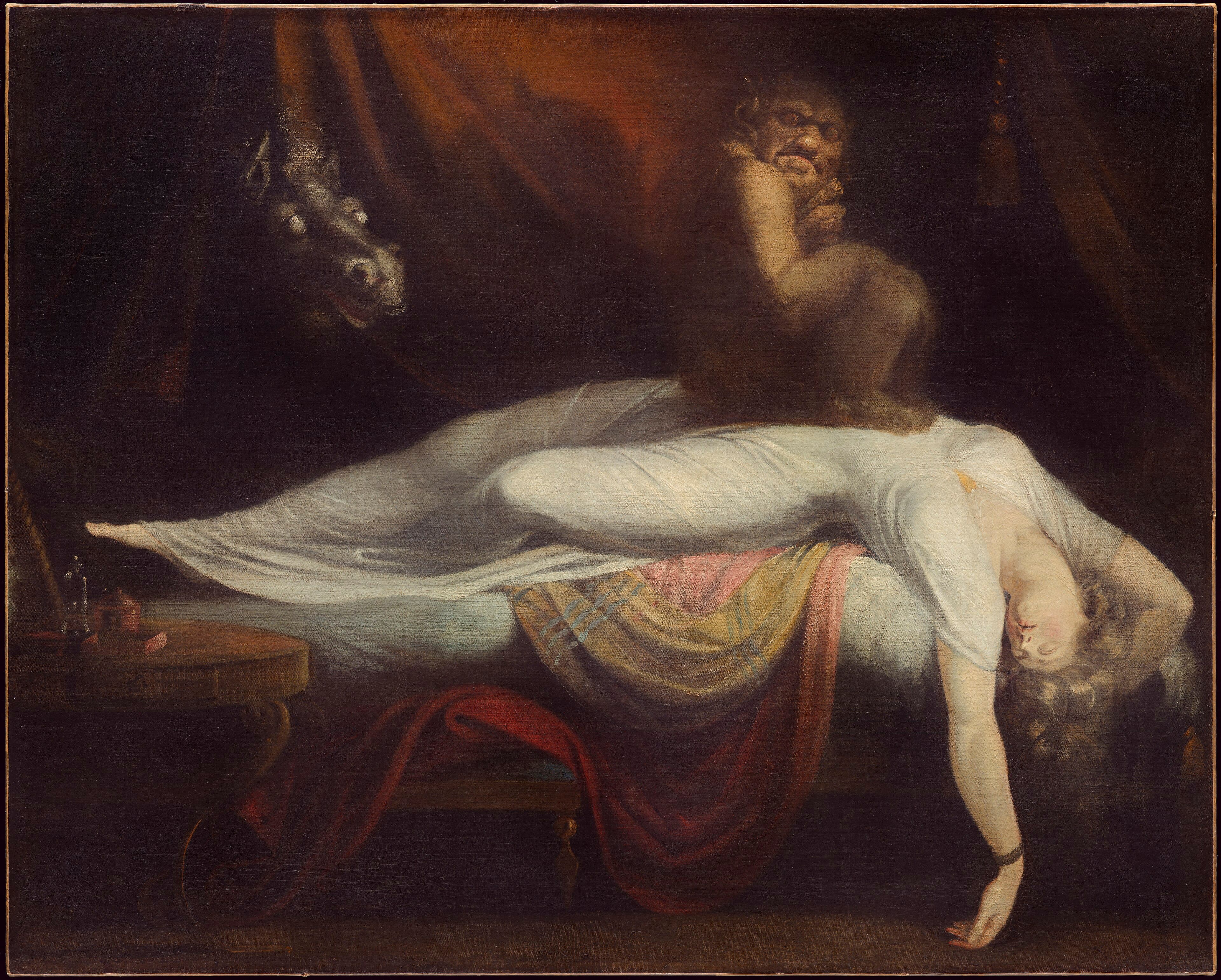
The Nightmare
Henry Fuseli · 1781

Venus de Milo
Alexandros of Antioch · c. 150–125 BC

Nymphs Dancing to Pan's Flute
Joseph Tomanek

The Scream
Edvard Munch · 1893
The Thinker
Auguste Rodin · Modeled 1880–82; enlarged 1902–03; this cast 1904