Italian (Neapolitan) · Late Baroque · Rococo
Giuseppe Sanmartino
b. 1720, Naples — d. 12 December 1793, Naples
Giuseppe Sanmartino (1720–1793) was a Neapolitan late Baroque sculptor whose Veiled Christ (1753) in the Cappella Sansevero, a dead Christ under a marble shroud that looks transparent, is one of the most famous sculptures in Italy.
1 work in the collection
Works by Giuseppe Sanmartino
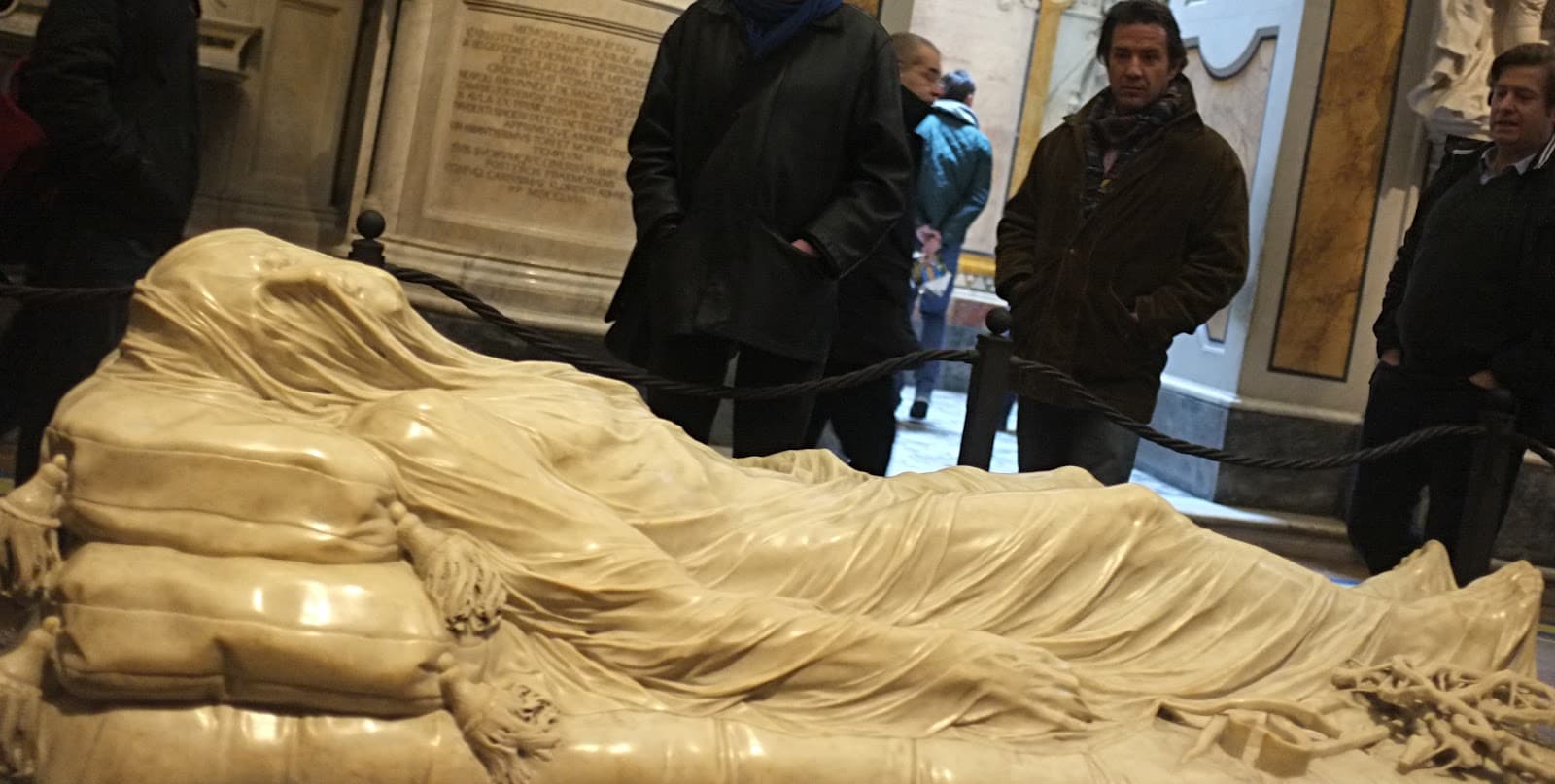
Giuseppe Sanmartino was the leading sculptor of eighteenth-century Naples, a specialist in religious figures in marble, stucco and terracotta. He is known worldwide for one work, the Veiled Christ (1753) in the Cappella Sansevero, Naples, in which the body of the dead Christ lies beneath a shroud carved so thinly that the face and wounds seem to show through it.
Life in brief
Sanmartino was born in Naples in 1720 and trained with the sculptor Matteo Bottiglieri and in the studio of the architect and sculptor Domenico Antonio Vaccaro. The Veiled Christ, carved when he was in his early thirties, is his first dated work. Its success made his career, and for the next four decades he worked for the churches and noble families of Naples. In 1772, on the advice of the architect Luigi Vanvitelli, he took up teaching at the royal academy of fine arts. He died in Naples in 1793.
The Veiled Christ
The statue was commissioned by Raimondo di Sangro, Prince of Sansevero, a scholar, inventor and reputed alchemist who was refurbishing his family's funerary chapel. The commission first went to the Venetian Antonio Corradini, a master of veiled figures whose La Pudicizia (Modesty) stands in the same chapel, but Corradini died in 1752 after making only a model. Sanmartino took over and, adapting the design freely, finished the marble in 1753.
Christ lies on a mattress with two pillows, his head turned slightly, the shroud clinging to the brow, nose and lips, gathering in folds over the chest and feet. At his feet lie the instruments of the Passion: the crown of thorns, pincers and nails. The veil's edge is fringed. Look at the swollen vein on the forehead and the nail wounds visible through the cloth: they are cut into the same block, an illusion of transparency achieved entirely in stone. A legend, still repeated to visitors, holds that di Sangro turned a real cloth to marble by alchemy; there is no evidence for it, and the veil is carved.
Other works
In Naples Sanmartino made a group of Saint Augustine for Sant'Agostino alla Zecca, statues of Saints Peter and Paul for the façade of the Girolamini (San Filippo Neri, 1775–76) and angels with torches for its high altar (1787), funerary portraits, and designs for silver statues in the Treasury Chapel of Saint Januarius in the cathedral. He is also credited with figures for the elaborate Neapolitan Christmas cribs (presepi), though individual attributions are difficult.
Where to see his work
The Museo Cappella Sansevero in Naples holds the Veiled Christ; his other works are in churches across the city. Explore Baroque Art and Famous Sculptures.
Questions & answers
Who made the Veiled Christ?
The Veiled Christ (1753) was carved by the Neapolitan sculptor Giuseppe Sanmartino for Raimondo di Sangro, Prince of Sansevero. The commission had first gone to Antonio Corradini, who died in 1752 after making a model; Sanmartino adapted that design freely.
Is the Veiled Christ veil really marble?
Yes. The veil is carved from the same single block of marble as the body. A popular legend claims Raimondo di Sangro used alchemy to turn a real cloth to stone, but there is no evidence for it; the effect is entirely the result of Sanmartino's carving.
Where can I see the Veiled Christ?
The Veiled Christ is in the Museo Cappella Sansevero, a small chapel-museum in the historic center of Naples, near Piazza San Domenico Maggiore. Visits are ticketed and usually need advance booking; photography inside the chapel is not allowed.