Contemporary figurative
Requiem
Ignacio Trelis
Requiem is a painting attributed to the contemporary Spanish artist Ignacio Trelis: a danse macabre in which Death, robed in white, plays the violin above a whirling crowd of red devils, monks, nobles and tormented souls.
- Artist
- Ignacio Trelis
- Medium
- Oil
- Movement
- Contemporary figurative
Requiem is a dark, crowded painting attributed on this site to Ignacio Trelis, a Spanish contemporary painter and gallery owner best known today for figurative portraits, often set against gold or silver leaf. It reworks one of the oldest subjects in European art, the danse macabre or Dance of Death, in which Death leads people of every station to the grave. Its date, size and owner have not been published in sources we could find.
What you're looking at
At the top center, glowing against a sky of smoke and embers, floats Death. It is a skull-faced figure swathed in a pale, billowing white shroud that trails down like a column of mist, and it plays a violin, bow drawn across the strings, head tilted to the instrument. This is the music of the title: a requiem, the Mass for the dead, played by Death itself.
Below, a ring of small red figures in pointed jester's hoods or devil's caps links hands and spins in a frenzied dance, their bodies the brightest color in the picture. Around and beneath them, a crowd is swept along. At the lower left an old, bearded monk in a brown habit stumbles forward; at the lower center a man in a gray eighteenth-century coat and powdered wig is thrown off balance, one arm out to break his fall. On the right a naked, flayed-looking figure twists upward, and beyond him dark riders and armored figures crowd the edge. At the far left, pale hooded faces, almost ghosts, watch from the shadows, while sparks drift across the upper left as if from a fire.
The painting is built on contrast: Death's cold white light at the top, hot red at the center, and murky browns and grays for the living as they are dragged into the dance.
Meaning
Like the medieval danse macabre, the picture insists that death comes for everyone: churchman, aristocrat, soldier and sinner alike. The violin is a traditional attribute of Death in this imagery, from Hans Holbein's woodcuts to Arnold Böcklin's Self-Portrait with Death Playing the Fiddle (1872), and it was immortalized in music by Camille Saint-Saëns's Danse macabre, in which Death tunes his fiddle at midnight. The red dancers turn the scene into a carnival as much as a judgment.
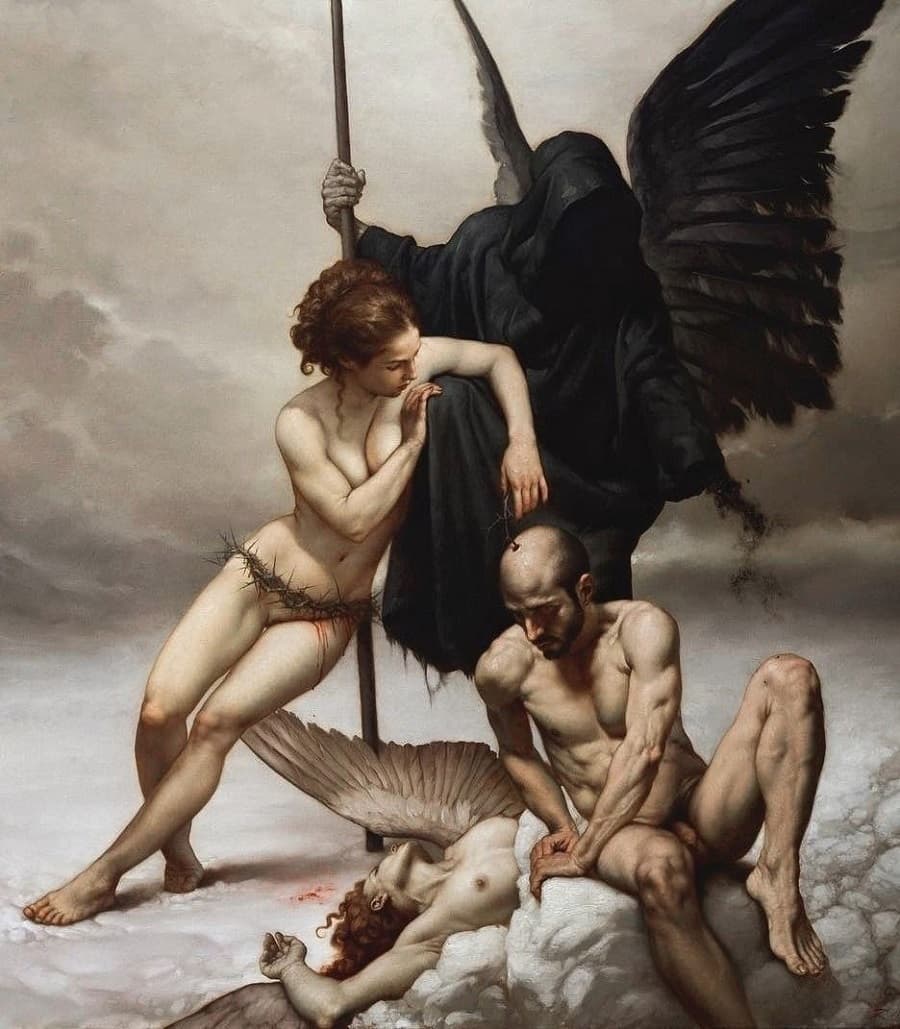
The title is not unique. The Italian painter Roberto Ferri, for example, made a large Requiem on commission in 2012, showing an angel received by demonic figures; it is a different work from the one shown here. For Ferri's related imagery, see The Angel, the Death, and the Devil.
For related works, see Paul Rumsey's Danse Macabre, The Triumph of Death by Bruegel and Dante and Virgil in Hell, with the theme explored in Danse Macabre.
Questions & answers
What does the Requiem painting show?
It shows Death, a skull-faced figure in a billowing white shroud, playing the violin above a whirling crowd. Red, hooded devils dance in a ring, while a monk, a bewigged aristocrat, armored riders and tormented souls are swept into the dance, a modern version of the medieval danse macabre.
Who painted Requiem?
This site attributes the painting to Ignacio Trelis, a contemporary Spanish painter and gallery owner known mainly for figurative portraits with gold and silver leaf. We have not found a gallery record or catalogue that confirms the attribution, date or present owner of this particular work.
What does Requiem mean?
A requiem is the Catholic Mass for the dead, named from its opening words, Requiem aeternam, 'eternal rest.' In this painting the requiem is played by Death itself on a violin, a long-standing image in art and music, from Holbein's woodcuts to Saint-Saëns's Danse macabre.
Kindred works
You may also study
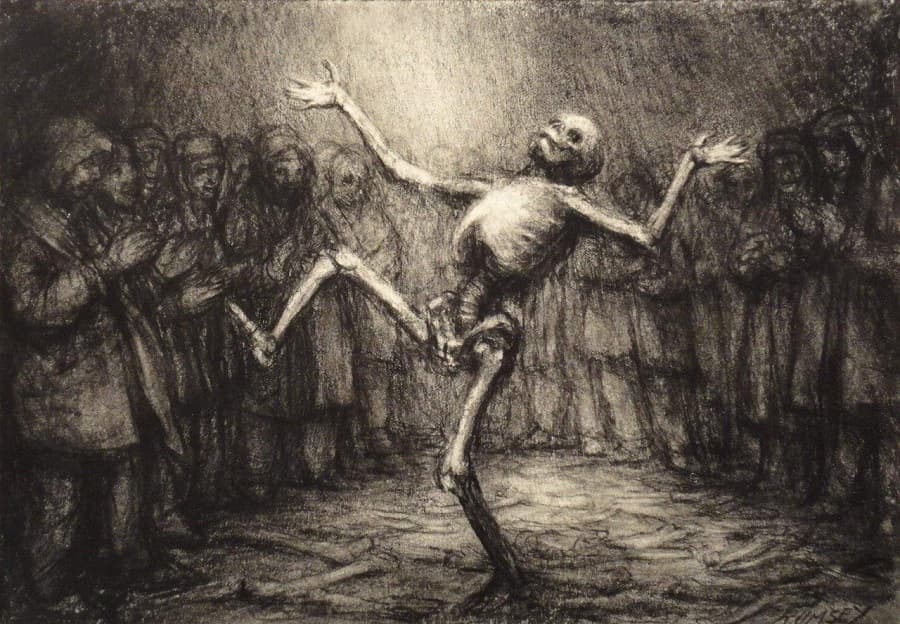
The Danse Macabre Series
Paul Rumsey
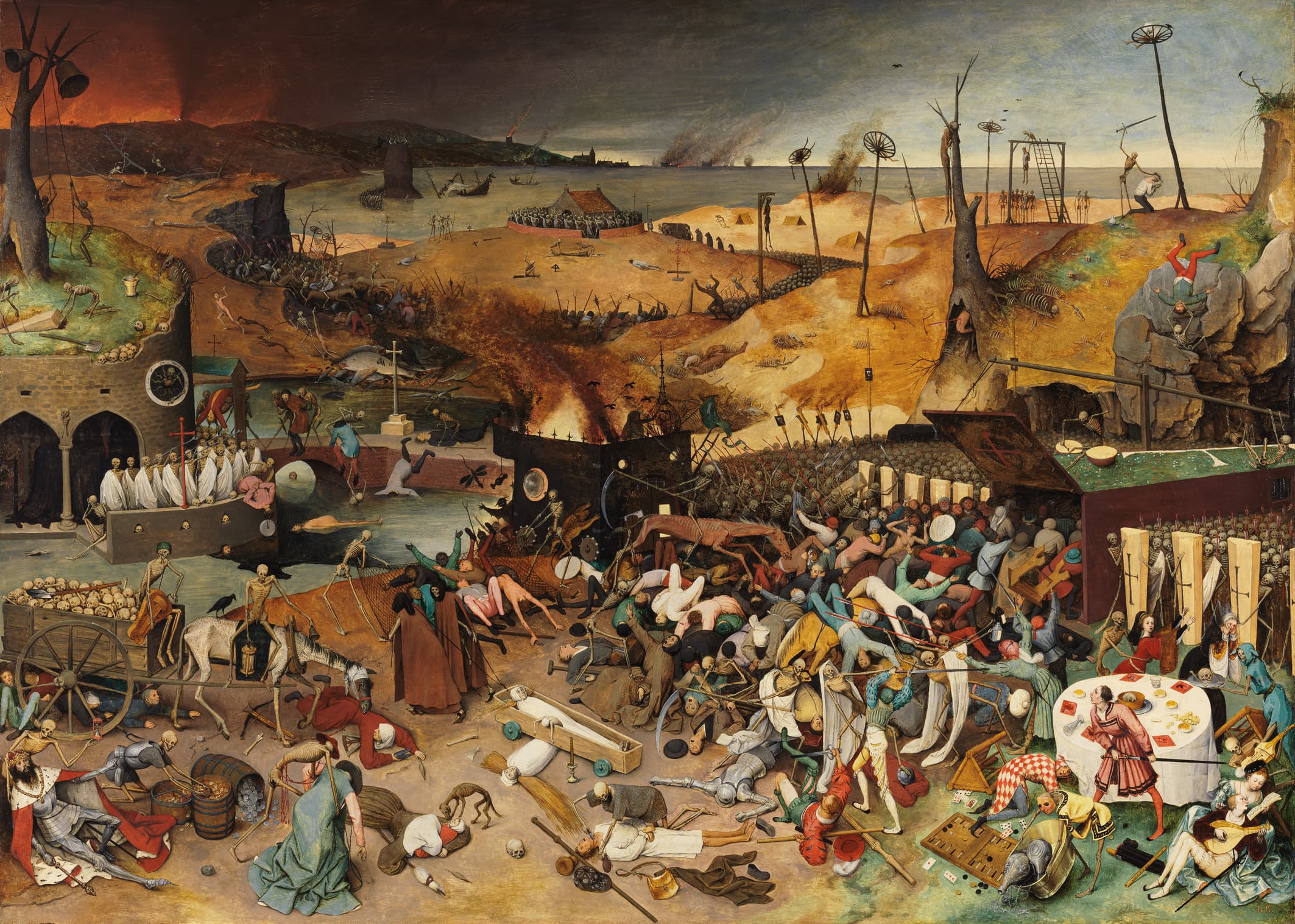
The Triumph of Death
Pieter Bruegel the Elder · c. 1562
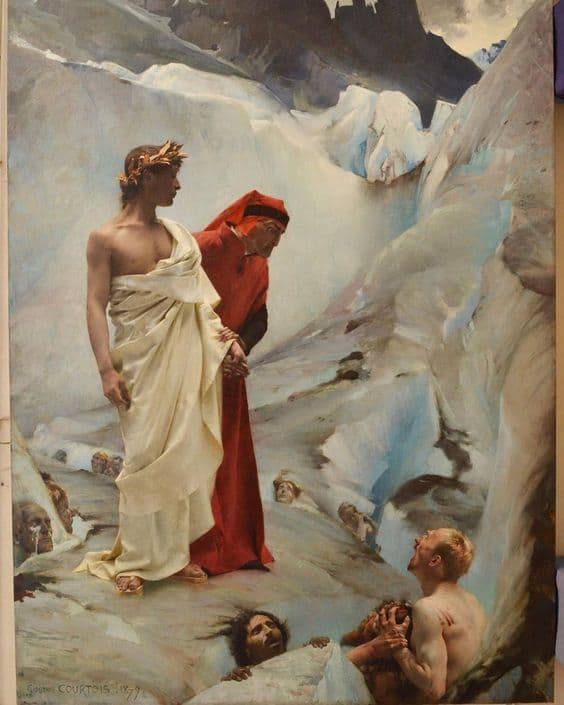
Dante and Virgil in Hell
Gustave Courtois · 1879
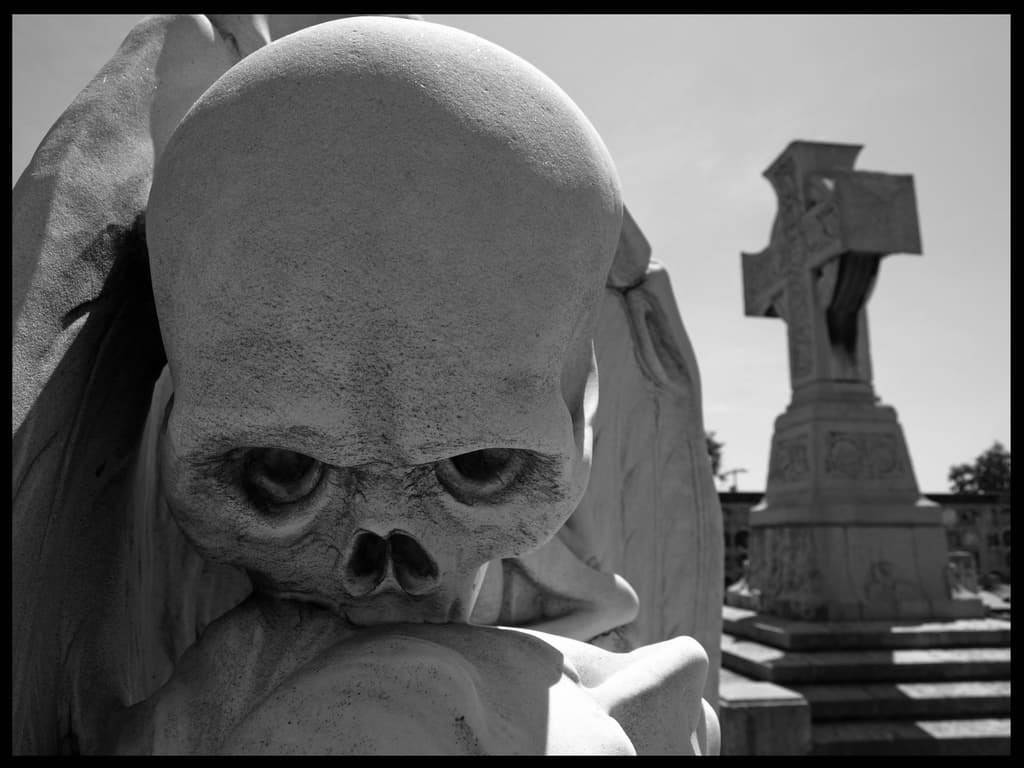
The Kiss of Death (El Petó de la Mort)
Jaume Barba & Joan Fontbernat · 1930
The Angel, the Death, and the Devil
Roberto Ferri · 2018

Nymphs Dancing to Pan's Flute
Joseph Tomanek

The Scream
Edvard Munch · 1893

Saturn Devouring His Son
Francisco Goya · c. 1819–1823