Netherlandish (Flemish) · Early Netherlandish painting · Northern Renaissance
Jan van Eyck
b. before c. 1390, probably Maaseik (Duchy of Limburg) — d. 9 July 1441, Bruges
Jan van Eyck (before c. 1390–1441) was the Flemish painter of the Ghent Altarpiece and The Arnolfini Portrait, whose mastery of oil paint set a new standard for realism in fifteenth-century Europe.
1 work in the collection
Works by Jan van Eyck
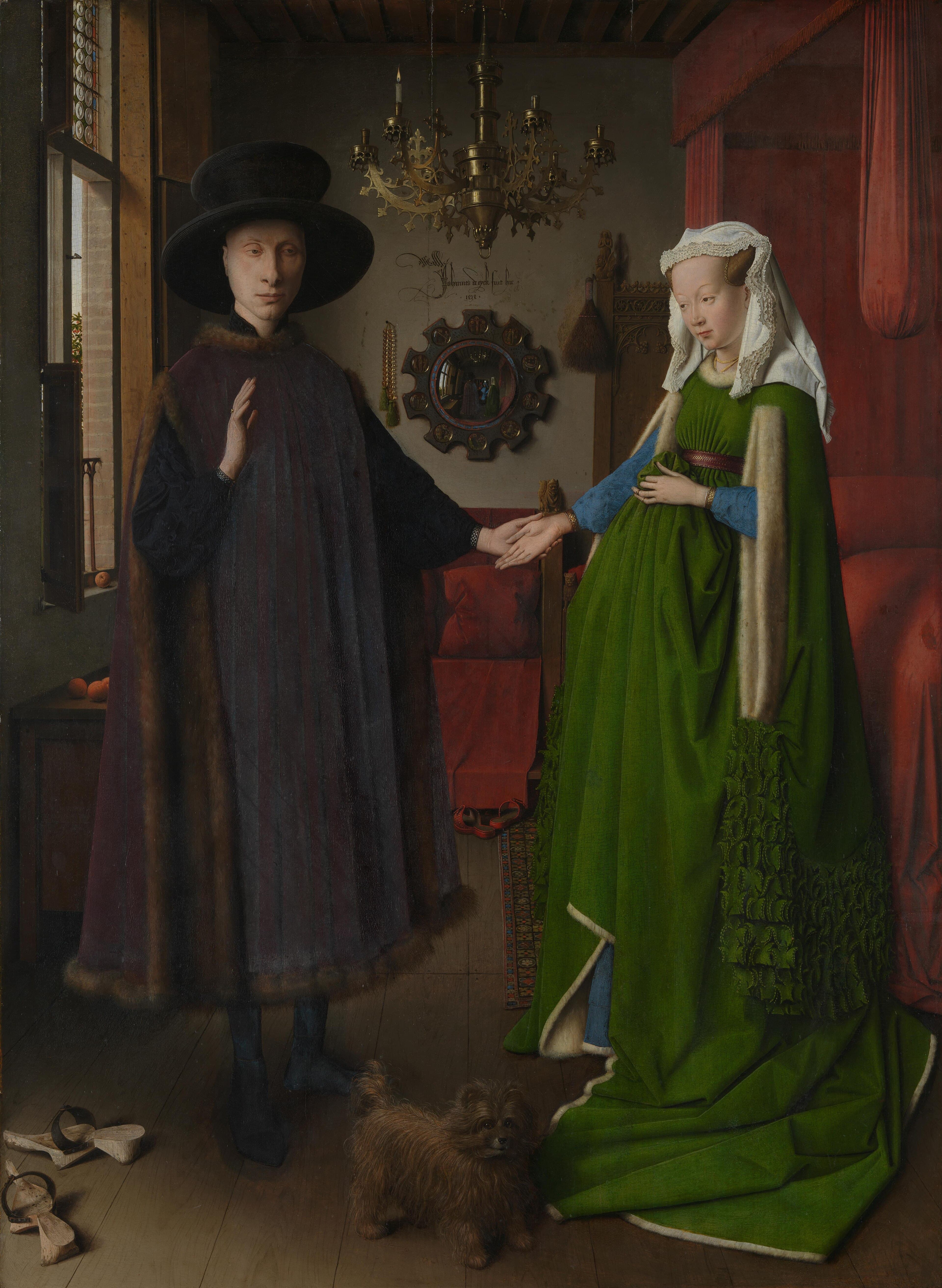
Jan van Eyck was a painter at the court of the dukes of Burgundy, based in Bruges, and the most celebrated artist of fifteenth-century northern Europe. His best-known works are the Ghent Altarpiece in Saint Bavo's Cathedral, Ghent, and The Arnolfini Portrait of 1434 in the National Gallery, London.
Life in brief
His birth date is unknown; he was probably born before about 1390, perhaps in Maaseik in today's Belgium. He first appears in records working for John of Bavaria, Count of Holland, in The Hague (1422–24). In 1425 he became painter and valet de chambre to Philip the Good, Duke of Burgundy, who also used him on confidential missions. In 1428–29 he traveled to Portugal to paint the duke's prospective bride, Isabella. He settled in Bruges, married a woman named Margaret, whose portrait of 1439 survives in the Groeningemuseum, and died there in July 1441.
Style and technique
Vasari's story that Jan invented oil painting is not true; oil binders were in use before him. What he did was refine the medium to an unprecedented degree, building pictures from many thin, translucent glazes over a light ground. The result is a luminous surface on which light seems to fall on every object separately: the shine on a brass chandelier, the nap of fur, the reflection of a window in a pearl. He signed and dated many works, sometimes with the punning motto Als ich can (“as I can”).
Key works
The Ghent Altarpiece, a vast polyptych centered on the Adoration of the Mystic Lamb, was completed in 1432; its inscription credits it to Jan and his elder brother Hubert, who died in 1426. Portrait of a Man in a Red Turban (1433, National Gallery, London) is often thought to be a self-portrait. The Madonna of Chancellor Rolin (c. 1435) is in the Louvre, and The Madonna of Canon van der Paele (1436) in Bruges.
The Arnolfini Portrait shows a merchant, usually identified as Giovanni di Nicolao Arnolfini, and a woman in a green gown in a Bruges interior. On the wall behind them a convex mirror reflects two further figures, and above it the artist wrote, in Latin, “Jan van Eyck was here, 1434.”
Where to see his work
Ghent, Bruges, London, Paris, Berlin, Madrid and Washington all hold major works. Explore more of the period in Renaissance Paintings and Famous Paintings.
Questions & answers
What is Jan van Eyck famous for?
Jan van Eyck is famous for the Ghent Altarpiece (completed 1432) and The Arnolfini Portrait (1434), and for refining oil painting into a medium of extraordinary detail and luminosity. He is regarded as the founding master of Early Netherlandish painting.
Did Jan van Eyck invent oil painting?
No. Oil-based paint was used before him; the idea that he invented it comes from Giorgio Vasari's sixteenth-century Lives. Van Eyck perfected the technique, layering thin translucent glazes to achieve depth, glow and minute detail no earlier painter had matched.
Where is The Arnolfini Portrait?
The Arnolfini Portrait is in the National Gallery in London, which bought it in 1842. Painted in oil on oak panel and dated 1434, it measures about 82 by 60 cm, smaller than many visitors expect.