Art Deco
Suzanne
René Lalique, 1925
Suzanne is a molded opalescent glass statuette designed by René Lalique in 1925: a nude dancer holding a long drapery out from her arms. Produced in multiple casts, examples are in museums and private collections.
- Artist
- René Lalique
- Date
- 1925
- Medium
- Opalescent glass (molded)
- Dimensions
- about 23 cm high
- Movement
- Art Deco
What you are looking at
A young woman stands on tiptoe, her weight on one leg, the other foot drawn up behind her. She lifts her arms out to either side and a long cloth falls from them to the base, so her body is framed by a curtain of vertical folds. The glass is cloudy and milky where it is thick, clearer where it is thin, and when light passes through it from behind, as in this photograph, the figure glows amber at its core while the drapery stays cool and pale.
This is Suzanne, a statuette designed by René Lalique (1860–1945) in 1925 and made in his glassworks. It stands about 23 centimeters high. Like most of Lalique's glass it was produced in a series from a mold rather than as a single work, so there are many examples, in clear, opalescent and occasionally colored glass, in museums and private hands. Some were set on bronze bases with a light so the figure could be lit from below.
How it was made
Lalique made his reputation as a jeweler around 1900, then turned to glass and industrial production after 1910. Suzanne was pressed in a mold, then finished by hand: the surface was partly frosted with acid and polished in places to control how the light catches it. The opalescent effect, the bluish-white haze that turns golden against the light, comes from the glass mixture itself.
Look at the drapery. Its folds are deep channels on the front and nearly flat at the edges, so the curtain catches light in parallel stripes, almost like the fluting of a column. The body, by contrast, is smooth and rounded. The contrast between the two surfaces is the whole design.
The name
The figure is often said to have been named after Lalique's daughter, Suzanne Lalique (1892–1989), herself a designer and painter who later married into the Haviland porcelain family. The connection is plausible, but there is no firm evidence that she modeled for it. A companion figure, Thaïs, shows a dancer in a similar pose.
Context
Suzanne belongs to the moment of the 1925 Paris Exposition internationale des arts décoratifs, where Lalique's glass dominated, and where the style later called Art Deco took its name. Its sleek, stylized nude is a cousin of the dancers in Art Deco bronze and ivory, and a world away from the marble nudes of Canova a century earlier.
Where to see it
Examples are held by the Musée Lalique in Wingen-sur-Moder, France, and other decorative-arts collections. See also our guide to famous sculptures.
Questions & answers
Who is Lalique's Suzanne named after?
The statuette is often said to celebrate René Lalique's daughter, Suzanne Lalique, a designer and painter born in 1892 who later married Paul Haviland of the Limoges porcelain family. The name supports the idea, but there is no firm evidence that she actually posed for the figure.
When was the Lalique Suzanne made?
René Lalique designed Suzanne in 1925, the year of the Paris Exposition internationale des arts décoratifs. It was produced in series from a mold in opalescent, clear and sometimes colored glass, so many examples exist, some mounted on illuminated bronze bases.
Why does Lalique's Suzanne glow?
The statuette is made of opalescent glass, which looks milky bluish-white in reflected light and turns warm amber when light passes through it. Lalique combined frosted and polished surfaces so the drapery and body catch the light differently.
Kindred works
You may also study
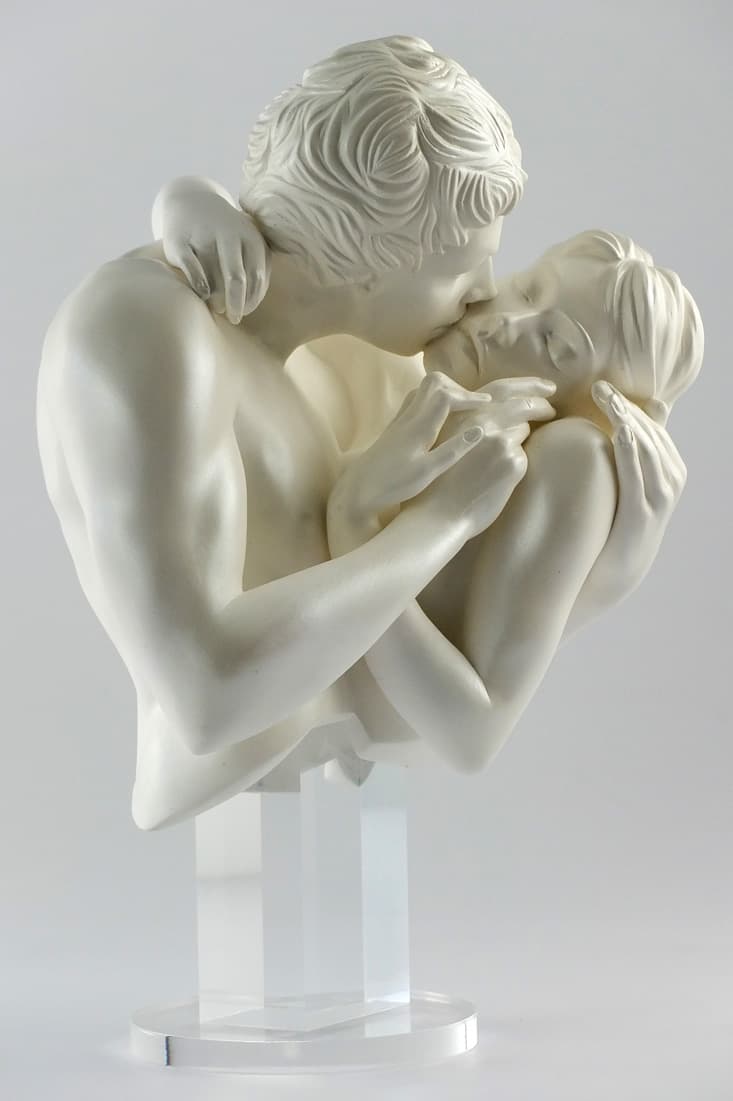
Le Baiser Nacré (The Mother-of-Pearl Kiss)
Yves Pirès

The Kiss of Death
Veronese Design · c. 2020

Pietà (Jago)
Jago (Jacopo Cardillo) · 2020–21

Venus de Milo
Alexandros of Antioch · c. 150–125 BC

Nymphs Dancing to Pan's Flute
Joseph Tomanek

The Thinker
Auguste Rodin · Modeled 1880–82; enlarged 1902–03; this cast 1904
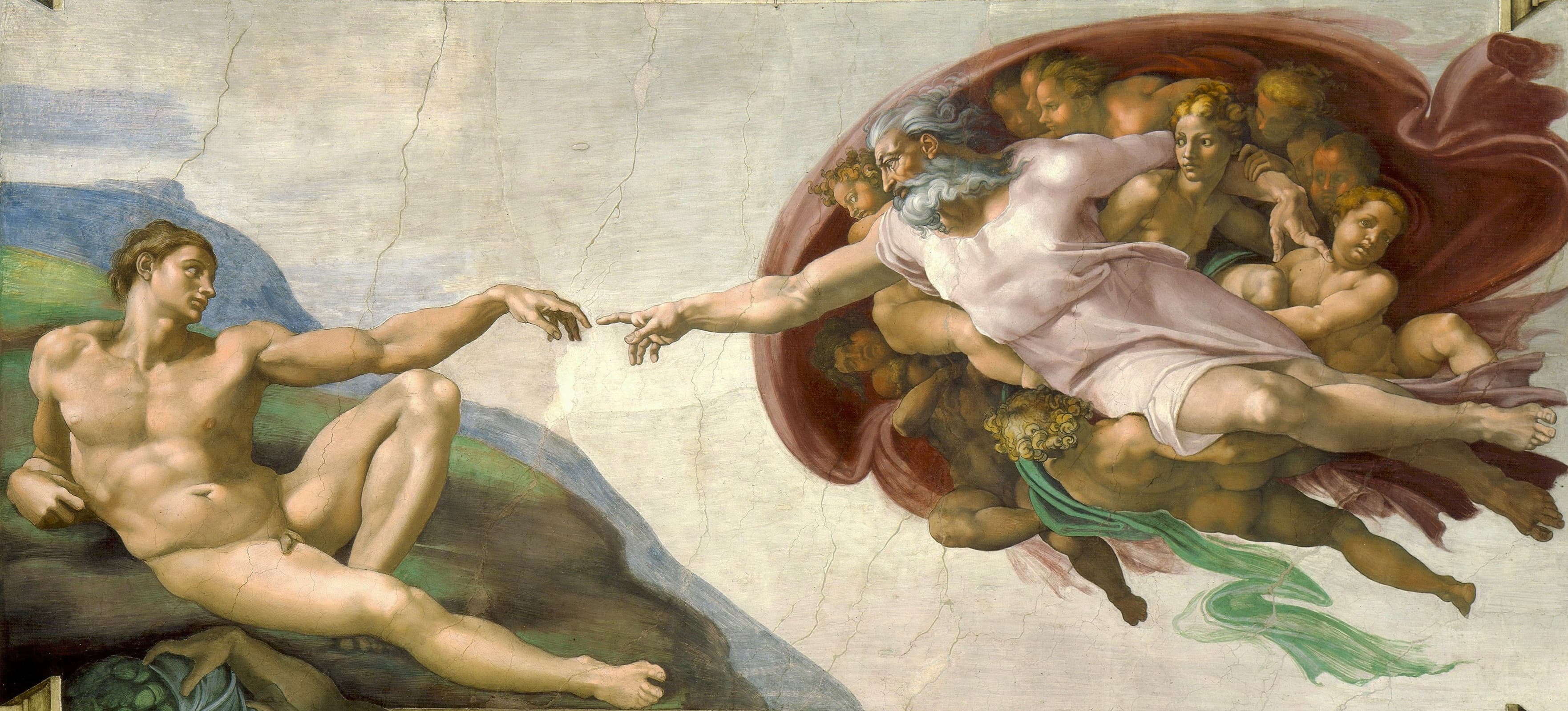
The Creation of Adam
Michelangelo · c. 1511–12

Ophelia
John Everett Millais · 1851–52