Contemporary figurative sculpture
Le Baiser Nacré (The Mother-of-Pearl Kiss)
Yves Pirès
Le Baiser Nacré (The Mother-of-Pearl Kiss) is a small contemporary sculpture by the French sculptor Yves Pirès: a pearl-white resin bust of two lovers locked in a kiss, about 31 cm high, mounted on a clear acrylic stand.
- Artist
- Yves Pirès
- Medium
- Pearlescent resin on a clear acrylic base
- Dimensions
- 31 × 20 cm
- Movement
- Contemporary figurative sculpture
Le Baiser Nacré, "the pearly kiss" or "the mother-of-pearl kiss," is a tabletop sculpture by Yves Pirès, a French sculptor who works in bronze and resin and sells mainly through galleries and online art platforms. It is cast in a pearlescent white resin and stands about 31 cm high and 20 cm wide. Like most of Pirès's resin pieces, it appears to have been produced in a numbered edition rather than as a single original, so there is no one "location" for the work.
What you're looking at
The sculpture is a fragment: two figures cut off below the chest, fused into a single compact form and lifted on a transparent acrylic post so that the group seems to float. The man, on the left, bends his head down to kiss the woman, his hair rendered in deep, wave-like grooves. She tilts her face up to meet him, eyes closed, her short hair swept back. Her right hand rests on his shoulder at the back of his neck; her left is drawn up between their bodies, fingers spread against his chest, while his hand cradles her head from behind.
What makes the piece work is the tangle of arms. There are four hands, and they are placed so that the eye keeps circling the group: from his hand on her nape, to her hand on his shoulder, to the two hands pressed between them. The truncation at the bottom, a smooth sweeping cut rather than a straight base, adds to the sense of two bodies emerging from a single block.
The nacré finish gives the surfaces a soft sheen, closer to porcelain or shell than to marble. Highlights slide across the shoulders and cheeks, and the deeper hollows, between the faces and under the arms, stay cool and gray.
Tradition
The motif of the half-length embracing couple descends from Auguste Rodin's The Kiss (1882) and from the many reductions and variants it inspired, in which the figures emerge from rough or truncated stone. Pirès's version is smoother and more decorative, closer to Art Deco and modern commercial sculpture than to Rodin's unfinished surfaces. For classical kisses in marble, compare Psyche Revived by Cupid's Kiss by Antonio Canova, and for paint, The Kiss by Francesco Hayez.
About the artist
Little has been published about Yves Pirès beyond gallery listings, which describe him as a figurative sculptor of human bodies and animals working in limited editions of bronze and resin. Older pages on this site gave the date "1958," which is unconfirmed and may refer to the artist rather than the work. See also Famous Sculptures.
Questions & answers
Who made Le Baiser Nacré?
Le Baiser Nacré (The Mother-of-Pearl Kiss) is by Yves Pirès, a French figurative sculptor who works in bronze and resin. Gallery listings describe his pieces, including this one, as limited-edition works sold through galleries and online art platforms rather than as unique museum objects.
What is Le Baiser Nacré made of?
It is cast in a pearlescent white resin, which gives it the soft, shell-like sheen of mother-of-pearl (nacre in French), and is mounted on a clear acrylic stand. The sculpture is small, about 31 cm high and 20 cm wide.
What does Le Baiser Nacré mean?
The title means 'the pearly kiss.' The sculpture shows a man and a woman cut off at the chest and fused into one form as they kiss, their four hands wound around each other. It belongs to the long tradition of embracing couples that runs from Canova to Rodin's The Kiss.
Kindred works
You may also study
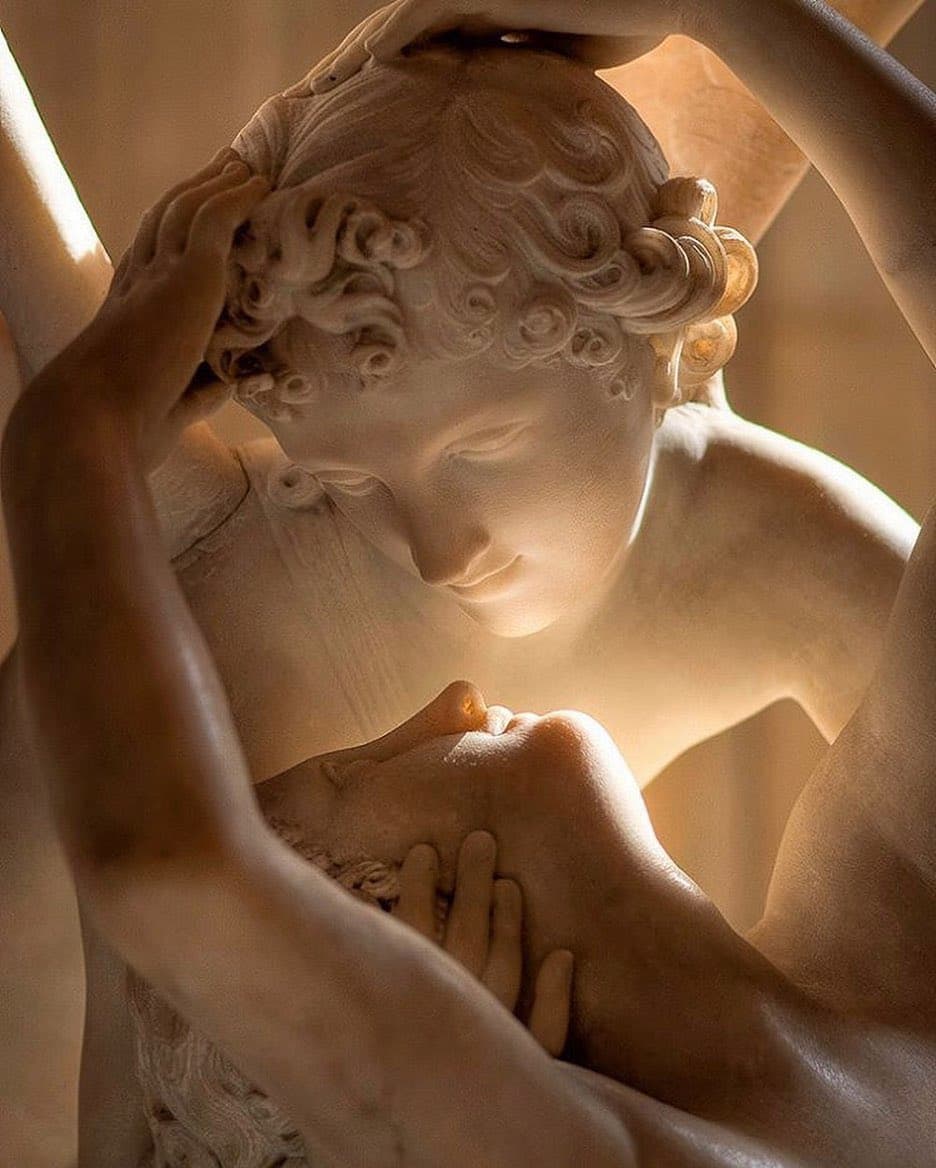
Psyche Revived by Cupid's Kiss
Antonio Canova · 1787–1793
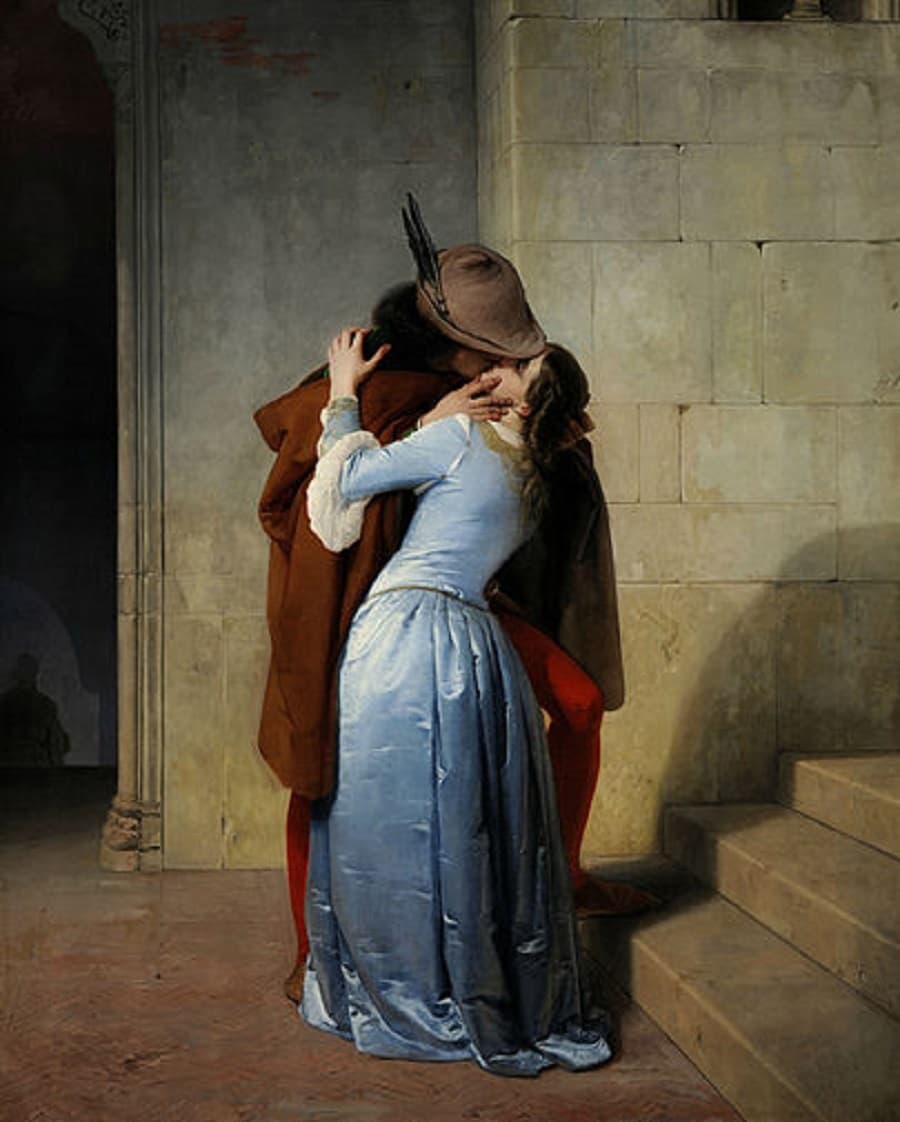
The Kiss
Francesco Hayez · 1859

The Embrace II
Fabián Pérez
The Three Graces
Antonio Canova · 1814–17

Venus de Milo
Alexandros of Antioch · c. 150–125 BC

Nymphs Dancing to Pan's Flute
Joseph Tomanek
The Thinker
Auguste Rodin · Modeled 1880–82; enlarged 1902–03; this cast 1904
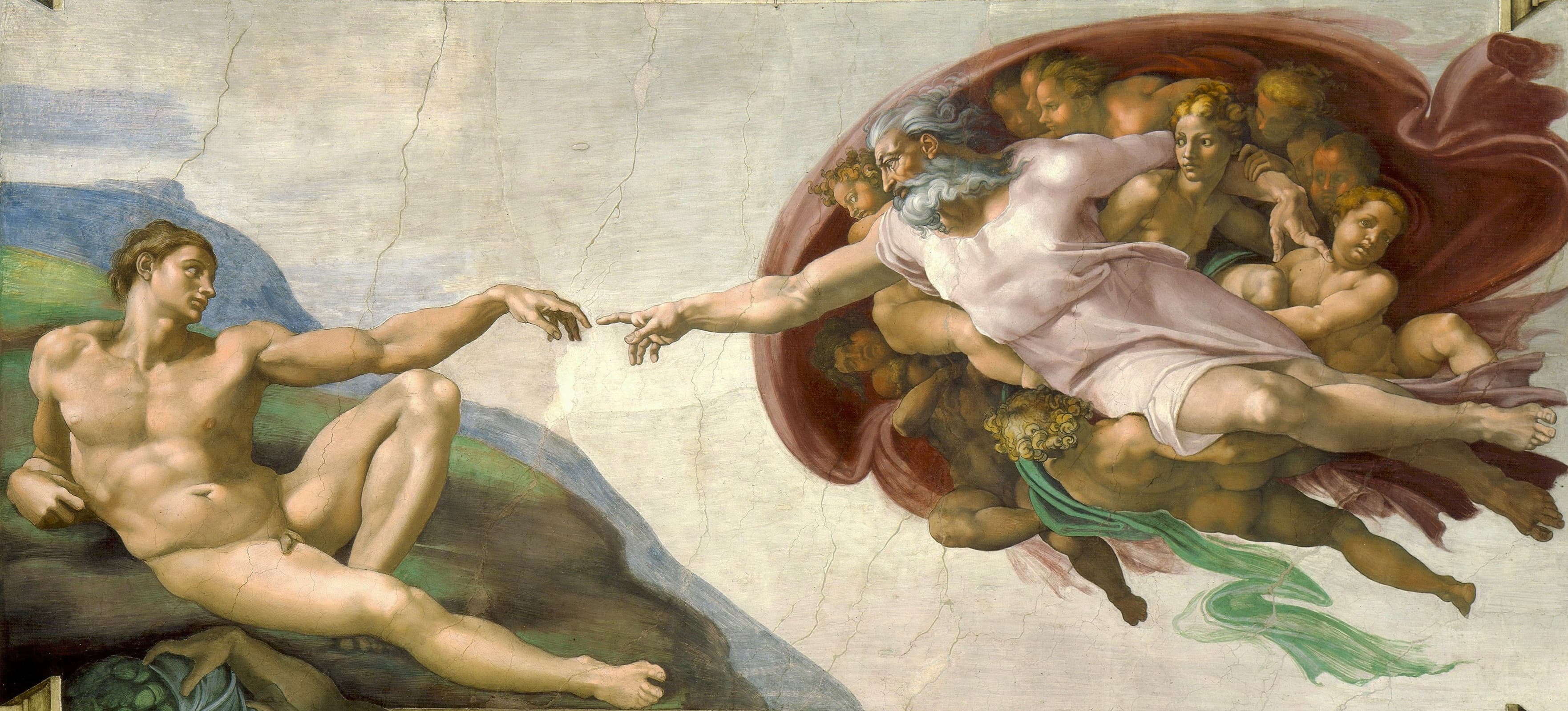
The Creation of Adam
Michelangelo · c. 1511–12