Italian · Neoclassicism
Antonio Canova
b. 1 November 1757, Possagno, Republic of Venice — d. 13 October 1822, Venice
Antonio Canova (1757–1822) was the leading Neoclassical sculptor in Europe, famed for marbles of luminous softness such as Psyche Revived by Cupid's Kiss (Louvre) and The Three Graces.
2 works in the collection
Works by Antonio Canova
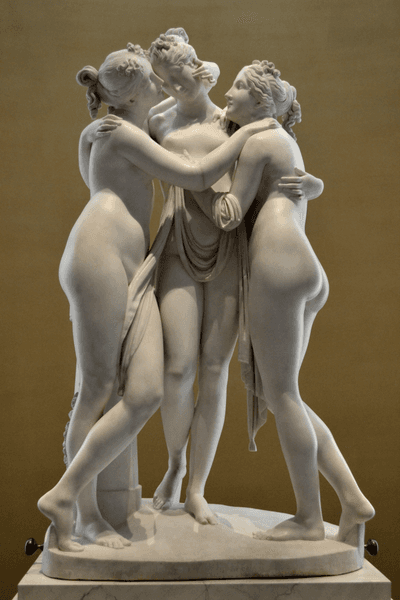
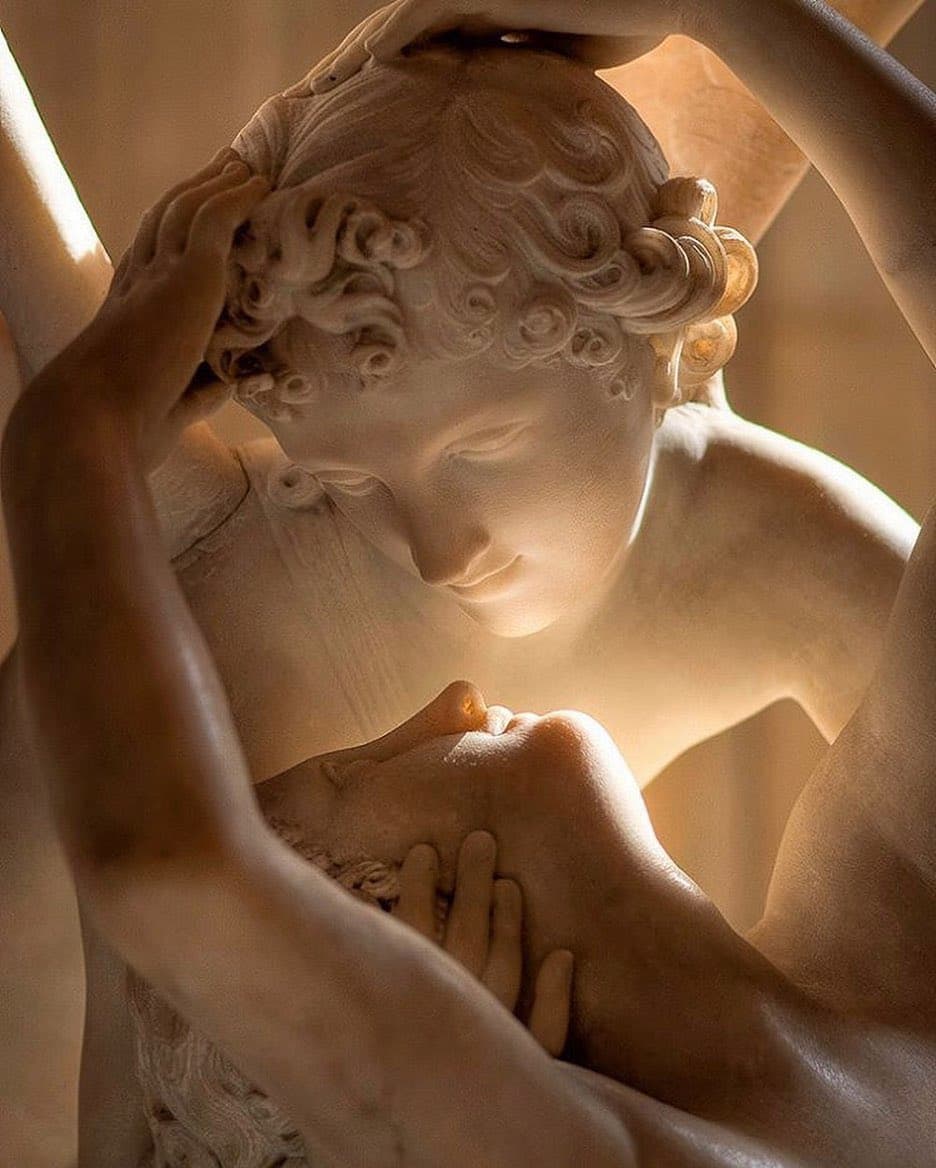
Antonio Canova (1757–1822) was an Italian sculptor and the most celebrated artist of the Neoclassical age. Working in Rome, he made marble look like warm skin, and his best-known works, Psyche Revived by Cupid's Kiss in the Louvre and The Three Graces, are still among the most visited sculptures in Europe.
Life in brief
Canova was born in Possagno, a village in the foothills of the Venetian Alps, into a family of stonecutters. Raised by his grandfather, he learned to carve as a boy and was sent to Venice, where he trained in the workshop of Giuseppe Bernardi, known as Torretti. His early Venetian works, especially Daedalus and Icarus (1777–79, Museo Correr), already showed a startling naturalism.
In 1781 he moved to Rome, then the capital of the classical revival. Theseus and the Minotaur (1781–83, Victoria and Albert Museum) announced a new, calmer style based on antique sculpture, and papal commissions followed: the tomb of Clement XIV in the church of Santi Apostoli (1783–87) and the tomb of Clement XIII in St. Peter's Basilica (1787–92).
From then on he worked for emperors, popes and aristocrats across Europe. He made portraits of Napoleon, including the colossal nude Napoleon as Mars the Peacemaker (now at Apsley House, London), and of Napoleon's sister Pauline Borghese reclining as Venus (Galleria Borghese, Rome). After Napoleon's fall in 1815, the pope sent Canova to Paris to negotiate the return of artworks the French had taken from Italy, and he went on to London, where he saw the Parthenon marbles and declared them the finest sculpture he knew. He was made Marquis of Ischia. He died in Venice in 1822 and is buried in the temple he designed and paid for in Possagno.
Style and technique
Canova's sculpture follows the ideals of the German theorist Johann Joachim Winckelmann, who praised Greek art for its "noble simplicity and calm grandeur." His figures are poised rather than straining, their emotions held in check.
What makes them distinctive is the surface. Canova's studio worked in stages: he modeled each figure in clay, assistants cast a full-size plaster dotted with metal pins, and they then transferred those measurements to the marble by the pointing method. Canova reserved the final stage for himself, rubbing the marble with pumice and abrasives until skin looked soft, then applying a thin wax patina to warm its tone. He showed finished works to visitors by candlelight, so the flickering flame would make the surfaces seem to move. You can still see the pin marks on the plaster models in the Gipsoteca at Possagno.
Key works in the catalogue
Psyche Revived by Cupid's Kiss (1787–93, Louvre) shows the god of love lifting the unconscious Psyche, their arms forming an open X around a kiss that has not yet happened. Canova made the group to be turned on a rotating base, so the composition changes as you walk around it. It is also catalogued with the closely related entry Cupid and Psyche.
The Three Graces shows the daughters of Zeus, Euphrosyne, Aglaea and Thalia, in a close embrace. The first version (1812–17) was commissioned by the Empress Josephine and is now in the Hermitage in St. Petersburg. The second (1814–17), made for the Duke of Bedford, is jointly owned by the Victoria and Albert Museum and the National Galleries of Scotland, and it alternates between London and Edinburgh. A small detail: the scarf that links the three women is the only thing that stops the group from being read as one body.
Influence
Canova set the standard for sculpture in Europe for half a century. The Danish sculptor Bertel Thorvaldsen, working in Rome at the same time, was his great rival, and younger sculptors such as James Pradier and Pietro Tenerani built on his example. Later in the nineteenth century, critics who preferred Romantic energy found him cold, and his reputation dipped. Since the late twentieth century, exhibitions and restorations have restored his standing, and he is again seen as the last great sculptor of the classical tradition.
For more, see Famous Sculptures and Greek Mythology in Art.
Where to see his work
The Louvre in Paris, the Hermitage in St. Petersburg, the Galleria Borghese in Rome, the V&A in London and the Museo Correr in Venice all hold major marbles. The Gipsoteca and Museo Canova in Possagno, beside his birthplace, preserve hundreds of his plaster models and drawings, and his temple stands on the hill above the village.
Questions & answers
What is Antonio Canova famous for?
Canova is famous as the greatest Neoclassical sculptor, known for marble figures with extraordinarily soft, polished surfaces. His best-known works include Psyche Revived by Cupid's Kiss in the Louvre, The Three Graces, Pauline Borghese as Venus and the papal tombs in Rome.
Where is Canova's Psyche Revived by Cupid's Kiss?
The first version, carved 1787–93, is in the Musée du Louvre in Paris. A second version is in the Hermitage in St. Petersburg. The Louvre group was made to turn on a rotating base so visitors could see it from every angle.
Where are Canova's Three Graces?
There are two versions. The first, made for the Empress Josephine in 1812–17, is in the Hermitage in St. Petersburg. The second, made for the Duke of Bedford in 1814–17, is jointly owned by the V&A in London and the National Galleries of Scotland in Edinburgh.
How did Canova make his marble look like skin?
Assistants roughed out the marble from his plaster models using the pointing method, then Canova finished the surface himself with pumice and fine abrasives and applied a thin wax patina. He often showed works by candlelight to make the surfaces glow.
Where is Antonio Canova buried?
Canova died in Venice in 1822 and is buried in the Tempio Canoviano, the church he designed and funded in his home village of Possagno. His heart is in a monument in the Frari church in Venice.