Italian Gothic
Siena Cathedral (Duomo di Siena)
Giovanni Pisano & Camaino di Crescentino & Giovanni di Agostino & Giovanni di Cecco, c. 1215–1263; facade c. 1284–late 14th century
Siena Cathedral (Duomo di Siena) is a medieval cathedral in Siena, Tuscany, built mainly c. 1215–1263, with a facade begun by Giovanni Pisano around 1284. It is famous for its striped marble, inlaid floor, Pisano pulpit and Piccolomini Library.
- Date
- c. 1215–1263; facade c. 1284–late 14th century
- Medium
- White, dark green-black and red marble; brick and stone
- Collection
- Piazza del Duomo, Siena, Italy
- Movement
- Italian Gothic
What you're looking at
The first thing anyone notices about Siena Cathedral is the stripes. Outside and in, walls and piers are banded in white and dark green-black marble, the colors of Siena's civic coat of arms, the black-and-white balzana, which legend ties to the horses of Senius and Aschius, the city's mythical founders. Inside, the effect is dizzying: columns striped like zebra hide rise into vaults painted blue with gold stars, while a frieze of terracotta busts of popes looks down from above the nave arches.
The west facade is a different kind of spectacle. Its lower half, with three deep portals, is crowded with marble prophets, sibyls and philosophers carved under Giovanni Pisano; the upper half, with its great rose window and three sharp gables, was finished in a more ornate Gothic style later in the fourteenth century. The gold-ground mosaics in the gables are not medieval: they were made in Venice in the late nineteenth century.
When was Siena Cathedral built?
A church stood on this hilltop by the ninth century, and in 1058 a synod held here elected Pope Nicholas II. The present building took shape in the thirteenth century. The cathedral works (the Opera del Duomo) are documented from 1196, daily masses were being said in the new church by 1215, and the main structure was largely finished by 1263. The hexagonal dome was completed in 1264, when a copper ball was set on its lantern.
The facade came next. Giovanni Pisano directed work on it from around 1284 until he left Siena in the later 1290s, and his statues were among the most expressive carved in Italy at the time; the originals are now protected indoors in the cathedral museum, replaced on the facade by copies. The upper facade was completed after a long pause, in the later fourteenth century, under the direction of Giovanni di Cecco. Other masters also served the Opera: Camaino di Crescentino, father of the sculptor Tino di Camaino, was its master of works in the early fourteenth century and oversaw building on the baptistery beneath the choir.
The Duomo Nuovo: the cathedral that was never finished
In 1339 Siena decided to make its cathedral one of the largest churches in Christendom. The plan, directed by the sculptor and architect Giovanni di Agostino, would have turned the existing building into the transept of a vast new nave running south-east. Work began, but the Black Death of 1348 killed much of the city's population, and serious structural faults had already appeared. The project was abandoned in 1355.
What survives is striking. The towering, unfinished facade of the new nave, known as the Facciatone, still stands on the south side of the cathedral, linked to a row of arches that marks the line of the planned aisle. The space where the nave would have stood is now an open square, Piazza Jacopo della Quercia, not a building at all, and the completed bays of the right aisle house the Museo dell'Opera del Duomo. Visitors can climb narrow stairs inside the museum to the top of the Facciatone for one of the best views over Siena and the Piazza del Campo.
The marble floor
The cathedral's pavement is one of the most ambitious decorative projects of the Italian Renaissance. Between the fourteenth and sixteenth centuries some forty artists designed fifty-six scenes in inlaid marble, combining white, black, red and colored stones in techniques ranging from simple incised outlines (graffito) to full pictorial marquetry. Near the entrance is Hermes Trismegistus, the legendary Egyptian sage; along the aisles stand ten Sibyls; in the left transept is Matteo di Giovanni's harrowing Massacre of the Innocents; and under the dome Domenico Beccafumi, working in the sixteenth century, designed Old Testament scenes of Elijah and Moses that read almost like monumental drawings in stone.
To protect it, most of the floor is covered for much of the year. It is uncovered for a period of several weeks annually, usually in late summer and early autumn, and that is the time to visit if you want to see it complete.
Nicola Pisano's pulpit
Inside, to the left of the crossing, stands the octagonal marble pulpit carved between 1265 and 1268 by Nicola Pisano, Giovanni's father, with assistants who included the young Giovanni and Arnolfo di Cambio. Its seven relief panels tell the story of Christ from the Nativity to the Last Judgment, packed with figures whose weight and gestures echo ancient Roman sarcophagi. The pulpit rests on granite and marble columns, several of them set on the backs of lions. Look for the crowded Last Judgment, where the damned are dragged down with real violence.
The Piccolomini Library and other treasures
Off the left aisle a doorway opens into the Piccolomini Library, built from 1492 by Cardinal Francesco Todeschini Piccolomini (later, briefly, Pope Pius III) to honor his uncle, Pope Pius II. Between 1502 and 1507 Pinturicchio covered its walls with ten brilliantly colored frescoes of Pius II's life, from his early career as a diplomat to his death at Ancona; the young Raphael may have contributed designs. In the center stands an ancient Roman marble group of the Three Graces, and the cases still hold the library's illuminated choir books.
The cathedral holds much more: a bronze Saint John the Baptist by Donatello, four statues by the young Michelangelo for the Piccolomini Altar (1501–04), and the Chigi Chapel, designed by Gian Lorenzo Bernini for Pope Alexander VII from 1659. Duccio's great circular stained-glass window for the choir, made in 1287–88, has been replaced by a copy; the original, like his Maestà altarpiece of 1308–11, is in the Museo dell'Opera. Beneath the choir, a space filled with rubble when the baptistery was built was rediscovered in 1999 and found to contain late thirteenth-century frescoes; it is now open as the so-called crypt.
Visiting
Siena Cathedral stands on Piazza del Duomo at the highest point of the old city, which is a UNESCO World Heritage Site. A combined ticket generally covers the cathedral, the Piccolomini Library, the Museo dell'Opera with the Facciatone, the crypt and the baptistery. For other great churches in our catalogue see Lichfield Cathedral and Monet's Rouen Cathedral series, and for the wider style, Gothic Art.
Questions & answers
When was Siena Cathedral built?
The present cathedral was built mainly between about 1215 and 1263, and its dome was completed in 1264. Giovanni Pisano began the lower facade around 1284, and the upper facade was finished in the later fourteenth century. A plan of 1339 to enlarge it enormously was abandoned in 1355 after the Black Death.
When can you see the floor of Siena Cathedral?
Most of the inlaid marble floor is covered to protect it. It is fully uncovered for several weeks each year, usually in late summer and early autumn; exact dates are announced by the Opera del Duomo. Some panels remain visible year-round, so part of the floor can be seen in any season.
Who designed Siena Cathedral?
No single architect designed it. The building grew over more than a century under masters of the cathedral works. Giovanni Pisano led the lower facade from about 1284, Camaino di Crescentino and others oversaw building in the early 1300s, Giovanni di Agostino directed the abandoned enlargement of 1339, and Giovanni di Cecco completed the upper facade.
What is the unfinished wall next to Siena Cathedral?
It is the Facciatone, the facade of the Duomo Nuovo, a huge new nave begun in 1339 and abandoned in 1355 after the Black Death and structural failures. The area where the nave would have stood is now an open square, and part of the shell holds the Museo dell'Opera, from which visitors can climb to the top.
Why does Siena Cathedral have black and white stripes?
Black and white are the colors of Siena's coat of arms, the balzana. According to local legend they recall the black and white horses of Senius and Aschius, sons of Remus and mythical founders of the city. The stripes turn the cathedral itself into a civic emblem.
Kindred works
You may also study
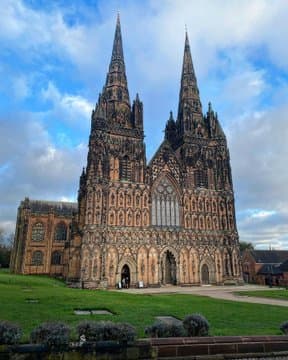
Lichfield Cathedral
Sir George Gilbert Scott · c. 1195–1340; restored 1850s–1900s
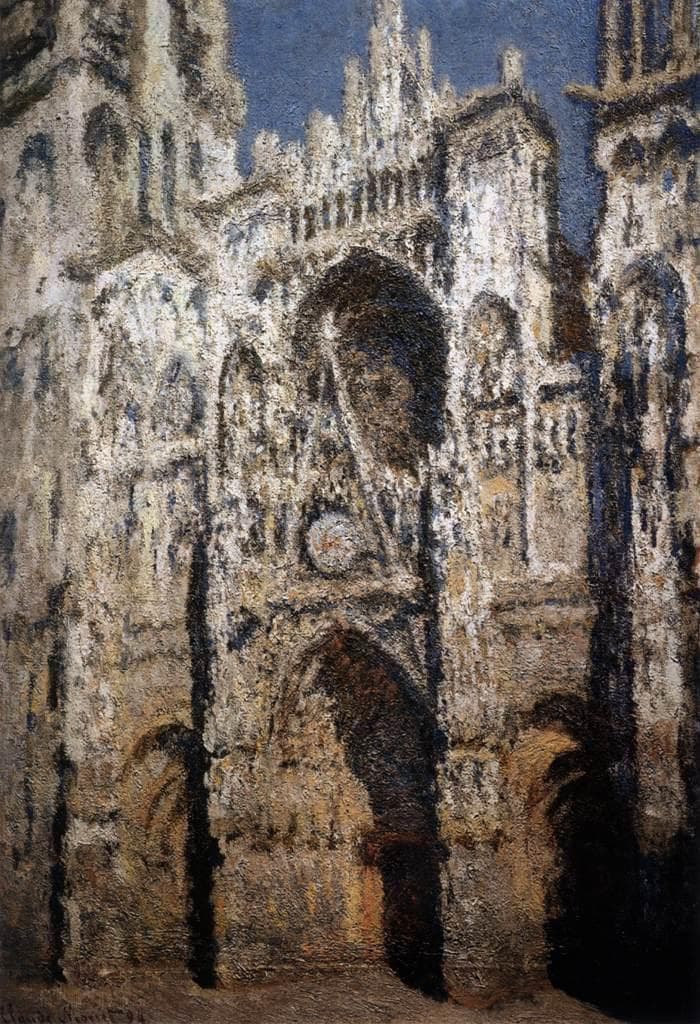
Rouen Cathedral in Full Sunlight
Claude Monet · 1893
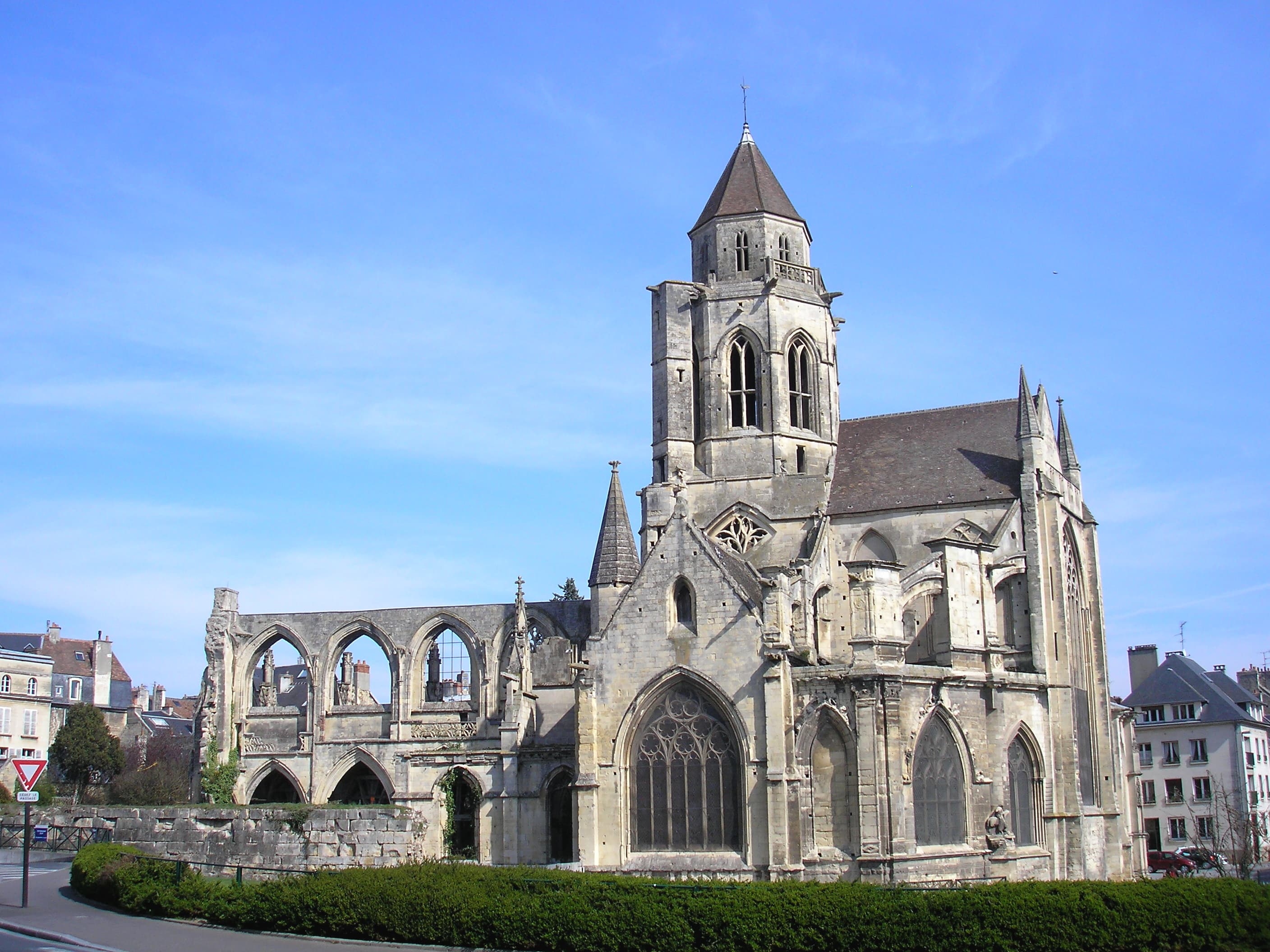
Church of Saint-Étienne-le-Vieux
The Monks Of Cluny · Founded c. 10th century; recorded c. 1067; rebuilt 15th century
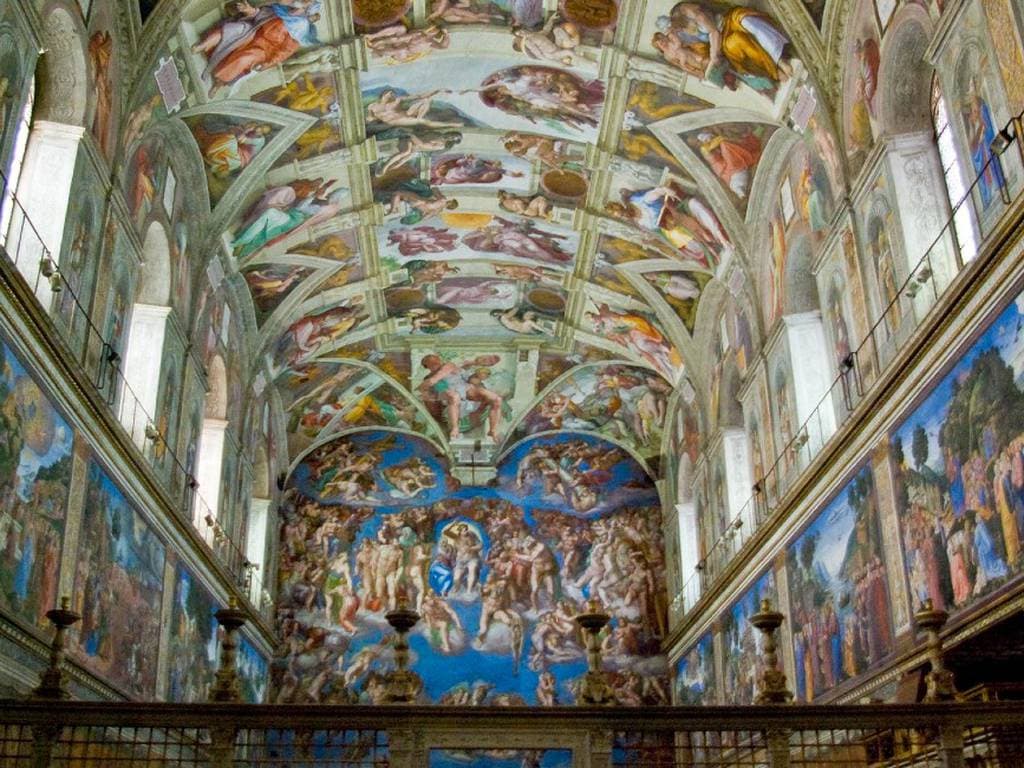
Sistine Chapel ceiling
Michelangelo · 1508–12
Statue of David
Michelangelo · 1501–04
The Creation of Adam
Michelangelo · c. 1511–12
Lucifer
Franz von Stuck · 1890
The Garden of Earthly Delights
Hieronymus Bosch · c. 1490–1510