Italian · Symbolism · Realism
Gaetano Cellini
b. 27 August 1875, Ravenna — d. 8 February 1957, Turin
Gaetano Cellini (1875–1957) was an Italian sculptor from Ravenna who worked in Turin. He is best known for the marble L'umanità contro il male (Humanity Against Evil, 1908) and the Don Bosco monument outside Turin's Basilica of Mary Help of Christians.
1 work in the collection
Works by Gaetano Cellini
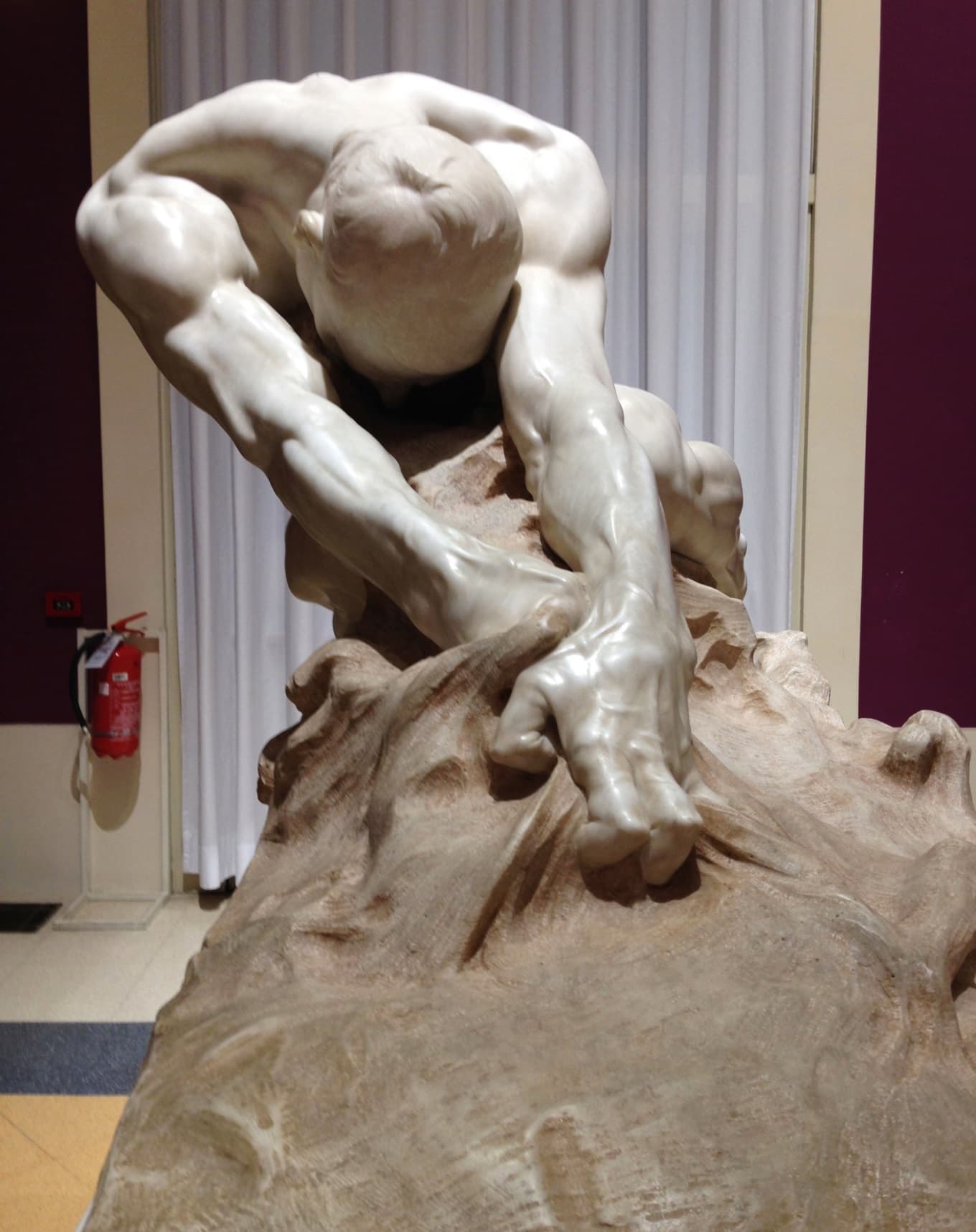
Gaetano Cellini was an Italian sculptor and painter, born in Ravenna in 1875 and active for most of his life in Turin, where he died in 1957. He is best known today for L'umanità contro il male (Humanity Against Evil), a marble of a muscular nude man wrestling a rough mass of stone, and in Turin for his bronze monument to Saint John Bosco.
He is not related to Benvenuto Cellini, the Renaissance goldsmith and author of the bronze Perseus in Florence, and should not be confused with him. Some online biographies also give Cellini the dates 1838–1914 and a Florentine career with a Columbus statue in Genoa; we have found no evidence for this, and the documented sculptor of Humanity Against Evil is the Ravenna-born Cellini described here.
Life and training
Cellini was born in Ravenna on 27 August 1875. He trained there with the sculptor Alessandro Mazzarenti before moving to Turin, where he worked in the studio of Pietro Canonica, one of the most successful Italian portrait and monument sculptors of the period. Turin around 1900 was a lively center for sculpture, with its international exhibitions and a strong market for funerary and civic monuments, and Cellini made his career there.
Humanity Against Evil
Cellini's most famous work shows a powerfully built nude man crouched over a rough, unworked mass of stone, gripping it with clawed hands as if wrestling it down or holding back something that threatens to rise from it. The contrast between the polished, anatomically precise body and the raw block is the heart of the piece: humanity, finished and conscious, against a formless evil that has not yet taken shape.
The idea owes something to Michelangelo's unfinished Slaves, whose figures seem to struggle out of the marble, and to Rodin, who made the contrast of rough and polished stone a signature in the decades before. The work is dated to around 1906 for the model and 1908 for the marble. Italian sources record the marble at the Galleria Nazionale d'Arte Moderna in Rome, though we have not confirmed whether it is currently on display.
Monuments in Turin and Piedmont
Much of Cellini's later career was devoted to religious and civic commissions in Piedmont:
- Monument to Don Bosco (1920), the bronze group in front of the Basilica of Mary Help of Christians (Maria Ausiliatrice) in Turin, honoring the founder of the Salesians. Cellini also made the bronze tondo with the saint's face for Don Bosco's reliquary urn.
- Bust of Monsignor Manacorda, Fossano (1912).
- War memorials for Carmagnola (1921) and Asti (1928–30), part of the wave of First World War memorials raised across Italy in the 1920s.
- A silver medallion of Blessed Pier Giorgio Frassati (1926) for a Turin parish church, and a bronze crucifix and portrait busts for churches in the province.
- Bronze panels for the portal of the Sanctuary of San Giovanni d'Andorno, and a marble high relief for a funerary chapel in Tortona's cemetery.
He also made smaller works such as La Tentazione (Temptation), a Bust of Michelangelo, and female heads and masks now in the Museo Cividini in Bergamo.
Style and reputation
Cellini worked at the meeting point of late 19th-century realism and Symbolism. In his monuments he is a solid, legible realist, as Catholic and civic patrons required. In Humanity Against Evil he is something more: a Symbolist who uses the body itself, and the unfinished stone, to stage a moral idea. In 2006 the Basilica of Maria Ausiliatrice in Turin held an exhibition devoted to him.
Where to see his work
In Turin, see the Don Bosco monument in Piazza Maria Ausiliatrice and the basilica itself. The war memorials stand in Carmagnola and Asti, and the Museo Cividini in Bergamo holds smaller works. For the tradition behind Humanity Against Evil, see the work of Auguste Rodin, our guide to famous sculptures, and Michelangelo's David.
Questions & answers
Who was Gaetano Cellini?
Gaetano Cellini (1875–1957) was an Italian sculptor and painter born in Ravenna who trained with Alessandro Mazzarenti and worked in Pietro Canonica's studio in Turin. He is known for the marble Humanity Against Evil (1908) and the Don Bosco monument in Turin.
What is Humanity Against Evil by Gaetano Cellini?
L'umanità contro il male (Humanity Against Evil) is a marble of a muscular nude man crouching over and grappling with a rough mass of unworked stone, modeled around 1906 and carved by 1908. The polished body against raw stone stages humanity's struggle with formless evil.
Where is Humanity Against Evil today?
Italian sources record the marble at the Galleria Nazionale d'Arte Moderna in Rome. Whether it is currently on display is not confirmed, so check with the museum before visiting.
Is Gaetano Cellini related to Benvenuto Cellini?
No connection is documented. Benvenuto Cellini (1500–1571) was the Florentine goldsmith and sculptor of the Perseus; Gaetano Cellini was born in Ravenna more than three centuries later.