Symbolism
Verso la Luce
Cipriano Mannucci
Verso la Luce (Towards the Light) is a Symbolist painting attributed to the Italian artist Cipriano Mannucci (1882–1970): a pale woman holding a small lamp walks through the night while a shadowy, skull-faced figure follows behind her.
- Artist
- Cipriano Mannucci
- Movement
- Symbolism
What you are looking at
A young woman moves through a blue night, wrapped in a long, translucent veil that streams behind her like smoke. Her face is chalk-white, her lips dark, her eyes turned up and away. In her outstretched right hand she carries a tiny oil lamp, and its flame is the brightest point in the picture, a small white sun. Its light falls across her shoulders and breast in patches of yellow and green.
Behind her, at her shoulder, looms a hooded dark shape. Look closely and it has a face: a hollow-eyed, skull-like head in profile, and below it perhaps a second, shadowed face. The figure seems to lean toward her, following or pursuing. The landscape is barely there, a dark ground of long scratchy strokes under a sky of streaked blue.
The title
Verso la luce is Italian for "towards the light." In the context of the image it reads two ways. The woman carries her own small light into the darkness, and the lamp is a traditional emblem of the soul, of faith, or of the wise virgins of the Gospel parable who kept their lamps burning. At the same time "the light" can mean death and what lies beyond it, and the shadow at her back suggests that she is not walking alone.
Style and technique
The handling is quick and searching. Long, parallel, hatched strokes build up both the veil and the darkness, so that the figure seems to be made of the same moving air as the night around her. This kind of mark-making, close to pastel or thin oil drawn with the brush, links the picture to late Symbolism around 1900–1920, when Italian painters absorbed both Divisionist color and the dream imagery of artists like Odilon Redon and Gaetano Previati.
Cipriano Mannucci
Cipriano Antonio Mannucci was born in Nice in 1882 and died in Florence in 1970. He trained at the Scuola di Santa Croce in Florence and was honored by the city's Society of Fine Arts. Auction records describe loose, luminous brushwork, a debt to Divisionism in long filament-like strokes of color, and a wide range of subjects from Italian village landscapes to Venetian carnival scenes. He showed in London in 1921 and later at the Royal Academy. Records of Verso la Luce itself, including its date, medium and owner, have not been found.
The idea, repeated online, that the painting was inspired by the Croatian modernist writer Antun Gustav Matoš (1873–1914) and his prose piece on the shadow is not supported by any documented source and should be treated as speculation.
Related works
For other Symbolist meetings of a young woman and death, see The Garden of Death by Hugo Simberg, Spleen et Idéal by Carlos Schwabe and Finis by Maximilian Pirner. The wider movement is introduced in Symbolism.
Questions & answers
What does Verso la Luce mean?
Verso la luce is Italian for 'towards the light.' In Mannucci's painting a pale woman carries a small lamp through the night while a shadowy, skull-faced figure follows her, so the title can refer both to the light of the soul and to death and what lies beyond.
Who painted Verso la Luce?
The painting is attributed to Cipriano Antonio Mannucci (1882–1970), an Italian painter born in Nice who trained at the Scuola di Santa Croce in Florence and worked in a loose, luminous style influenced by Divisionism.
Where is Verso la Luce today?
Its current location, date and medium are not documented in public sources. Mannucci's works appear mainly at auction and in private collections, so the painting is most likely privately owned.
Kindred works
You may also study
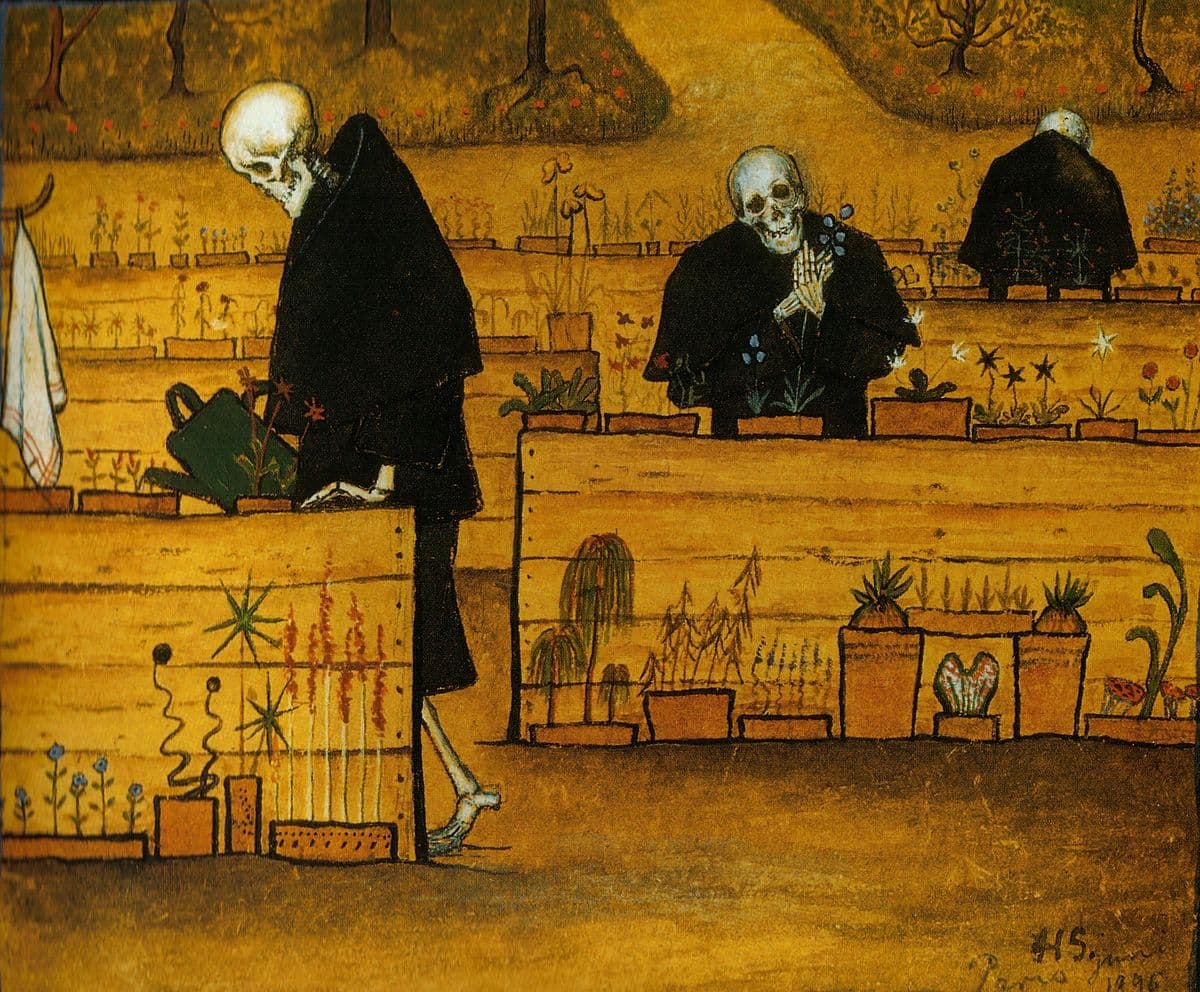
The Garden of Death
Hugo Simberg · 1896
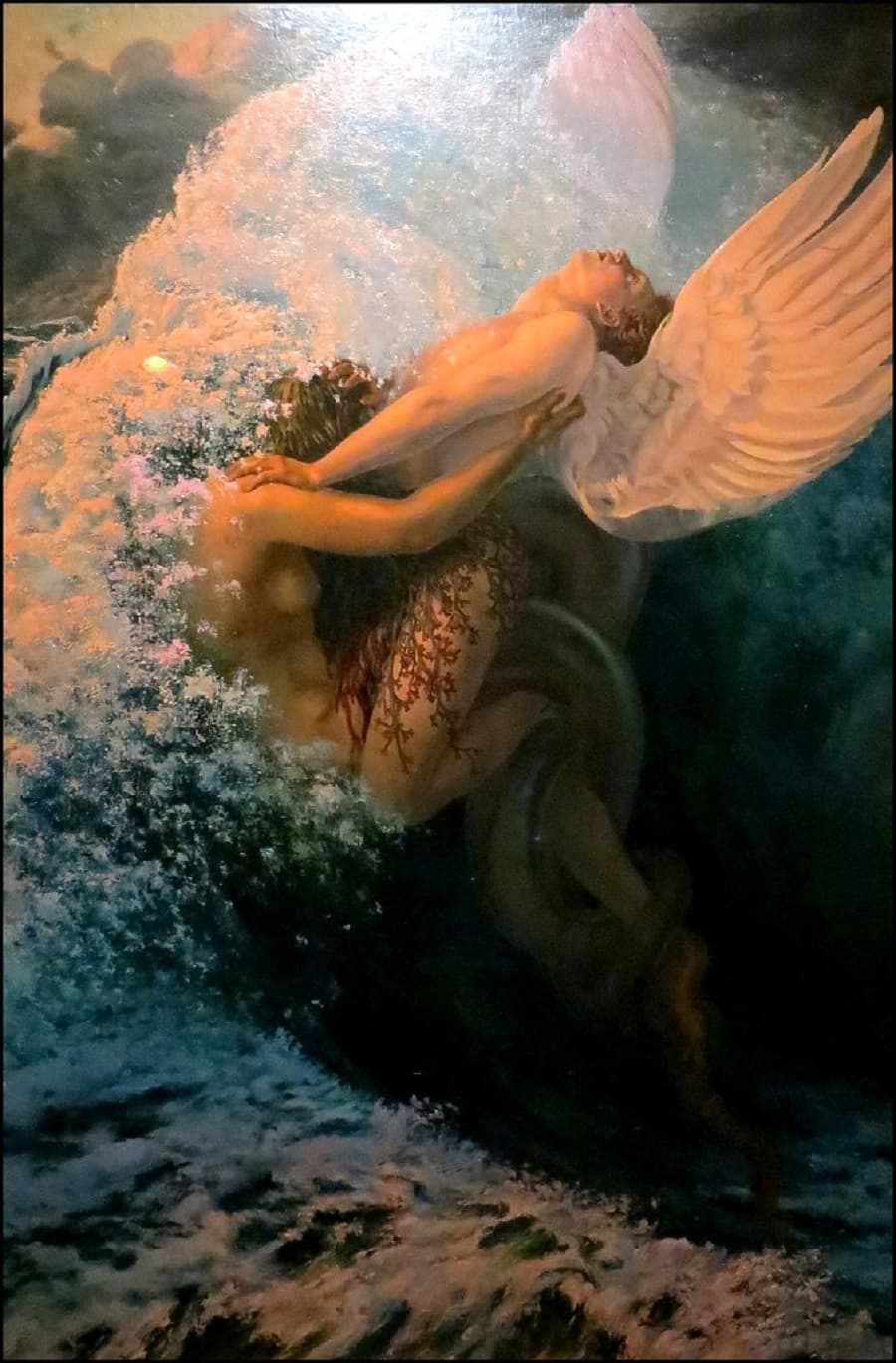
Spleen et Idéal
Carlos Schwabe · 1907
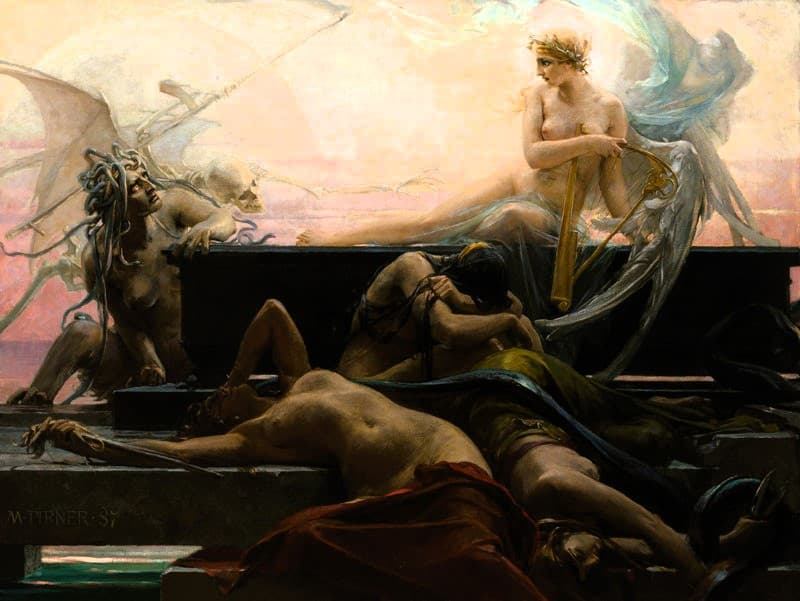
Finis (The End of All Things)
Maximilian Pirner · 1887
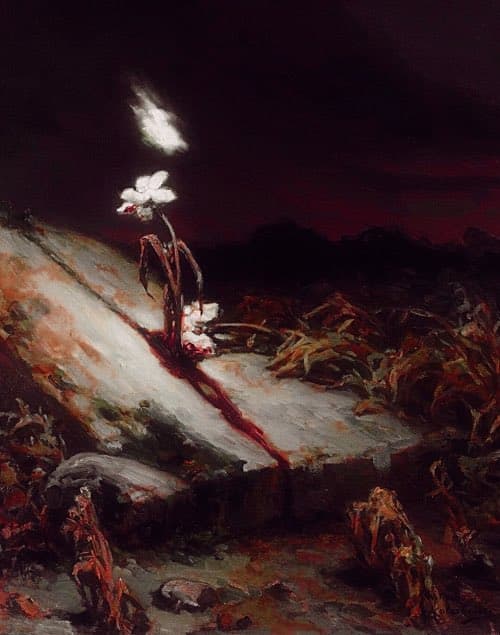
Grave of a Suicide Victim
Wilhelm Kotarbiński · c. 1900
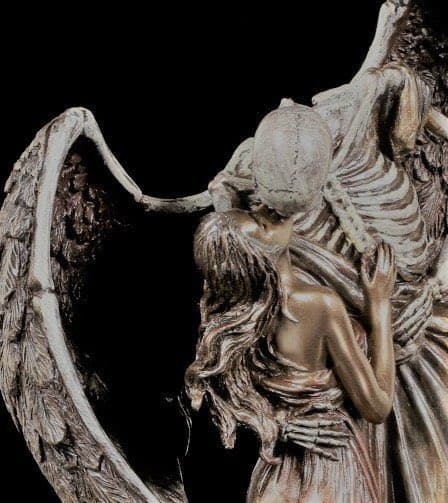
The Kiss of Death
Veronese Design · c. 2020

Venus de Milo
Alexandros of Antioch · c. 150–125 BC

Nymphs Dancing to Pan's Flute
Joseph Tomanek

The Scream
Edvard Munch · 1893