Image: Österreichische Galerie Belvedere, Vienna (via Google Arts & Culture) / Wikimedia Commons · Public domain · via Wikimedia Commons
Vienna Secession (Art Nouveau)
The Kiss
Gustav Klimt, 1907–08
The Kiss, Klimt's gold-leaf painting of two lovers embracing at the edge of a flowered meadow, was made in 1907–08 and hangs in the Upper Belvedere in Vienna. The Austrian state bought it in 1908, before it was even finished.
- Artist
- Gustav Klimt
- Date
- 1907–08
- Medium
- Oil and gold leaf on canvas
- Dimensions
- 180 × 180 cm
- Collection
- Upper Belvedere, Österreichische Galerie Belvedere, Vienna, Austria
- Movement
- Vienna Secession (Art Nouveau)
The Kiss (Der Kuss, first exhibited as Liebespaar, "The Lovers") is an oil painting with applied gold and silver leaf by the Viennese artist Gustav Klimt, made in 1907–08. The canvas is a perfect square, 180 by 180 centimeters, and it has hung in the Belvedere in Vienna since the Austrian state bought it from the 1908 Kunstschau exhibition. It is the most famous work of Viennese art and the high point of what is called Klimt's Golden Period.
What you're looking at
Two figures kneel at the edge of a meadow, wrapped together in a single shape that rises like a bell or a tower of gold against a background of shimmering, speckled bronze. Only their heads, hands and the woman's feet are painted naturalistically. Everything else is pattern.
The man stands over the woman, his back to us, his head bent down so that his face is almost hidden. He wears a wreath of ivy leaves in his dark hair. His large hands hold her face, tilting it up toward him. She kneels, her eyes closed, her cheek turned to receive his kiss, one hand curled around his neck, the other resting on his hand. Her face is pale and calm; her lips are slightly parted. She wears flowers in her red-gold hair.
The two robes are distinguished by their patterns. His is covered in black, white and silver rectangles, hard and upright. Hers is covered in circles, spirals and small flowers in red, blue and violet. Most readers have taken this as a contrast between male and female, the geometry of one and the organic forms of the other, merging within a single golden envelope.
The detail most people miss: the edge of the cliff
Look at the bottom of the picture. The flowered meadow on which the lovers kneel does not continue: it stops abruptly at the woman's feet, as if at the edge of a cliff. Her toes are curled tightly, gripping the edge. Her feet, bare and tense, are the only part of her body that seems to be under strain. Golden tendrils trail down from the meadow into the void.
This one detail changes the mood of the whole picture. The embrace that looks like perfect bliss is happening at a precipice. Whether she is giving herself up, holding back or about to fall is left open.
The Kiss: Klimt's gold technique
Klimt was the son of a gold engraver, and he trained at the School of Applied Arts in Vienna. He used real gold leaf, applied over a base of gesso and adhesive, then worked over it with paint, platinum and silver leaf, and in places raised and textured the surface. Seen in person, the gold reacts to the light as you move, which no reproduction captures.
A visit to Ravenna in 1903, where he saw the sixth-century Byzantine mosaics in the church of San Vitale, is often credited as the source of his use of gold. The flat, decorative surfaces also reflect the influence of Japanese art and of the Vienna Secession's ideal of the Gesamtkunstwerk, the total work of art in which painting, design and craft are united. Klimt was a founder and the first president of the Secession in 1897.
What does The Kiss by Klimt mean?
Klimt left no explanation, and readings vary. The most common is the simplest: an image of romantic and sexual union, in which two individuals become one golden form. The near-square format, the gold and the bell-shaped mass make the image feel timeless and almost sacred, like an icon of love.
A second reading draws on Klimt's other work, especially the Beethoven Frieze (1902), which ends in a similar embrace between a man and woman beneath a choir of angels, symbolizing the fulfillment of human longing through art and love. The Kiss may continue that theme.
The identities of the models have long been discussed. Some writers suggest the couple are Klimt and his lifelong companion Emilie Flöge, a fashion designer; others propose a model known only as "Red Hilda." No evidence settles the question.
The cliff edge adds a darker note that writers often connect to the Symbolist themes of love and death common in fin-de-siècle Vienna, the city of Freud and Schnitzler.
The Kiss and the Kunstschau of 1908
The painting was shown, still unfinished, at the Kunstschau exhibition of 1908, which Klimt organized with his circle after leaving the Secession. Although his earlier university ceiling paintings had been condemned as obscene, this picture was instantly admired, and the Austrian Ministry of Culture bought it for 25,000 crowns, an exceptionally high price, for the Moderne Galerie, the predecessor of today's Belvedere collection.
Reception and legacy
Few twentieth-century images have been more widely reproduced. The Kiss became one of the most recognizable paintings in the world, the emblem of Vienna, Art Nouveau and the idea of romantic love. It has remained in the Belvedere ever since its purchase and is the museum's central attraction.
Where to see it
The painting hangs in the Upper Belvedere (Oberes Belvedere), Vienna, in a room on the first floor devoted to Klimt, along with Judith I and his landscapes. The Belvedere is one of the most visited museums in Vienna; arrive early. For more of the artist, see Gustav Klimt and compare the theme with Francesco Hayez's very different The Kiss of 1859, Canova's Psyche Revived by Cupid's Kiss and the Symbolist movement.
Questions & answers
Where is The Kiss by Gustav Klimt?
It hangs in the Upper Belvedere in Vienna, Austria, part of the Österreichische Galerie Belvedere. The painting has been in the collection since 1908, when the Austrian state bought it from the Kunstschau exhibition.
What does Klimt's The Kiss mean?
It is usually read as an image of love as a union in which two people merge into one golden form. The man's robe is patterned with rectangles and the woman's with circles and flowers. The flowered meadow ends at a cliff edge at her feet, a hint of risk or surrender.
Is The Kiss made with real gold?
Yes. Klimt applied real gold leaf, along with silver and platinum, over the painted canvas, then worked over it in oil. The technique reflects his father's trade as a gold engraver and his admiration for the Byzantine mosaics he saw in Ravenna.
Who are the couple in The Kiss?
The models are not known. It is often suggested that the lovers are Klimt and his companion Emilie Flöge, and another theory names a model called 'Red Hilda,' but there is no documentary evidence for either.
When did Klimt paint The Kiss?
He painted it in 1907–08, during his so-called Golden Period. It was shown, still unfinished, at the 1908 Kunstschau in Vienna, where the Austrian state bought it.
More by the artist
Gustav Klimt
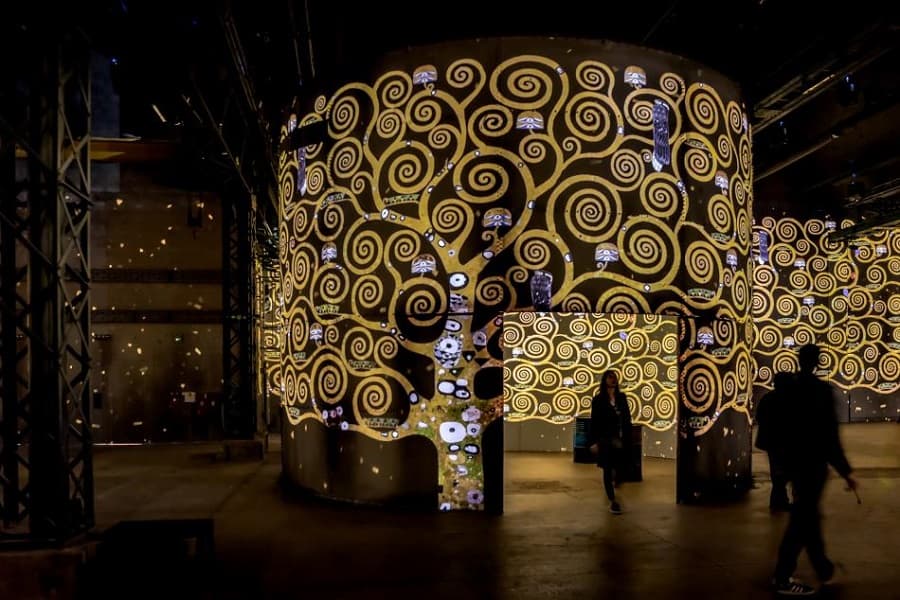
Kindred works
You may also study
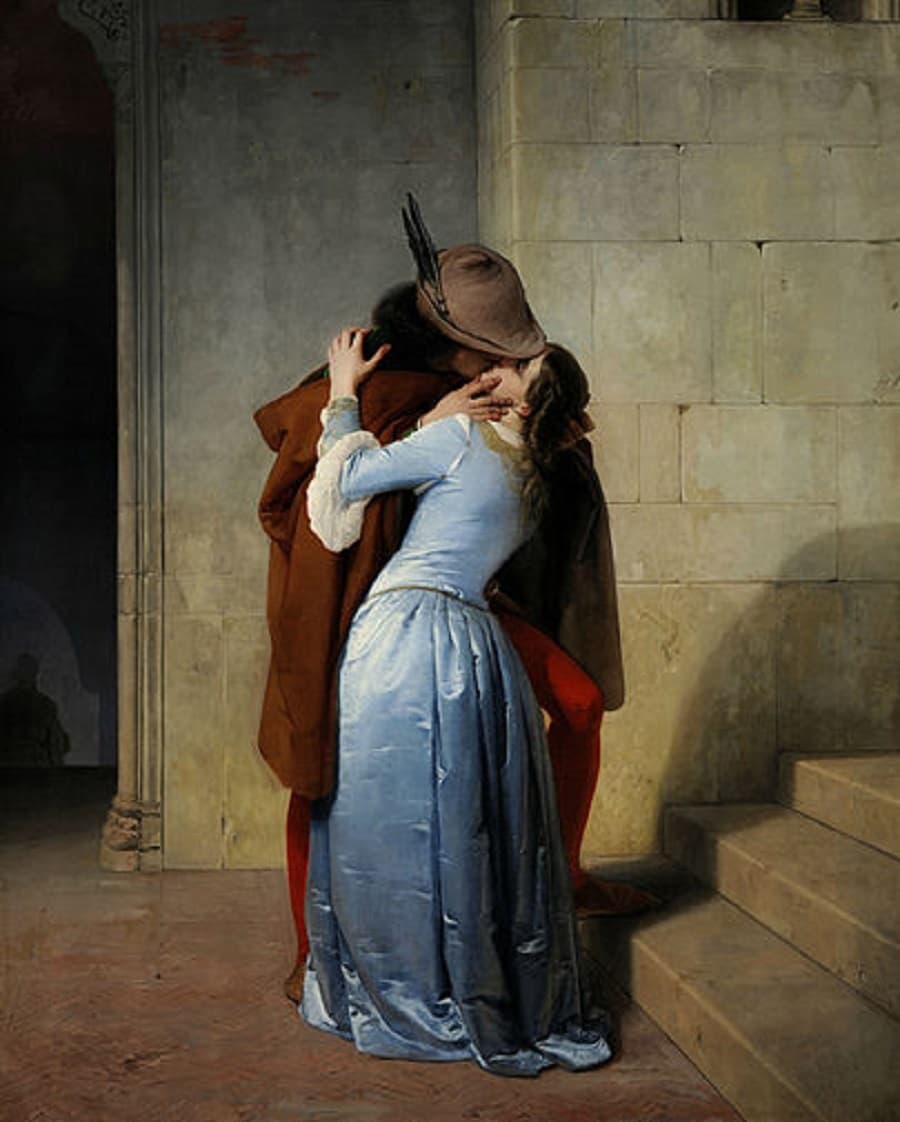
The Kiss
Francesco Hayez · 1859
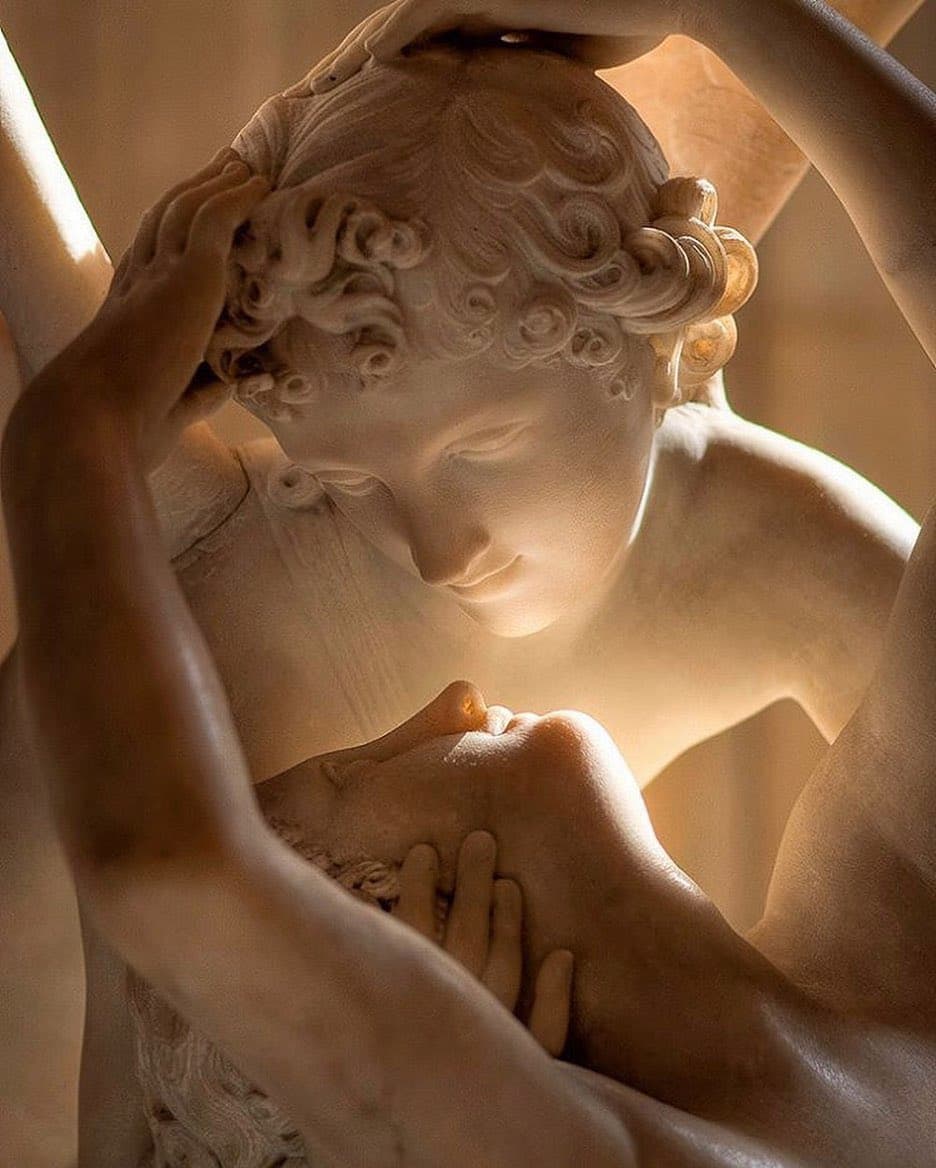
Psyche Revived by Cupid's Kiss
Antonio Canova · 1787–1793
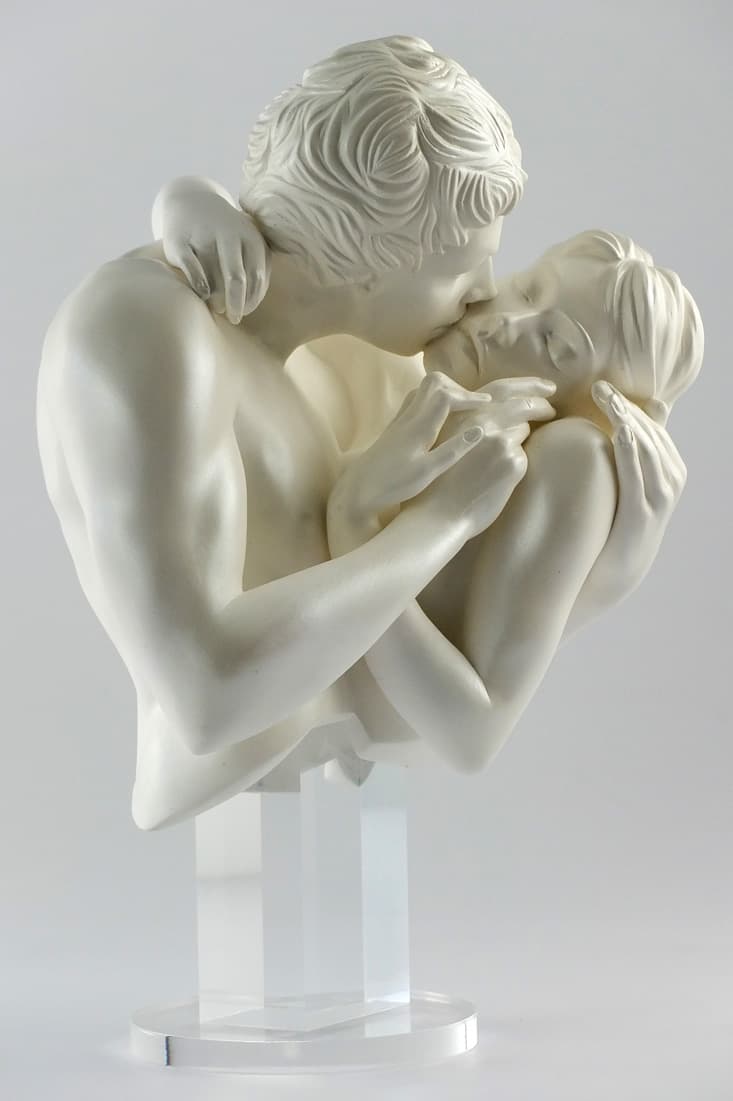
Le Baiser Nacré (The Mother-of-Pearl Kiss)
Yves Pirès

The Scream
Edvard Munch · 1893

Bridge over a Pond of Water Lilies
Claude Monet · 1899

Venus de Milo
Alexandros of Antioch · c. 150–125 BC

Ophelia
John Everett Millais · 1851–52

Woman with a Parasol – Madame Monet and Her Son
Claude Monet · 1875