Russian Gothic Revival (pseudo-Gothic)
Church of the Vladimir Icon of the Mother of God, Bykovo
Vasily Bazhenov, 1788–89
The Church of the Vladimir Icon of the Mother of God is a pseudo-Gothic Orthodox church built in 1788–89 on the Bykovo estate, southeast of Moscow, for Mikhail Izmailov in memory of his wife. Its architect is unrecorded; it is usually attributed to Vasily Bazhenov.
- Artist
- Vasily Bazhenov
- Date
- 1788–89
- Medium
- Stone and brick masonry
- Collection
- Bykovo estate, Ramensky district, Bykovo, Moscow Oblast, Russia
- Movement
- Russian Gothic Revival (pseudo-Gothic)
What you're looking at
In a village southeast of Moscow, at the edge of an old country estate, stands a church that looks as if it has wandered out of a fairy tale. Instead of the onion domes of a typical Russian church, it rises in pale stone with pointed windows, slim black spires and a cluster of pinnacles around a drum and lantern capped in green-blue metal. The main body is rounded, almost a rotunda, and a lower wing runs off it toward two smaller towers, each topped by its own spire, with a separate bell tower standing nearby. Travel writers like to call it Russia's "Disney castle." It is in fact an eighteenth-century Orthodox parish church, and still a working one.
The building is two churches stacked one above the other. The upper church is dedicated to the Vladimir Icon of the Mother of God, the revered Byzantine image of the Virgin and Child that has protected Moscow, by tradition, since the fourteenth century. The lower, "winter" church, easier to heat, is dedicated to the Nativity of Christ.
The detail most people miss is that the Gothic look is skin-deep, and deliberately so. The plan and the liturgical arrangement are fully Orthodox. What is "Gothic" is the dress: pointed windows, carved niches and needle-like pinnacles applied over a compact church body. Look closely at the rounded main volume and you see paired pilasters and arched niches that belong as much to Baroque and classical design as to anything medieval.
Who built it, and why
The church was commissioned by Mikhail Mikhailovich Izmailov, a Moscow governor and the owner of the Bykovo estate, and built in 1788–89. Izmailov raised it in memory of his late wife, Maria Alexandrovna Naryshkina. That makes the building, in part, a memorial: a church as an act of mourning, in the same spirit as the funerary chapels of Western Europe.
The architect is not documented. Most historians attribute the design to Vasily Bazhenov (1737/38–1799), the leading Russian architect of his generation and the man behind the unfinished Gothic palace at Tsaritsyno for Catherine the Great. Bazhenov worked with Izmailov, and the manor house at Bykovo is attributed to him as well, but no surviving document puts his name on the church; some writers add or substitute Matvei Kazakov, Bazhenov's colleague, or a local builder. Older online descriptions credit Bartolomeo Rastrelli, the architect of the Winter Palace, but Rastrelli died in 1771, well before the church was begun, and the attribution should be set aside. Nor is the church in St. Petersburg, as some sites claim: Bykovo lies in the Moscow region, roughly 35 to 40 kilometers southeast of the capital.
Why a Gothic church in Russia?
In the 1770s and 1780s a fashion for "Gothic" spread through the Russian nobility, encouraged by Catherine the Great's own taste for it. Russians called it simply gotika, but it borrowed freely from medieval Europe, from Moscow's own sixteenth- and seventeenth-century brick ornament, and from the English Gothic Revival of Horace Walpole's Strawberry Hill. It was a romantic style, associated with ruins, chivalry and melancholy, and it suited country estates where landowners wanted buildings that looked picturesque in a landscape park.
For a memorial church, the style carried an extra charge. Gothic was the architecture of tombs, chantries and cathedrals in the imagination of the period, and its pointed, upward-straining forms read as solemn and aspiring at once. Izmailov's church uses that mood to frame an Orthodox interior dedicated to the Mother of God, a fitting choice for a monument to a wife.
Later history
A separate bell tower was added in the nineteenth century; sources disagree on whether it dates from 1869–71 or 1884. In the 1930s, under the anti-religious campaigns of the Soviet state, the church was closed (sources give 1937) and stripped. Over the following decades it served as a juvenile prison, a training site for demolition work and a garment factory, and the interior was badly damaged. The manor house nearby became a tuberculosis sanatorium.
The church was returned to the Russian Orthodox Church in 1989, and services resumed. It has since been restored. Reliefs on the building that include portraits of Izmailov and his wife are thought by historians to date from this modern restoration rather than from the 1780s, a reminder that what we see today is partly a reconstruction.
How it compares
The church belongs to a European family of buildings that use medieval forms for modern feeling. It invites comparison with true medieval Gothic, such as the Lichfield Cathedral (itself heavily restored in the nineteenth century) or the ruined parish church of Saint-Étienne-le-Vieux in Caen, and with Monet's dissolving views of Gothic stone in Rouen Cathedral in Full Sunlight. What sets Bykovo apart is the translation: Western Gothic ornament wrapped around the shape and rituals of an Orthodox church. For more, see Gothic Art.
Can you visit?
Yes. The church is an active Orthodox parish on the former Bykovo (Vorontsov-Dashkov) estate in the Ramensky district of Moscow Oblast and is open daily for worship and visitors. The neighboring manor house, also attributed to Bazhenov, stands empty. Visitors should dress as for any Orthodox church: covered shoulders and knees, and headscarves for women.
Questions & answers
Where is the Church of the Vladimir Icon of the Mother of God in Bykovo?
It stands on the former Bykovo estate in the village of Bykovo, Ramensky district, Moscow Oblast, roughly 35–40 km southeast of Moscow. It is not in St. Petersburg. The church is an active Orthodox parish and is open to visitors daily.
Who designed the Gothic church in Bykovo?
No document names the architect. Most historians attribute the design to Vasily Bazhenov, who worked for the estate's owner, Mikhail Izmailov; some sources also mention Matvei Kazakov. The often-repeated attribution to Bartolomeo Rastrelli is impossible, since Rastrelli died in 1771, before construction began.
When was the Bykovo church built?
The church was built in 1788–89 for Mikhail Izmailov, owner of the Bykovo estate, in memory of his wife, Maria Naryshkina. A separate bell tower was added in the 19th century. The church was closed in the 1930s and returned to believers in 1989.
Why does a Russian Orthodox church look Gothic?
In the 1770s–80s a romantic "Gothic" fashion spread among the Russian nobility, encouraged by Catherine the Great. Architects applied pointed arches, pinnacles and stone tracery to buildings with Russian plans. At Bykovo the Gothic ornament wraps an entirely Orthodox two-level church.
Kindred works
You may also study
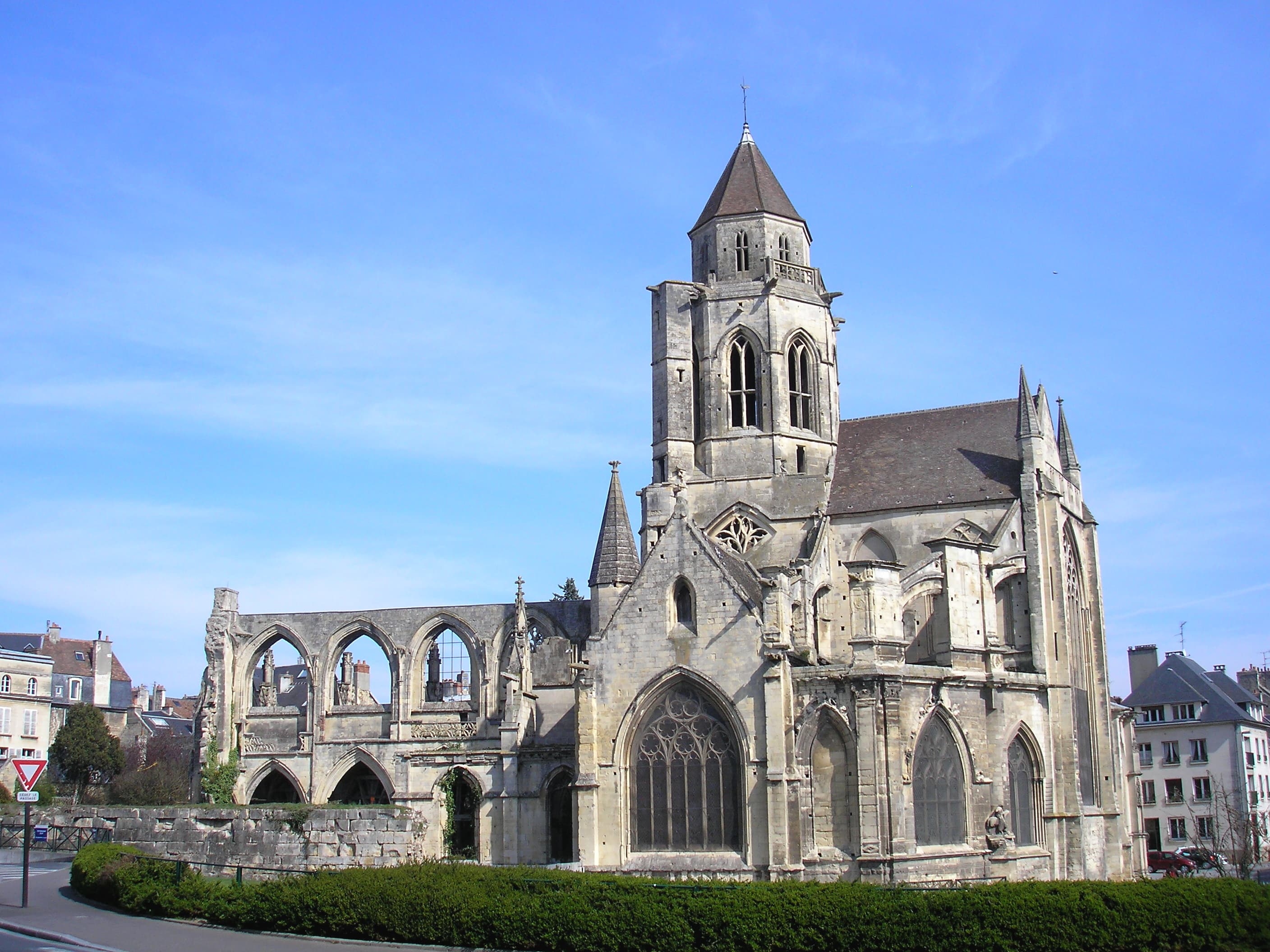
Church of Saint-Étienne-le-Vieux
The Monks Of Cluny · Founded c. 10th century; recorded c. 1067; rebuilt 15th century
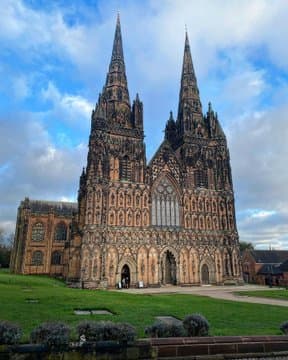
Lichfield Cathedral
Sir George Gilbert Scott · c. 1195–1340; restored 1850s–1900s
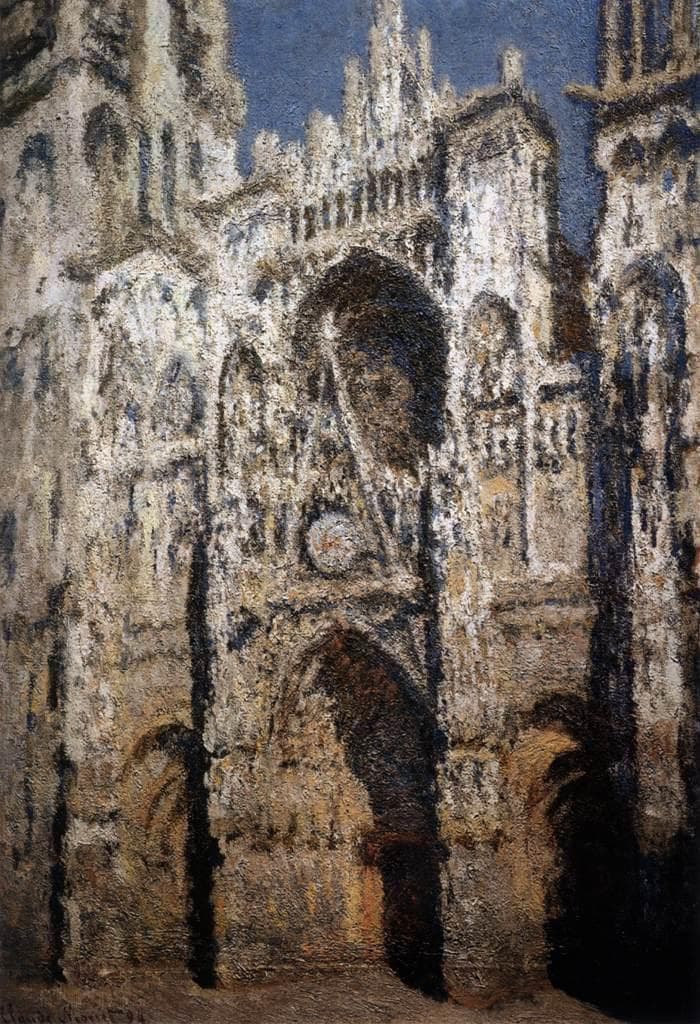
Rouen Cathedral in Full Sunlight
Claude Monet · 1893
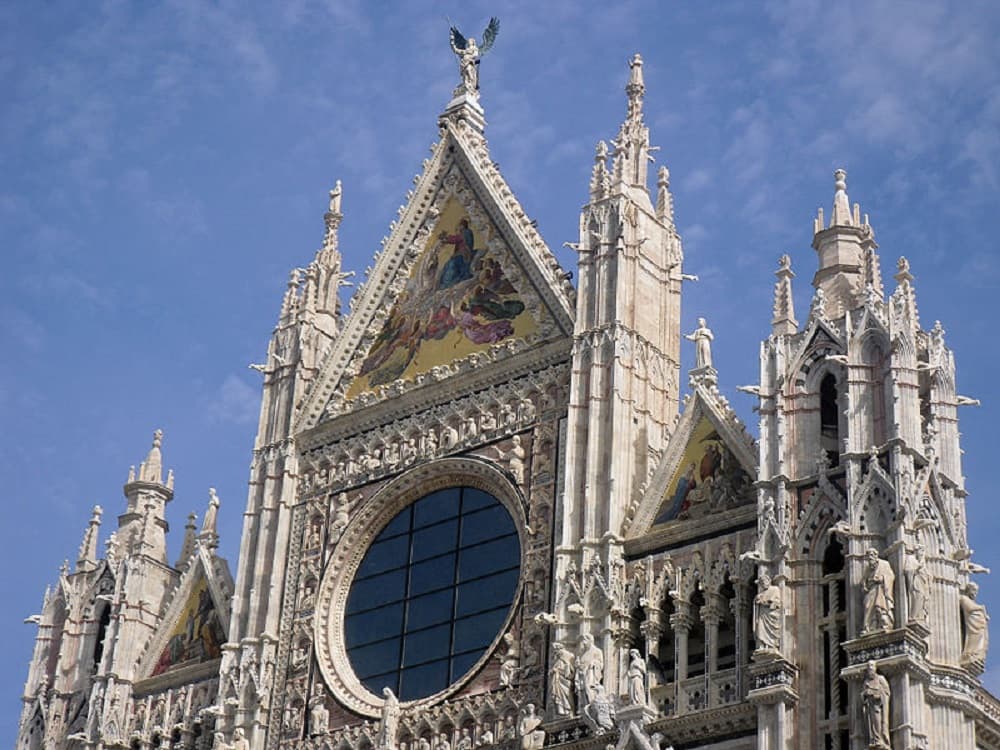
Siena Cathedral (Duomo di Siena)
Giovanni Pisano & Camaino di Crescentino & Giovanni di Agostino & Giovanni di Cecco · c. 1215–1263; facade c. 1284–late 14th century

Venus de Milo
Alexandros of Antioch · c. 150–125 BC

The Scream
Edvard Munch · 1893

Saturn Devouring His Son
Francisco Goya · c. 1819–1823
The Creation of Adam
Michelangelo · c. 1511–12