Academic art
Allegory of Summer
František Bohumil Doubek, c. 1905
Allegory of Summer is a painting attributed to the Czech artist František Bohumil (Franz) Doubek, dated around 1905. A red-haired woman in sheer green drapery, crowned with wheat and poppies, strides through a field holding a sheaf of grain, with a sickle hidden behind her back.
- Artist
- František Bohumil Doubek
- Date
- c. 1905
- Medium
- Oil on canvas
- Movement
- Academic art
Allegory of Summer personifies the season as a young woman walking away from us across a harvest field at dusk. It is attributed to František Bohumil Doubek (1865–1952), a Czech painter and illustrator, also known by the German form of his name, Franz Doubek, who was born in České Budějovice (Budweis) and trained at the Prague Academy and, according to dealers' biographies, in Munich. The date usually given is 1905. Its present owner and dimensions are not recorded in sources we could verify.
What you're looking at
The figure fills the tall, narrow canvas. She is seen from behind, turning to look back over her right shoulder at the viewer with a level, slightly challenging gaze. Her long red hair streams out to the right, lifted by a wind that also tugs a loose green ribbon. A transparent green robe slips from her shoulders and clings to her legs as she steps forward, leaving her back and one breast bare.
The attributes of summer are carried, not scattered around her. She wears a crown of wheat ears and red poppies, and in her outstretched right hand she holds a sheaf of ripe wheat with more poppies tucked into it. Her bare feet are planted in stubbly ground, and behind her a dark band of trees and a stormy, gray-green sky open onto a strip of pale light on the horizon.
The detail most viewers miss is in her left hand, held behind her back: a curved sickle, its blade catching the light. It is easy to overlook because it is half hidden against her hip, yet it changes the meaning of the picture.
Meaning
Wheat and poppies are traditional emblems of high summer and harvest, associated in classical myth with Ceres (the Greek Demeter), goddess of grain. The poppy also carries a second meaning, of sleep and death, which the Victorians and Symbolists used freely. Combined with the sickle, the tool of reaping and an attribute of Father Time and Death, the image becomes a quiet memento mori: summer's ripeness is also the moment of cutting down. The figure's backward glance invites us to follow her into the field and, perhaps, to notice what she is hiding.
Whether Doubek intended the darker reading cannot be confirmed; he left no statement about the picture. But the deliberate concealment of the sickle suggests more than a simple decorative season.
Style
The painting belongs to the academic tradition of allegorical nudes that flourished in Munich, Vienna and Paris around 1900, with smooth, carefully modeled flesh and thinly painted, transparent drapery. Compare Spring Scattering Stars by Edwin Blashfield and Flaming June by Frederic Leighton, and see Academic Art.
Questions & answers
Who painted Allegory of Summer?
It is attributed to František Bohumil Doubek (1865–1952), also called Franz Doubek, a Czech painter and illustrator born in České Budějovice who studied at the Prague Academy of Fine Arts. The painting is usually dated to about 1905, though we have not found a museum or catalogue record confirming the date.
What does Allegory of Summer symbolize?
The woman personifies summer and harvest: she wears a crown of wheat and poppies and carries a sheaf of grain. Behind her back she hides a sickle, the reaper's tool, which adds a hint of mortality. The ripeness of summer is also the moment of cutting down.
Where is Allegory of Summer by Franz Doubek?
Its current location is not publicly documented. Doubek's paintings appear mainly on the art market rather than in museum collections, and we have not found a record placing this work in a public collection. Its attribution and date also await confirmation from a catalogue or sale record.
Kindred works
You may also study
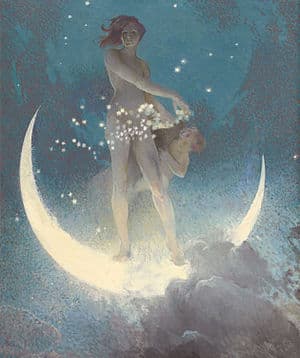
Spring Scattering Stars
Edwin Howland Blashfield · 1927
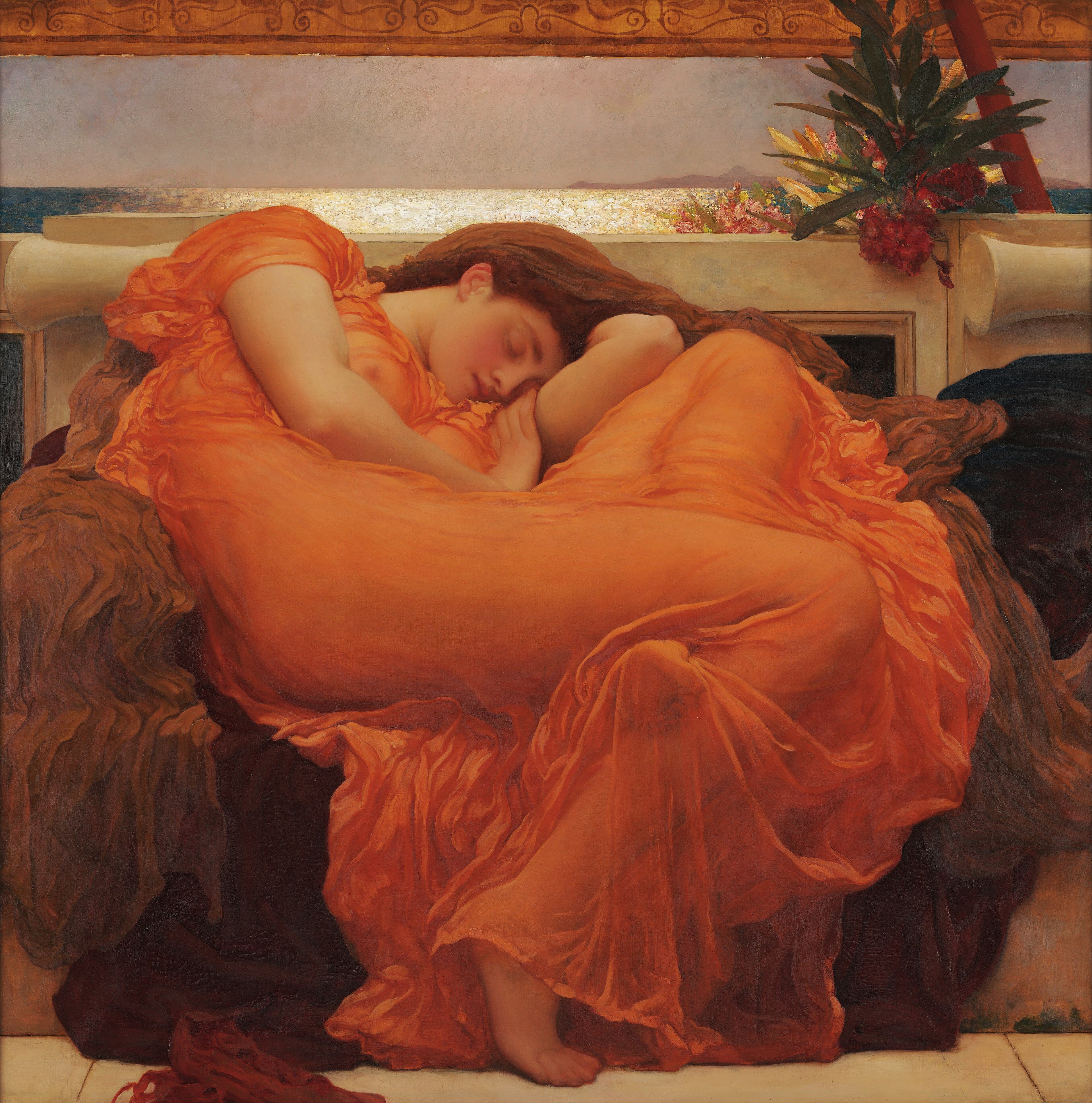
Flaming June
Frederic Leighton · 1895

Nymphs Dancing to Pan's Flute
Joseph Tomanek
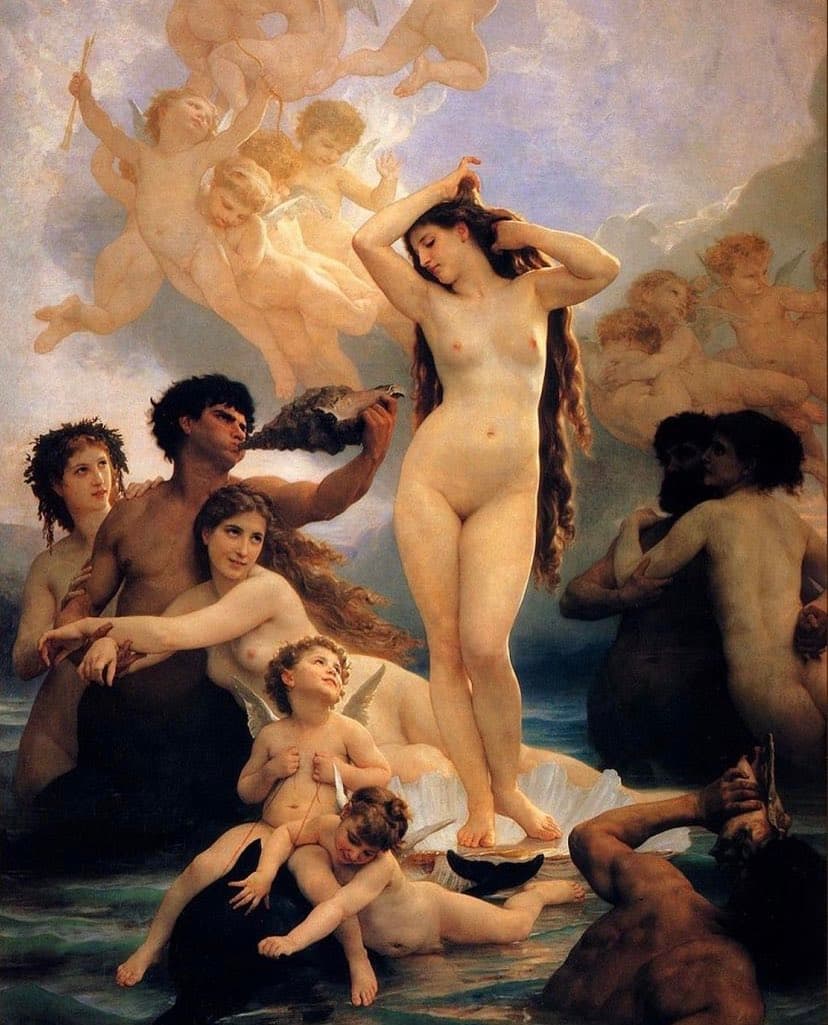
The Birth of Venus
William-Adolphe Bouguereau · 1879
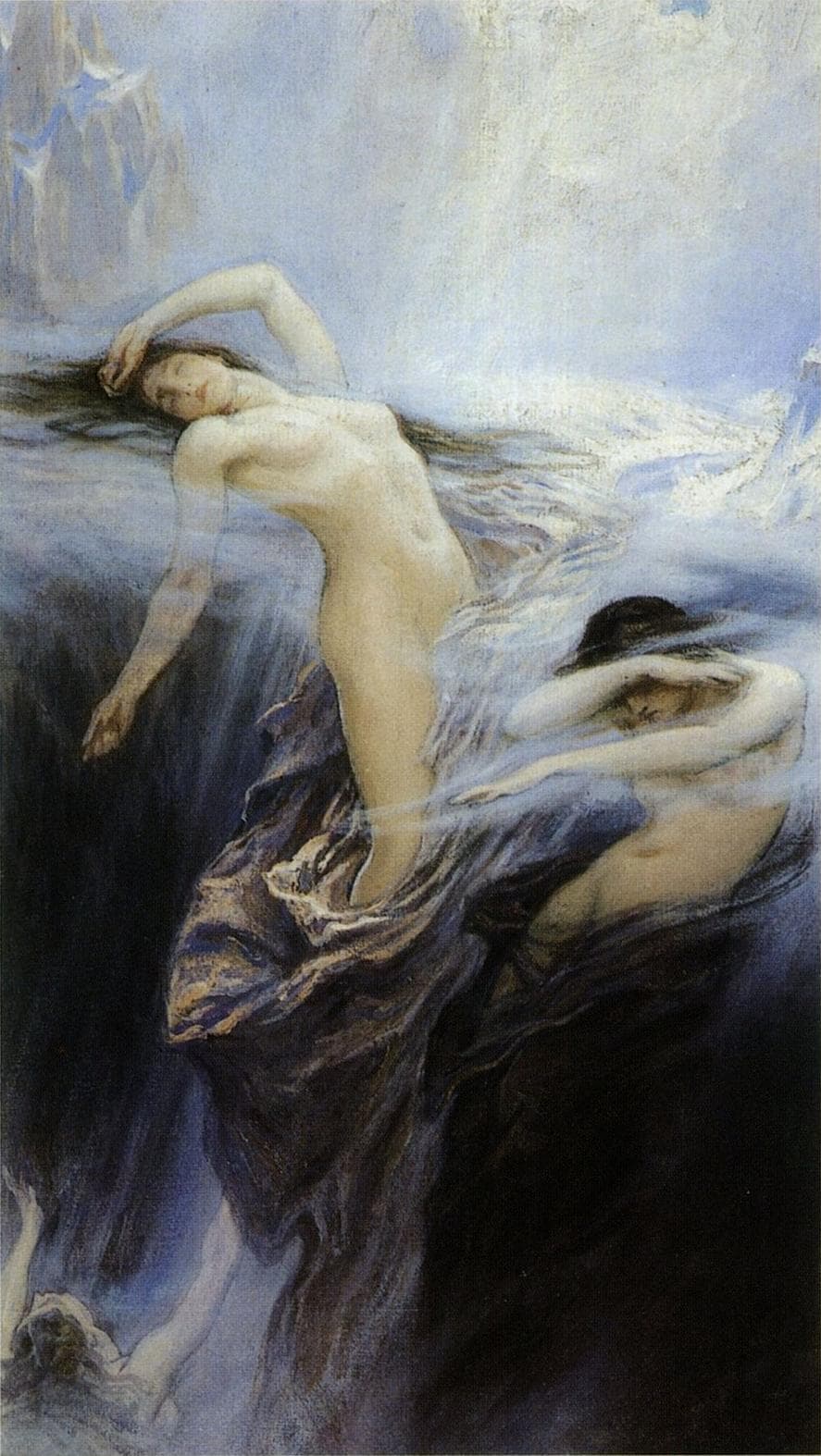
Clyties of the Mist
Herbert James Draper · 1912

Bridge over a Pond of Water Lilies
Claude Monet · 1899

Venus de Milo
Alexandros of Antioch · c. 150–125 BC

The Scream
Edvard Munch · 1893