American Neoclassicism
The West Wind
Thomas Ridgeway Gould, Modeled 1870
The West Wind is a marble statue by the Boston sculptor Thomas Ridgeway Gould, modeled in Florence in 1870, of a young woman striding forward as wind sweeps her skirts behind her. Gould made several copies; versions are in Rochester, Orlando and St. Louis.
- Artist
- Thomas Ridgeway Gould
- Date
- Modeled 1870
- Medium
- Marble
- Movement
- American Neoclassicism
What you are looking at
A young woman in white marble steps forward on tiptoe, her weight on her front foot. Her arms are crossed over her breast, her hands resting on her shoulders, and her head, with short curling hair, tilts slightly down. She wears a light, sleeveless dress belted high, and below the belt her skirt is blown back by the wind into deep, rippling folds that stream behind her and gather against a low rocky support. In this photograph she stands on a turned pedestal of dark veined marble, against a dark ground.
The sculptor
Thomas Ridgeway Gould (1818–1881) was born in Boston and worked there as a dry-goods merchant before turning to sculpture in middle age. After losing much of his fortune in the Civil War years, he moved with his family to Florence in 1868, joining the large colony of American sculptors working in Italy, where marble and skilled carvers were readily available. He died in Florence in 1881 and was buried in Boston.
The statue
Gould modeled The West Wind in 1870. Its title recalls Zephyrus, the gentle west wind of Greek myth, here imagined as a girl moving with the breeze. Some descriptions read her as a personification of America and its westward spirit, and say that her belt is decorated with stars; we have not been able to confirm whether this was Gould's own intention. The statue was shown at the Centennial Exhibition in Philadelphia in 1876 and was popular enough that Gould produced seven copies in two sizes. Surviving versions are recorded at the Memorial Art Gallery of the University of Rochester, the Orlando Museum of Art and the St. Louis Mercantile Library.
In 1874 critics accused Gould of copying Antonio Canova's Hebe, apart from the drapery. The charge was answered and dismissed, but the comparison is useful: like Canova, Gould uses a light, forward-stepping figure and contrasts smooth skin with elaborate cloth.
Close looking
The drapery is the technical challenge. Gould's marble is cut so thin at the edges of the skirt that it seems to flutter, and the deep undercutting creates dark channels of shadow between the folds. The whole sculpture is balanced on the toes of one foot; the windblown skirt joins the rocky outcrop behind, which carries the weight and keeps the figure from tipping. Compare the calm, inward pose of the upper body with the movement below.
Related works
The specific copy in this photograph, on its dark marble column, has not been identified. For Neoclassical marble figures in the catalogue, see The Three Graces and Psyche Revived by Cupid's Kiss by Antonio Canova, Undine Rising From The Waters by the American sculptor Chauncey Bradley Ives, and Famous Sculptures.
Questions & answers
Who made the West Wind statue?
The West Wind is by Thomas Ridgeway Gould, an American sculptor born in Boston in 1818. He moved to Florence in 1868, where he modeled the statue in 1870, and he died there in 1881. It was shown at the 1876 Centennial Exhibition in Philadelphia.
Where can I see The West Wind by Gould?
Gould made seven copies in two sizes. Versions are recorded at the Memorial Art Gallery of the University of Rochester in New York, the Orlando Museum of Art in Florida and the St. Louis Mercantile Library in Missouri. Others have appeared on the art market.
What does The West Wind represent?
The title refers to the west wind, Zephyrus in Greek myth, shown as a girl moving with the breeze, her skirt swept back. Some writers have read her as a symbol of America and its westward spirit, but Gould's own intention is not well documented.
Kindred works
You may also study
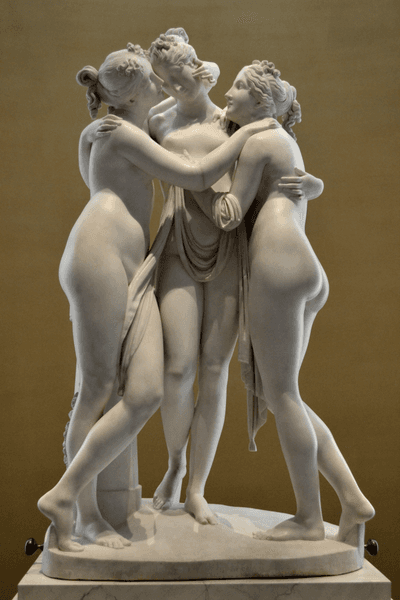
The Three Graces
Antonio Canova · 1814–17
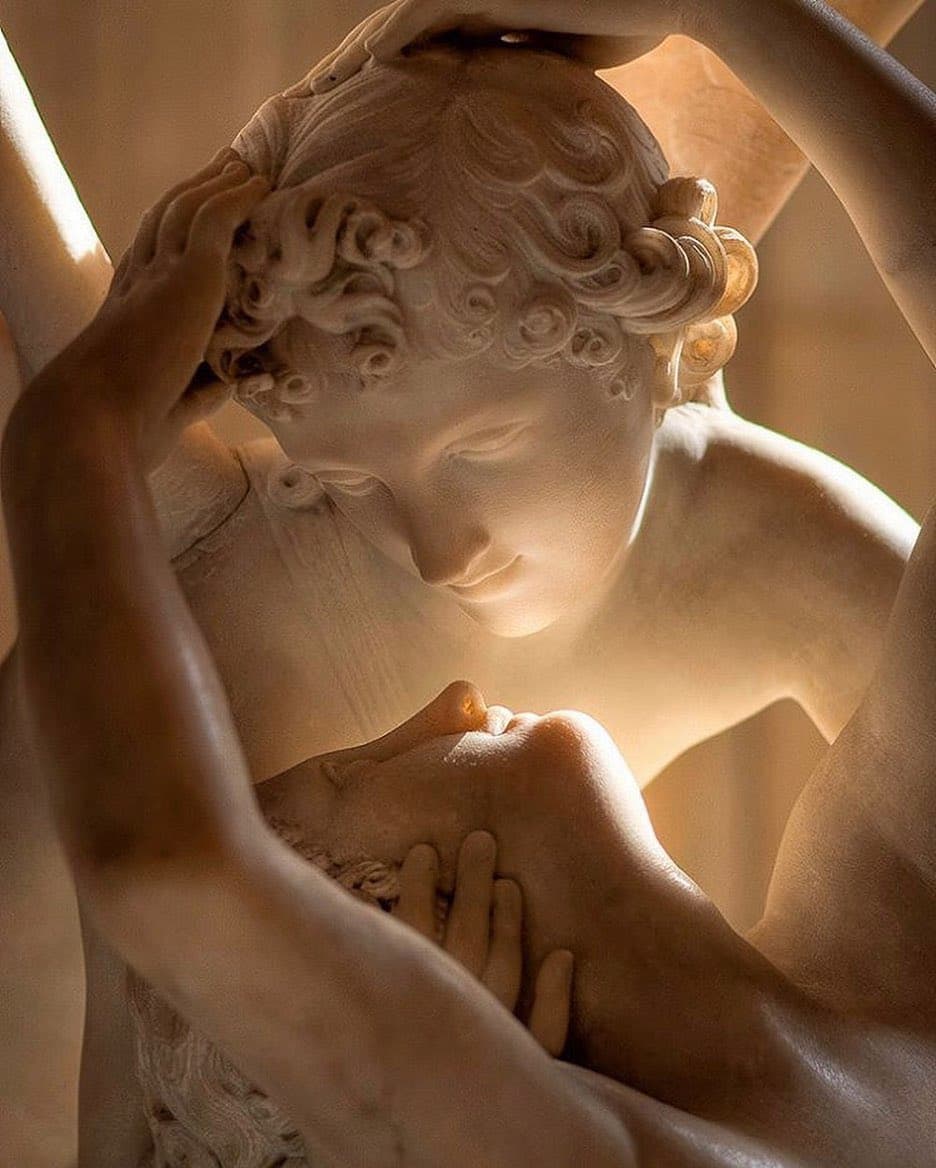
Psyche Revived by Cupid's Kiss
Antonio Canova · 1787–1793
Undine Rising from the Waters
Chauncey Bradley Ives · 1880
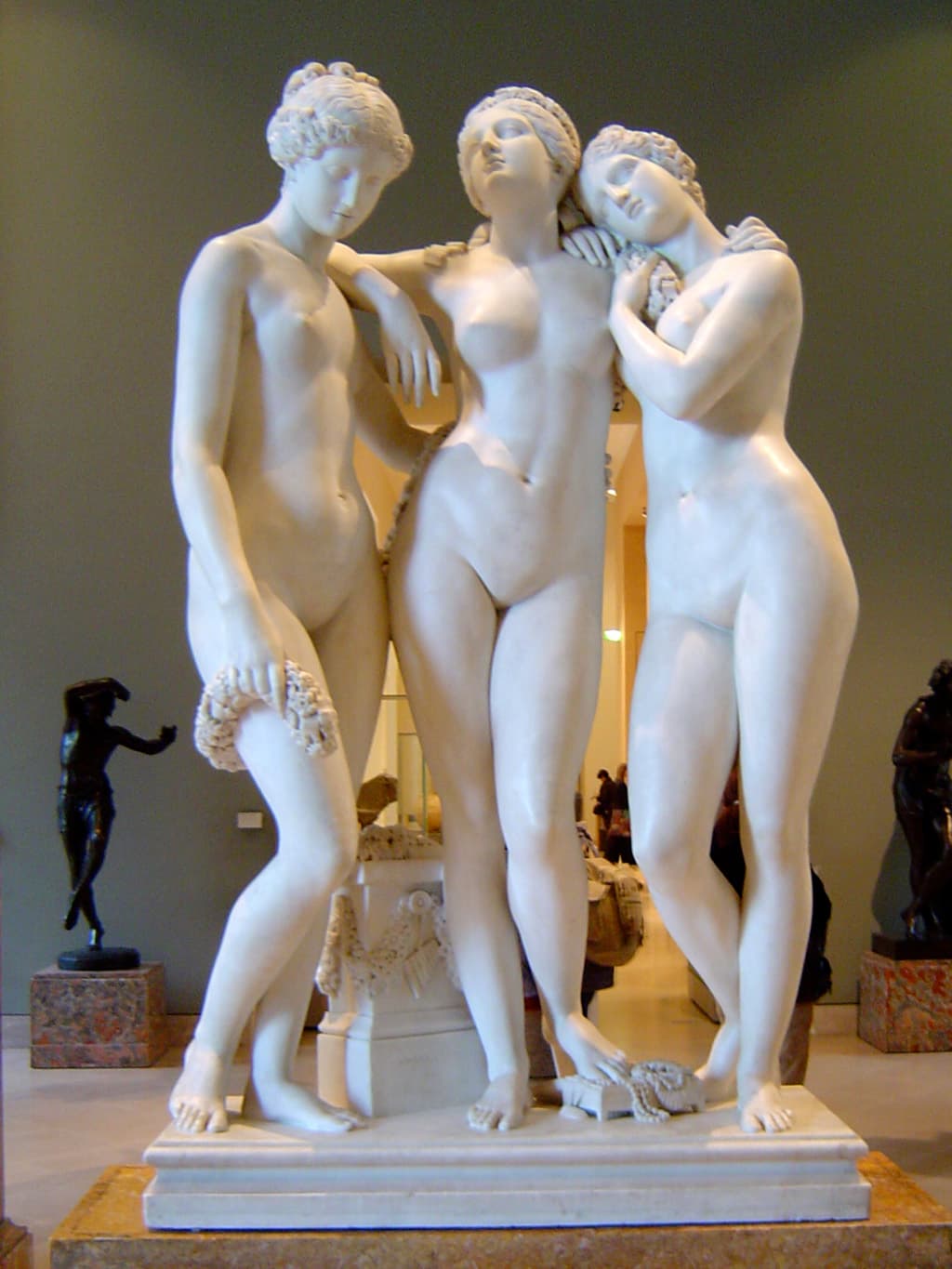
The Three Graces
James Pradier · 1831

Venus de Milo
Alexandros of Antioch · c. 150–125 BC

Nymphs Dancing to Pan's Flute
Joseph Tomanek

Saturn Devouring His Son
Francisco Goya · c. 1819–1823

Ophelia
John Everett Millais · 1851–52