Victorian sculpture
Lady Godiva
John Thomas, 1861
Lady Godiva is an 1861 sculpture by the Victorian sculptor John Thomas, showing Godiva riding naked through Coventry, head bowed and hand to her face. The original, slightly larger than life, is in Maidstone Museum; white porcelain reductions were also produced.
- Artist
- John Thomas
- Date
- 1861
- Medium
- Plaster (original model); also reproduced in Parian porcelain
- Dimensions
- Slightly larger than life (original)
- Collection
- Maidstone Museum & Bentlif Art Gallery, Maidstone, United Kingdom
- Movement
- Victorian sculpture
What you are looking at
A young woman rides side-saddle on a stepping horse. She is naked, her long hair loosened and falling forward, and she bows her head and raises one hand to cover her face, a gesture of modesty and shame. A long, flowered cloth is thrown over the horse's back and hangs to the ground, and she sits on it. The horse, with a richly decorated bridle and a flowing mane and tail, arches its neck and lifts one foreleg, moving forward carefully. The group stands on a low, cushion-like base.
The photograph shows the composition as a small white figure in a glass display case, its smooth matte surface typical of Parian ware, the unglazed porcelain that Victorian manufacturers used to make reduced copies of famous sculptures. The full-size original is in Maidstone.
The legend
According to the story, Godiva (Godgifu in Old English) was the wife of Leofric, Earl of Mercia, in the eleventh century. Both were real people and generous benefactors of the church in Coventry. The legend, first written down in the thirteenth century by the chronicler Roger of Wendover, says that Godiva begged her husband to lift a heavy tax on the people of Coventry.
He mockingly agreed, if she would ride naked through the market. She did, covered only by her long hair, and Leofric kept his word. A later addition, from around the seventeenth or eighteenth century, introduced Peeping Tom, the tailor who looked and was struck blind.
The Victorians loved the tale. Tennyson published his poem "Godiva" in 1842, and the subject offered sculptors and painters a respectable reason to show the nude: her nakedness is an act of virtue and sacrifice, and the viewer who stares becomes Peeping Tom.
John Thomas
John Thomas (1813–1862), born in Chalford, Gloucestershire, was one of the busiest sculptors of the Victorian age. As Superintendent of Stone Carving at the new Palace of Westminster under Charles Barry, he supplied dozens of statues of kings and queens. He also carved the lions of the Britannia Bridge in Wales and made fountains and decorative work for many buildings. Lady Godiva was one of his most admired personal works. He showed it at the Royal Academy in 1861, and it appeared at the 1862 International Exhibition in London, the year of his death.
The original, slightly larger than life and mounted on a plinth almost a meter high, is now one of the best-known works at Maidstone Museum & Bentlif Art Gallery in Kent. Art UK describes it as plaster, painted in cream and green-grey tones; some sources call it marble. Smaller copies were made, including reductions in Parian porcelain such as the one photographed here.
Close looking
Thomas solves the problem of the subject through the gesture. Godiva's whole body turns inward: her shoulders hunch, her head drops, her hand hides her face, and her hair falls forward to screen her breast. The horse, by contrast, is all outward energy, with an arched neck, a curving mane, a lifted hoof and a tail that sweeps to the ground. The contrast between the shrinking rider and the proud animal carries the drama.
Look at the cloth beneath her. It is embroidered with flowers and falls in long vertical folds that hide the horse's flank and support the composition, a practical solution to the weight of the sculpture, turned into a decorative element. The bridle is also finely worked, its straps ornamented with rosettes.
Is it the statue in Coventry?
No, and the confusion is common. The statue of Lady Godiva on horseback in Broadgate, the center of Coventry, is a bronze by Sir William Reid Dick, unveiled in 1949. John Thomas's Lady Godiva is a separate, earlier work in Maidstone.
Victorian sculpture for the home
The Parian reduction in the photograph is part of the story. From the 1840s, factories such as Minton and Copeland developed Parian ware, a fine, unglazed white porcelain that imitated the look of Carrara marble. It allowed middle-class households to own small versions of the celebrated sculptures shown at the Royal Academy and the great exhibitions.
Popular subjects were often literary or sentimental, and a naked heroine made acceptable by legend and Tennyson's poem was ideally suited. In this way Thomas's composition reached a far wider audience than the single plaster in Maidstone. Today such Parian figures are collected in their own right as records of Victorian taste.
Related works
For other Victorian and academic treatments of the female nude, see Undine Rising from the Waters by Chauncey Bradley Ives, Sleeping Beauty by Louis Sussmann-Hellborn and Zuleikha by Benjamin Victor. More on the sculptor on his artist page.
Where to see it
John Thomas's original Lady Godiva is at Maidstone Museum & Bentlif Art Gallery, Kent. Parian reductions appear in museum collections and on the antiques market.
Questions & answers
Where is John Thomas's Lady Godiva statue?
The original, made in 1861 and slightly larger than life, is in Maidstone Museum & Bentlif Art Gallery in Kent, England. The photograph here shows a smaller white porcelain reduction of the same composition in a display case.
Is John Thomas's Lady Godiva the statue in Coventry?
No. The bronze Lady Godiva in Broadgate, Coventry, is by Sir William Reid Dick and was unveiled in 1949. John Thomas's 1861 sculpture is a separate work, shown at the Royal Academy and now in Maidstone.
What is the legend of Lady Godiva?
Godiva, wife of Leofric, Earl of Mercia, in the eleventh century, supposedly rode naked through Coventry so that her husband would lift a harsh tax. The story was first recorded in the thirteenth century; Peeping Tom was added centuries later.
What is Lady Godiva by John Thomas made of?
Art UK describes the Maidstone original as painted plaster, though some sources call it marble. Smaller copies were produced in Parian ware, an unglazed white porcelain popular in Victorian Britain for reproductions of sculpture.
Kindred works
You may also study
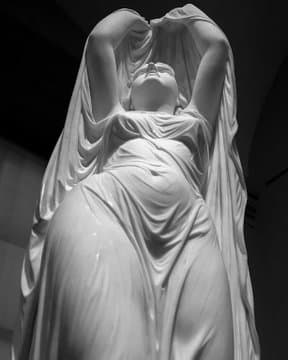
Undine Rising from the Waters
Chauncey Bradley Ives · 1880
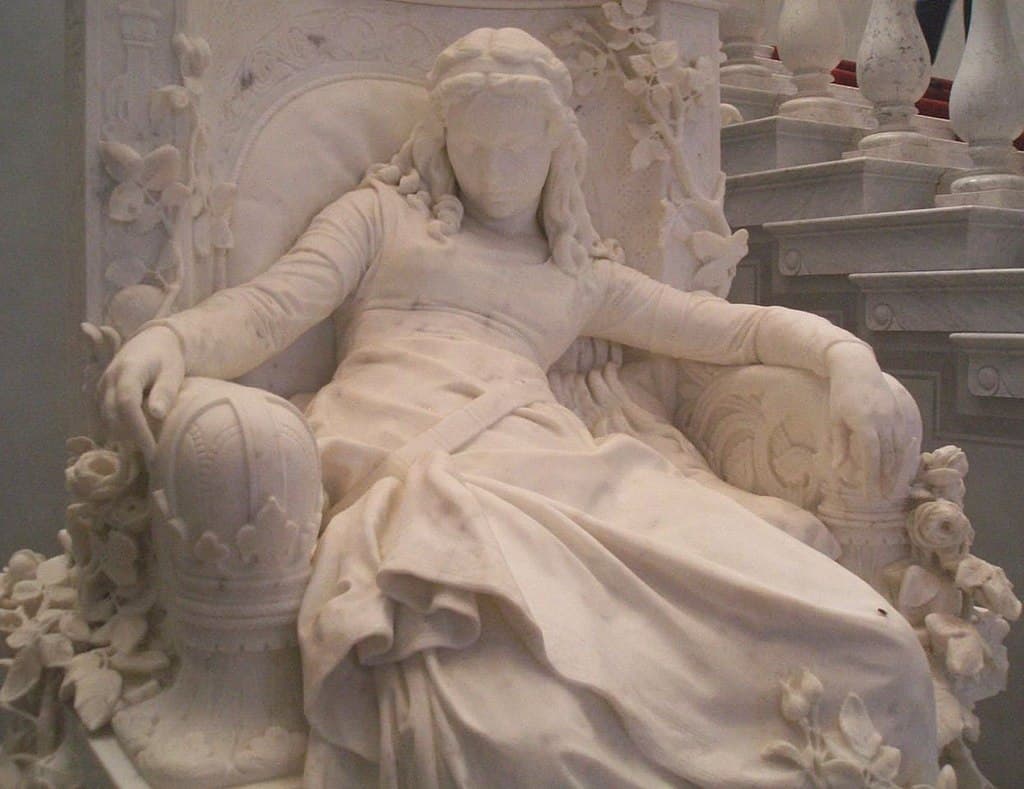
Sleeping Beauty (Dornröschen)
Louis Sussmann-Hellborn · 1878
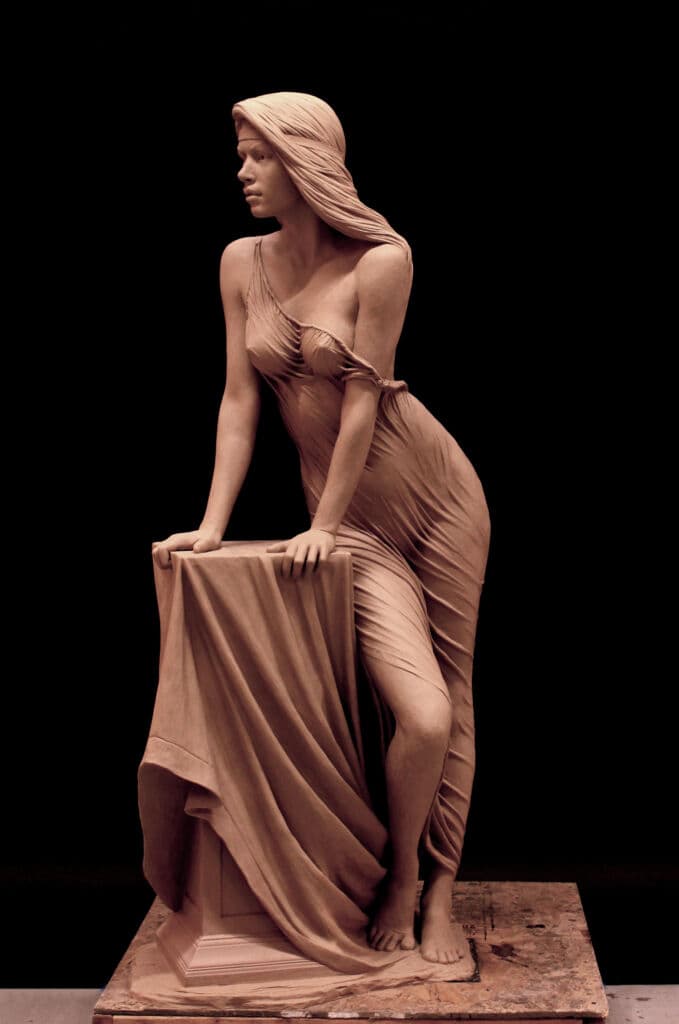
Zuleikha
Benjamin Victor · c. 2022
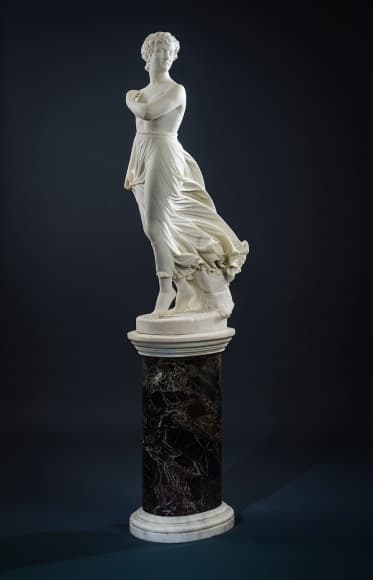
The West Wind
Thomas Ridgeway Gould · Modeled 1870

Venus de Milo
Alexandros of Antioch · c. 150–125 BC

Nymphs Dancing to Pan's Flute
Joseph Tomanek
The Thinker
Auguste Rodin · Modeled 1880–82; enlarged 1902–03; this cast 1904
The Creation of Adam
Michelangelo · c. 1511–12