Contemporary figurative sculpture
Bathsheba
Benjamin Victor
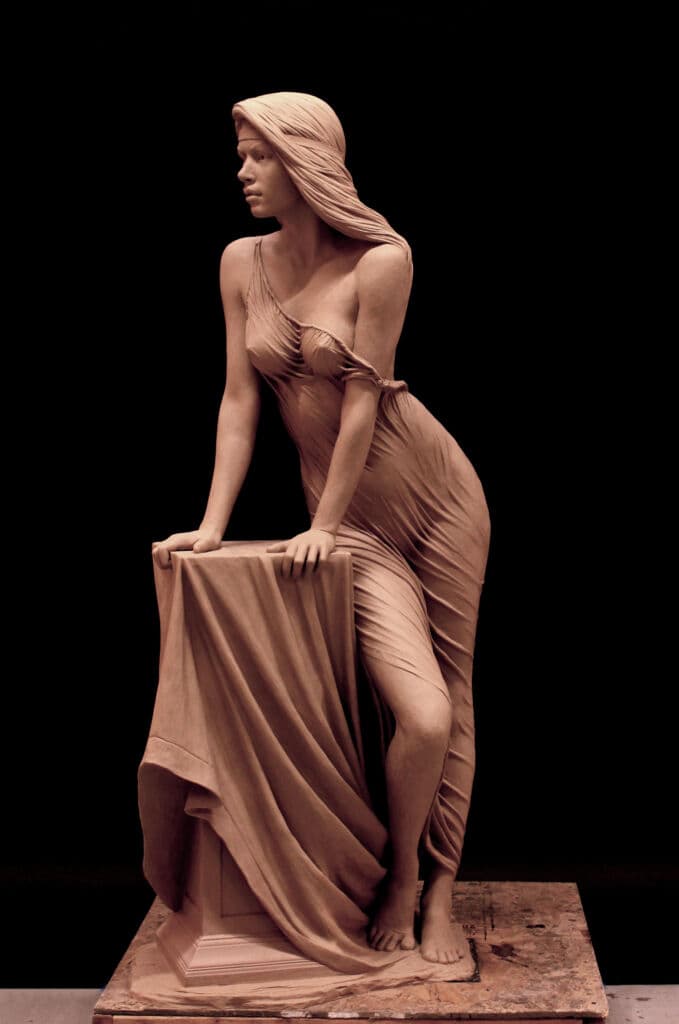
Bathsheba is a figure sculpture by the American artist Benjamin Victor showing the biblical Bathsheba standing just after her bath, her wet drapery clinging to her body and a towel gathered in one hand.
- Artist
- Benjamin Victor
- Medium
- Clay (sculpture model)
- Movement
- Contemporary figurative sculpture
Bathsheba is a standing female figure by Benjamin Victor, an American figurative sculptor best known for his monumental bronzes in the U.S. Capitol's National Statuary Hall. The work, shown here in clay, depicts the biblical Bathsheba at the moment just after her bath. Its date, size and whether it has been cast in bronze have not been confirmed.
What you are looking at
A young woman stands upright, weight on one leg, her long wavy hair falling over her shoulders. She wears a thin, wet garment that clings to her body and gathers in dense, rippling folds across her stomach and thighs, revealing the forms beneath. In her left hand she grips a long cloth or towel that hangs down to the ground and pools around her bare feet in heavy folds.
Her expression is calm but guarded. She looks slightly to one side rather than at the viewer, and her right arm hangs close to her body. The surface is modeled in warm, smooth clay against a dark background, and the effect of the wet drapery, a classic test of a sculptor's skill since antiquity, is the work's centerpiece.
The story of Bathsheba
In the Second Book of Samuel, King David sees Bathsheba bathing from the roof of his palace and sends for her. She becomes pregnant, and David arranges for her husband, the soldier Uriah the Hittite, to be killed in battle before marrying her. Their son Solomon later becomes king. Painters from Rembrandt onward have treated the scene, often casting Bathsheba as a temptress. Many modern readings stress instead that she had little power to refuse a king. Victor's figure, sensual yet hesitant, sits between those interpretations.
The sculptor
Benjamin Victor is unusual among living sculptors for having three works in National Statuary Hall in Washington: Sarah Winnemucca (2005), Norman Borlaug (2014) and Chief Standing Bear (2019). Alongside public commissions, he makes intimate figures from biblical and mythological subjects, such as Zuleikha.
Related works
For other images of biblical women, compare Eglon van der Neer's Judith and Fede Galizia's Judith with the Head of Holofernes. More at Benjamin Matthew Victor.
Questions & answers
Who is Bathsheba in the Bible?
Bathsheba appears in the Second Book of Samuel. King David saw her bathing, summoned her and later had her husband Uriah killed so he could marry her. She became the mother of King Solomon and, in the Book of Kings, a powerful queen mother who secured his succession.
Who sculpted Bathsheba?
This Bathsheba is by Benjamin Victor, a contemporary American sculptor whose bronzes of Sarah Winnemucca, Norman Borlaug and Chief Standing Bear stand in the U.S. Capitol's National Statuary Hall. He also makes smaller figures on biblical and literary themes, including Zuleikha.
What is the meaning of Benjamin Victor's Bathsheba?
The sculpture shows Bathsheba just after bathing, her wet garment clinging to her body and a towel held tightly in her hand. Her guarded expression and protective grip suggest both sensuality and apprehension, inviting viewers to see her as a person caught in events beyond her control.
More by the artist
Benjamin Victor
Kindred works
You may also study
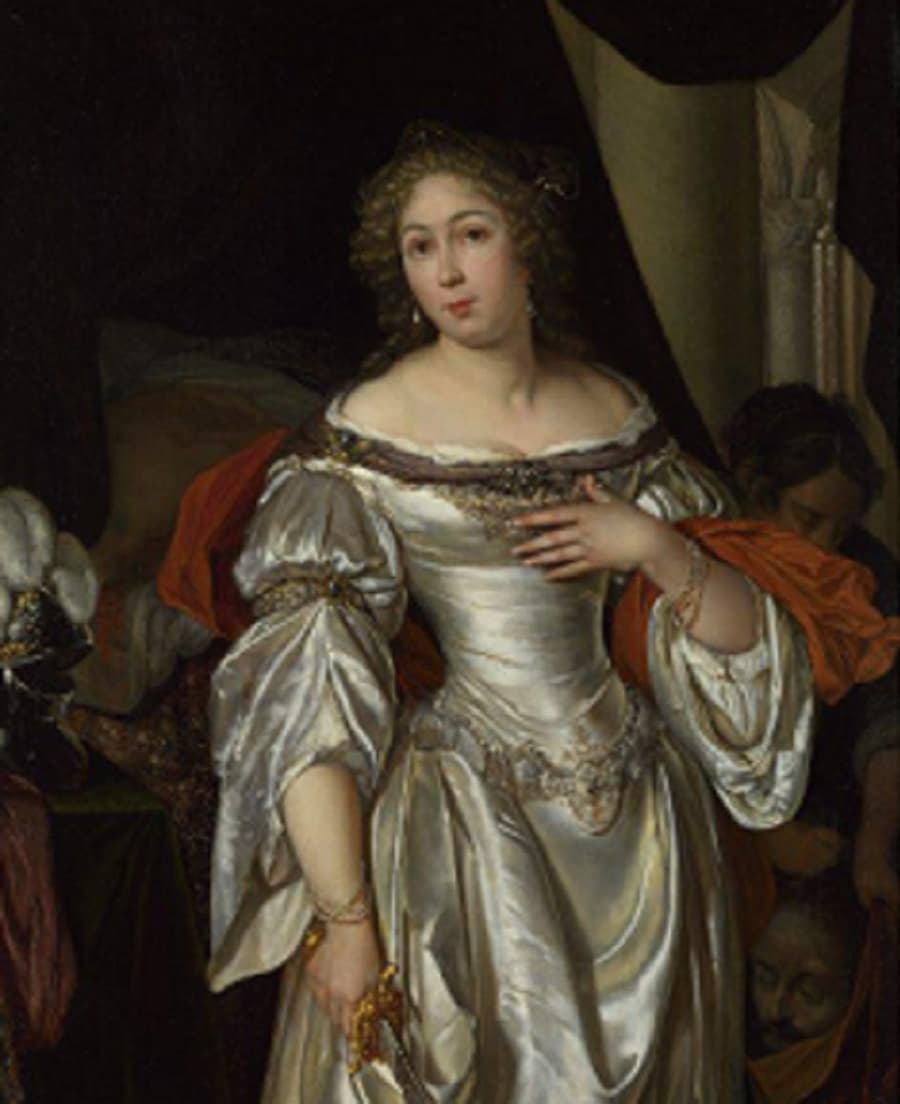
Judith
Eglon van der Neer · c. 1678
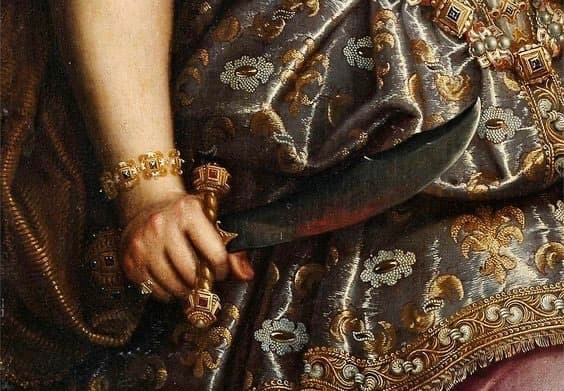
Judith with the Head of Holofernes
Fede Galizia · 1596
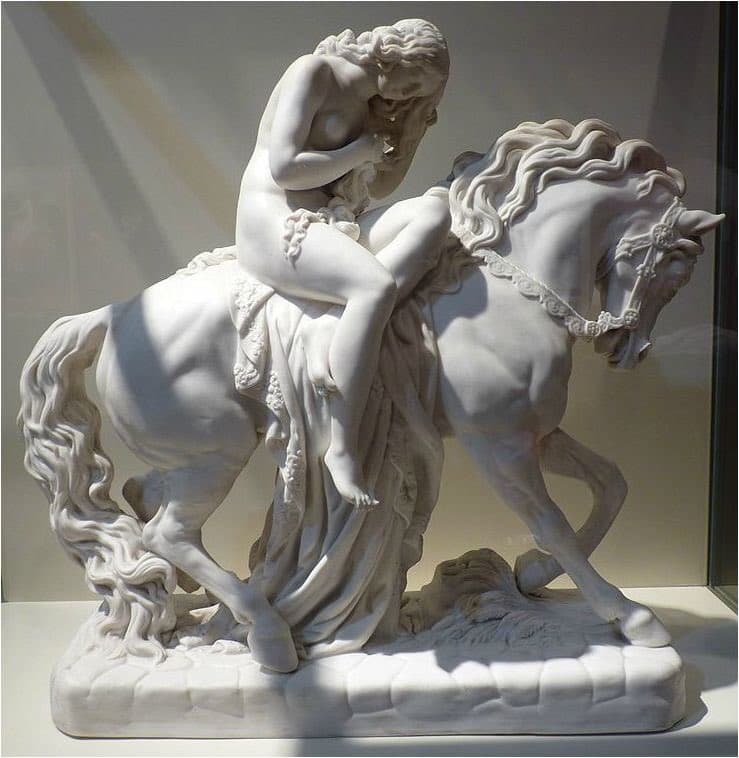
Lady Godiva
John Thomas · 1861

Venus de Milo
Alexandros of Antioch · c. 150–125 BC
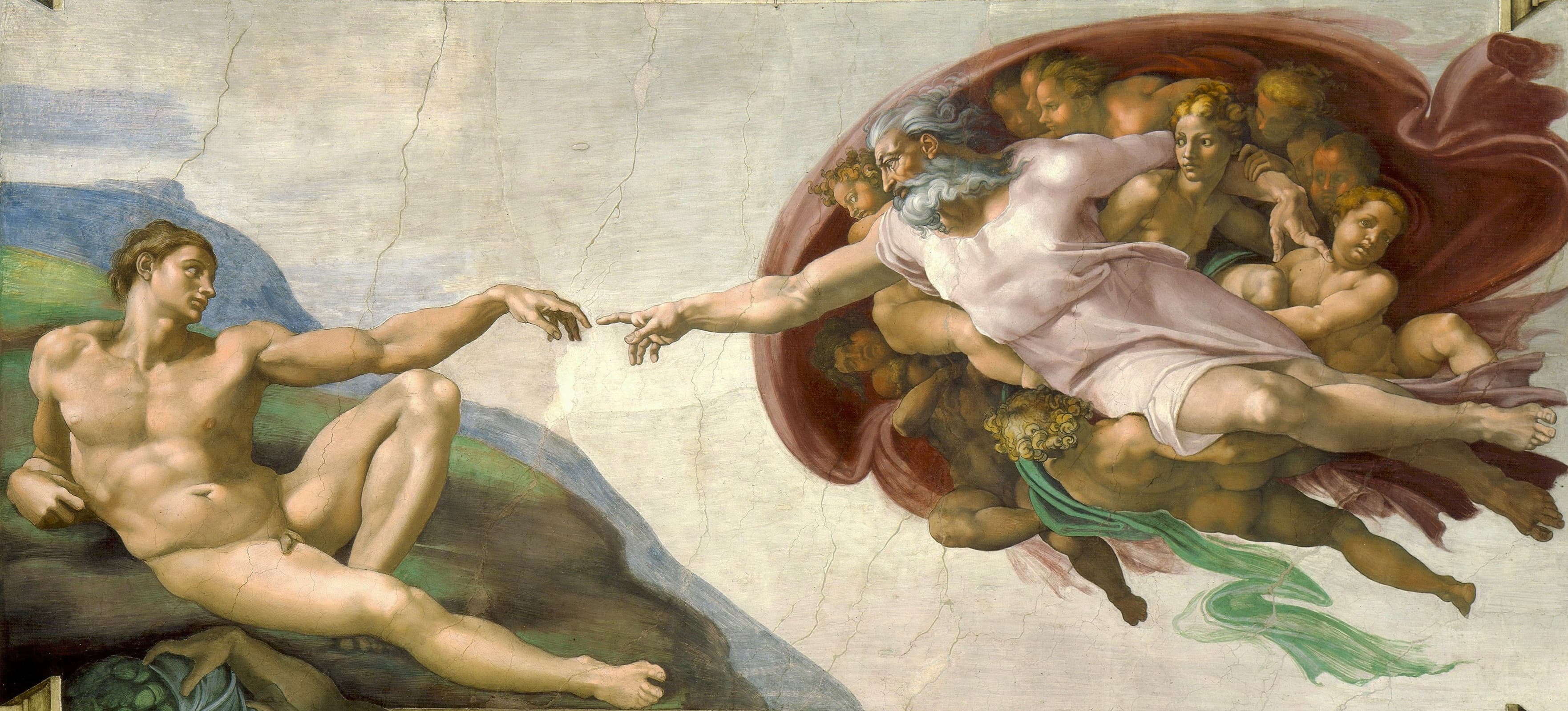
The Creation of Adam
Michelangelo · c. 1511–12

Ophelia
John Everett Millais · 1851–52

Woman with a Parasol – Madame Monet and Her Son
Claude Monet · 1875
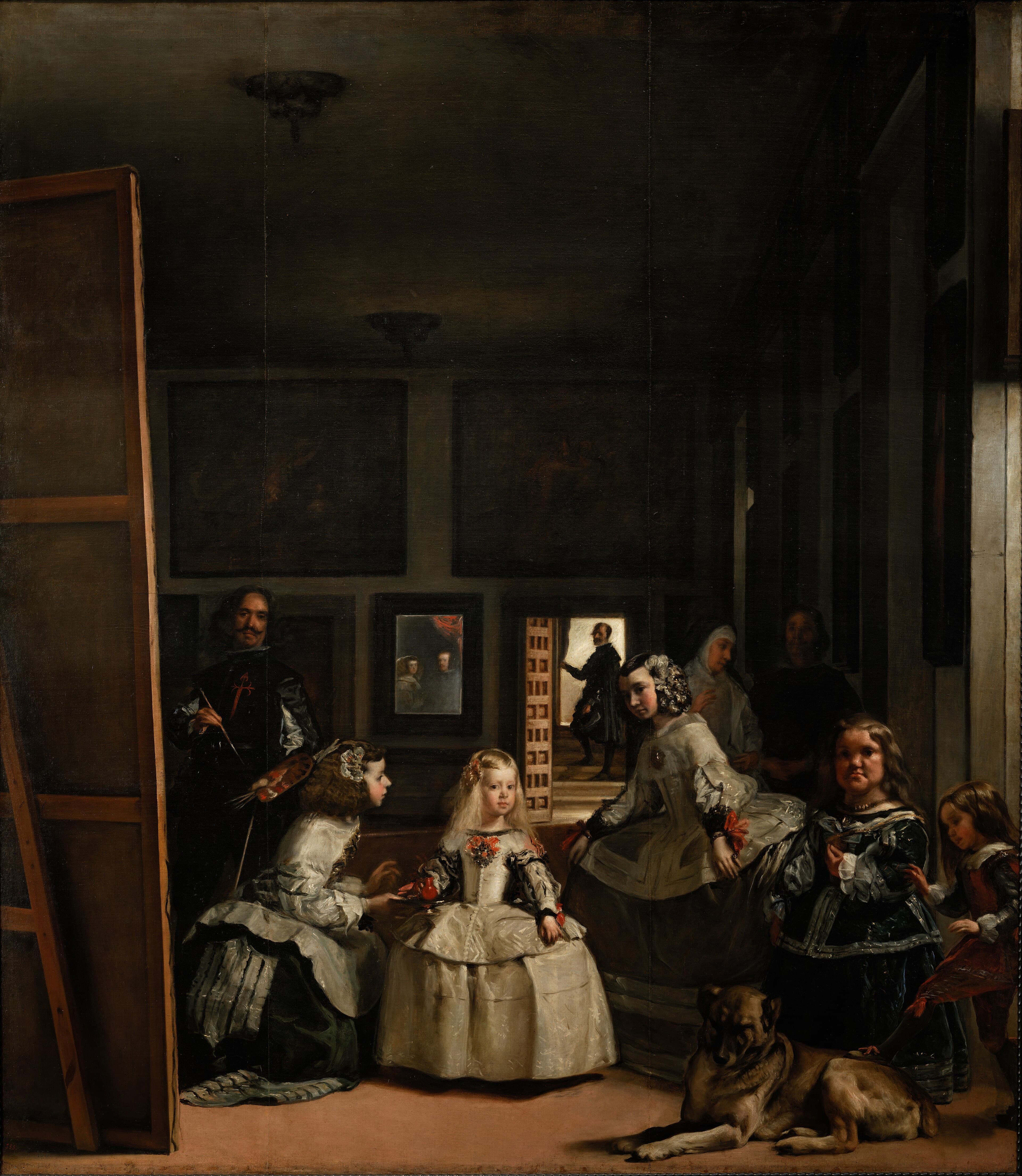
Las Meninas
Diego Velázquez · 1656