American · Photography · Art history
Paul Koudounaris
b. Los Angeles
Paul Koudounaris is an American art historian, author and photographer from Los Angeles whose books Heavenly Bodies (2013) and The Empire of Death (2011) documented Europe's jeweled catacomb saints and bone-decorated ossuaries.
6 works in the collection
Works by Paul Koudounaris
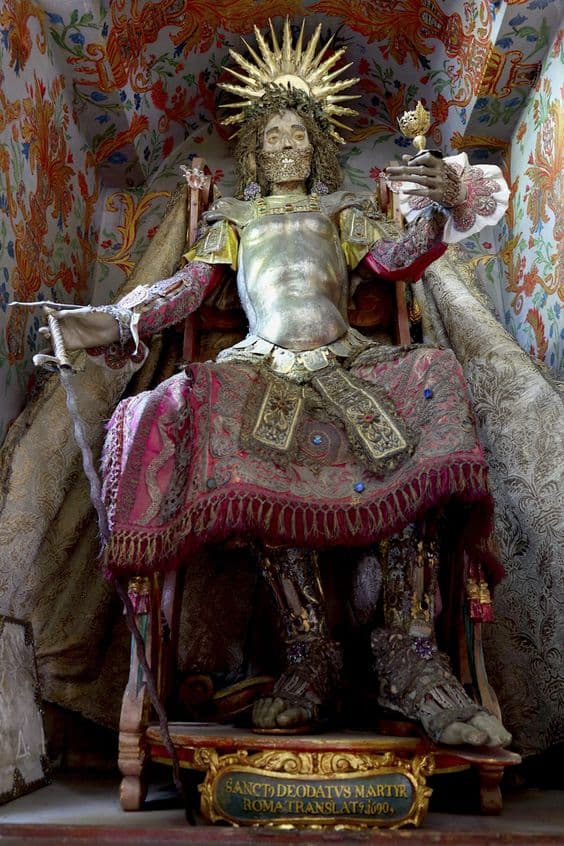
Bejeweled Skeleton of Saint Deodatus
Artist Unknown & Paul Koudounaris · Translated from Rome 1690
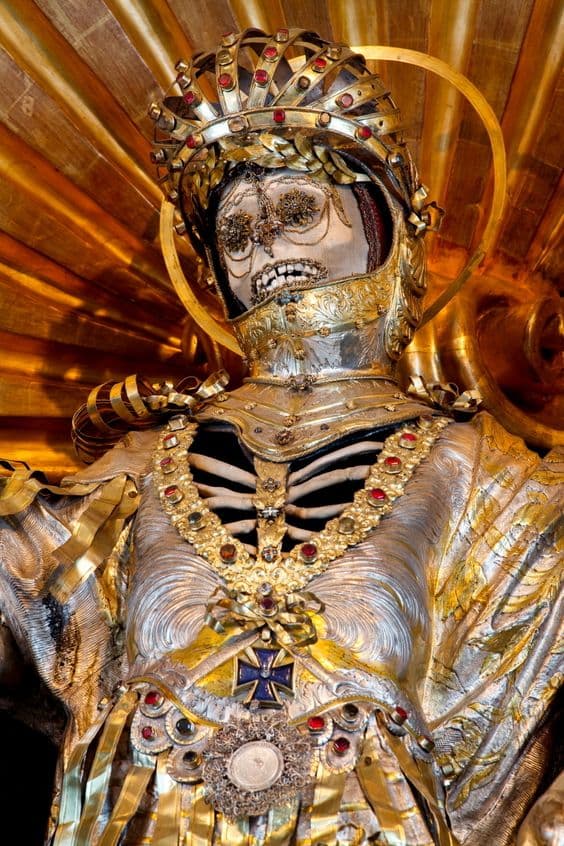
Bejeweled Skeleton of Saint Maximus
Paul Koudounaris · Late 17th century (relics acquired 1677)
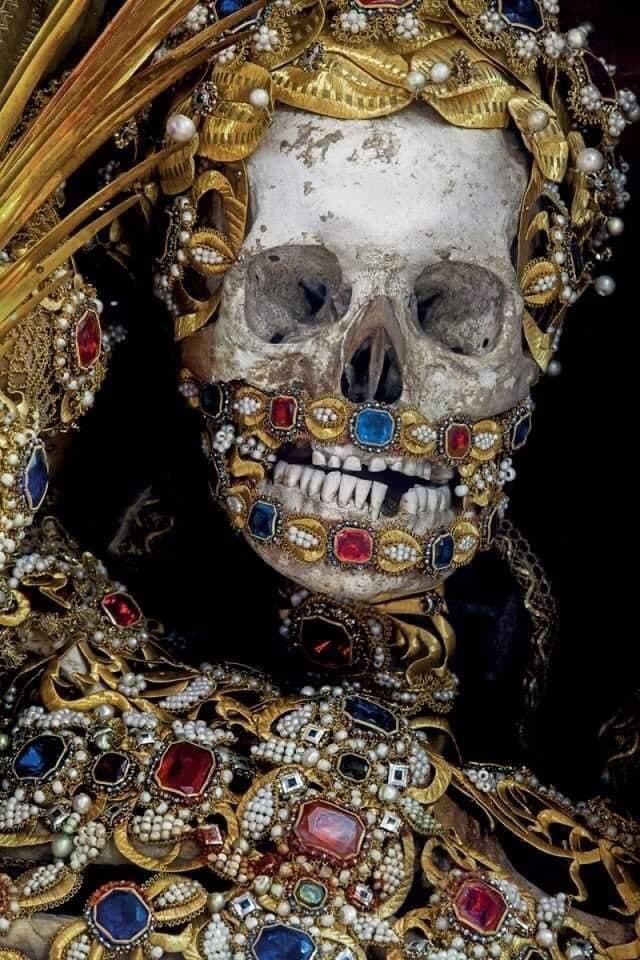
Bejeweled Skeleton of Saint Albertus
Paul Koudounaris · Arrived 1723; decoration 18th century
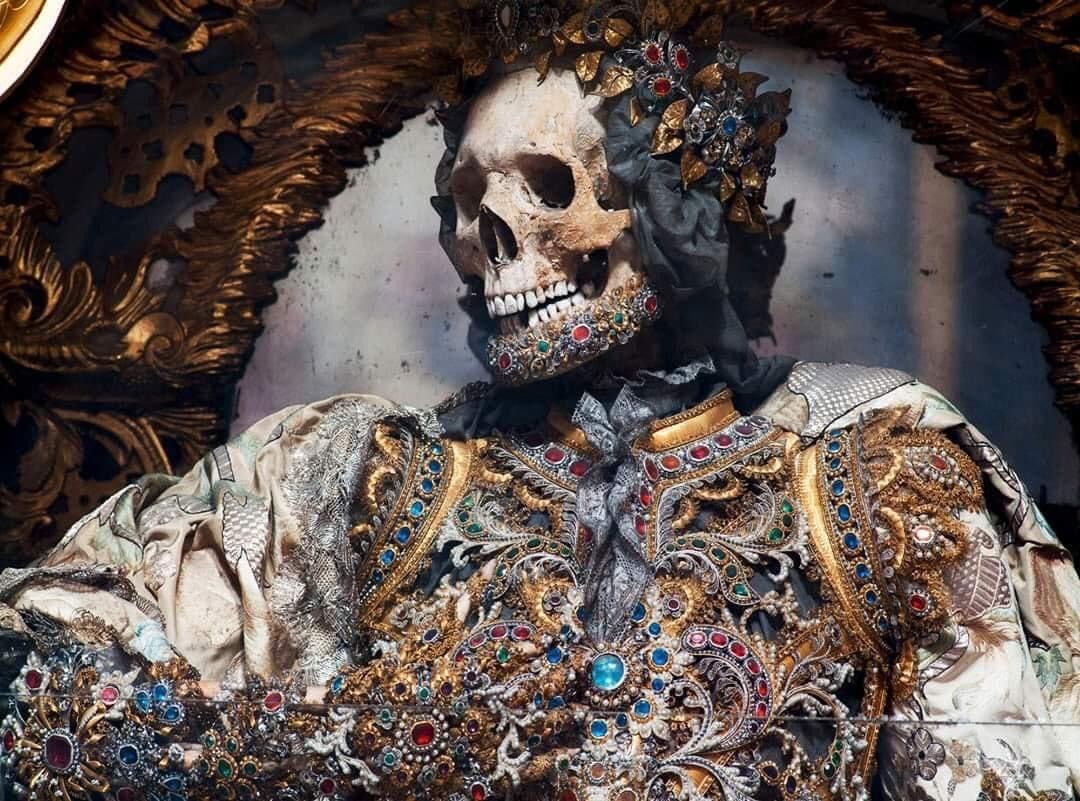
Bejeweled Skeleton of Saint Gratian
Adalbart Eder & Paul Koudounaris · 18th century (decoration); photographed by Paul Koudounaris, published 2013
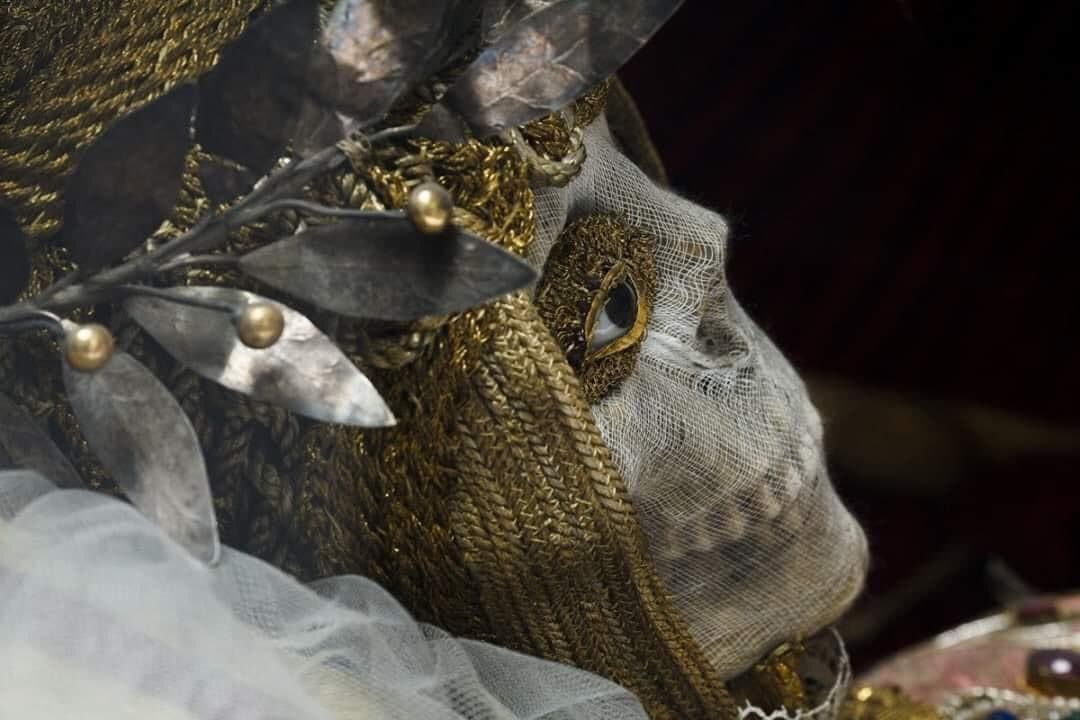
Bejeweled Skeleton of Saint Munditia
St. Peter's Church & Paul Koudounaris · 1675–77
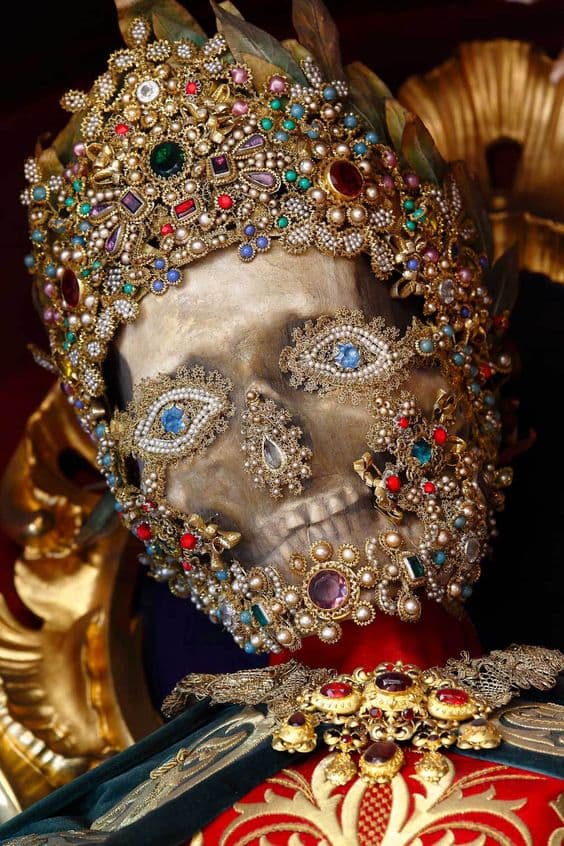
Bejeweled Skeleton of Saint Felix
Paul Koudounaris & Eastern Orthodox Church & St. Peter's Church
Paul Koudounaris is an American art historian, writer and photographer who has spent his career recording how cultures display and honor their dead. He is best known for Heavenly Bodies: Cult Treasures and Spectacular Saints from the Catacombs (2013), the book that made the jeweled skeletons of Baroque Europe famous again, and his photographs are the source of the catacomb saints in our catalogue.
Life in brief
Koudounaris grew up in Los Angeles and earned a PhD in art history. In 2006, while researching the use of human remains in religious art, he began traveling to churches and charnel houses across Europe, often gaining access to crypts and side chapels that were closed to the public. The UK press nicknamed him "Indiana Bones." He has since lived in Las Vegas and is a member of The Order of the Good Death, a group that encourages frank public conversation about mortality.
The books
His first book, The Empire of Death: A Cultural History of Ossuaries and Charnel Houses (2011), surveyed bone chapels such as Sedlec in the Czech Republic and the Capuchin crypts of Rome, arguing that they were places of devotion and community memory rather than horror. Heavenly Bodies (2013) followed, then Memento Mori: The Dead Among Us (2015), which widened the view to skull shrines, mummies and death customs on several continents. He has also published A Cat's Tale (2020), a history of cats told in the voice of his own cat, and has a book on pet cemeteries, Faithful Unto Death, announced for 2024. The Empire of Death and Heavenly Bodies were both chosen for end-of-year best-book lists.
What the catacomb saints are
The skeletons Koudounaris photographed are not his artworks; they are eighteenth- and seventeenth-century devotional objects that he found, lit and recorded. In 1578 an ancient burial ground was rediscovered beneath Rome's Via Salaria, and the Church began identifying anonymous bones as early Christian martyrs. Over the next two centuries thousands were sent north, mainly to Catholic churches in southern Germany, Austria and Switzerland, to replace relics destroyed during the Protestant Reformation. There they were dressed, often by nuns, in silk, gold thread, glass and paste jewels, wax masks and armor, and displayed upright or reclining in glass shrines.
During the Enlightenment many were seen as embarrassing. Under Emperor Joseph II and later secular reformers, a large number were removed, stripped or hidden away. Koudounaris's photographs made them visible to a wide audience for the first time in generations, and his books are now the standard popular account. Read the full background on our Catacomb Saints page.
The skeletons in our catalogue
Each of these pages pairs one of his photographs with the history of the saint and the church that holds it:
- Saint Deodatus, at the former abbey church of Rheinau, Switzerland, whose Roman bones arrived in 1690 and were dressed as a Roman soldier with a wax face mask.
- Saint Maximus, in the parish church of Bürglen, Switzerland, a soldier of Christ in armor, brought there in the late seventeenth century.
- Saint Albertus, sent in 1723 to the church of St. George at Burgrain in Bavaria and covered in gold and stones.
- Saint Gratian, one of the skeletons at Waldsassen Basilica in Bavaria decorated by the lay brother Adalbart Eder in the eighteenth century.
- Saint Munditia, lying in a glass shrine in St. Peter's Church, Munich, since 1677, with glass eyes set in her skull.
- Saint Felix, another of the decorated martyrs recorded in his survey.
How he photographs them
Koudounaris shoots the skeletons close and frontally, usually against dark backgrounds, with light raking across the metalwork so that every wire flower and paste stone throws a small shadow. The method treats them the way a museum photographer treats a reliquary: as crafted objects with a maker's hand, not as curiosities. Look at the hands in his images and you will often see rings slipped over bare finger bones and lace cuffs stitched to the wrists, details that are invisible from the nave of a church.
That approach also reflects his argument. He reads the saints as expressions of faith and of the skill of the nuns who decorated them, many of whom were trained in fine needlework and goldwork, rather than as macabre spectacles. The decoration, he points out, was meant to show the soul's glory in heaven, so the brighter the jewels, the better.
Influence
Before his books, the catacomb saints were known mainly to local parishioners and specialists. Since 2013 they have become a staple of articles, documentaries and the online aesthetics that cluster around memento mori and death in art, and several churches report more visitors coming to see them. His work sits within a broader revival of interest in the visual culture of death.
Where to see the saints
Most of the skeletons remain in the churches that received them, including Rheinau, Bürglen, Waldsassen and St. Peter's in Munich, and are usually visible during opening hours. Koudounaris's photographs are best seen in Heavenly Bodies, published by Thames & Hudson.
Questions & answers
Who is Paul Koudounaris?
Paul Koudounaris is an American art historian, author and photographer from Los Angeles with a PhD in art history. He documents how cultures display the dead, and is best known for Heavenly Bodies (2013), on Europe's jeweled catacomb saints, and The Empire of Death (2011), on ossuaries.
What are the bejeweled skeletons of the catacomb saints?
They are anonymous skeletons taken from Rome's catacombs after 1578, identified as early Christian martyrs and sent to churches in Catholic Germany, Austria and Switzerland. Local nuns and craftsmen dressed them in jewels, gold thread, armor and wax masks for public veneration.
Did Paul Koudounaris make the jeweled skeletons?
No. The skeletons were decorated in the seventeenth and eighteenth centuries, mostly by nuns and lay brothers. Koudounaris found and photographed them from 2006 onward, and his photographs and book Heavenly Bodies brought them to a wide modern audience.
Where can I see the jeweled skeletons?
Many are still in the churches that received them, such as Waldsassen Basilica and St. Peter's Church in Munich in Bavaria, and Rheinau and Bürglen in Switzerland. Access varies by church, so check opening hours before visiting.
What books has Paul Koudounaris written?
His books include The Empire of Death (2011), Heavenly Bodies (2013), Memento Mori: The Dead Among Us (2015) and A Cat's Tale (2020). A book on pet cemeteries, Faithful Unto Death, was announced for 2024.