German · Berlin school of sculpture · Academic art
Louis Sussmann-Hellborn
b. 20 March 1828, Berlin — d. 15 August 1908, Charlottenburg (now Berlin)
Louis Sussmann-Hellborn (1828–1908) was a Berlin sculptor, painter, collector and entrepreneur, best known for the marble Sleeping Beauty (1878) in the Alte Nationalgalerie. He also directed the Royal Porcelain Manufactory (KPM) from 1882 to 1887.
1 work in the collection
Works by Louis Sussmann-Hellborn
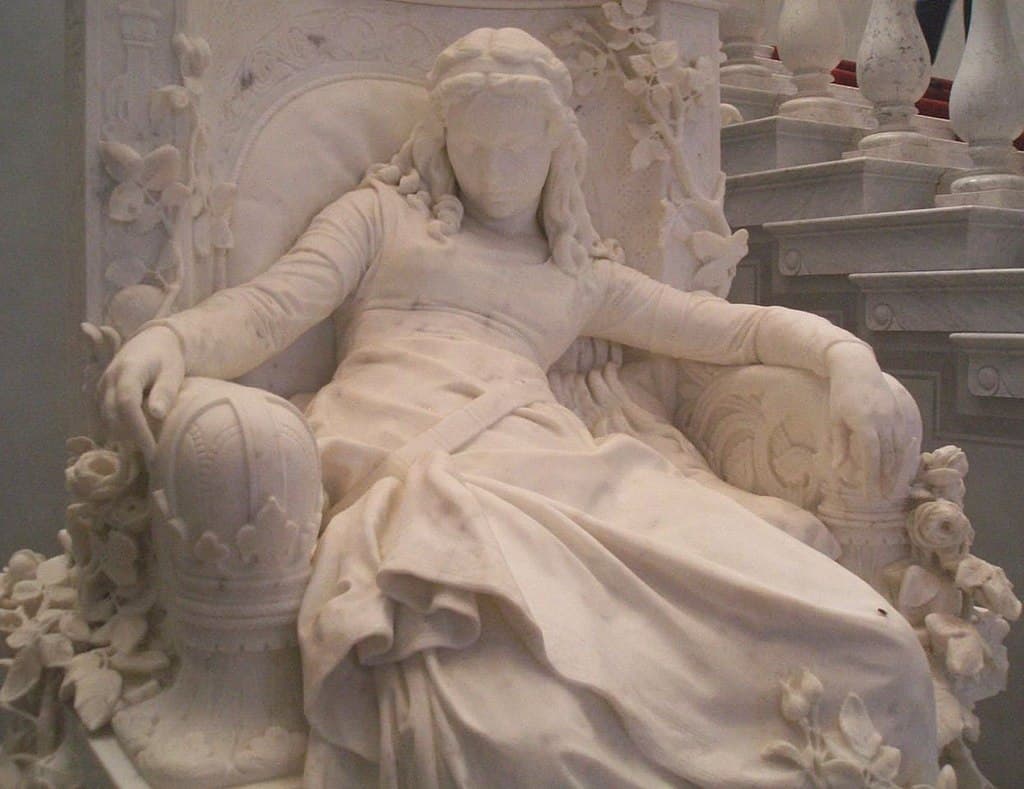
Louis Sussmann-Hellborn was a German sculptor of the Berlin school whose career ran from carved marble to porcelain, enamel and museum building. His best-known work is Sleeping Beauty (Dornröschen, 1878), a life-size Carrara marble figure that he gave to the Nationalgalerie and that is still in the Alte Nationalgalerie in Berlin.
Life
He was born Ludwig Sussmann in Berlin on 20 March 1828, the son of a Prussian royal lottery collector, and trained as a sculptor under August Wredow at the Berlin Academy of Arts. Study trips took him to France, Belgium and Britain, and from 1852 to 1856 he lived in Rome. A first large exhibition of his work was held in Berlin in 1856, and he settled there for good the next year. In 1858 he married Bertha Hellborn, the daughter of a wealthy banker and a celebrated beauty, and took the combined name Sussmann-Hellborn.
His villa in the Tiergarten district became a meeting place for educated Berlin society. He was also a serious collector: in 1875 he bought Arnold Böcklin's painting Meeresidylle (Sea Idyll) for 10,000 marks; it later passed to the Nationalgalerie and has been missing since 1945. He died in Charlottenburg on 15 August 1908 and is buried in the Jewish cemetery on Schönhauser Allee.
Sculpture
His early Roman works were ideal figures in the classical manner, such as a Drunken Faun and Abandoned Psyche. Back in Berlin he took on public commissions: statues of Frederick the Great for Brieg (Brzeg) and for the Red Town Hall, and the allegorical group Der deutsche Volksgesang (German Folk Song, 1875), a copy of which stands in the Tiergarten. Sleeping Beauty and a Lute Player, both of 1878, entered the Nationalgalerie. Seated figures of Hans Holbein and Peter Vischer (1881) were made for the building now called the Martin-Gropius-Bau.
Design and institutions
Sussmann-Hellborn was unusual in moving between fine and applied art. He helped found Berlin's Kunstgewerbemuseum (Museum of Decorative Arts), assisted in building the sculpture collection of the Royal Museums, and from 1882 to 1887 headed the Royal Porcelain Manufactory (KPM). With the Ravené family he founded a firm producing enamel work to his designs.
Where to see his work
The Alte Nationalgalerie holds Sleeping Beauty; Berlin's Tiergarten has the Volksgesang group. Compare Eduard Müller's Prometheus Bound and the Oceanids in the same museum, or browse more famous sculptures.
Questions & answers
Who was Louis Sussmann-Hellborn?
Louis Sussmann-Hellborn (1828–1908) was a German sculptor, painter, art collector and businessman from Berlin. He is best known for the marble Sleeping Beauty (1878) in the Alte Nationalgalerie and for directing the Royal Porcelain Manufactory (KPM) from 1882 to 1887.
Where is Sleeping Beauty by Sussmann-Hellborn?
The life-size Carrara marble Sleeping Beauty (Dornröschen), dated 1878, is in the Alte Nationalgalerie on Museum Island, Berlin. The sculptor gave it to the Nationalgalerie in 1888.
Why is he called Sussmann-Hellborn?
He was born Ludwig Sussmann. After marrying Bertha Hellborn, daughter of the banker Philipp Hellborn, in 1858, he adopted the double surname Sussmann-Hellborn.